

Expressing qualms over some measures, Gov. Jared Polis signs two dozen bills
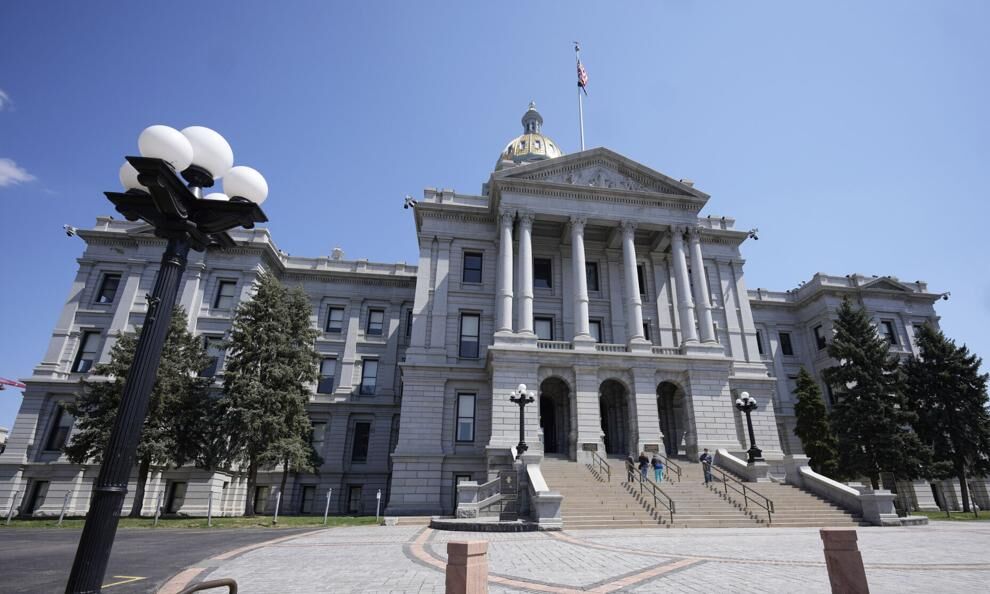
With a Wednesday deadline nearing for signing bills from the 2023 General Assembly session, Gov. Jared Polis got to work on Tuesday, adding another 24 new state laws through his signature pen.
But many of those signings came with statements expressing displeasure or concerns about either the process for those bills or gaps that will have to be addressed in the future.
Among those the bills that he signed – and which he has qualms with – was Senate Bill 111, which prohibits public employers from retaliating against public employees for engaging in activities such as participating in public sector unions or political activities outside of work, including speaking to the governing board for that employer.
Polis said he shared the sponsors’ goal of protecting the free speech of Colorado public sector employees, although also noting public employees already have many of the protections. In addition, the governor wrote, public employers “are also free to frankly speak with their employees about the benefits and drawbacks to employee organizations – there is no requirement that employers in this bill remain neutral and employers have the ability to engage in meaningful conversation with their employees.”
But the governor also noted worries raised by public employers that the law could interfere with their ability to pursue their public missions.
The signing statement ordered the Colorado Department of Labor and Employment to conduct rulemaking that would clarify how employers can “manage, engage and discipline employees, as well as addresses the rights and allowances public employers have in promoting their public mission.” That would also include rules on the rights of managers to “speak freely about the benefits and drawbacks of employee organizations.”
It didn’t stop there. Polis wants legislation in the next session to put into statute those requirements on the rights of public employers.
Despite those guardrails, the signing drew disappointment from the Colorado Municipal League, which represents 270 cities and towns across Colorado.
In a statement on Wednesday, CML Executive Director Kevin Bommer said, “The breadth and scope of the direction given by Gov. Polis in his signing statement prove how deeply flawed the bill is.”
He added it would lead to confusion about employer-employee relationships.
“The time to ‘clarify’ SB 111 was during the legislative session,” Bommer said. “Punting the responsibility to a state agency to determine local employment relations and management decisions gives little assurance to local leaders.”
The CML statement said the bill’s “broad, vague remedial provisions” raised concerns that a state agency (CDLE) could interfere in disciplinary actions, personnel investigations, and decisions that are rightly reserved to public management and the decision-making of local elected bodies.”
“The breadth and scope of the direction given by Gov. Polis in his signing statement prove how deeply flawed the bill is,” said Bommer.
Bommer also noted that SB 111 amends a collective bargaining law for firefighters adopted several years ago, and that, under the law signed Tuesday, firefighters can now strike.
Dennis Dougherty, executive director of Colorado AFL-CIO, responded that SB 111 does not expand rights for public employees and “the alarmist misinformation from employers is unacceptable in policy discussions.”
“The bill,” he said, “simply provides a resolution process that is less expensive for taxpayers and workers.”
Dougherty characterized the feedback on the bill from employers as intended only to gut and undermine it and the efforts to protect public employees from discrimination and retaliation.
Amie Baca-Oehlert, president of the Colorado Education Association, said she is “thrilled to see that our legislative leadership listened to the hundreds of Colorado educators who lobbied, emailed, texted, and called them this session.”
She added: “Finally, we will be able to advocate for students’ learning conditions – which are educators’ working conditions – without fear of retaliation.”
Tuesday’s two dozen signed into law included several bills dealing with tenant rights, part of the legislative Democrats’ agenda to tackle the state’s housing crisis.
Senate Bill 184 limits landlords on the income information they can use during the rental application process. That includes asking about the amount of income, except to verify that the applicant has enough to exceed 200% of annual rent or information on credit scores, if the applicant intends to use a housing subsidy.
House Bill 1120 requires landlords and tenants to engage in mediation when an eviction is involved and when the tenant relies on financial assistance, either state or federal, for rent.
Polis expressed concerns about the latter. In his signing statement, the governor wrote he isn’t comfortable about establishing policies on mediation for a particular population and he would prefer “a holistic approach to improve access to mediation across the board.”
But his concerns are broader than just one bill, Polis wrote, and extend to the “piecemeal approach” to landlord tenant law over the last few legislation session. That approach could lead to instability in the marketplace and worse, a decreased supply for affordable and attainable housing, as well as higher rents, he said.
He warned lawmakers that he will oppose any further legislation that could lead to those results, he wrote.
Polis raised similar concerns about the impact of SB 184 on rent prices in that measure’s signing statement.
And one bill may never come to pass, as it requires the Colorado Commission on Criminal and Juvenile Justice to submit a report on sentencing, which could be a problem since the the commission is being disbanded and all future meetings have been canceled, according to its website.
Senate Bill 88, also signed on Tuesday, requires the Colorado Commission on Criminal and Juvenile Justice to submit a report by June 30 on its work on sentencing reform, including a summary of the commission’s work to date.
But progressive Democrats in the House voted down the commission’s continuation, and the CCJJ’s website said it is not doing any more work nor holding any more meetings.
Polis noted that in a signing statement that it will be “very difficult” for the CCJJ to complete the requirements of SB 88. That, however, will be left to a new group the governor intends to form through executive action that will continue the CCJJ’s work, he wrote.
The practice by some public agencies to require identification from those who seek access to public records – most notably, in Elbert County – is largely now in the past, with Polis’ signing of Senate Bill 286.
Jeff Roberts of the Colorado Freedom of Information Coalition noted Tuesday that SB 286 also prohibits records custodians from charging a per-page fee for digital records, such as PDFs. But the bill didn’t address some of the biggest concerns around open records costs – “fees government entities are allowed to charge for processing records requests, including the time it takes to pull, review and redact records.”
Currently, the state’s open records law allows a charge of $33.58/hour after the first hour, which must be provided for free. Records that take multiple hours to research and retrieve get expensive for journalists and the public, and that fee could go to $40, adjusted for inflation, next year, Roberts wrote.
The requirement for identification only applies to confidential records, the new law says.
Renovations to the Capitol Annex, formerly the home of the Department of Revenue, are now authorized under Senate Bill 306. Once completed, those renovations will begin the process for shuffling offices in the Capitol Complex, with lawmakers moving back to the Capitol from the State Services Building on the north side of Colfax Avenue.


Paul Pazen, a former police chief, launches bid for Denver City Council
Deborah Grigsby
deborah.smith@denvergazette.com
Updated 3 hours ago
Former Denver Police Chief Paul Pazen announced his bid for the District 2 City Council seat to be vacated by Kevin Flynn in 2027. Flynn is term-limited. Pazen, who began his law enforcement career in 1995 with the Denver Police...

Resolution calling for increased road funding clears Colorado Senate committee
Marissa Ventrelli
marissa.ventrelli@coloradopolitics.com
Updated 5 hours ago
A Republican legislator said he was pleasantly surprised on Wednesday when the state Senate’s transportation panel advanced a resolution brought to him by county commissioners urging the Colorado Department of Transportation to invest more money to fix roads. Road maintenance...

Hail drives up to 54% of homeowners’ insurance premiums in parts of Colorado
Marissa Ventrelli
marissa.ventrelli@coloradopolitics.com
Updated 3 hours ago
Hail is the largest cost driver of homeowners’ insurance spikes in many parts of the state, according to data collected by the Colorado Division of Insurance. The department requested data from 20 homeowners’ insurance carriers to calculate average premiums and...

Denver advances face covering ban for law enforcement
Deborah Grigsby
deborah.smith@denvergazette.com
Updated 3 hours ago
A Denver City Council committee on Wednesday advanced a proposed ordinance banning law enforcement officers, including federal immigration agents, from covering their faces during an arrest or detainment or inside a city facility. The proposed ordinance also establishes a minimum...
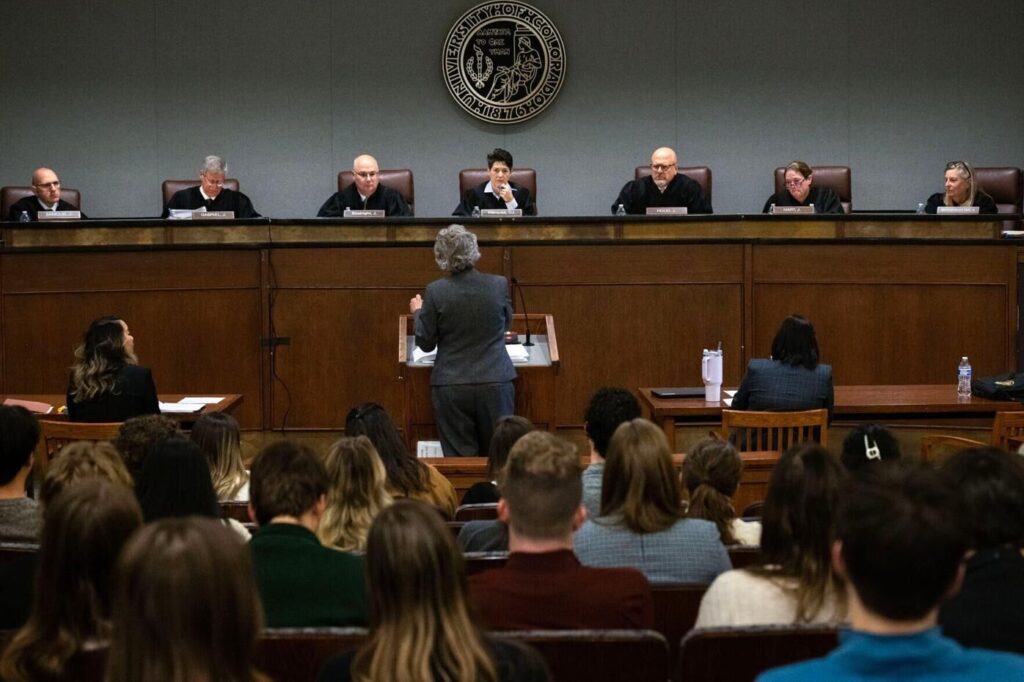
Colorado Supreme Court blocks ‘child-to-parent violence’ testimony in Boulder County case
Michael Karlik
michael.karlik@coloradopolitics.com
Updated 6 hours ago
The Colorado Supreme Court concluded on Friday that a Boulder County judge incorrectly green-lit a psychologist’s expert testimony when the defendant had not laid the necessary groundwork for the evidence. State law requires criminal defendants to provide notice and undergo...
Colorado justices concerned about retrying defendant after jury signaled acquittal
Michael Karlik
michael.karlik@coloradopolitics.com
Updated 3 hours ago
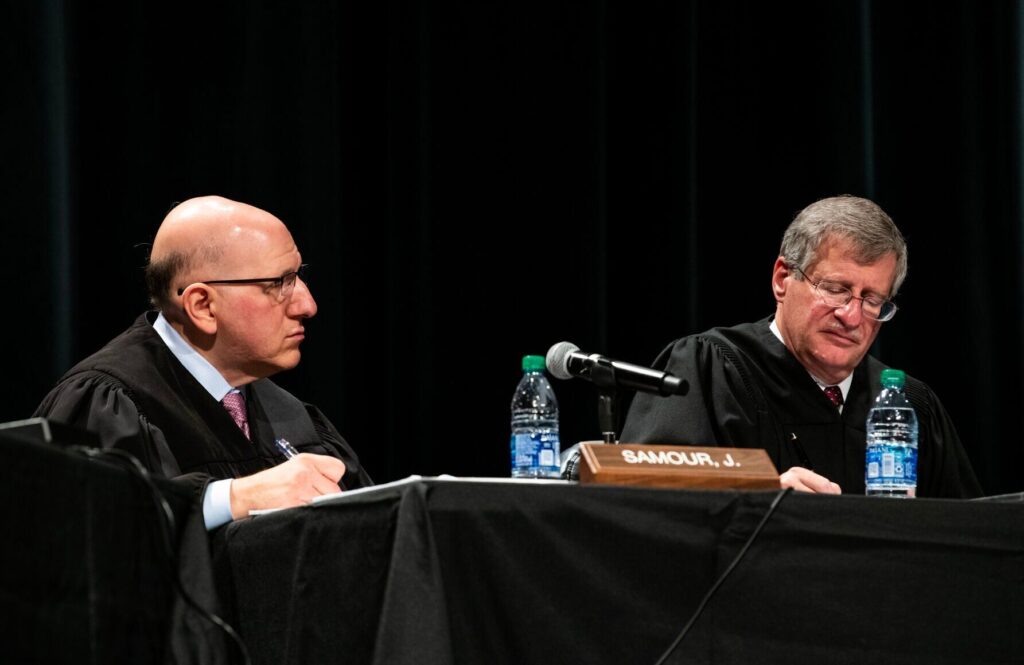
Some members of the Colorado Supreme Court appeared uncomfortable on Tuesday with allowing a criminal defendant to stand trial a second time after a Larimer County jury signaled it was deadlocked on some counts but found him not guilty of...

Colorado budget gets clean opinion from Office of the State Auditor
Marissa Ventrelli
marissa.ventrelli@coloradopolitics.com
Updated 5 hours ago
Colorado’s state auditor issued a “clean” opinion on the financial statements prepared by the government and higher education institutions, concluding they met generally accepted accounting principles and the documents were presented fairly. The state’s financial statements reported total assets of...

Missy Woods pleads not guilty; trial set for fall
Jenny Deam
jenny-deam@coloradopolitics.com
Updated 4 hours ago
The former Colorado Bureau of Investigation DNA expert charged with more than 100 felonies entered a plea of not guilty to all of them Wednesday in a packed Jefferson County courtroom. The plea was entered by her defense attorney Tom...
Colorado justices question process for parole board appeals
Michael Karlik
michael.karlik@coloradopolitics.com
Updated 10 hours ago
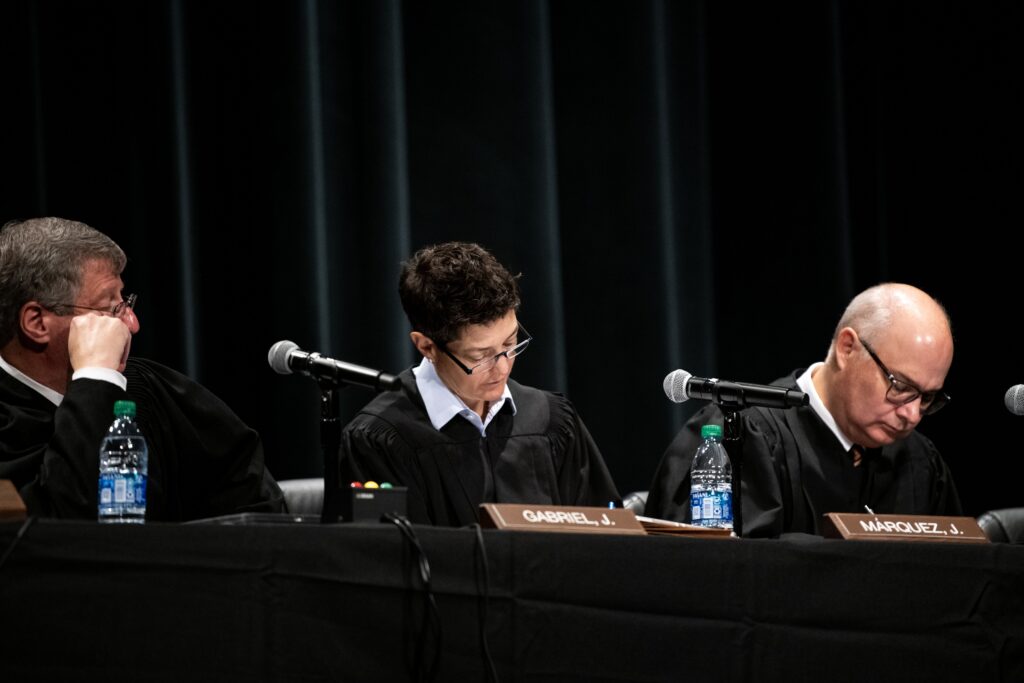
The Colorado Supreme Court considered on Tuesday whether criminal defendants whose parole is revoked must appeal the decision internally to the state’s parole board before seeking review by a judge. The process for returning someone to incarceration for violating the...

Leaders, past and present, inducted into Colorado Business Hall of Fame | NONPROFIT REGISTER
Joanne Davidson Special to Colorado Politics
joanne-davidson-special-to-colorado-politics@coloradopolitics.com
Updated 11 hours ago
JUNIOR ACHIEVEMENT ROCKY MOUNTAIN DENVER METRO CHAMBER OF COMMERCE Denver News: The men and women who were inducted into the Colorado Business Hall of Fame this year made their marks in different ways, yet they had this in common: They dared to...
PREV
PREVIOUS

Meet Mike Johnston, Denver's new mayor
When Mike Johnston became principal of Thornton’s Mapleton Expeditionary School of the Arts in 2005, he learned many of his students couldn’t claim in-state tuition if they enrolled in college after graduation because they were living in the country without proper immigration documentation. He recalled in a interview that his distraught and dispirited students were […]
Polis vetoes drug task force, defies Colorado legislature by seeking criminal justice panel reboot
The General Assembly’s decision to allow the Colorado Commission on Criminal and Juvenile Justice to lapse did not go over well with Gov. Jared Polis. Polis on Tuesday evening vetoed House Bill 1258, a plan by legislative Democrats to replace the commission after they opted against extending it beyond this fall. In a letter announcing […]