

Attorneys request trial delay for two Aurora officers charged in Elijah McClain’s death

Attorneys for two Aurora police officers facing homicide charges for the death of Elijah McClain want their July trial pushed back, saying they need more time to review the volume of evidence produced.
And lawyers for one officer have asked the judge to take another look at their request to require prosecutors lay out the specific actions they allege led to McClain’s injuries and make up the criminal charges, known as a bill of particulars.
Not guilty pleas for suspects in Elijah McClain’s death
Prosecutors from the Colorado Attorney General’s Office and defense attorneys tussled over the requests in a hearing Friday in Adams County District Court. Lawyers for the two officers, Randy Roedema and Jason Rosenblatt, say they need more time to review the mounting trove of evidence gathered by prosecutors, while prosecutors slammed the defense attorneys with an accusation of continuously using that as a reason to delay the case several times.
McClain, a 23-year-old Black man, died in a hospital in August 2019 days after three police officers forcibly restrained him, put him in a control neck hold and paramedics called to the scene injected him with the sedative ketamine. Officers had responded to a call reporting a person acting suspiciously as McClain walked home from a convenience store after buying iced tea, but he was not suspected of any crime. He wore a ski mask to keep warm because of anemia, according to relatives.
A statewide grand jury convened by Attorney General Phil Weiser indicted the two paramedics and three officers in late 2021: Peter Cichuniec, Jeremy Cooper, Nathan Woodyard, Roedema and Rosenblatt. The five face 32 counts altogether, including criminally negligent homicide, manslaughter and second-degree assault causing serious charges. Cooper and Cichuniec also face a count each of second-degree assault with a deadly weapon – ketamine – and unlawfully administering the sedative without consent.
Adams County District Court Judge Priscilla Loew ruled last July the grand jury had found probable cause for the indictments. All five have pleaded not guilty.
Judge Mark Warner, who has taken over the case, ordered three separate trials. Rosenblatt and Roedema are currently scheduled to go to trial together starting July 11.
In Friday’s hearing on a cornucopia of motions, senior assistant attorney general Jason Slothouber said prosecutors bear the risk of delays to the start of trial because they increase the chances of witnesses moving away, dying or their memories fading. He said the defense attorneys were previously granted several months-long continuances to scheduled court dates because they’ve said they need more time to review evidence and accused them of using it as a tactic to serve their own interests by delaying a trial as long as possible.
Parents of Christian Glass receive $19 million record settlement
“These arguments that ‘We can’t possibly be ready for trial because there’s simply too much’ is not right,” Slothouber said.
But defense lawyers countered during the hearing that prosecutors have prevented them from developing an effective defense by not clearly articulating how they believe the officers’ alleged actions contributed to McClain’s injuries and death.
Arguing for Warner to reconsider a request by Roedema’s lawyers for a bill of particulars, Elkus & Sisson partner Donald Sisson said the indictment is too vague for the defense to understand the theory prosecutors plan to present at trial.
“A proper indictment explains the who, what, when, where, why and how of the alleged conduct,” he said, later adding, “It’s not clear. Are they saying there was a bad stop, and because there was a bad stop, any subsequent force is unlawful?”
Prosecutors pushed back by saying it’s up to a jury to decide whether the officer bears responsibility for McClain’s death.
The indictment accuses Roedema of putting his body weight on McClain to hold him down, despite McClain’s pleas that he could not breathe, and of “cranking” McClain’s shoulder in a bar hammer lock, a tactic to hold his arm behind his back. It also claims the struggle with police caused hypoxia, hypoxemia and metabolic acidosis: Low oxygen, low oxygen levels in the blood and too much acid in the blood.
The argument about the indictment’s vagueness echoes a filing by attorneys for Woodyard, the third police officer, when they requested a probable cause review by Loew of the charges against him. They wrote in March 2022 several medical experts testified to the grand jury that the actions of the police officers did not contribute to McClain’s death.
An autopsy report by Dr. Stephen Cina originally characterized McClain’s cause and manner of death undetermined. But an amended autopsy report, released last year after a group of news organizations sued the Adams County coroner for its disclosure, concluded McClain would have most likely survived if not for the administration of ketamine. It was determined to be too high for his body weight. However, Cina still found his manner of death undetermined, not a homicide.
Cina’s amended report adds he saw “no evidence that injuries inflicted by police contributed to death” because McClain was conscious, able to speak and responsive following the neck hold and removal of the officers’ body weight from him.
Aurora police officers undergo new de-escalation, bias training
Warner did not rule Friday on requests to push back the trial or reconsider the request for a bill of particulars. He instead set a status hearing for next Thursday at 1:30 p.m.
Cooper and Cichuniec, the paramedics, are scheduled for an Aug. 7 trial. The trial for Woodyard has been set for Sept. 18.


‘Utterly no precedent’: Federal judge expresses concerns about Jeffco’s early appeal in jail death case
Michael Karlik
michael.karlik@coloradopolitics.com
Updated 1 hour ago
A federal judge shared his concerns on Monday about Jefferson County’s appeal of a routine procedural order in a constitutional rights case, which the plaintiffs argued could spawn appeal-related delays in countless lawsuits against the government. During a hearing, U.S....

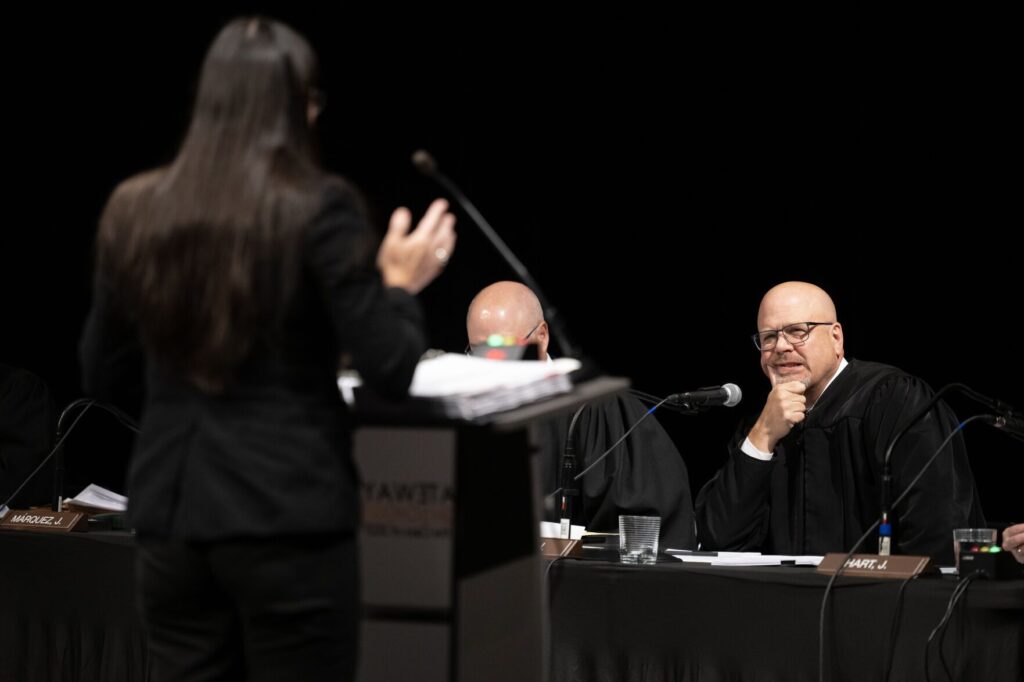
Justice Hart’s absence continues, state Supreme Court hears oral arguments | COURT CRAWL
Michael Karlik
michael.karlik@coloradopolitics.com
Updated 3 hours ago
Welcome to Court Crawl, Colorado Politics’ roundup of news from the third branch of government. One member of the Colorado Supreme Court remains on an unusual leave of absence, plus the court heard oral arguments in eight more cases last...

Suspect in 5-person fatal crash near Franktown faced dozen previous criminal charges, including assault
Sage Kelley
sage.kelley@denvergazette.com
Updated 7 hours ago
The man accused of carjacking a vehicle from a Regional Transportation District station, then crashing into a family of five and causing five deaths — including his own — has been identified. The Denver Gazette confirmed with multiple sources that...
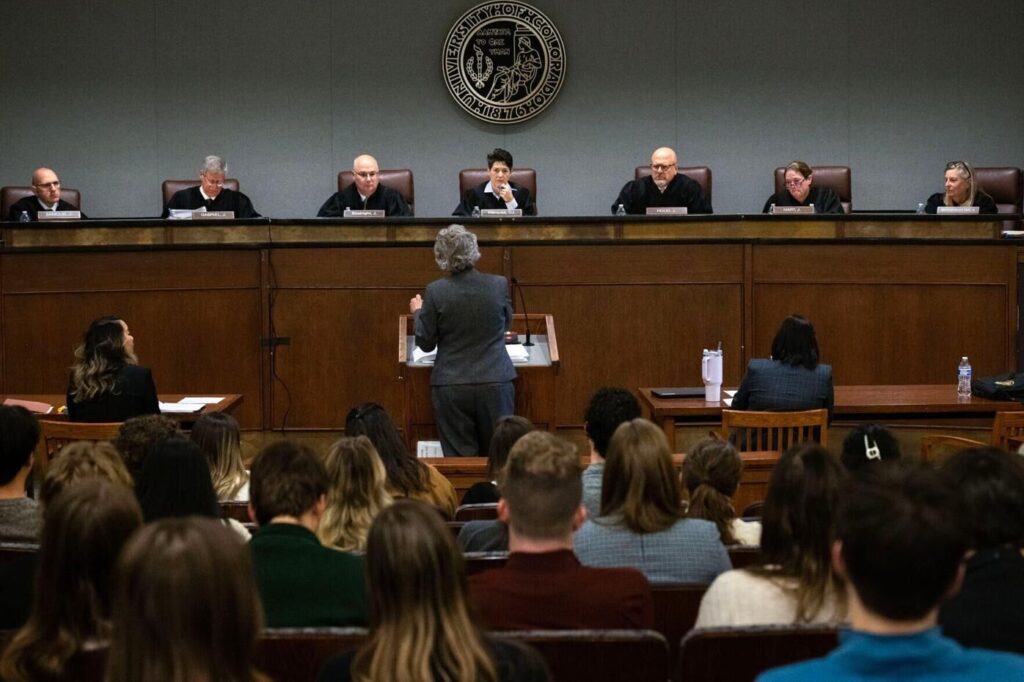
Colorado Supreme Court to examine whether corporations can be liable for ‘felonious killing’
Michael Karlik
michael.karlik@coloradopolitics.com
Updated 1 day ago
The Colorado Supreme Court recently announced that it will determine whether corporations can be liable for a “felonious killing,” meaning there is no limit to the damages they might pay for pain and suffering after causing a wrongful death. At...
Panel member ejected from one judge’s discipline case, as second judge challenges protocols in his proceeding
Michael Karlik
michael.karlik@coloradopolitics.com
Updated 3 days ago
One member of a panel adjudicating the misconduct allegations against a county court judge has been replaced due to her alleged non-responsiveness, at the same time a different county court judge is objecting to the intended protocols in his own...
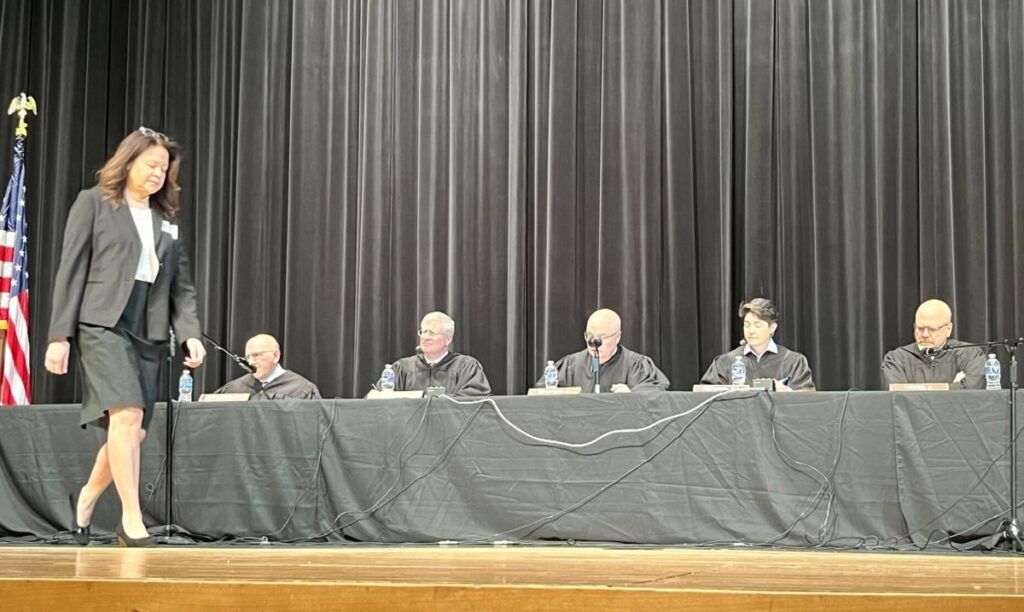
Colorado justices ponder scope of law curbing insurers’ ability to allege failure to cooperate
Michael Karlik
michael.karlik@coloradopolitics.com
Updated 5 days ago
Members of the Colorado Supreme Court pondered a question last week that could have sweeping ramifications for those making insurance claims: When the legislature required insurance companies to take certain steps before accusing policyholders of failing to cooperate in an...

Aurora court to hold warrant amnesty week for non-violent offenders
Kyla Pearce
kyla.pearce@gazette.com
Updated 5 days ago
Aurora court officials are holding Fresh Start Week at the beginning of December, when people with certain non-violent active warrants can get them cleared without arrest by showing up at walk-in court. Aurora Fresh Start Week will happen from Dec....
Colorado justices ponder ‘gotcha’ for defendant after messy process impacted mental health evidence
Michael Karlik
michael.karlik@coloradopolitics.com
Updated 5 days ago
Some members of the Colorado Supreme Court were uncomfortable last week with letting a defendant’s murder conviction stand after a series of missteps resulted in a trial judge blocking jurors from hearing an expert’s assessment of the defendant’s mental health....
Federal judge orders immigration agents to follow law on warrantless arrests, imposes requirements on ICE
Michael Karlik
michael.karlik@coloradopolitics.com
Updated 6 days ago
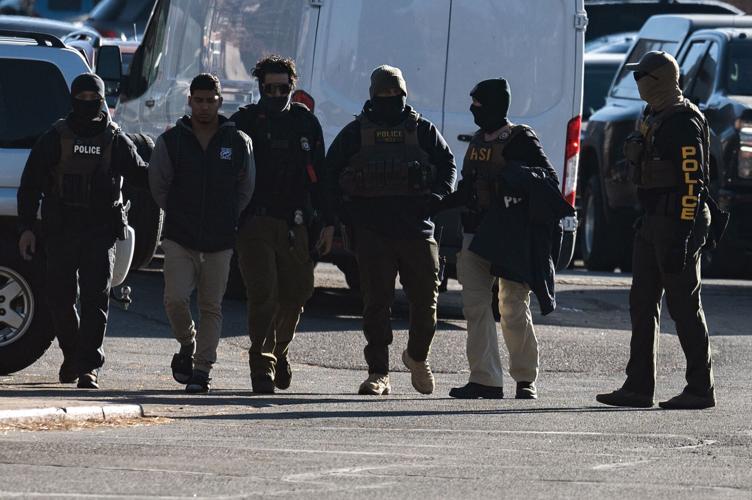
A federal judge on Tuesday ordered the government to follow the legal requirements for warrantless immigration arrests, finding a practice of agents in Colorado taking noncitizens into custody without evaluating the likelihood they are a flight risk. In a Nov....
Appeals court, for third time, confirms new trial necessary for Alamosa County judge’s public trial violation
Michael Karlik
michael.karlik@coloradopolitics.com
Updated 6 days ago
Colorado’s second-highest court confirmed for the third time last week that an Alamosa County judge violated a defendant’s constitutional right to a public trial, which requires the reversal of his convictions. The unusual number of opinions in Gilberto Andres Montoya’s...
PREV
PREVIOUS

Mike Johnston, Kelly Brough pledge to pursue 'best value contracting' if elected Denver mayor
The two mayoral candidates facing off in Denver’s upcoming municipal election have agreed to pursue changing the way the city awards contracts by considering factors that strengthen the local economy, not just on the lowest qualified bid, a group backing the change said this week. Mike Johnston and Kelly Brough each signed a pledge to […]

Colorado progressives see many victories, big losses in 2023 legislative session
The 2023 Legislature is perhaps the most progressive Colorado has seen. Democrats this year achieved the largest majority the state has seen in 85 years and many first-year lawmakers pushed the Capitol to the left ideologically. Colorado governor, leaders reflect on 2023 legislative session Despite this, the progressive agenda often faced an uphill battle throughout […]