

Colorado may join in nuclear power generation renaissance

As the push to decarbonize electric power systems accelerates, there’s a worldwide nuclear energy renaissance on the horizon, proponents say, and Colorado may be on the verge of joining in.
Across the globe, 413 nuclear power reactors in 32 countries currently produce about 10% of the world’s electricity. In recent years, the number of new reactors under construction has reached 56. The U.S. has the largest fleet, at 92 operating reactors, with two more completed and undergoing testing and expected to go online in the next two months.
Colorado’s future with nuclear power remains uncertain, but a study of reliable and affordable energy technologies to help support rural economies in northwestern and southeastern Colorado may shape that future.
Dubbed “Assess Advanced Energy Solutions In Rural Colorado,” HB23-1247, sponsored by Sen. Rod Pelton, R-Cheyenne Wells, awaits the governor’s signature after passing the House and Senate by overwhelming bipartisan margins. It requires the Colorado Energy Office to study options, including natural gas with carbon capture, geothermal, clean hydrogen, and advanced nuclear – as well as wind and solar – in both northwestern and southeastern Colorado.
“This bill is trying to capture all the above and see what makes sense, what is economical,” Pelton said. “Because in my mind, nuclear is the next real economic energy producer. These small modular nuclear reactors that are starting to come online show a lot of promise.”
Colorado Energy Office Director Will Toor, who testified in favor of HB23-1247, said exploring options for full-time generation in areas hit hardest by the closure of coal power plants and mines that have served the state for more than a century is a good idea.
“We think that geothermal, nuclear, clean hydrogen, gas with carbon capture, and long duration storage could all play a role and I think (we) are interested in exploring the role of all of those technologies,” Toor said.
He believes wind and solar can provide up to 85% of the energy Coloradans need, with grid stability and backup being provided at present by natural gas turbine generators.
“The primary firming resources right now are gas combustion turbines that are operated at very low capacity factors,” Toor said in an interview.
Gas turbines might have to operate only 5% of the time to provide power at peak demand or low renewable input times, he said.
“Then, as we look out from the 2030 to 2040 time period and trying to move from that 84%, 85% emission reduction towards a fully decarbonized grid, I think that’s the point at which modeling suggests that the lowest cost approach will likely include uses of zero or very low carbon firm generation,” Toor said.
He pointed to technologies that can potentially play a role in achieving the last 10% to 15% needed to get all the way to 100% carbon-free electricity generation, and that nuclear is one of those technologies.
Opposition remains strong
Opponents of nuclear power say there are better, cheaper, and safer options on the horizon – including utility-scale batteries and clean hydrogen as a fuel for power plants.
“The reality is nuclear is neither clean, safe, or smart, but a very complex technology with the potential to cause significant harm,” said Dr. Greg Jaczko, former chairman of the U.S. Nuclear Regulatory Commission, founder of MAXEAN, a clean energy development firm, and self-described “rogue nuclear regulator.”
“Perhaps most importantly, nuclear is just not part of any feasible strategy that could counter climate change,” he said.
Environmental organizations, including Greenpeace, have objected to the advancement of nuclear power since the 1970s.
“Nuclear energy has no place in a safe, clean, sustainable future,” Greenpeace declares on its nuclear issues web page. “Nuclear energy is both expensive and dangerous, and just because nuclear pollution is invisible doesn’t mean it’s clean.”
In Europe, Greenpeace is suing the European Commission, alleging nuclear power as a clean energy source violates the “do no significant harm” requirements of the EU climate law and the 2015 Paris Agreement.
While Edwin Lyman of the Union of Concerned Scientists said the group’s position is neutral but watchful, he voiced concerns about both nuclear power plant security and spent fuel storage, as well as the potential for cost overruns and extending the service life of existing reactors over concerns about durability and safety at the end of a potential 80-year lifespan.
Renewables sometimes aren’t reliable
Energy experts are skeptical that true carbon-free power generation can be achieved without nuclear power.
Wind and solar alone are incapable of providing the steady power that’s required to keep an electrical grid operating, said Charles Griffey, president of Peregrine Consultants of Seabrook, Texas, a utility resource planning consultancy. Griffey believes renewable energy sources don’t provide the capability to meet the second-to-second movements in the electric system to maintain a stable grid.
“You can’t maintain electrical reliability,” Griffey said. “You have to have capacity that can move up and down. And you also have to have something that’s called inertia on the system that helps buffer that. And inertia is provided by turbines that spin. Renewables don’t have inertia.”
Griffey added that renewable energy sources can require up to 80-90% of their nameplate capacity in firm power backup generators for when the wind isn’t blowing or when the sun isn’t shining.
Renewable proponents point out that utility scale battery technology has the ability to rapidly react to load changes and can provide load-following, grid stabilizing features.
Current lithium-ion utility scale batteries provide about 4 to 6 hours of electricity, according to the Energy Information Administration. Emerging technologies, such as iron-air batteries being tested by Xcel Energy, are promising as much as 100 hours of power.
Nuclear power’s stability and utility
Nuclear power is one of the few large-scale sources of low-carbon electricity that can operate continuously – regardless of weather conditions – and has the potential to play a significant role in reaching net-zero carbon emissions, according to industry experts, such as Everett Redmond, senior technical advisor at the Nuclear Energy Institute, the trade association for the commercial nuclear power industry in the United States.
“Nuclear has the capability to interface well with wind and solar,” Redmond said. “We need all of these generation sources, but nuclear actually has to be part of this mix in order to truly decarbonize the electricity and energy sectors.”
Today in the U.S., base-load power is primarily produced by coal and natural gas generating stations, with about 20% being provided by nuclear energy. According to the U.S. Energy Information Administration. In Colorado, 69.7% of electricity came from natural gas and coal in 2022, while renewables provided 30.3% of the state’s electricity last year.
U.S. Energy Information Administration officials said that, as of January, America’s 92 reactors produced 18.2% of all electric generation. Nuclear power provides 50% of America’s clean electricity, according to the IAEA.
“Having base load generation, even in an age of renewables, I would probably argue it’s even more important because those resources are still intermittent and we still have an obligation to provide 99.99% reliability, which is one of the reasons I think nuclear becomes an attractive base load resource,” Xcel Energy Colorado President Robert Kenney said in an interview with the Denver Gazette.
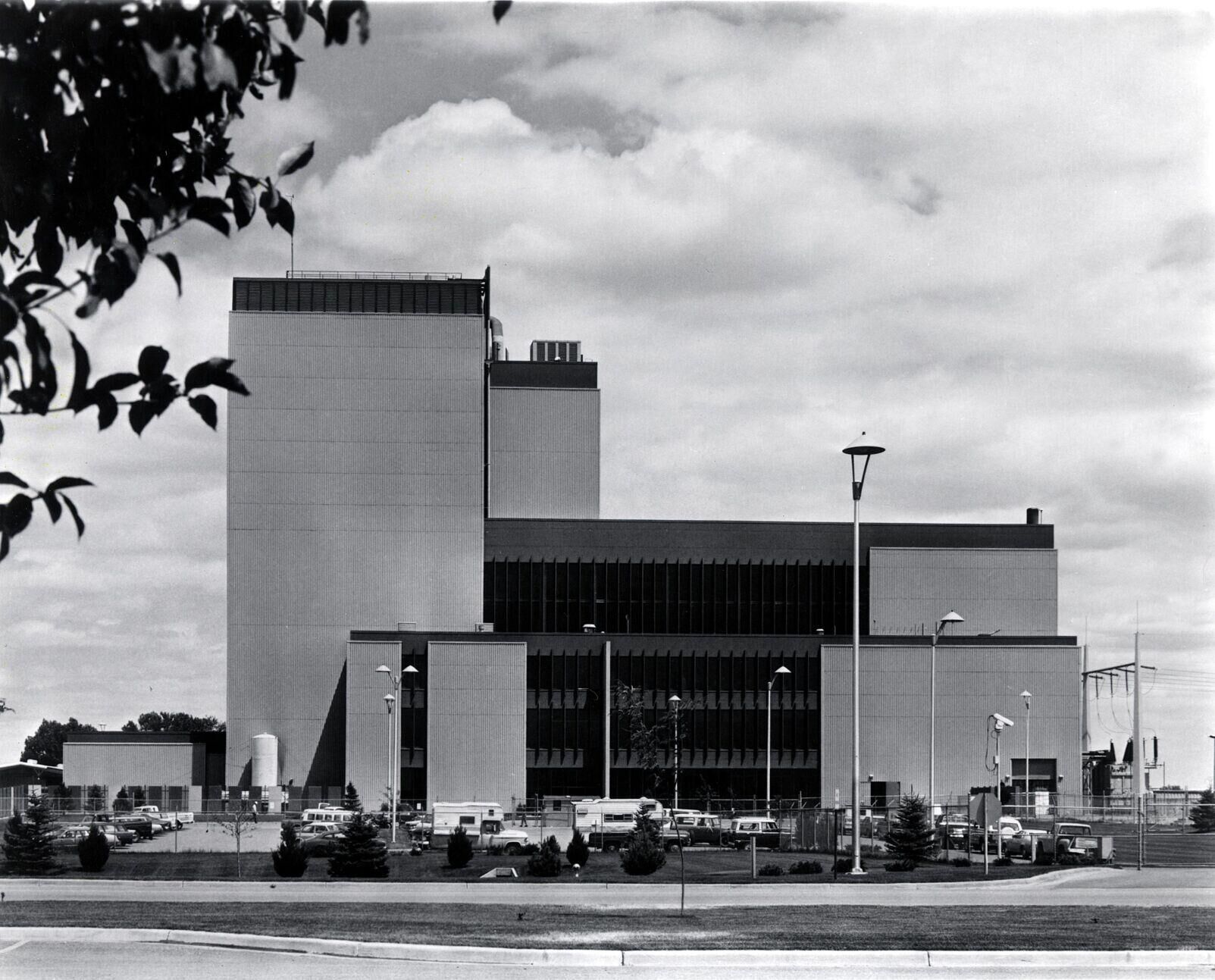
Xcel Energy has been operating nuclear power stations since the 1970s. Three reactors in two sites in Minnesota provide power to nearly 30% of Xcel’s customers in the Upper Midwest.
The U.S. Department of Energy, under the Biden administration, is promoting and providing funding for advanced nuclear reactor projects.
“Funded by President Biden’s Bipartisan Infrastructure Law, the $6 billion CNC program supports the continued operations of safe and reliable nuclear energy facilities, preserving thousands of good-paying clean energy jobs, while avoiding carbon emissions. As the nation’s largest source of carbon-free power, America’s current fleet of nuclear reactors is a vital resource for achieving the President’s goal of 100% clean electricity by 2035 and a net-zero emissions economy by 2050,” the Department of Energy said in a press release.
In September, the agency released a report analyzing active and decommissioned coal power plant sites that identified 315 sites nationwide, including five in Colorado, that are suitable for back-fitting with advanced nuclear reactors to replace the coal burners.
The agency declined to release the list of sites pursuant to a federal Freedom of Information Act request, citing confidentiality of the information and a concern that releasing it would dissuade cooperation with future agency information requests.
Modern technology reduces risk
Proponents of nuclear power said environmental concerns are overstated and that nuclear power is a safe, mature alternative to fossil fuel generation.
“Nuclear power is generally regarded as one of the safest forms of power generation. We fear it a lot. We worry about it,” said Dr. Jeffery King, professor of nuclear engineering at the Colorado School of Mines in an interview with The Denver Gazette. “But the reality is that no commercial nuclear power plant has ever killed anyone in the United States, or really even in the West.”
Pelton agrees. Nuclear technology has advanced in the years since the Chernobyl disaster in 1986, and today’s advanced reactors are safe, he said.
“Three Mile Island. I think every time nuclear is talked about that gets brought up again. And it’s looking at history instead of the modern technology,” said the senator. “We deal with technology every day. Our phones carry more storage than what a computer bigger than this room did when I was a kid. And we accept that technology, but nuclear we don’t seem to buy into. I think there’s a push to keep people scared to keep it tamped down.”
The Nuclear Regulatory Commission concluded in a 1981 report that “the reactor accident at Three Mile Island did not cause any injury or harm to the health of the public” but acknowledged that some individuals may have received small radiation doses.
Film director Oliver Stone, in his newly released movie “Nuclear Now,” argues nuclear power is not the threat everybody’s been led to believe it is.
“We’ve been trained from the very beginning to fear nuclear power and within our terror of radiation, it was in our subconsciousness,” Stone said in the film’s prologue.
State of the Art
Several advanced nuclear reactor pilot projects are currently underway in the U.S. Two, a Natrium molten sodium cooled reactor being funded by Bill Gates, and a NuScale VOYGR multiple reactor module plant being built for UAMPS – a consortium of cities and towns in Utah – are currently underway at the Idaho National Laboratory.
Pamela Gorman, director of nuclear strategy and policy for Xcel Energy, said, “I think the big question is, with advanced nuclear, where do the costs come down?
“I think what those pilots will allow us to do is better understand the technology, but it’ll also help us build better cost estimates that will prove their technology. We’re watching as these vendors refine their technology and we want to make sure that we understand the cost going forward.”
In California, an about-face regarding the need for base load nuclear power occurred when Gov. Gavin Newsom called for reversing the scheduled shutdown and decommissioning of California’s largest power generating station, the Diablo Canyon nuclear power plant near San Luis Obispo. The action was triggered by acute power shortages and blackouts in August 2020.
In September, California lawmakers voted to overturn the law requiring the plant’s shutdown in 2025. The U.S. Nuclear Regulatory Commission authorized a 5-year exemption for the plant, while the commission studies extending its life by up to 20 years.
“I think the fact that Diablo Canyon is extending its license is a signal to me that there’s a recognition from a federal or national policy level that advanced nuclear is going to play some sort of role in our future,” said Xcel’s Kenney. “And I think that actually portends well for the future of nuclear in the United States.”

Fishing closures are becoming routine as record heat warms rivers in the US West | OUT WEST ROUNDUP
Ernest Luning
ernest.luning@coloradopolitics.com
Updated 3 days ago
MONTANA Fishing restricted as rivers warm LIVINGSTON — Trout need cool water to survive, but record heat this summer has driven water temperatures to lethal levels for fish. Wildlife officials are banning fishing during certain hours on rivers and streams...
Colorado measure redirects sales tax revenue from sporting goods, equipment to conservation programs
The Denver Gazette
the-denver-gazette@coloradopolitics.com
Updated 14 hours ago
A proposal to redirect sales tax revenues from sporting goods and equipment toward wildfire and conservation programs will appear on the ballot this November, election officials in Colorado confirmed. The measure, if approved by voters, would reduce the amount available...
Firefighters’ deaths prompt debate over 100% suppression wildfire strategy
Rachael Wright, Special to Colorado Politics
rachael.wright@coloradopolitics.com
Updated 11 hours ago
On July 22, 2026, the chief of the U.S. Forest Service testified before a House Agriculture subcommittee that his agency pursues a “full suppression” strategy to contain all fires while they are still small, rather than allowing them to burn...

A summertime all-you-can-eat political buffet | SONDERMANN
Eric Sondermann
eric-sondermann@coloradopolitics.com
Updated 5 days ago
We find ourselves in the doldrums of August with a complete dearth of political news. Yeah, right. These days, that train never stops moving. It is a 24/7/365 express amplified by 24/7/365 media. Let me respond with one of my...
GOP worker pleads guilty to campaign funds embezzlement scheme | A LOOK BACK
Rachael Wright, Special to Colorado Politics
rachael.wright@coloradopolitics.com
Updated 5 days ago
Forty-five Years ago this week: After pleading not guilty to a Denver federal grand jury indictment of five counts of bank embezzlement, Eve Lynn Lincoln, a Colorado Republican Party employee, decided to plead guilty to one count: using bank credit...
Schoolchildren’s presence at child sex-related trial did not harm Arapahoe County defendant, appeals court says
Michael Karlik
michael.karlik@coloradopolitics.com
Updated 1 day ago
Colorado’s second-highest court decided on Thursday that the presence of a group of schoolchildren on the first day of a child sexual exploitation trial did not violate an Arapahoe County defendant’s constitutional right to a fair trial. Prosecutors charged Jerry...
Appeals court cites week-old Colorado law to reinstate child neglect case at child, father’s request
Michael Karlik
michael.karlik@coloradopolitics.com
Updated 1 day ago
Colorado’s second-highest court invoked a new state law for the first time on Thursday and reinstated a child neglect case that both the child and her father wished to reopen. House Bill 1227 took effect on Aug. 12, reversing a...
Democratic candidate in Colorado’s 4th CD urges long-term water planning
Marianne Goodland
marianne.goodland@coloradopolitics.com
Updated 1 day ago
The Democrat hoping to become the next representative of Colorado’s 4th Congressional District on Thursday made her case on the final day of Colorado Water Congress in Steamboat Springs. Eileen Laubacher, who spent 34 years in the U.S. Navy and...

Castle Rock council declines to censure member accused of misconduct
Nicholas Fogleman
nicholas.fogleman@denvergazette.com
Updated 3 days ago
A Castle Rock Town Council meeting Tuesday became consumed by allegations that a councilmember attempted to trade a town policy decision for the withdrawal of a recall effort against him. The allegations against Councilmember Mark Davis surfaced during public comment...

Proposal to cap Colorado income tax rate qualifies for November ballot
Thelma Grimes
thelma.grimes@coloradopolitics.com
Updated 18 hours ago
Election officials on Thursday confirmed that the proposal to cap the state’s income tax at the current rate submitted signatures and voters will consequently decide its fate this November. The fight over tax rates is part of the tug and...
PREV
PREVIOUS

High potency marijuana associated with psychosis, curbs anxiety, depression: researchers
Is high potency marijuana bad for individuals with preexisting mental health conditions? According to university researchers, the answer is yes, depending on the condition. But the researchers found it also offers some benefits, such as reducing anxiety and depression. Researchers at the Colorado School of Public Health at the University of Colorado Anschutz Medical Campus pointed […]

Colorado units 'orphaned' amid Space National Guard debate
When the Space Force was established in late 2019, more than 1,000 Air National Guard members focused on space missions were left behind. A debate about their future is still raging, leaving the airmen in limbo some three years later. Lawmakers are debating a new Space National Guard that could leave the 16 space-focused guard […]