

Colorado, federal officials sign agreement to aid conservation in Republican River
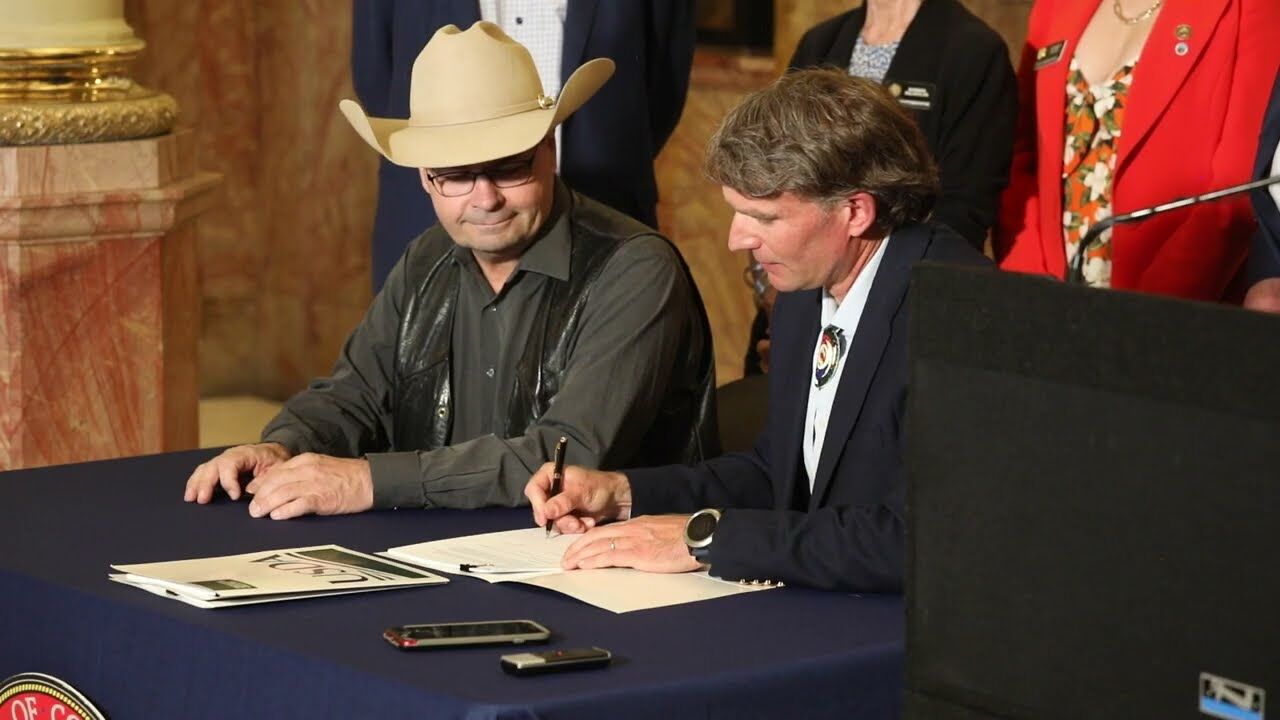
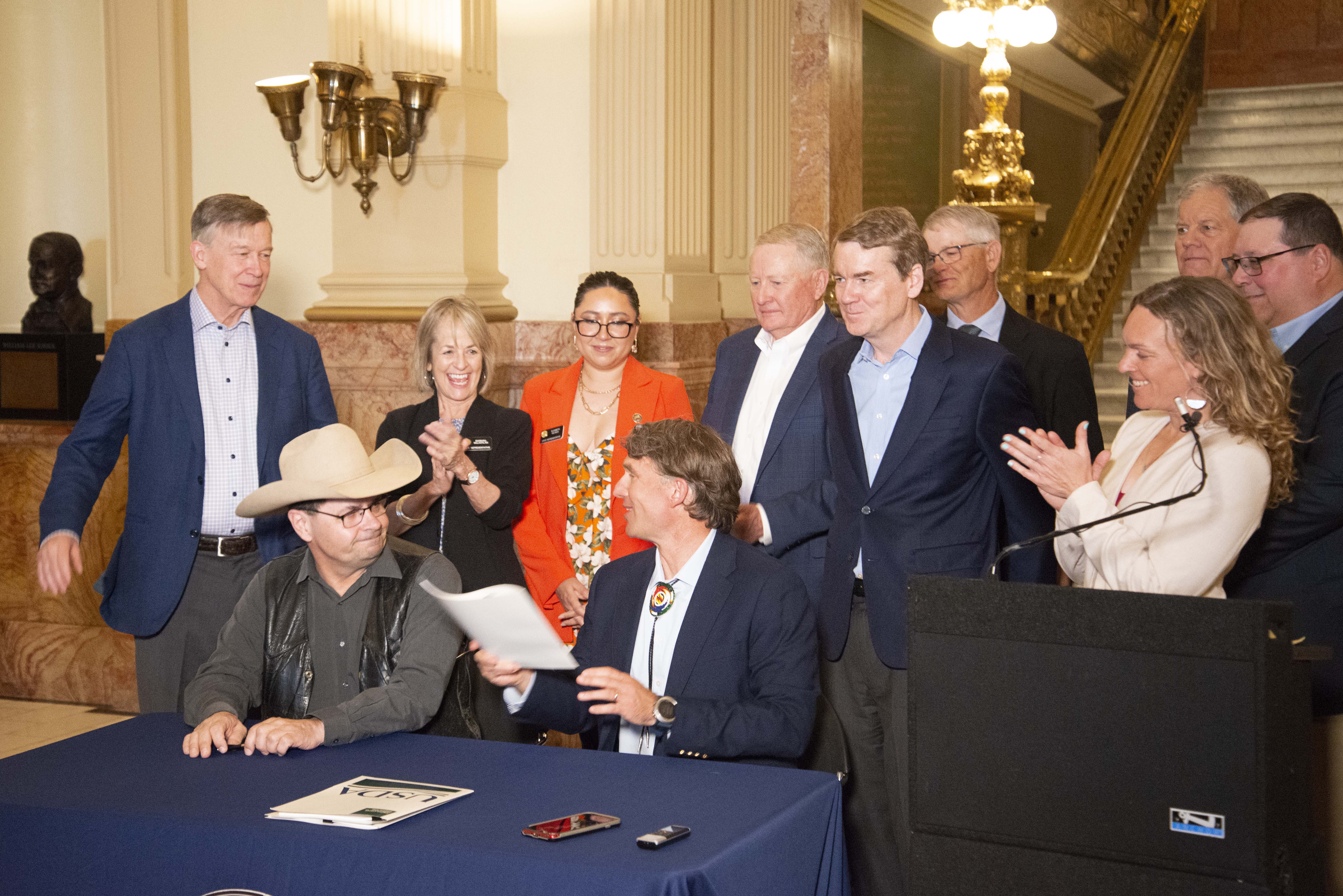
A bevy of state and federal officials came to the state Capitol on Monday to sign a first-in-the-nation agreement to help with water conservation efforts in the south fork of the Republican River on Colorado’s Eastern Plains.
At the same time, the agreement will help farmers who are allowing their groundwater wells to dry up to be able to continue farming on their land.
Colorado leaders announce new water conservation efforts for Republican RiverTomHellauer
tom.hellauer@denvergazette.com
https://secure.gravatar.com/avatar/a3dc80c0a9d47d671f1f3da872cc0a06?s=100&d=mm&r=g
The agreement is known as the Colorado Republican River Conservation Reserve Enhancement Program (CREP), which arose out of efforts started more than five years ago by then-Colorado Commissioner of Agriculture Don Brown, who worked alongside Mike Sullivan in the state engineer’s office.
In an exclusive interview with Colorado Politics, Brown explained how this program will work.
The agreement was inked between the Colorado Department of Natural Resources, which will administer the program, and the U.S. Department of Agriculture’s Farm Service Agency.
CREP is part of the USDA’s Conservation Reserve Program, the country’s largest private-land conservation program. Administered by the Farm Service Agency, it leverages federal and non-federal funds to target specific state, regional, or nationally significant conservation concerns.
Under the program, “environmentally sensitive” land is removed from production, and farmers and ranchers are paid an annual rental rate, along with other federal and non-federal incentives. Participation is voluntary, and the contract period is typically 10-15 years, according to the USDA.
Brown said Colorado’s CREP program is for irrigated acres.
“You’re retiring irrigated land, you give the well permit up to the state and no longer irrigate,” Brown said.
“It’s always been a concern of mine that we have highly-productive soils,” he said.
Colorado’s CREP allows for irrigated acres to be placed under the program, in exchange for a reduced payment, but permits continued farming with crops suitable for dryland farming, such as corn, wheat or sorghum, Brown said, adding that this scenario is better for younger farmers, too.
That reduced payment is equivalent to 75% of the rate on previously irrigated ground.
Brown believes this will also help with retiring wells in the current effort to satisfy the compact on the south fork of the Republican River with Nebraska and Kansas. That compact requires farmers in the Republican River Water Conservancy District’s south fork to retire 25,000 irrigated acres by 2030. So far, about 10,000 acres have been retired.
That progress has been helped along by a $30 million pot of money approved by the General Assembly last year to pay farmers to shut down groundwater wells.
While Brown doesn’t think farmers will line up around the block to get into the program, it offers an incentive to farmers with very good soil to retire their wells and allow them to continue to farm.
He also commended the efforts of USDA Commissioner of Agriculture Tom Vilsack, who, he said, had been a driving force behind the program.
Prior to Monday’s signing ceremony, Sen. Michael Bennet, D-Colo., said the program has been a long time coming for the farmers along the Republican River. He noted the contributions of Brown and Rod Lenz, the head of the Republican River Water Conservancy District, for bringing forward the challenges farmers faced between payment rates for dryland farming being too low and the existing program’s requirements too rigid, which he said discouraged farmers from enrolling.
In the 2018 farm bill, Bennet said, Congress – mostly under Brown’s instructions – worked to give the USDA the authority to allow dryland farming on retired irrigated acres.
Until today, however, that type of program had never been implemented anywhere in the country.
“This agreement will help Colorado enroll more farmers in the program to keep the state in compliance with the compact,” Bennet said.
It will conserve more water while keeping the land productive and ensure that agriculture continues to support the economies of small towns and rural communities on the Eastern Plains, Bennet added.
“These agreements are critical to helping our family farms and ranches adapt to a hotter, and drier future, and give them the chance to be able to pass their farms and their ranches to the next generation,” Bennet added.
The program still needs tweaking, which could happen in the farm bill currently under consideration in Congress, Brown told Colorado Politics.
Sen. John Hickenlooper, D-Colo., who also was on hand for the ceremony, said, “Every single person in this country eats the food that we grow in our, rural areas … Now we can have dry land farming, where it makes all the sense in the world.”
Dan Gibbs, executive director of Department of Natural Resources, said as drought and climate challenges stress water supplies in Colorado, the Republican River basin faces “eminent threat to involuntary and uncompensated curtailment of groundwater pumping.”
“We know that this would result in devastating impacts to your communities, your livelihoods, and the state’s agriculture economy. Maintaining compact compliance in the Republican river basin is critical,” he said.
Lenz, the head of the Republican River Water Conservancy District, said the agreement is not perfect.
“But it is certainly going the right direction,” Lenz told Colorado Politics.




With its water source dry, a southeast Colorado town’s clock is ticking
Savannah Eller
savannah-eller@coloradopolitics.com
Updated 2 days ago
The Cucharas is not a mighty river, but the people of La Veta knew they had a problem brewing when it ran dry at the beginning of June. “We’re getting by,” said La Veta Mayor Doug Brgoch. “It’s not great.”...
Colorado farmers, ranchers wrestle with hurdles amid extreme drought conditions
Shen Wu Tan (Special to The Denver Gazette)
shen-wu-tan@gazette.com
Updated 1 month ago
Some producers take drastic steps to adapt to dry climate, record-low snowpack This is the first time that Jim Magnuson, who operates a family farm in the rural town of Eaton, can ever recall planting only 75% of his acreage. ...

Colorado produce not tied to nationwide cyclospora outbreak, agriculture officials say
Marissa Ventrelli
marissa.ventrelli@coloradopolitics.com
Updated 2 months ago
There is no indication that the recent outbreak of cyclospora, a fecal parasite that has contaminated food and water across nearly every state, can be linked to produce grown in Colorado, according to the state’s Department of Agriculture. “Colorado growers...
With no 7-state deal, federal agency turns to 10-year Colorado River strategy
Marianne Goodland
marianne.goodland@coloradopolitics.com
Updated 3 months ago
The U.S. Department of the Interior is moving forward with a 10-year framework for managing the Colorado River after 2026, outlining a plan to issue new operating guidelines every two years as the seven basin states remain unable to reach...
Colorado on the hook for $1 million in costs to pay for wolves’ livestock kills
Marianne Goodland
marianne.goodland@coloradopolitics.com
Updated 4 months ago
After paying more than $700,000 in March to ranchers for livestock lost to wolves, the Colorado Parks and Wildlife Commission is poised to approve two additional claims totaling $262,000 at its meeting this week. Those approvals would bring total payouts...
Overtime for farms, school safety, public office rules: What’s new in Colorado law
Marianne Goodland
marianne.goodland@coloradopolitics.com
Updated 4 months ago
Gov. Jared Polis signed 25 bills into law Monday, bringing changes that will affect workers, families, schools, and local governments across Colorado. The new laws deal with a range of issues – from overtime rules for farmworkers to limits on...
While growth slows statewide, small-town populations in Colorado boom
Savannah Eller
savannah-eller@coloradopolitics.com
Updated 4 months ago
A proposed housing project could more than double the population of Calhan, a town of just 760 on the Eastern Plains outside Colorado Springs. For some small towns on the Front Range, it’s a familiar situation. Colorado’s overall population growth...
Governor’s wildlife commission picks face pushback ahead of Colorado Senate hearing
Marianne Goodland
marianne.goodland@coloradopolitics.com
Updated 5 months ago
Colorado’s largest coalition of hunters, anglers, and wildlife conservation groups is urging state lawmakers to reject two of Gov. Jared Polis’ latest nominees to the Colorado Parks and Wildlife Commission, setting up a contentious confirmation hearing before the Senate Agriculture...
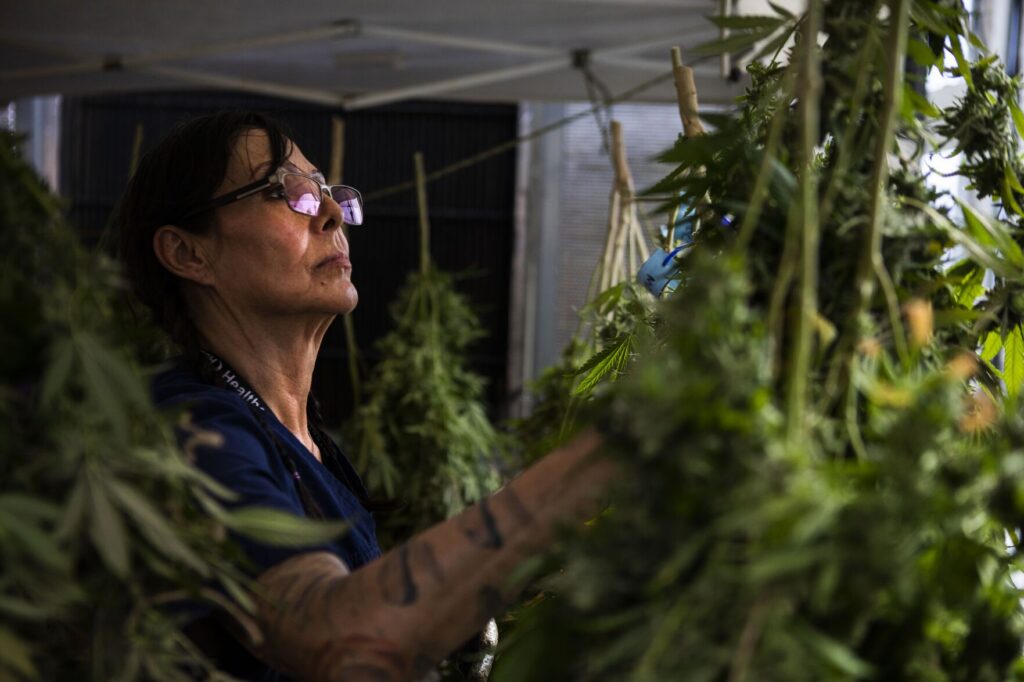
Cannabis overhaul introduced in Colorado Senate
Chris Osher
chris-osher@gazette.com
Updated 5 months ago
Colorado lawmakers on Wednesday introduced a measure that, if approved, would place a ballot proposal before voters this fall that contains changes backers say would improve consumer safety and overhauls how the marijuana industry is taxed. The proposed ballot initiative would fund a testing...
Colorado House passed a bill raising threshold for agriculture overtime by one vote
Marianne Goodland
marianne.goodland@coloradopolitics.com
Updated 5 months ago
The bill that would raise the overtime threshold for overtime pay for certain agricultural workers won the narrowest of votes Thursday in the Colorado House. Senate Bill 121 won a 33-32 vote, a dramatic difference from votes cast Wednesday on...
PREV
PREVIOUS

Colorado lawmakers face six dozen outstanding bills in session's final hours
The 2023 legislative session ends at midnight today, Monday, May 8. In that time, lawmakers will have to work through a remaining 72 bills as of Monday morning. For the 2023 session, 617 bills have been introduced, according to the Office of Legislative Legal Services. The last bill introduced in the Senate, SB 306, would […]

Kwame Spearman announces candidacy for Denver school board
Kwame Spearman made it official Monday. He’s running – after a failed Denver mayoral bid -for the at-large seat on the Denver Public Schools Board of Education. Early last month, Spearman stepped down as CEO of the Tattered Cover to explore a run for school board in November. The board has two at-large seats. The […]