

Legislation to increase scrutiny on experts in custody cases heads to Gov. Polis’ desk

A bill to increase scrutiny on the qualifications of experts on domestic violence and sexual abuse who wish to be admitted in child custody cases is headed to Gov. Jared Polis’ desk after clearing both chambers of the legislature last week. The bill codifies a new piece of legislation from the federal Violence Against Women Act that comes with financial incentives for states that adopt them.
Rep. Meg Froelich, a Democrat from Greenwood Village and prime sponsor of House Bill 23-1178, said the legislation is intended to begin correcting course on what she called a phenomenon of parents losing custody of their children when they make accusations of abuse against the other parent, and combat an imbalance of power that happens when abusive parents have financial resources to hire experts to refute accusations against them, she said.
4 recent murders: Colorado’s troubled family court system ignores children in peril
Courts must scrutinize the experience of professionals in working with victims of domestic violence or child abuse who seek to offer evidence about alleged abuse in custody cases, according to the bill.
“It’s all centered around abusers gaining custody in court, and the way that they are able to do that is through using parental alienation as a defense,” Froelich said, referring to a theory that parents sometimes manipulate their children to turn them against their other parent in some instances, including fabricating allegations of abuse.
It also clarifies that courts have to consider evidence of sexual or other physical abuse by an accused person, including restraining orders, arrests or convictions and other documentation. Froelich said that piece was added because lawmakers heard from parents who said judges believed abuse against them wasn’t relevant to their custody cases.
The legislation bars courts from restricting the custody of a parent who is competent, protective and not abusive solely to improve a relationship with the other parent.
The bill also prohibits reunification treatment that is predicated on cutting off the relationship between a child and a protective parent the child has a bond with. If a court orders reunification treatment, that treatment must be generally accepted and proven safe, effective, and to have therapeutic value, according to the legislation.
Another proposed piece of legislation, House Bill 23-1108, is making its way through the legislature to create a task force for studying training on domestic violence and sexual assault provided to judicial officers around the country to determine best practices for training in Colorado. Froelich said that bill is intended to work around Colorado’s constitution, keeping the powers of each government branch separate, limiting lawmakers’ ability to actually mandate training for judges. She acknowledged the legislative gymnastics that structure has created.
Maralee McLean, the executive director of family court reform organization Moms Fight Back, expressed her frustration about the hoops the legislature has had to jump through in order to push the judiciary to implement training on abuse for judges. She said that has been a main priority for advocates of family court reform, and they originally hoped to implement it through legislation passed two years ago known as Julie’s Law.
“It’s just very frustrating. Why would any judge want to sit on the bench when they aren’t trained in domestic violence, child abuse, child sexual abuse, coercive control, any of this stuff?” McLean said.
Colorado’s parenting evaluation industry profits as bitter child custody cases thrown into chaos
McLean was a key proponent of Julie’s Law, officially House Bill 21-1228, which established a mechanism of oversight for parental responsibility evaluators in the Office of the State Court Administrator.
Colorado’s network of evaluators – private professionals hired in some cases to make recommendations about custody – has historically had little practical oversight, accountability or opportunity for public scrutiny. Investigations by The Denver Gazette found judges have relied on inaccurate and biased reports by evaluators and put children at serious risk by giving custody to abusive parents.
House Bill 21-1228 directed the judicial branch to create an eligibility roster for evaluators, practice standards and a process for people to make complaints against evaluators. The legislation also established a requirement for parental evaluators and child and family investigators to complete six hours of training each on domestic violence and child abuse, and an additional four hours of domestic violence education every two years.
Denver Gazette reporter Chris Osher contributed to this report.


Atop taxes, here’s how much each Colorado resident pays in fees
Marissa Ventrelli
marissa.ventrelli@coloradopolitics.com
Updated 2 hours ago
Each Colorado resident paid nearly $5,000 in state-sanctioned fees last year, according to a report by a policy think tank. The report, which analyzed how fees have affected Colorado’s economy, found that fee revenue has more than tripled since 2008...

Colorado National Guard, Swiss Armed Forces celebrate partnership
Marissa Ventrelli
marissa.ventrelli@coloradopolitics.com
Updated 4 hours ago
Colorado’s National Guard marked a year of partnership with the Swiss Armed Forces at the Governor’s Mansion on Monday. “This anniversary marks one strong year of friendship and collaboration between the State of Colorado and Switzerland,” said Gov. Jared Polis....
Judge allows Trump to refile $15 billion lawsuit against the New York Times
Emily Hallas
emily-hallas@coloradopolitics.com
Updated 4 hours ago
A federal judge declined to dismiss President Donald Trump’s multibillion-dollar lawsuit against the New York Times on Monday, giving him roughly four weeks to amend his case after the outlet moved to toss it on First Amendment grounds. District Judge...

Gov. Polis celebrates Colorado’s first-place education ranking by U.S. News
Marianne Goodland
marianne.goodland@coloradopolitics.com
Updated 2 hours ago
Colorado officials said they have something to celebrate this week, in addition to the state’s sesquicentennial birthday on Saturday. U.S. News & World Report on Tuesday gave Colorado its top ranking for education efforts from pre-K to postsecondary, though it...
Denver detox center did not violate man’s rights with 10-hour hold, 10th Circuit says
Michael Karlik
michael.karlik@coloradopolitics.com
Updated 2 hours ago
The Colorado-based federal appeals court concluded on Tuesday that Denver’s detoxification facility did not violate a man’s rights by holding him against his will for 10 hours until his blood alcohol content was projected to reach zero. Unusually, Brian Garrett’s...

Federal judge clarifies ex-GOP treasurer candidate’s burden to prove defamation claims
Michael Karlik
michael.karlik@coloradopolitics.com
Updated 2 hours ago
A federal judge clarified last week that businessman and former Republican statewide candidate Brian Watson will need to surmount a higher hurdle in proving his claim that a party guest’s alleged description of him as a “criminal” amounted to defamation....

Denver City Council sends Xcel franchise deal to voters
Deborah Grigsby
deborah.smith@denvergazette.com
Updated 6 hours ago
This November, Denver voters will decide whether to renew the city’s longstanding franchise agreement with Xcel Energy. Members of the Denver City Council approved on Monday sending a proposed 20-year franchise agreement with Xcel that would deliver more than $180...
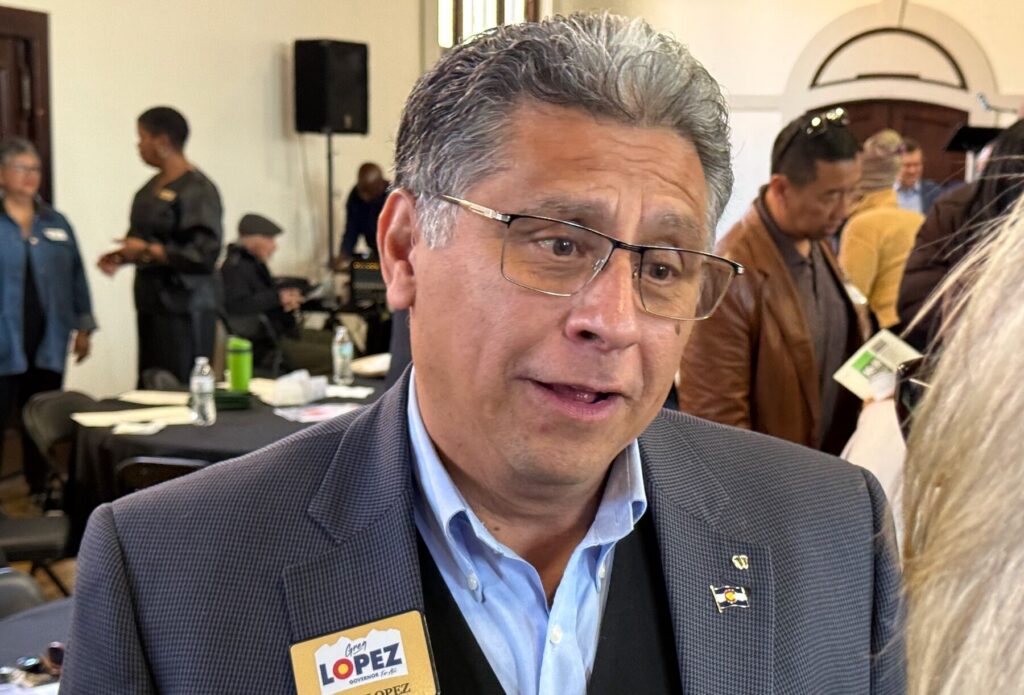
Independent gubernatorial candidate Greg Lopez, a former GOP congressman, qualifies for Colorado ballot
Ernest Luning
ernest.luning@coloradopolitics.com
Updated 2 hours ago
Unaffiliated gubernatorial candidate Greg Lopez, a former Republican congressman from Elizabeth who left the GOP to run as an independent, has qualified for the ballot by submitting enough petition signatures, the Colorado Secretary of State’s Office said Tuesday. He’ll face...

At Colorado’s 150th anniversary, leaders offer birthday wishes
Thelma Grimes
thelma.grimes@coloradopolitics.com
Updated 8 hours ago
As Colorado’s 150th anniversary approaches, leaders from across the state reflect on the spirit that binds the plains, mountains, Western Slope and Front Range — a shared commitment, they underscored, to opportunity, community, stewardship and personal freedom. Their tributes highlight...
Fauci’s private COVID-19 diaries: Six takeaways on fame, prize money and the lab leak debate
The Washington Examiner
the-washington-examiner@coloradopolitics.com
Updated 11 hours ago
Anthony Fauci’s private writings from 2020 and beyond portray a public health official who was fixated on his growing celebrity while privately grappling with a pandemic response he believed was chaotic, leaderless and consumed by internal rivalries. The writings of...
PREV
PREVIOUS

Colorado Public Employees' Retirement Association terminates director
The Public Employees’ Retirement Association (PERA) announced the termination of its executive director Tuesday. The Colorado PERA Board of Trustees voted unanimously Monday to terminate the employment of Executive Director Ron Baker, according to a news release. Baker’s termination comes after an almost two-month leave of absence, according to the release. PERA did not say […]

Guilty, yet innocent: Colorado justices examine requirements for unique type of plea
In 1970, the U.S. Supreme Court gave its approval to a special type of guilty plea, one in which a criminal defendant maintains his innocence while, at the same time, accepting a plea deal from the prosecution. Those “Alford pleas,” named after the case North Carolina v. Alford, are permissible when a defendant believes it is […]