

Don’t whitewash drug decriminalization | Denver Gazette
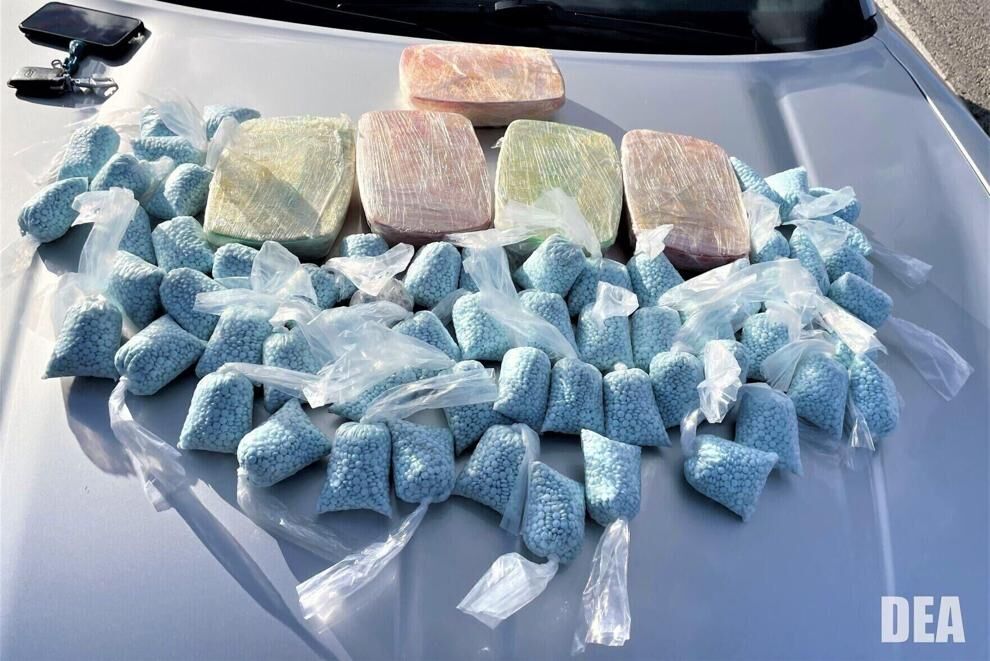
Ask veterans of law enforcement if dealing illegal drugs is a “victimless crime.” They’ll tell you each transaction can have endless ripple effects that wreak havoc and wreck lives throughout the community.
Seasoned dealers of ultralethal opioids such as fentanyl, or other ruinous hard drugs such as heroin or meth, tend to have mile-long rap sheets for other crimes. Often enough, violent crimes.
The users they sell to also might turn to crime to support their habit. And that’s not to mention what their addictions do to their ability to hold a job, drive a car – or raise a child.
Stay up to speed: Sign-up for daily opinion in your inbox Monday-Friday
And yet, Colorado’s “justice reform”-bound Legislature continues its relentless quest to water down penalties, curb incarceration and, essentially, to decriminalize crime – especially drug crimes. That’s even as our state reels from an epic crime wave alongside an epidemic of fentanyl overdoses.
The political fringe among ruling Democrats at the Capitol has been on a crusade over the past several years to legitimize illegal drug abuse and to coddle the criminals who supply the users.
The lawmakers have adopted wide-ranging new laws to implement their reckless agenda – the centerpiece being their 2019 legislation decriminalizing possession of Schedule I and Schedule II controlled substances, including fentanyl, to a mere misdemeanor.
A mounting public outcry over high crime in general as well as proliferating overdose deaths has slowed the crusade’s progress somewhat. Last week, a Senate committee wisely voted down a House bill that would have legalized “safe-injection” sites – where addicts would be given clean needles and coached by professionals in shooting up illegal drugs.
Yet, the radical campaign to normalize illegal, dangerous drug use proceeds. And now, the same advocates of normalization seek to justify their agenda in the face of public pushback. Lawmakers are hoping to cobble together a task force and commission it with a study that, in all likelihood, will yield “findings” that purport to justify the decriminalization binge.
House Bill 23-1258 would create the ineptly named “Evaluating the Costs Associated with Enforcement of Drug Laws and Incarceration for Drug Crimes Task Force” under the authority of the state Department of Public Health and Environment. It would meet four times and submit a report to the Legislature by Jan. 30.
Questions have arisen about the proposed task force’s makeup, which underrepresents law enforcement and skews toward the decriminalization and “harm reduction” movement.
The underlying problem with the proposal, of course, is the task force’s mandate. It aims to calculate the “costs associated with enforcement” – but not the costs of decriminalization. The task force’s work is a foregone conclusion. It will regard each time a hardened criminal drug dealer goes to prison as a “cost” and a failure of the justice system.
The task force won’t tally the savings to society of people who often enough have a history of theft and violence being taken off the streets. Nor will the task force’s work account for the benefit to a community of fewer lives and households being upended by illegal drug use and all that goes with it.
Public Safety Colorado, a law enforcement coalition of police and sheriffs opposing HB 23-1258, got it right in a recent news release: “Further reductions in the ability of law enforcement to investigate and arrest for drug activity will make our communities less safe and ultimately not serve those who need help in breaking their dependence on drugs.”
Let’s hope common sense prevails when the bill faces a hearing Monday in the Senate Judiciary Committee.
Denver Gazette Editorial Board


The Centennial State’s nuclear energy opportunity | OPINION
Michael Hancock
michael-hancock@coloradopolitics.com
Updated 8 hours ago
Colorado was given a clear opportunity earlier this year. On Jan. 28, the U.S. Department of Energy issued a Request for Information (RFI) seeking potential hosts for Nuclear Energy Innovation Campuses — an early-stage process designed to identify states serious...

More pain than gain in upending Colorado’s water-access laws | OPINION
Colorado Politics
colorado-politics@coloradopolitics.com
Updated 8 hours ago
By Greg Walcher and Mike King Colorado’s long-standing balance between public recreation and private property along rivers is now under renewed pressure. But changing stream access law would impose significant fiscal and legal costs for relatively limited new recreational benefit....

Guardianship is not a homelessness policy | OPINION
Colorado Politics
colorado-politics@coloradopolitics.com
Updated 8 hours ago
By Amelia McKeon The federal government’s proposal to expand guardianship for homeless veterans is being framed as compassionate. It is anything but. It is a dangerous shift toward using one of the most restrictive legal tools we have as a...
Ready to build next-gen clean-energy infrastructure —data centers included | OPINION
Colorado Politics
colorado-politics@coloradopolitics.com
Updated 7 hours ago
By Nate Bernstein and Jason Wardrip Colorado has long taken pride in doing things a little differently. We are a state of innovators, entrepreneurs and adventurers, and often lead the nation in new policies and new ideas. For generations, our...
Untraditional education platform makes fool out of state ed department | Paula Noonan
Paula Noonan
paula-noonan@coloradopolitics.com
Updated 17 hours ago
It’s April Fool’s week and ERBOCES, Education Re-envisioned BOCES, is one of the state’s biggest jokers. This untraditional education platform authorized through five founding school districts including Falcon School District 49 in El Paso County has played the Colorado Department...

‘Steel for fuel’ — but bill consumers for both | PODIUM
Colorado Politics
colorado-politics@coloradopolitics.com
Updated 17 hours ago
By Sarah Montalbano In 2018, Xcel Energy, an investor-owned utility serving millions of customers across eight states, was the first U.S. utility to pledge to deliver 100% carbon-free electricity by 2050. Eight years later, Xcel is pleading with Colorado...

Mental health education for coaches can help young athletes on and off the field | OPINION
Colorado Politics
colorado-politics@coloradopolitics.com
Updated 2 days ago
By Erin Harrop Youth athletics have become significantly more intense and competitive. The physical effects of training or injury can be grueling — but so are the mental health effects, particularly as performance pressure increases. As leaders and mentors, coaches...
Legislature busy sending lots of minor bills for governor’s signature | Hal Bidlack
Hal Bidlack
hal-bidlack@coloradopolitics.com
Updated 3 days ago
One of the benefits of being, well, I guess technically, some type of journalist writing here on Colorado Politics, isI get on interesting mailing lists. A while back, some kind soul in the governor’s office added me to the daily...
SB26-140 will protect access to rare disease treatments | OPINION
Colorado Politics
colorado-politics@coloradopolitics.com
Updated 3 days ago
By Amanda Boone There are moments in life that leave an indelible mark on your soul. For me, one came in the middle of the night when I took a full breath for the first time in over a decade....
Lawmakers hold the key to solving Colorado’s mental health crisis | OPINION
Colorado Politics
colorado-politics@coloradopolitics.com
Updated 3 days ago
By Ryan M. Burkhart The U.S. is currently in the midst of a mental health crisis, and here in Colorado, more than 28% of residents live with a mental health condition. Unfortunately, a majority of Colorado residents are currently locked...
PREV
PREVIOUS

Left-wing politicians burden the innocent | Colorado Springs Gazette
Colorado Gov. Jared Polis and his radically doctrinaire legislature should heed an observation of the venerable Scottish philosopher, economist and classical liberal sage Adam Smith. “Mercy to the guilty is cruelty to the innocent,” Smith wrote in “The Theory of Moral Sentiments.” In this timeless tome, Smith explains how love, affection and common perceptions of […]

A shameful use of the race card | OPINION
Floyd Trujillo If you can’t get traction on a cause, just use the race card and reporters will come knocking at your door. News reports that the Suncor Refinery is practicing environmental racism due to its location in a community of color is an example of non-profits and reporters using skin color to raise funds […]