

Caps on rental income requirements, security deposits pass Colorado Senate

A bill seeking to qualify low-income Coloradans for much more rental housing cleared the Senate on Monday.
Most landlords require tenants to earn at least three times the amount they charge for rent. In 2022, the average monthly cost of a one-bedroom apartment in Colorado stood at $1,364. That means tenants must make at least $49,104 to qualify. The individual median income for Coloradans is just under $37,000, according to the most recent Census data from 2020.
If made law, Senate Bill 184 would cap minimum income requirements for tenants to twice the cost of rent. It would also cap security deposits to the cost of two months’ rent, among other changes.
“Over the last decade, the cost of housing in Colorado has doubled, forcing folks to spend larger shares of their income on rent,” said bill sponsor Sen. Faith Winter, D-Westminster. “It’s time to put in place sensible guardrails to expand housing access for Coloradans of all income levels.”
The Senate approved the bill in a 22-12 vote on Monday. All Republicans voted against the bill and all but one Democrat voted in support of it.
Critics called the bill’s restrictions “excessive” and “punitive” for landlords. They said the bill will contribute to dis-incentivize landlords from renting.
The state legislature is currently considering several bills that sponsors say will lower housing costs for renters by cracking down on the actions of landlords. Some of those bills seek to prohibit evictions without just cause and cap housing fees for owning pets.
“You’re really going to end up hurting the very people you think you’re going to help,” said Rep. Janice Rich, R-Grand Junction. “What I’m hearing is a lot of people are just going to sell their rental properties and there’s going to be less for (renters) to choose from.”
Sen. Joann Ginal, D-Fort Collins, was the only Democrat to vote “no” on SB 184 Monday. She said the bill would open the door for renters to over-spend on housing, as well as make the agreement more risky for landlords.
“It sets the tenants up and the landlords up for failure,” Ginal said. “If someone isn’t financially secure enough to pay an upfront deposit, then they probably aren’t in any position to rent anyway.”
The general rule of thumb for budgeting rent is to spend a maximum of 30% of one’s monthly income on housing, with those who spend more than 30% being classified as cost-burdened.
But with the cost of housing in Colorado rising faster than incomes, fewer and fewer residents are able to adhere to this standard. In 2022, a study found that half of Colorado renters spent more than 30% of their income on housing – a rate above the national average and the eighth-highest of all states.
In addition, proponents of the bill said it would close a loophole landlords use to discriminate against people who use housing vouchers. While landlords can’t deny tenants for using housing vouchers, they can still require the tenant to earn a certain amount. Proponents said this is also particularly difficult for those who live on fixed incomes, such as older adults, veterans and people with disabilities.
The bill clarifies that tenants can raise discrimination as a defense in eviction proceedings, and it prohibits landlords from considering credit scores when evaluating potential tenants who use housing vouchers.
“Burdensome income requirements shut out too many hardworking Coloradans from the market,” said bill sponsor Sen. Tony Exum, D-Colorado Springs. “This bill will help ensure prospective renters aren’t being discriminated against because of their income while improving housing stability across Colorado.”
In committee, sponsors changed the bill in response to points opponents raised, including raising the income cap to two times rent, instead of the original 1.25 times rent, and raising the deposit cap to two months’ rent instead of the original one month’s rent.
Winter also fully removed several provisions of the original bill that would have, in part, required landlords to accept the first eligible tenant who applies; allowed tenants to pay deposits in monthly installments; and, prohibited landlords from considering a tenant’s financial status if they have paid their rent on time for the last three months or if they have a financially qualified co-signer.
The bill now goes to the House for consideration.



U.S. Rep. Lauren Boebert’s son arrested, faces charges of sexual exploitation of minor
Matt Kyle
matt.kyle@denvergazette.com
Updated 7 hours ago
U.S. Rep. Lauren Boebert’s son Tyler Jay Boebert has been arrested and accused of recording and sharing a video depicting himself having intercourse with a minor, according to court records. The case originated in Garfield County in Western Colorado and...

Colorado audit finds $175K wasted on unused state-issued cellphones
Marissa Ventrelli
marissa.ventrelli@coloradopolitics.com
Updated 10 hours ago
Colorado spent nearly $175,000 on government issued cellphones for employees of various departments that went unused last year, according to a recent state audit. About 400 of the 6,688 cellphones issued to state employees received no calls or texts and...

Adams County water district may proceed with cost-recovery lawsuit against Denver for contamination
Michael Karlik
michael.karlik@coloradopolitics.com
Updated 9 hours ago
A federal judge rejected Denver’s arguments last week for pausing or dismissing a lawsuit brought by an Adams County special district seeking to recover its costs for addressing water contamination as a result of Denver firefighting activities. In January, the...

Hunter shot Colorado wolf after mistaking it for a coyote, wildlife office says
Marianne Goodland
marianne.goodland@coloradopolitics.com
Updated 10 hours ago
Colorado Parks and Wildlife said Monday that a female wolf from British Columbia that died in January was shot by a hunter who mistook her for a coyote. The wolf, identified as 2504‑BC, was one of 17 wolves relocated since...
Federal judge declines to dismiss First Amendment retaliation claim against prison official
Michael Karlik
michael.karlik@coloradopolitics.com
Updated 6 hours ago
A federal judge agreed last month that an incarcerated Native American woman may pursue her claim of First Amendment retaliation against a prison official who allegedly interfered with her religious exercise. Yvonne Peterson resided at Buena Vista Correctional Facility for...
By the students, for the students: Sierra High School represents Colorado in developing national AI framework
Eric Young
eric.young@gazette.com
Updated 7 hours ago
To many, the recent, rapid development of generative artificial intelligence and its lack of frameworks and oversight may evoke comparisons to the unrestrained Wild West in the 1800s or the economic potential of the dot-com boom in the early 2000s....

Colorado’s troubled guardianship office pursues ‘cultural reset’
Marianne Goodland
marianne.goodland@coloradopolitics.com
Updated 7 hours ago
Colorado’s guardianship program, long criticized for mismanagement and high staff attrition, is undergoing a “cultural reset,” as its new director works to repair partnerships and prepare for a major expansion under recent legislation. Created by lawmakers in 2017, the Office...
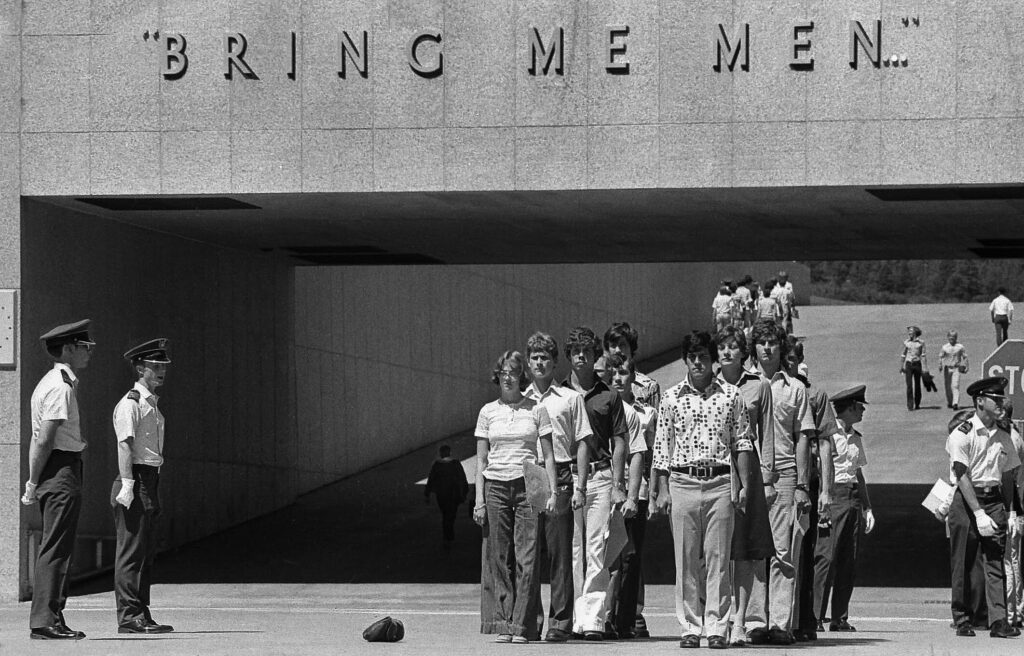
Fifty years later, women reflect on first coed class at the Air Force Academy, struggle for equality
Mary Shinn
mary-shinn@coloradopolitics.com
Updated 2 days ago
When the first female Air Force Academy cadets arrived 50 years ago this summer, they stood in front of an enormous sign on campus that read “Bring me men.” In the shadow of that sign, Kathleen Utley Kornahrens, one of...

As Lake Powell shrinks, marinas are having to adapt to dwindling water levels | OUT WEST ROUNDUP
The Associated Press
the-associated-press@coloradopolitics.com
Updated 5 days ago
ARIZONA Reservoirs near record lows PAGE — The Colorado River’s Lake Powell, the second largest reservoir in the U.S., is shrinking. A record-dry winter and extreme heat — as well as decades of overuse, chronic drought and climate change —...

U.S. Senate OKs funding bill to avoid government shutdown
Wire Services
wire-services@coloradopolitics.com
Updated 3 days ago
Hemp provision became point of contention WASHINGTON • The U.S. Senate in an overnight vote Saturday approved a short-term measure to fund federal agencies into early December and avoid a government shutdown during the middle of campaign season. The late-summer...
PREV
PREVIOUS

Lauren Boebert's Democratic challenger Adam Frisch towers over the competition in 1st quarter fundraising
If there was any doubt that Colorado’s 3rd District will be home to the state’s most expensive congressional race next year, it’s likely been removed after first-quarter fundraising totals posted over the weekend. Adam Frisch, the leading Democrat challenging Republican U.S. Rep. Lauren Boebert’s bid for a third term, outraised the incumbent by nearly $1 […]

Former public defenders offer crash course on rights: Remain silent when interacting with cops
On a Saturday morning in Aurora, more than a dozen audience members – mostly people of color – received a crash course in how to interact with police without compromising any constitutional protections. The overarching message: You have the right to remain silent, and you should use it. “The idea of talking yourself out of something is […]