

Appeals court sides with Weld County judge who dismissed criminal case for speedy trial violation

Colorado’s second-highest court last week sided against Weld County prosecutors and agreed a trial judge correctly determined the consequence of his failure to declare a COVID-19-related mistrial was to dismiss the criminal charges against a defendant.
The federal and state constitutions guarantee defendants the right to a speedy trial. In Colorado, that means the government must bring defendants to trial within six months of a not guilty plea. The legislature has provided one consequence for a violation: dismissal of the charges, with a bar against any future prosecution.
In August 2021, Thomas J. Early pleaded not guilty to alleged sex offenses and his speedy trial deadline was Feb. 12, 2022. On Jan. 19, the chief judge in Weld County temporarily halted jury trials due to increased COVID-19 positivity rates.
That same day, Early and the prosecution appeared before District Court Judge Shannon D. Lyons. The judge acknowledged the suspension of trials, then reset Early’s trial date to late March. After Feb. 12, the defense moved to dismiss the charges, noting Lyons had never declared a mistrial and so the government had violated Early’s speedy trial right under Colorado law.
Lyons agreed and terminated the case.
Early in the COVID-19 pandemic, the Colorado Supreme Court enacted a rule that permitted trial judges to declare mistrials if jury pools could not safely be called during a public health crisis. A mistrial would effectively provide extra time toward the calculation of the speedy trial date.
However, in 2021 the Supreme Court clarified that if judges declare a mistrial under the rule, they must “explicitly do so.“
The Weld County District Attorney’s Office argued to the Court of Appeals that Lyons did not need to specifically use the word “mistrial” when he rescheduled Early’s trial date outside the deadline.
“In the case at hand, Judge Lyons was clearly declaring a mistrial in fact as evidenced by the circumstances and other statements made,” wrote Deputy District Attorney Arynn E. Clark.
A three-judge panel for the Court of Appeals disagreed.
“Despite issuing two written orders, the court never indicated that it had declared a mistrial in fact – i.e., that its intention was to declare a mistrial,” wrote Judge Elizabeth L. Harris in the March 30 opinion. “As a result, Early’s right to a speedy trial was violated, and dismissal of the charges was mandatory.”
The case is People v. Cox.


Federal judge hears ICE agents’ confusion about law, injunction on warrantless arrests
Michael Karlik
michael.karlik@coloradopolitics.com
Updated 11 hours ago
A federal judge heard testimony on Tuesday from U.S. Customs and Immigration Enforcement agents in Colorado, who had trouble describing the requirements of his recent injunction and the training they received on making warrantless arrests pursuant to the law. On...

10th Circuit dismisses challenge to Colorado legislature’s decorum rules
Michael Karlik
michael.karlik@coloradopolitics.com
Updated 17 hours ago
The Denver-based federal appeals court concluded on Tuesday that Colorado lawmakers cannot be sued for creating and enforcing rules of decorum that circumscribe the public commentary allowed at legislative committee hearings. A three-judge panel of the U.S. Court of Appeals...
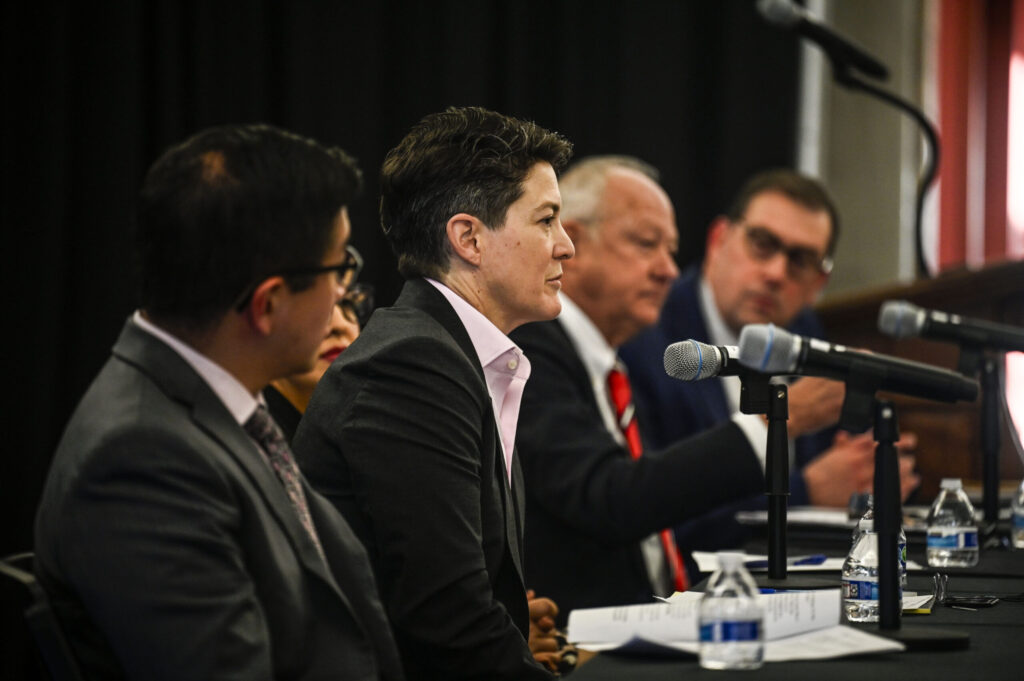
Colorado Supreme Court blocks ballot initiative defining ‘fees’
Michael Karlik
michael.karlik@coloradopolitics.com
Updated 2 days ago
The Colorado Supreme Court blocked a proposed ballot initiative on Monday that would have required voter approval for new fees above a certain threshold, while also enshrining a definition of “fee” into the state constitution for the first time. Chief...
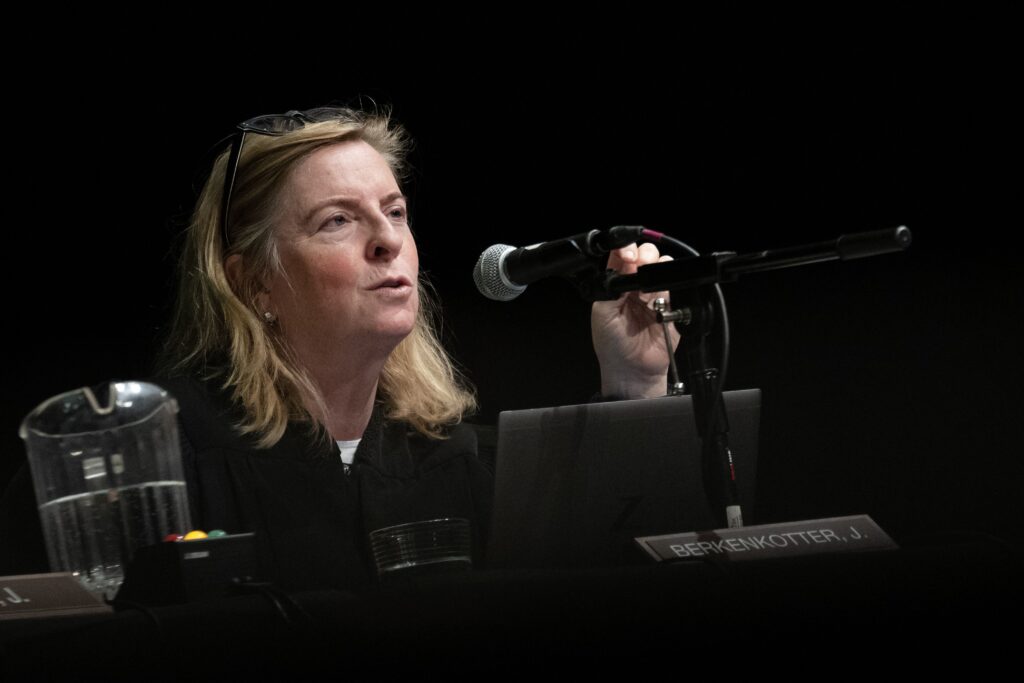
Colorado justices, by 5-2, say Longmont detective did not violate suspect’s Miranda rights
Michael Karlik
michael.karlik@coloradopolitics.com
Updated 2 days ago
The Colorado Supreme Court’s majority ruled on Monday that a Longmont detective did not coerce a suspect into talking by making references to how a judge would look at his character, and by suggesting he may get out of prison...
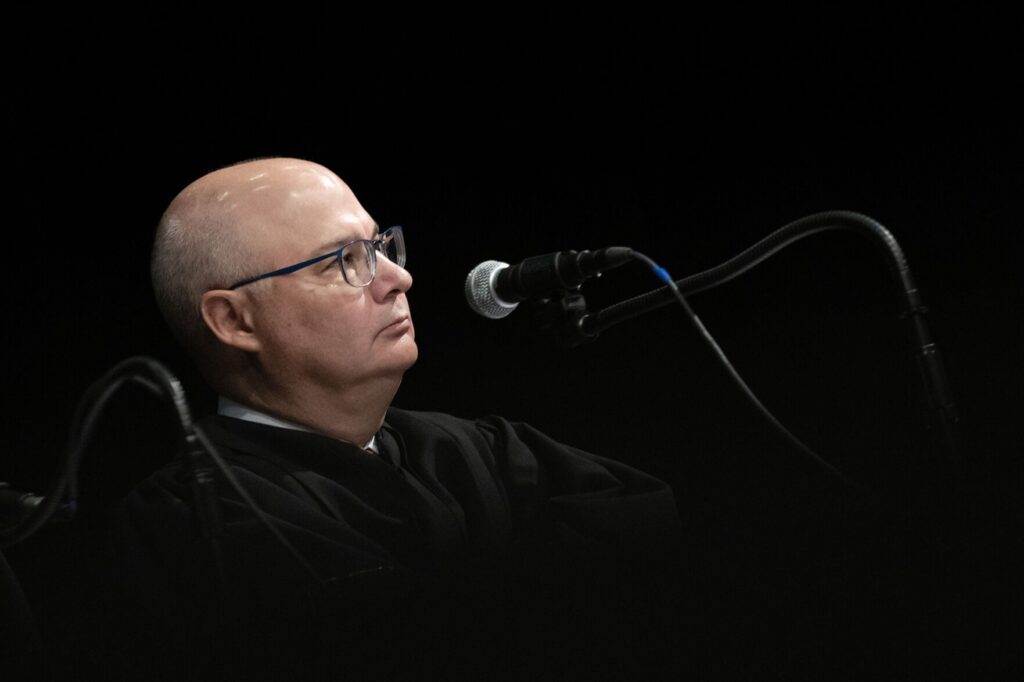
Colorado justices find Fort Collins police lacked probable cause to arrest suspect in park
Michael Karlik
michael.karlik@coloradopolitics.com
Updated 2 days ago
The Colorado Supreme Court agreed on Monday that Fort Collins police lacked probable cause to arrest a man for a child sex offense based on his presence in a public park around the time they intended to meet with their...

Supreme Court to hold oral arguments, discipline commission releases report | COURT CRAWL
Michael Karlik
michael.karlik@coloradopolitics.com
Updated 2 days ago
Welcome to Court Crawl, Colorado Politics’ roundup of news from the third branch of government. The state Supreme Court is holding oral arguments this week, plus Colorado’s judicial discipline commission released its annual report. Colorado Supreme Court news • The Supreme...
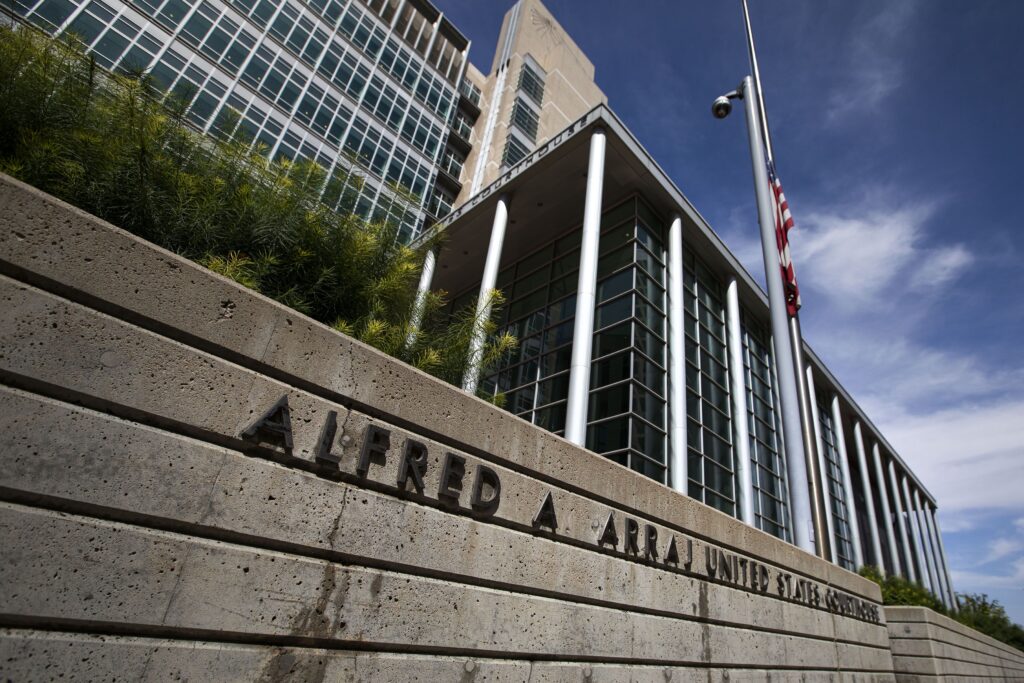
Federal judge dismisses developer’s challenge to Denver affordable housing ordinances
Michael Karlik
michael.karlik@coloradopolitics.com
Updated 5 days ago
A federal judge dismissed a homebuilder’s constitutional challenge on Tuesday to a pair of Denver ordinances that impose obligations on developers related to the affordable housing demands created by new construction. Two related companies, redT Homes and redT Capital Partners,...

10th Circuit distances itself from prior decision making it easier to toss prisoner lawsuits
Michael Karlik
michael.karlik@coloradopolitics.com
Updated 5 days ago
The Denver-based federal appeals court distanced itself on Wednesday from its own recent decision that made it easier for prison officials to end civil lawsuits by transferring incarcerated plaintiffs between facilities. A three-judge panel of the U.S. Court of Appeals...

Appeals court overturns Douglas County vehicular homicide conviction due to faulty jury instructions
Michael Karlik
michael.karlik@coloradopolitics.com
Updated 3 days ago
Colorado’s second-highest court overturned a defendant’s vehicular homicide conviction and 12-year prison sentence on Thursday after determining a Douglas County judge omitted key language from the jury instructions that could have resulted in a different outcome. James Paul McDonald was...
Federal judge dismisses malicious prosecution claim against former Denver prosecutor
Michael Karlik
michael.karlik@coloradopolitics.com
Updated 5 days ago
A federal judge concluded on Monday that a former Denver prosecutor could not be sued for allegedly causing the arrests of two plaintiffs after they failed to appear for trial on the scheduled date, even though the trial had been...
PREV
PREVIOUS

Denver election results live blog: Denver mayoral runoff appears set after latest results release
Editor’s note: The races in this year’s municipal election include various seats, notably the mayor, city council, clerk and recorder, and auditor. Denver voters will also decide the fate of local ballot measures. Polling centers closed at 7 p.m. Check here for live updates. April 6, 4:31 p.m. – Calderon acknowledges defeat in Denver mayor race Lisa Calderon […]

Denver District 9 candidates gearing up for runoff
The closely watched District 9 Denver City Council race has remained a nail-biter as more ballots are being reported, but incumbent Candi CdeBaca began gaining a lead after initially trailing one of her two opponents. On Thursday morning, the race was in a near tie. CdeBaca held at 43.95% of votes counted, while challenger Darrell […]