

Pending bill denies Colorado women a true choice | OPINION

As OB/GYNs, we’ve shared with tens of thousands of women the incredible joy of pregnancy, the fear of a complicated pregnancy, the concerns of unplanned pregnancies, and the consuming grief of loss of a preborn baby or a child. We don’t take any of it for granted.
We also do not take lightly SB23-190 – Colorado’s legislation that threatens to limit the ability of Pregnancy Resource Centers (PRCs) to advertise and removes women’s right to choose to continue pregnancy by Abortion Pill Reversal (APR). The bill would have devastating consequences.
The bill’s title, “Deceptive Trade Practice Pregnancy-Related Service,” implies application to all pregnancy-related services but actually only targets PRCs. We have never witnessed deception or coercion in a PRC, but Colorado already has a deceptive trade practice law for these situations. If this bill is deemed necessary, it should protect women in ALL pregnancy-related services – or the bill itself is deceptive.
One of us (Dr. Wheeler), having previously performed abortions, believed PRCs employed deceptive and coercive practices because of hearsay. Then one day, I entered a PRC as a skeptic, and was shocked to find a compassionate, non-coercive, medically accurate, factual, caring, non-judgmental and unhurried approach to patients. PRCs exist not to limit choice, but to help women overcome obstacles leading them to feel abortion is their only choice. Without alternatives to abortion, like those offered by PRCs, there is no choice for these women.
The more than 2,700 PRCs in the U.S. provide a variety of free resources to patients, including pregnancy tests, STD testing, ultrasounds, birth control counseling, parenting classes, housing and baby-care items. In 2019 PRCs provided more than $266 million in services. Medical care at PRCs is supervised by a licensed physician, just like it is in abortion clinics. Ultrasounds offered at PRCs are performed by trained medical professionals and comply with medical standards. Only 17% of U.S. PRCs receive government funding, and PRCs do not generate profits and have no financial motive to coerce or deceive.
On the other hand, abortion is a lucrative business. Planned Parenthood and other abortion clinics don’t offer free resources or help for women choosing to continue a pregnancy. The government provides 37% of Planned Parenthood’s funding. Their 2020-21 Annual Report showed excess total revenue over expenses of $69.7 million and revealed abortions made up 96.6% of their pregnancy resolution services. Planned Parenthood’s financial benefit requires greater protection from deceptive and coercive practices.
SB23-190 also aims to prohibit APR. APR is a protocol that administers progesterone to women who have started but not completed their chemical abortion drugs. Some women DO immediately regret their abortion decision, and these women deserve the right to do everything they can to continue their pregnancy. Fortunately, scientific evidence shows APR is both safe and effective:
- There is biological plausibility. The first of the two abortion drugs, mifepristone, reversibly blocks the progesterone receptor, causing breakdown of the placenta, and the death of the developing baby. The manufacturer’s studies demonstrated the block is reversible.
- Progesterone in similar doses has been safely used for more than 50 years to treat women with recurrent miscarriage, in vitro fertilization, infertility and for preterm birth prevention.
- A 1999 FDA extensive review reported progesterone is safe in pregnancy. A 2008 American Society of Reproductive Medicine clinical bulletin agreed.
- A case series of more than 750 women given APR resulted in 64% to 68% live birth when taken within 72 hours of mifepristone (alone). Case series are a common research method when it is unethical or not feasible to perform a randomized placebo-controlled study.
Abortion pill reversal is now available through more than 1,300 providers in all 50 states, and in 86 countries. In the U.S., more than 4,000 women have successfully saved the lives of their unborn babies, with no increase in birth defects, and a significant benefit of reduction in preterm birth.
Recently one of us (Dr. Trandem) saw a woman in a PRC in tears asking for APR. She had three beautiful children and reported she felt like she just couldn’t handle a fourth and ended up taking the abortion pill hastily. She was beside herself with regret and begging us to help her save her unborn baby. We performed an ultrasound and saw her baby still had a heartbeat, and we immediately gave her the progesterone medicine to help support her pregnancy. We have since seen her weekly, and now she only sheds tears of joy every time we see her baby growing healthily! APR empowers women to save themselves and their families.
Colorado law states a woman has the right to continue her pregnancy. When a woman desperately wants to save her baby’s life after taking mifepristone, it is unethical and frankly cruel to not offer APR, a safe, commonly used medication that at least doubles the chance her baby will survive.
We urge you to contact your House Representatives now and ask them to oppose SB23-190.
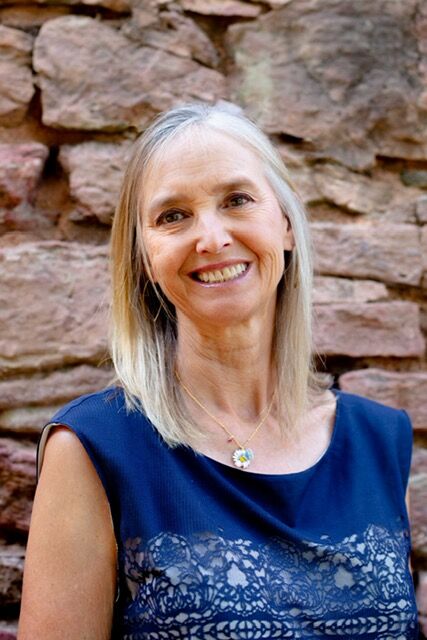
Catherine Wheeler, M.D., is a board-certified OB/GYN who practiced for 24 years in Utah and now resides in Colorado. Karysse Trandem, M.D., is a board-certified obstetrician and gynecologic surgeon in Naples, Florida. She has completed distinguished research fellowships at both the National Institutes of Health in Washington and the World Health Organization in Geneva.


Rural hospitals don’t want special treatment, just a chance to care for locals | PODIUM
Colorado Politics
colorado-politics@coloradopolitics.com
Updated 12 hours ago
By Kevin Stansbury As chief executive of Lincoln Health, my responsibility is simple: ensure the people of eastern Colorado have access to high-quality healthcare close to home when they need it most. That mission has never been easy. Rural hospitals...

Blue states should avoid disasters | Hal Bidlack
Hal Bidlack
hal-bidlack@coloradopolitics.com
Updated 19 hours ago
Back when I was teaching political science at the U.S. Air Force Academy (and amazingly to me, a week from this column’s publication will mark 20 years since my retirement from active duty. Where the heck did that time go?)...

Right-to-hunt ballot measure’s a cruel, anti-wildlife solution to a nonexistent problem | GUEST COLUMN
Colorado Politics
colorado-politics@coloradopolitics.com
Updated 1 day ago
By Eric Washburn I love to hunt. Every year I try to hunt big game in Colorado and waterfowl in Louisiana. This year, I applied for five Colorado big game licenses — elk, deer, pronghorn, moose and bighorn sheep. I...

Jena Griswold’s record: corruption, incompetence | Dick Wadhams
Dick Wadhams
dick-wadhams@coloradopolitics.com
Updated 4 days ago
There is no statewide elected official going back decades who is as breathtakingly corrupt and incompetent as Secretary of State Jena Griswold, who is now running for attorney general of all things. And compliant ruling Democrats know it. Their silence...

Kiros exudes why Colorado’s political times are a-changin’ at annual Denver Dems gala | Miller Hudson
Miller Hudson
miller-hudson@coloradopolitics.com
Updated 4 days ago
Among Colorado’s few remaining bipartisan rituals are county and state party dinners. I was particularly intrigued by last week’s Denver Democratic Party’s 2026 Annual Gala, a “New Deal for a New Era.” Their glossy program featured an artist’s Technicolor rendering...

Livestock grazing regulations need flexible updates | Rachel Gabel
Rachel Gabel
rachel-gabel@coloradopolitics.com
Updated 4 days ago
The Bureau of Land Management last updated their livestock grazing regulations the year I graduated from high school. I am 49. Assessing rangeland health can’t be done once and not revisited. This year is a prime example that managers must...

Taxpayers donate to tax increase campaign | Jon Caldara
Jon Caldara
jon-caldara@coloradopolitics.com
Updated 5 days ago
Give the man his due. President Donald Trump has undeniable talents. Colorado politicians are learning. Chief among The Don’s skills is taking the self-serving, ethically dubious behavior of previous politicians and putting it on steroids. Or, to borrow from the...

A summertime all-you-can-eat political buffet | SONDERMANN
Eric Sondermann
eric-sondermann@coloradopolitics.com
Updated 7 days ago
We find ourselves in the doldrums of August with a complete dearth of political news. Yeah, right. These days, that train never stops moving. It is a 24/7/365 express amplified by 24/7/365 media. Let me respond with one of my...

State money diversion scheme the unsurprising downfall of ERBOCES scam | Paula Noonan
Paula Noonan
paula-noonan@coloradopolitics.com
Updated 6 days ago
Falcon School District 49, aka El Paso County School District 49, has finally cut bait, thrown the fishing pole into the lake and sunk the canoe. The longtime enabler of the Education Reenvisioned BOCES’ (ERBOCES) schemes to fund private Christian...

Steve Schuck on the ‘magic’ of school choice | The OpEdge Podcast
Tony Olivero
tony.olivero@gazette.com
Updated 7 days ago
Parents Challenge co-founder and longtime school choice advocate Steve Schuck joins The OpEdge to discuss expanding educational opportunities and ensuring parents are in charge of their kids’ education. Schuck tells investigative columnist and host Jimmy Sengenberger why he believes Colorado...
PREV
PREVIOUS

Cops return as Denver’s school board eats crow | Denver Gazette
Gun-control measures under consideration at the Capitol would have done nothing to prevent last week’s shooting at Denver’s East High School and are unlikely to head off another such incident, heaven forbid. What could make a difference, however, is the regular presence of police officers – who now will come back to Denver high schools […]

For troubled kids, juvenile justice bill helps best | OPINION
Rep. Ryan Armagost, R-BerthoudPhoto courtesy of the Colorado General Assembly The first time my nephew experienced the justice system as a young kid determined how the rest of his life would play out. There isn’t a day I don’t think about him. What could he have accomplished, where would he have gone to college, how […]