

Senate considers Colorado judicial nominees, legal community weighs in on virtual court | COURT CRAWL

Welcome to Court Crawl, Colorado Politics’ roundup of news from the third branch of government.
Colorado has a new federal judge following the U.S. Senate’s latest confirmation vote, and members of the legal community told the state Supreme Court about the virtues and pitfalls of virtual proceedings.
Senate considers 2 Coloradans for judgeships
? By a vote of 53-43, the Senate confirmed U.S. Magistrate Judge Gordon P. Gallagher to the state’s seven-member U.S. District Court. He will succeed Senior Judge William J. Martínez, an Obama administration appointee who stepped down from active service last month.
? Gallagher is the second magistrate judge in Colorado to ever be elevated to a lifetime appointment and the only district judge since 1989 to live on the Western Slope. It’s unclear whether Gallagher will remain in Grand Junction or if he will come to Denver with the other active judges. He has yet to be sworn in.
? On the same day, the Senate Judiciary Committee heard from another Colorado nominee: U.S. Magistrate Judge S. Kato Crews. He is the White House’s choice for the U.S. District Court given the planned retirement of Judge Raymond P. Moore in June.
? Crews has been a magistrate judge since 2018 and prior to that, represented primarily employers in civil matters. But several civil rights and workers’ rights attorneys vouched for Crews’ integrity, as did multiple bar associations and one state Supreme Court justice.

? Crews made news at the hearing, and not in a good way. U.S. Sen. John Kennedy, R-La., recited a list of Crews’ orders and recommendations that had been reversed on appeal – 18 out of roughly 1,500 total. Then he asked Crews if he knew the holding of the U.S. Supreme Court’s 1963 decision Brady v. Maryland. The case pertains to prosecutors’ obligation to turn over exculpatory evidence to the defense. Instead, Crews guessed it was “something regarding the Second Amendment.”
? Online, the comments were harsh, with some people deeming him “incompetent” and others suggesting Crews’ race and not his resume was the reason for his nomination. In Colorado, however, the reaction was far more measured, with lawyers who practice in the federal courts telling Colorado Politics they aren’t worried about Crews.
? “Judges confront so many different legal issues on a day-to-day basis. They can’t know everything off the tops of their heads. They can and should have appropriate time to research the law and analyze the facts (before) reaching a decision.” -Adam Mueller, appellate attorney for criminal cases at Haddon, Morgan, and Foreman
In other federal news
? A federal judge declined to alter her ruling or authorize an appeal, meaning a tenant in Denver can pursue her claims against Colorado’s self-styled “#1” eviction law firm for its alleged misrepresentations.
? Two men’s claims of being unlawfully arrested at Denver Union Station may proceed against a police officer, a federal judge decided. But the preliminary evidence suggests the plaintiffs may have a hard time showing the officer lacked probable cause, as the men were harassing passersby with a megaphone just before their arrest.
? The U.S. Supreme Court hasn’t drawn a firm line at when an undocumented immigrant’s detention without a bond hearing becomes unconstitutional, but a federal judge deemed a woman’s 14-month detention in Aurora had crossed that line.
? A man has been suing Denver area law enforcement and store security officers for wrongfully detaining and searching him when he leaves with his purchases and refuses to show his receipts. Although some lawsuits have been thrown out, a federal judge allowed his claims against an Aurora police officer to proceed.

Virtual court hearings and livestreaming
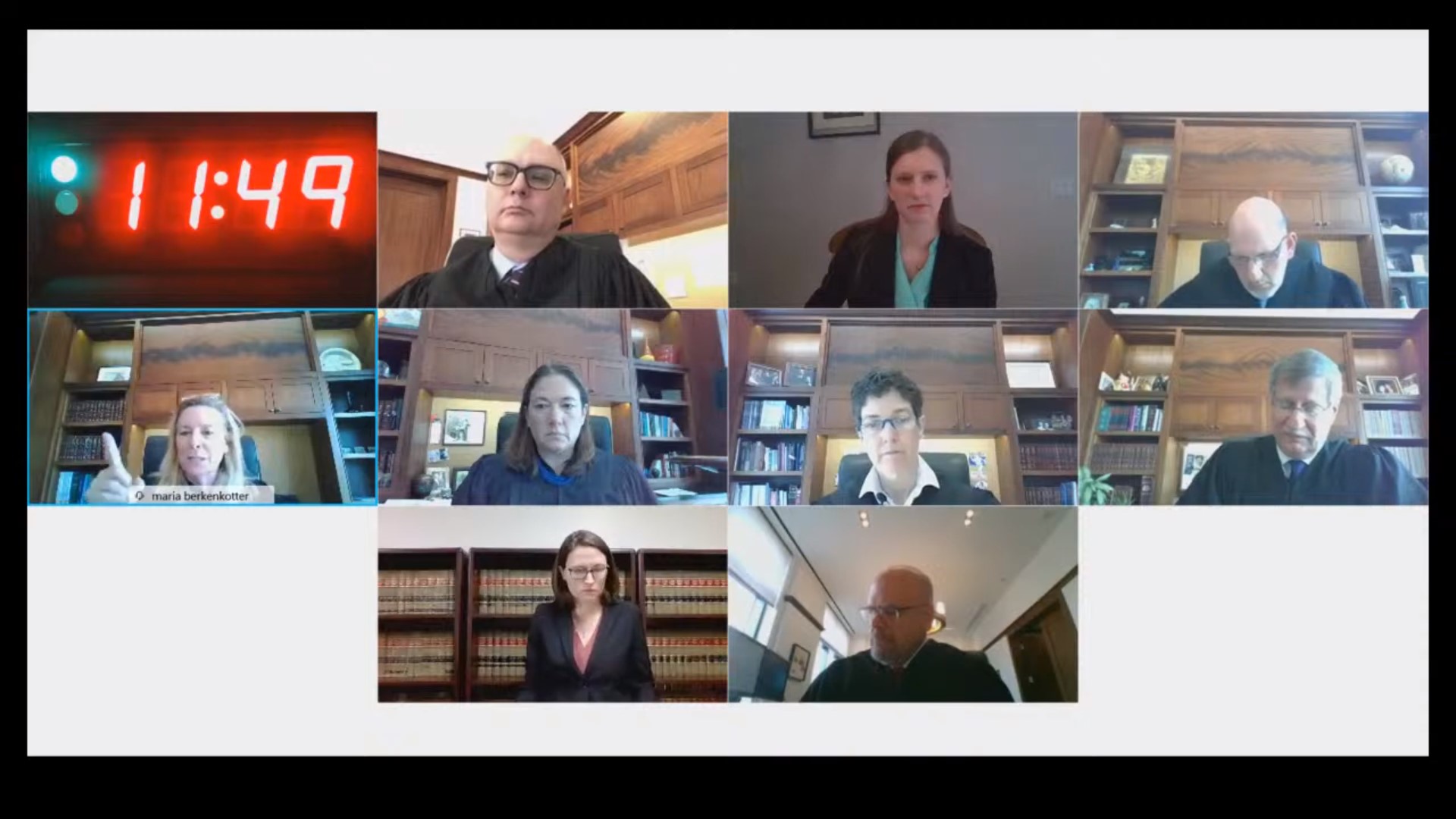
? Last month, the Colorado Supreme Court solicited public comment on a pair of chief justice directives that seek to provide uniform guidance on livestreaming and virtual court hearings, which became necessary during the early COVID-19 pandemic but still remain popular. More than 100 people and organizations sent their thoughts to the Supreme Court, with most asking for tweaks to the proposed rules.
? Among the benefits people touted? Virtual hearings are safer for victims, they enable attorneys to represent clients in rural areas and they reduce failure-to-appear rates among litigants. The cons? People can hijack virtual proceedings, it can be more work for the judges and not everyone has great technology.
Heard on appeal
? A lawsuit seeking $140 million in damages against a Lakewood-based special district is back, after the state’s Court of Appeals ruled a Jefferson County judge wrongly found an agreement involving the district was void as a matter of law.
? An El Paso County juror told the trial judge she “wouldn’t give him (the defendant) a fair trial.” Nonetheless, she was allowed to serve on the jury. The Court of Appeals concluded that was the proper outcome.
? An Adams County judge denied a defendant’s challenge to his conviction, partly because he didn’t sign his name on the form. The Court of Appeals said the judge’s reaction was improper.
Vacancies and appointments
? The governor has appointed defense attorney and former military prosecutor John G. Scott to the Lake County Court, where he will succeed now-District Court Judge Jonathan Shamis.
? There are three finalists to fill the seat of the late Boulder County Court Judge Kristy Martinez: Shana Beggan and Magistrates Monica Haenselman and Elizabeth Kelley.
? Applications are due by April 14 to succeed retiring Pueblo County District Court Judge Larry Schwartz, with the vacancy effective in late May. Applications are due by May 5 to fill a seat on the Ninth Judicial District Court (Garfield, Pitkin and Rio Blanco counties) being vacated by Chief Judge James Berkley Boyd, effective July 1. Also on July 1, 17th Judicial District Court Judge Robert W. Kiesnowski Jr. will retire. Applications for the seat in Adams and Broomfield counties are due on May 5.
Miscellaneous proceedings
? Denver is seeking to dismiss a challenge to the redevelopment plan for Park Hill Golf Course in court, while voters will weigh in shortly via a related ballot initiative.
? There are $1.9 million available in court security grants for counties with a below-average population and above-average poverty rate. Applications are due to the Judicial Department by April 21.


Colorado’s newest federal judge speaks about techniques for advancing cases
Michael Karlik
michael.karlik@coloradopolitics.com
Updated 17 hours ago
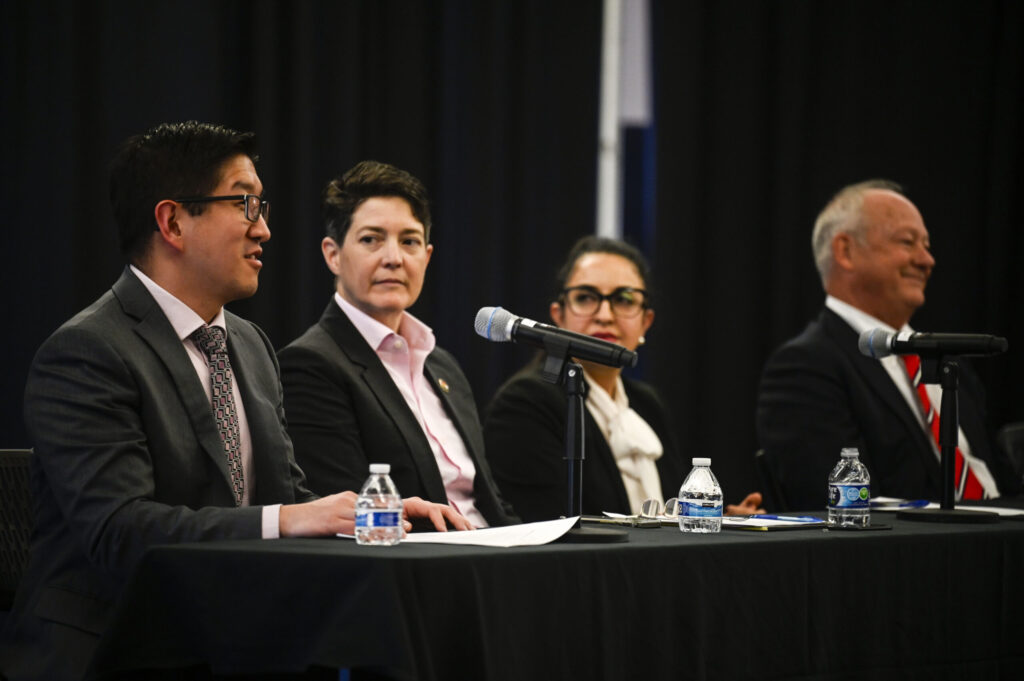
U.S. Magistrate Judge Cyrus Y. Chung described on Wednesday the various tactics he employs to resolve court cases, summing up his role with a laxative-based metaphor. “Someone told a group of us federal magistrate judges that magistrate judges are the...

Federal judge hears ICE agents’ confusion about law, injunction on warrantless arrests
Michael Karlik
michael.karlik@coloradopolitics.com
Updated 2 days ago
A federal judge heard testimony on Tuesday from U.S. Customs and Immigration Enforcement agents in Colorado, who had trouble describing the requirements of his recent injunction and the training they received on making warrantless arrests pursuant to the law. On...

10th Circuit dismisses challenge to Colorado legislature’s decorum rules
Michael Karlik
michael.karlik@coloradopolitics.com
Updated 1 day ago
The Denver-based federal appeals court concluded on Tuesday that Colorado lawmakers cannot be sued for creating and enforcing rules of decorum that circumscribe the public commentary allowed at legislative committee hearings. A three-judge panel of the U.S. Court of Appeals...
Colorado Supreme Court blocks ballot initiative defining ‘fees’
Michael Karlik
michael.karlik@coloradopolitics.com
Updated 3 days ago
The Colorado Supreme Court blocked a proposed ballot initiative on Monday that would have required voter approval for new fees above a certain threshold, while also enshrining a definition of “fee” into the state constitution for the first time. Chief...
Colorado justices, by 5-2, say Longmont detective did not violate suspect’s Miranda rights
Michael Karlik
michael.karlik@coloradopolitics.com
Updated 3 days ago
The Colorado Supreme Court’s majority ruled on Monday that a Longmont detective did not coerce a suspect into talking by making references to how a judge would look at his character, and by suggesting he may get out of prison...
Colorado justices find Fort Collins police lacked probable cause to arrest suspect in park
Michael Karlik
michael.karlik@coloradopolitics.com
Updated 3 days ago
The Colorado Supreme Court agreed on Monday that Fort Collins police lacked probable cause to arrest a man for a child sex offense based on his presence in a public park around the time they intended to meet with their...

Supreme Court to hold oral arguments, discipline commission releases report | COURT CRAWL
Michael Karlik
michael.karlik@coloradopolitics.com
Updated 3 days ago
Welcome to Court Crawl, Colorado Politics’ roundup of news from the third branch of government. The state Supreme Court is holding oral arguments this week, plus Colorado’s judicial discipline commission released its annual report. Colorado Supreme Court news • The Supreme...
Federal judge dismisses developer’s challenge to Denver affordable housing ordinances
Michael Karlik
michael.karlik@coloradopolitics.com
Updated 6 days ago
A federal judge dismissed a homebuilder’s constitutional challenge on Tuesday to a pair of Denver ordinances that impose obligations on developers related to the affordable housing demands created by new construction. Two related companies, redT Homes and redT Capital Partners,...
10th Circuit distances itself from prior decision making it easier to toss prisoner lawsuits
Michael Karlik
michael.karlik@coloradopolitics.com
Updated 6 days ago
The Denver-based federal appeals court distanced itself on Wednesday from its own recent decision that made it easier for prison officials to end civil lawsuits by transferring incarcerated plaintiffs between facilities. A three-judge panel of the U.S. Court of Appeals...

Appeals court overturns Douglas County vehicular homicide conviction due to faulty jury instructions
Michael Karlik
michael.karlik@coloradopolitics.com
Updated 4 days ago
Colorado’s second-highest court overturned a defendant’s vehicular homicide conviction and 12-year prison sentence on Thursday after determining a Douglas County judge omitted key language from the jury instructions that could have resulted in a different outcome. James Paul McDonald was...
PREV
PREVIOUS

Auon'tai Anderson, Michael Hancock in feud over return of SROs to Denver schools
Denver Public Schools Board Vice President Auon’tai Anderson and Mayor Michael Hancock’s office offered two competing versions of why DPS decided to bring back school resource officers to Denver schools. The way Anderson put it, the DPS board was forced to reverse its 2020 decision to kick out SROs because Hancock was poised to issue […]

DIA's Phil Washington withdraws from consideration for FAA administrator
Denver International Airport CEO Phil Washington withdrew his name from consideration to lead the Federal Aviation Administration over the weekend, saying he can’t see a “respectful, civil, and viable path forward to Senate confirmation.” “This was a decision that I did not make lightly,” Washington said in a statement. “I faced cheap and unfounded partisan attacks […]