

Denver jury should not have heard about defendant’s prior assaults of wife, appeals court rules

A man convicted of beating his wife will receive a new trial after the state’s second-highest court determined a Denver judge mistakenly allowed jurors to hear about two previous instances of the defendant beating his wife.
Under Colorado’s procedural rules, prosecutors cannot use evidence of a defendant’s other, uncharged misconduct to show that the person has bad character and acted in line with that bad character in committing the criminal charges at hand. Such “propensity” evidence runs the risk of a conviction based unfairly on the uncharged acts.
There is an exception if the evidence of prior misconduct can show the defendant’s motive, plan or intent to commit the charged offense. Colorado law also broadly permits such evidence for sexual offenses in order to show the defendant’s modus operandi, or way of doing things.
However, a three-judge panel for the Court of Appeals saw no apparent link between Kiefer Beyer’s two prior assaults on his wife and the assault for which he stood trial in 2020. Although the prosecution argued the three episodes were similar enough to illustrate Beyer’s intent, the panel was unconvinced.
“Instead, the prior acts evidence simply invited the jury to infer that because Beyer had previously choked his wife, he likely assaulted her on New Year’s Day, including kicking her down the stairs, smashing her head into a doorframe, and biting her nose,” wrote Judge Elizabeth L. Harris in the March 23 opinion.
On New Year’s Eve 2018, the Beyers had been out drinking and using illicit drugs. Once they came home, Beyer allegedly grew enraged at his wife and physically attacked her.
Beyer’s wife then drove off to meet police. She subsequently went to the hospital for a forensic examination. Prosecutors charged Beyer with nine offenses, ranging from assault and attempted sexual assault to false imprisonment.
A jury convicted Beyer on most of the assault counts, while acquitting him of attempted sex assault. He received five years in prison.
On appeal, Beyer challenged District Court Judge J. Eric Elliff’s decision to allow jurors to hear about his other alleged assaults that had not been criminally charged. The prosecution offered four prior incidents in total, but Elliff permitted two as evidence: One encounter involving an assault and the other involving an attempted rape.
“Here, if the defendant successfully used violence in the past in order to intimidate, control, and harm the victim during domestic violence disputes, then the evidence makes it more probable that he knowingly utilized violence to intimidate, control, and intentionally harm the victim because that is what worked in the past,” the prosecution argued.
Beyer’s attorney claimed his pattern of angry behavior was “hardly unique,” and the evidence did not show a common modus operandi across all incidents.
“In addition, it is unfair to require the defendant to disprove the uncharged misconduct or explain his personality,” wrote Deputy State Public Defender Jud Lohnes.
The Court of Appeals panel agreed with Beyer. Because neither of the prior incidents involved Beyer successfully sexually assaulting his wife, they could not show a common intent to sexually assault her on New Year’s Day. Further, the panel saw no evidence that his prior strangulations of his wife resulted in serious bodily injury, or any injury.
“The mere act of putting one’s hands on another person’s neck is not the kind of unique or distinctive conduct that makes a witness’s account of the charged crime more believable,” Harris wrote. Instead, “the evidence’s relevance mostly relied on the inference that Beyer had assaulted his wife in the past and so likely assaulted her this time.”
She added that because the physical evidence of the New Year’s Day assault was not conclusive, and the credibility of Beyer’s wife was the main factor, it was possible Beyer’s other misconduct contributed to the jury’s verdict. The panel ordered a new trial.
The case is People v. Beyer.

Colorado Supreme Court clarifies restraining order violations can always support burglary charge
Michael Karlik
michael.karlik@coloradopolitics.com
Updated 7 hours ago
The Colorado Supreme Court’s majority ruled on Monday that a violation of a restraining order can also serve as a basis for finding a defendant guilty of burglary. Under state law, a person commits second-degree burglary by unlawfully entering or...

10th Circuit judge creates vacancy, district court gets new chief judge | COURT CRAWL
Michael Karlik
michael.karlik@coloradopolitics.com
Updated 11 hours ago
Welcome to Court Crawl, Colorado Politics’ roundup of news from the third branch of government. A longtime member of the Denver-based federal appeals court will give the president a vacancy to fill, plus Colorado’s federal trial court will see a...
Gov. Jared Polis moves to end ICE subpoena fight over Colorado workers’ personal data
Marianne Goodland
marianne.goodland@coloradopolitics.com
Updated 3 days ago
The effort by Gov. Jared Polis to comply with an administrative subpoena from U.S. Immigration and Customs Enforcement for information held by several state agencies is over. Polis, in a motion filed Feb. 20, asked for a permanent injunction and...

Ex-Colorado Sen. Sonya Jaquez Lewis avoids prison, gets probation for forged ethics letters
Marianne Goodland
marianne.goodland@coloradopolitics.com
Updated 3 days ago
Former state Sen. Sonya Jaquez Lewis, D-Longmont, was sentenced Friday to two years of supervised probation and 150 hours of community service, and a $3,000 fine, to be waived if she completes an additional 100 hours of community service. The...

Toll to sexual assault survivors rises if they feel blamed and disbelieved
Jenny Deam
jenny-deam@coloradopolitics.com
Updated 4 days ago
Natalie, a single mother, dropped off her son at daycare, went to therapy and then returned home. She swallowed a fistful of pills, washing them down with a six-pack of beer. She was ready to end her life. “I just...

Colorado rape cases rarely result in an arrest and prosecution
Evan Wyloge
evan-wyloge@coloradopolitics.com
Updated 8 hours ago
Authorities say they are especially difficult cases. In Colorado, most go nowhere. Over the past decade, for every 10 reports of rape, there is only one arrest. Warning: This story contains descriptions of sexual violence. Kiersten May remembered a fuzziness...
10th Circuit upholds finding of no misconduct against Colorado federal judge
Michael Karlik
michael.karlik@coloradopolitics.com
Updated 4 days ago
A judicial committee for the Denver-based federal appeals court upheld the chief judge’s finding last week that a federal judge in Colorado did not engage in misconduct by handling a civil case involving other attorneys and judges in the state....
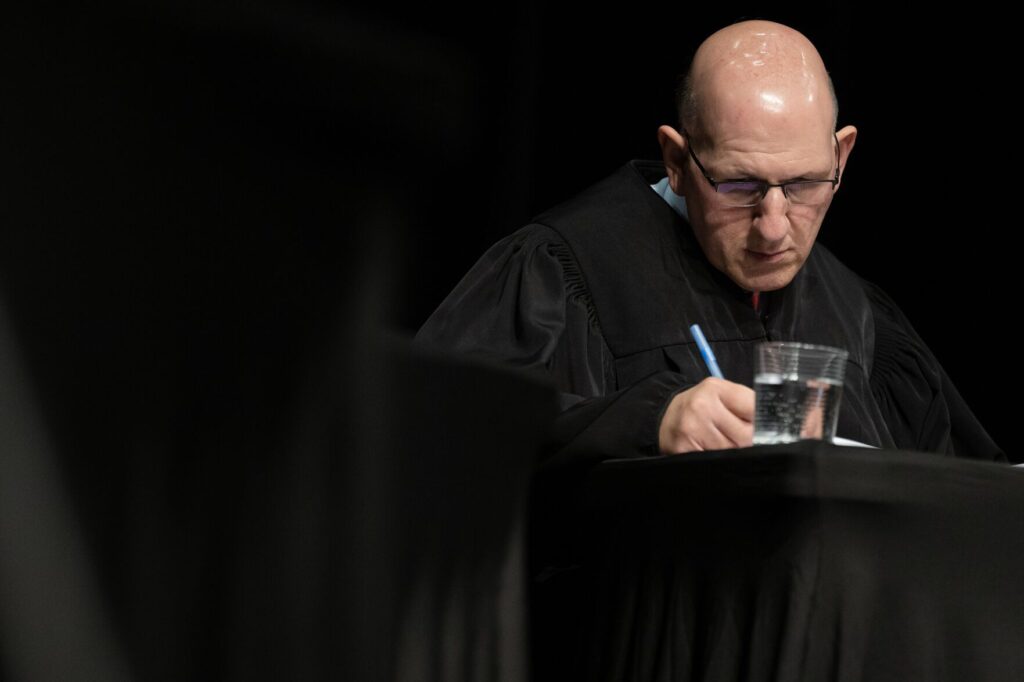
SCOTUS whisperer? Justice Carlos Samour may get second opportunity to turn state dissent into national precedent
Michael Karlik
michael.karlik@coloradopolitics.com
Updated 4 days ago
For the second time in two years, Justice Carlos A. Samour Jr. occupies an unusual position: Having his dissent in a Colorado Supreme Court case potentially forming the basis of U.S. Supreme Court precedent. Earlier this week, the nation’s highest...
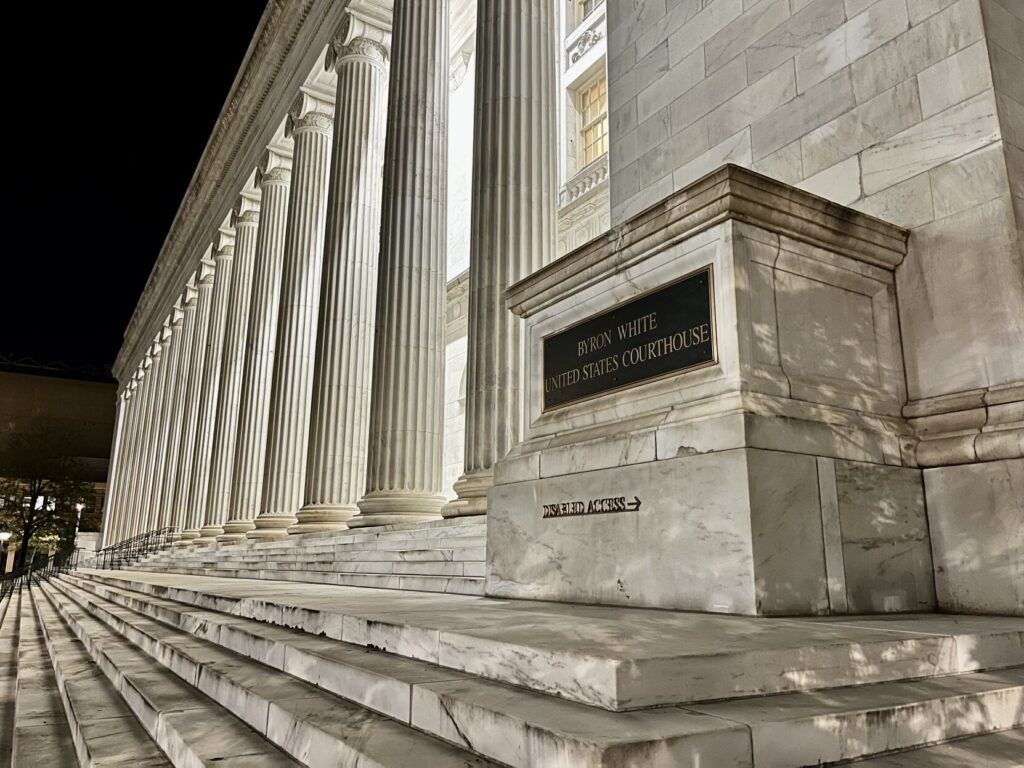
10th Circuit appoints ex-Colorado solicitor general to argue issue after federal government declines
Michael Karlik
michael.karlik@coloradopolitics.com
Updated 3 days ago
The Denver-based federal appeals court took the unusual step earlier this month of appointing an attorney to independently argue a key issue in a criminal sentencing appeal after the government indicated it would not contest the defendant’s view of the...
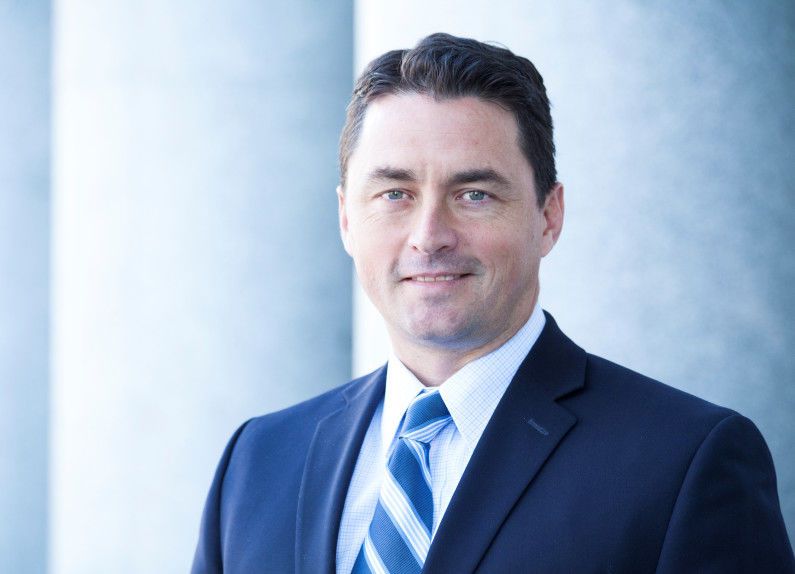
Daniel Domenico to take over as Colorado’s chief federal judge
Michael Karlik
michael.karlik@coloradopolitics.com
Updated 1 day ago
Daniel D. Domenico will become the new chief judge of Colorado’s federal trial court next week, a role that encompasses the administration of the court as well as a judicial caseload. Under federal law, the chief judge of a U.S....
PREV
PREVIOUS

THIS WEEK AT THE COLORADO CAPITOL | Week of March 27, 2023
Here are legislative committee hearings and other events of note for the week ahead at the Colorado state Capitol. Committee schedules are subject to change. The daily schedule is available on the legislature’s website. Options for public testimony during committee hearings can be found here. House regulations regarding remote testimony can be found here. Senate regulations are here. Bills […]
Auon'tai Anderson, Michael Hancock in feud over return of SROs to Denver schools
Denver Public Schools Board Vice President Auon’tai Anderson and Mayor Michael Hancock’s office offered two competing versions of why DPS decided to bring back school resource officers to Denver schools. The way Anderson put it, the DPS board was forced to reverse its 2020 decision to kick out SROs because Hancock was poised to issue […]