

Michael Bennet wants continuous health care coverage for children as emergency declaration set to expire

More than 200,000 Colorado children are expected to lose their health insurance once the federal government’s COVID-19 public health emergency ends.
On Monday, U.S. Senator Michael Bennet and 14 of other Democrats urged the Centers for Medicare & Medicaid Services (CMS) to ensure the gains in reducing the number of uninsured children is not lost when the agency winds down policies enacted to keep people continuously enrolled during the public health emergency.
Anyone enrolled in Health First Colorado – the state’s Medicaid program – was guaranteed health coverage because states were required to keep people continuously enrolled during the public health emergency.
The emergency declaration is set to end on May 11.
In December, Congress passed a bipartisan funding bill that requires states to keep kids enrolled in continuous coverage for 12 months at a time. The new requirement, however, does not kick in until January 1, 2024.
Children often lose coverage not because they are ineligible, but because parents pick up an extra shift temporarily boosting their pay and making them ineligible, or they miss a deadline, causing what’s called “churn” in the system.
“Churning in and out of health coverage has a direct, negative effect on children who rely on Medicaid and CHIP, as well as the ability of doctors, hospitals, and health plans to provide effective, continuous care,” the senators wrote CMS Administrator Chiquita Brooks-LaSure on Feb. 21.
As a result of the federal government’s continuous enrollment provision and additional Affordable Care Act subsidies over the past two years, uninsured rates dropped 2.7% for adults and children, the senators wrote.
Bennet and his colleagues urged CMS to make continuous health care coverage for children enrolled in Medicaid and CHIP a national policy.
All told, an estimated 325,000 Coloradans – 220,000 of whom are children – are expected to be disenrolled from Medicaid. That number rivals the 400,000 people enrolled in the first two years of the state’s Medicaid expansion in 2014.
Estimated 325,000 Coloradans will lose Medicaid with end of COVID-19 public health emergency
The Colorado Department of Health Care Policy and Financing administers the state’s Medicaid program, the federal safety net which provides health coverage to low-income people.
Medicaid in Colorado provides health care for roughly one in four residents.
To be eligible for Medicaid, the annual household income before taxes for a single person must be below $18,075 and $36,908 for a family of four.
Most of those expected to lose eligibility will be because their income exceeds Medicaid’s limit.
The state is expected to take 12 to 14 months to review Medicaid eligibility for the roughly 1.7 million Coloradans enrolled in the program. The Colorado review is set to begin in May.
Case reviews will be based on an individual’s enrollment anniversary. So, for example, someone who enrolled in April will not be reviewed until next year.
The emergency designation is often associated with the restrictions implemented to curb the spread of the virus. Nearly all these federal and state rules, however, have already gone away.
The move to end the national emergency marks the government’s shifting response to an endemic public health threat managed through agencies regular authority.
Click here, to read the full letter.



US service member missing after Iran shot down fighter jet has been rescued, US officials say
Associated Press
associated-press@coloradopolitics.com
Updated 9 hours ago
JERUSALEM — President Donald Trump announced early Sunday that the U.S. had rescued an aviator nearly two days after he was shot down over Iran. The extraction came after a frantic search in what appears to be a remote, mountainous region of...

Low and slow meets forever: US postage stamps honor lowrider car culture | OUT WEST ROUNDUP
The Associated Press
the-associated-press@coloradopolitics.com
Updated 4 days ago
NEW MEXICO Stamps honor lowrider culture ALBUQUERQUE — From Mexican American and Chicano barrios in the American Southwest to the halls of the Smithsonian on the National Mall and even the streets of Japan, lowrider culture has become part of...

Colorado Politics Calendar Apr. 6-12
Rachael Wright, Special to Colorado Politics
rachael.wright@coloradopolitics.com
Updated 4 days ago
CoPo’s weekly political calendar will help you find political and public-policy events throughout Colorado. It includes candidate and issue campaign events, public policy meetings, court hearings, state and local party conventions, assemblies, debates, rallies, parades, speaking engagements, traveling dignitary appearances,...

Democrats rebounding without learning necessary lessons | SONDERMANN
Eric Sondermann
eric-sondermann@coloradopolitics.com
Updated 1 day ago
“When we fight, we win!” That, reportedly, was the chant heard over and over again at the Colorado Democratic Assembly a week ago. It suggests that pugilism has been the piece missing from the Democratic toolkit. Perhaps it was just...
An April Fool’s Day to remember | Capitol M | Week of April 4, 2026
Marianne Goodland
marianne.goodland@coloradopolitics.com
Updated 3 days ago
The lighter side of the Capitol, and if light were weight, the Capitol would have lifted off better than the Artemis II rocket on April Fool’s Day. There was a plethora of Fools at the Capitol for April Fool’s Day...

Federal judge sides with Mesa County school district in ex-student’s First Amendment claims
Michael Karlik
michael.karlik@coloradopolitics.com
Updated 2 days ago
A federal judge concluded last week that Mesa County Valley School District 51 and three of its administrators did not violate the First Amendment rights of a former student when they imposed minor discipline in response to disruptive behavior. In...

Colorado Supreme Court intervenes in 4 ongoing cases
Michael Karlik
michael.karlik@coloradopolitics.com
Updated 2 days ago
The Colorado Supreme Court recently moved to intervene in four ongoing cases, including two criminal prosecutions, a civil lawsuit, and a child welfare proceeding. At least four of the court’s seven members must agree to hear a case outside of...
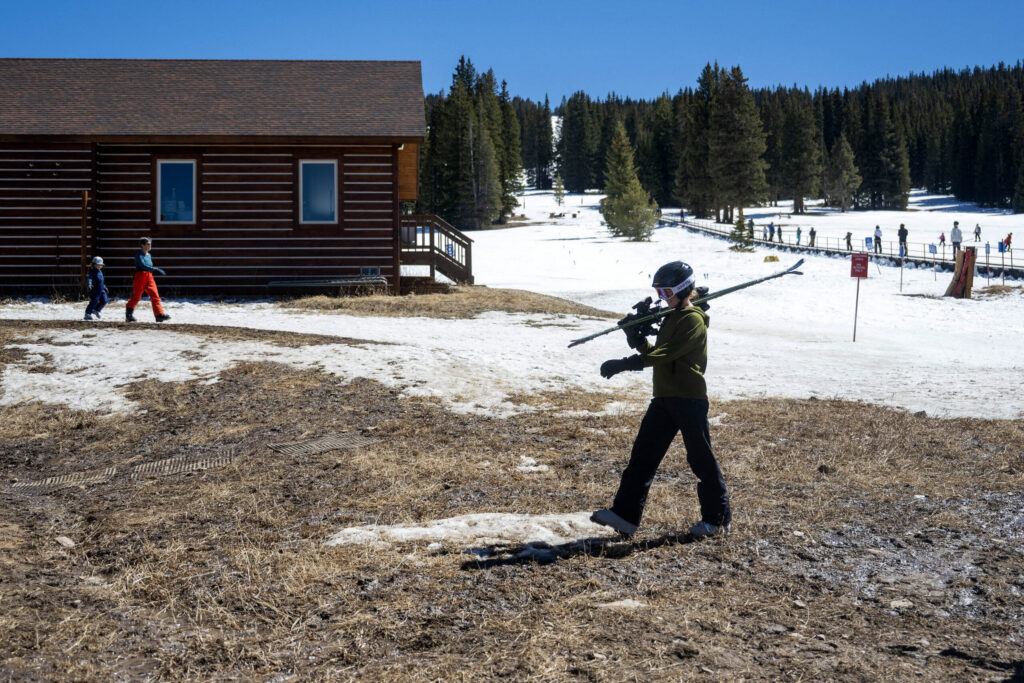
Colorado ski resorts announce early closures amid historic snowpack lows, high temperatures
Kyla Pearce
kyla.pearce@gazette.com
Updated 1 day ago
Vail Resorts is the latest area to announce season closure Wednesday As Colorado’s historically low snowpack year comes to a close and spring conditions take over the mountains, the state’s major ski resorts are announcing closing dates — some of...

Kentucky Gov. Andy Beshear set to headline Colorado Democrats’ annual fundraising dinner
Ernest Luning
ernest.luning@coloradopolitics.com
Updated 2 days ago
Kentucky Gov. Andy Beshear, one of the Democrats’ top 2028 presidential prospects, is scheduled to deliver the keynote address at the Colorado Democratic Party’s annual fundraising dinner in June in Denver, the party said Friday. Serving his second term as...
Gov. Polis names new leaders for Colorado health agencies in wake of Medicaid turmoil
Marianne Goodland
marianne.goodland@coloradopolitics.com
Updated 2 days ago
Gov. Jared Polis, on Thursday, announced he was appointing Gretchen Hammer to serve as acting executive director of the Colorado Department of Health Care Policy and Financing, and deputy executive director Stephanie Beasley to become the next commissioner of the...
PREV
PREVIOUS

Justices to hear Adams County school district's challenge to state order, vehicle insurance appeal
The Colorado Supreme Court agreed on Monday to hear two cases involving the ability of an Adams County school district to challenge a reorganization order from the state, and the parameters of auto insurance policies covering antique or classic cars. At least three of the court’s seven members must consent to take up an appeal. […]

Colorado lawmakers propose making all auto theft a felony, regardless of vehicle value
Colorado is the No. 1 state in the nation for auto thefts. Lawmakers want to change that with Senate Bill 97. Currently, the severity of criminal offenses for auto thefts in Colorado depends on the value of the stolen vehicle – ranging from a class 1 misdemeanor for a car worth $2,000 or less, to […]