

Colorado’s justices to review whether lawyers may abandon clients’ claims
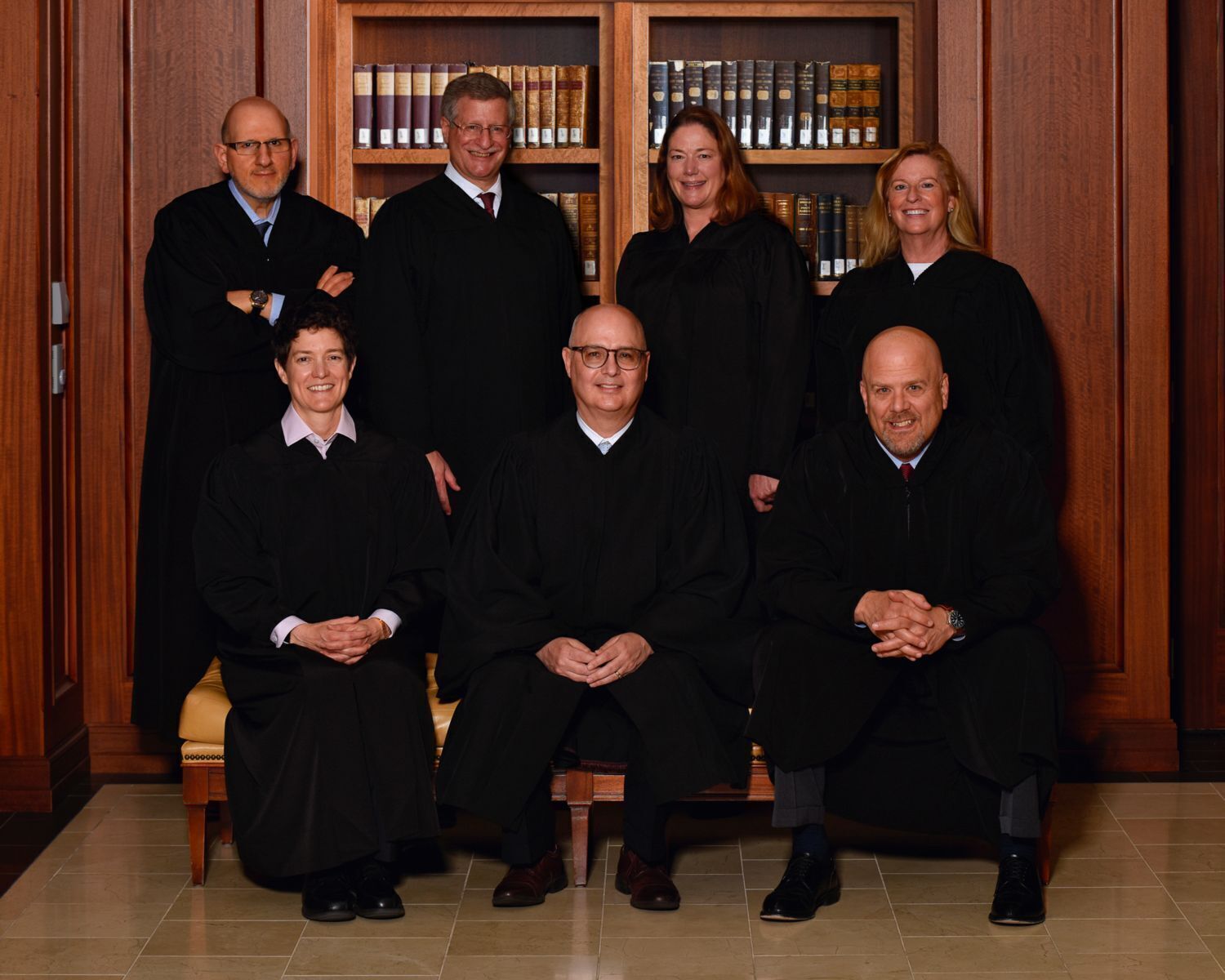
Can attorneys representing defendants who are challenging their criminal convictions discard certain claims without their clients’ informed consent?
The Colorado Supreme Court announced on Monday it will review the question after the state’s Court of Appeals last year decided a Larimer County judge was wrong to assume a defendant’s lawyer had abandoned some of her client’s arguments, with no evidence the defendant intended for that to happen.
At least three of the Supreme Court’s seven members must consent to hear a case on appeal.
A jury convicted Anthony Robert Smith of multiple child sex assault offenses in 2013. Five years later, Smith filed his own motion asking for postconviction relief, alleging new evidence, prosecutorial misconduct and constitutionally ineffective levels of assistance from his trial lawyer. The court appointed an attorney for Smith, who then filed a supplemental motion focusing specifically on three ineffective assistance claims.
District Court Judge Gregory M. Lammons denied Smith’s request for postconviction relief, only addressing the three claims in the supplemental motion. Because Smith’s lawyer did not have a duty to pursue meritless claims and she had not referenced many of Smith’s initial contentions, Lammons believed Smith had waived his opportunity for a judge’s review of the remaining allegations.
On appeal, a three-judge panel of the Court of Appeals decided that Smith’s attorney was not obligated to re-raise her client’s original issues when he was self-represented, or “pro se.” As long as Smith had not intended to relinquish his claims, Lammons should have considered them.
Nothing, wrote Judge Rebecca R. Freyre, “shows that counsel considered Smith’s pro se claims to be meritless or that she sought (or received) Smith’s informed consent to waive any claims.”
Both parties appealed to the Supreme Court. Smith’s lawyer argued the Court of Appeals neglected to address an allegedly-problematic episode in which Smith’s original trial judge personally delivered lunch to deliberating jurors without the parties’ knowledge. The government, meanwhile, alleged the notion of “informed consent” reversed the traditional roles of lawyer and client during post-conviction proceedings.
“By requiring ‘informed consent’ from Defendant to waive claims, Defendant, not counsel, is now ‘captain of the ship,'” wrote Matthew S. Holman of the Colorado Attorney General’s Office.
The Supreme Court elected to review the government’s issues and rejected Smith’s petition. The case is People v. Smith.
The justices also narrowly turned down a second appeal implicating the child welfare system.
A Mesa County father, identified as D.W., challenged a finding of child neglect as well as a judge’s directive that he complete the same type of evaluation and treatment given to those convicted of sex offenses. Although D.W.’s neglect case involved allegations of sexual assault, the proceedings were not criminal.
A Court of Appeals panel decided last summer that the trial judge was not wrong to require D.W. to participate in behavioral treatment, but she was wrong to order the specific treatment given to defendants with criminal convictions.
The trial judge then reissued D.W.’s treatment plan with modifications. D.W. appealed a second time.
But the Court of Appeals now wondered whether it had the ability to hear D.W.’s new appeal. His treatment plan was known as a dispositional order. Colorado law deems dispositional orders to be non-final judgments that are appealable when paired with an adjudicatory order – meaning the decision that a child is neglected.
This time, D.W. did not have an adjudicatory order to pair with his appeal of the treatment plan. He argued that his second trip to the appellate court should be viewed as a “continuation of the appeal,” but the court dismissed the case anyway.
On appeal to the Supreme Court, Chief Justice Brian D. Boatright and Justice Richard L. Gabriel indicated they would have heard D.W.’s case to decide whether dismissal is the right outcome when an appellate court orders a judge to change only her treatment plan and a party appeals the plan by itself.
The case is D.W. v. People.



Colorado Supreme Court signals intervention in dispute over treatment for trans children
Michael Karlik
michael.karlik@coloradopolitics.com
Updated 3 hours ago
The Colorado Supreme Court ordered Children’s Hospital Colorado on Tuesday to explain why it should not direct the organization to resume providing certain types of services to transgender children in compliance with the state’s non-discrimination law. Last month, a Denver...

Judge nixes latest policy requiring 7 days’ notice for Congress members to visit ICE facilities
Michael Kunzelman
michael.kunzelman@associatedpress.com
Updated 5 hours ago
WASHINGTON (AP) — A federal judge agreed on Monday to temporarily suspend the latest version of a Trump administration policy that requires members of Congress to provide a week’s notice before they can visit immigration detention facilities. U.S. District Judge...
Judge nixes latest policy requiring 7 days’ notice for Congress members to visit ICE facilities
Michael Kunzelman
michael.kunzelman@associatedpress.com
Updated 2 hours ago
WASHINGTON • A federal judge agreed on Monday to temporarily suspend the latest version of a Trump administration policy that requires members of Congress to provide a week’s notice before they can visit immigration detention facilities. U.S. District Judge Jia...

Colorado Supreme Court clarifies restraining order violations can always support burglary charge
Michael Karlik
michael.karlik@coloradopolitics.com
Updated 1 day ago
The Colorado Supreme Court’s majority ruled on Monday that a violation of a restraining order can also serve as a basis for finding a defendant guilty of burglary. Under state law, a person commits second-degree burglary by unlawfully entering or...

10th Circuit judge creates vacancy, district court gets new chief judge | COURT CRAWL
Michael Karlik
michael.karlik@coloradopolitics.com
Updated 10 hours ago
Welcome to Court Crawl, Colorado Politics’ roundup of news from the third branch of government. A longtime member of the Denver-based federal appeals court will give the president a vacancy to fill, plus Colorado’s federal trial court will see a...

Morgan County man accused of killing wife, staging her suicide charged with first-degree murder
Kyla Pearce
kyla.pearce@gazette.com
Updated 1 hour ago
A grand jury announced the indictment of 52-year-old Ronald Lowry, who is accused of killing his wife in October 2023 and staging the crime scene to look like a suicide. Lowry, who was arrested Friday in Morgan County, was charged...
Gov. Jared Polis moves to end ICE subpoena fight over Colorado workers’ personal data
Marianne Goodland
marianne.goodland@coloradopolitics.com
Updated 4 days ago
The effort by Gov. Jared Polis to comply with an administrative subpoena from U.S. Immigration and Customs Enforcement for information held by several state agencies is over. Polis, in a motion filed Feb. 20, asked for a permanent injunction and...

Ex-Colorado Sen. Sonya Jaquez Lewis avoids prison, gets probation for forged ethics letters
Marianne Goodland
marianne.goodland@coloradopolitics.com
Updated 4 days ago
Former state Sen. Sonya Jaquez Lewis, D-Longmont, was sentenced Friday to two years of supervised probation and 150 hours of community service, and a $3,000 fine, to be waived if she completes an additional 100 hours of community service. The...

Toll to sexual assault survivors rises if they feel blamed and disbelieved
Jenny Deam
jenny-deam@coloradopolitics.com
Updated 4 days ago
Natalie, a single mother, dropped off her son at daycare, went to therapy and then returned home. She swallowed a fistful of pills, washing them down with a six-pack of beer. She was ready to end her life. “I just...

Colorado rape cases rarely result in an arrest and prosecution
Evan Wyloge
evan-wyloge@coloradopolitics.com
Updated 1 day ago
Authorities say they are especially difficult cases. In Colorado, most go nowhere. Over the past decade, for every 10 reports of rape, there is only one arrest. Warning: This story contains descriptions of sexual violence. Kiersten May remembered a fuzziness...
PREV
PREVIOUS

Denver Public Schools sees bump in new Spanish-speaking students
More than 350 new Spanish-speaking students enrolled in Denver Public Schools within the first weeks after an influx of immigrants from South and Central American arrived in the Mile High City, school district data shows. The Denver Gazette requested, under the Colorado Open Records Act, the number of newly enrolled Spanish-speaking students from Nov. 5, […]

House Democrats target crisis pregnancy centers, set to introduce abortion-rights package
A package of bills intended to bolster Colorado’s abortion-rights laws are expected within the next two weeks, including a proposal that targets “crisis pregnancy centers.” Sen. Julie Gonzales, D-Denver, who spoke about the package on Tuesday, said the first measure deals with what she calls deceptive trade practices by anti-abortion clinics that she described as […]