

Colorado lawmakers try to address loopholes in last year’s fentanyl bill
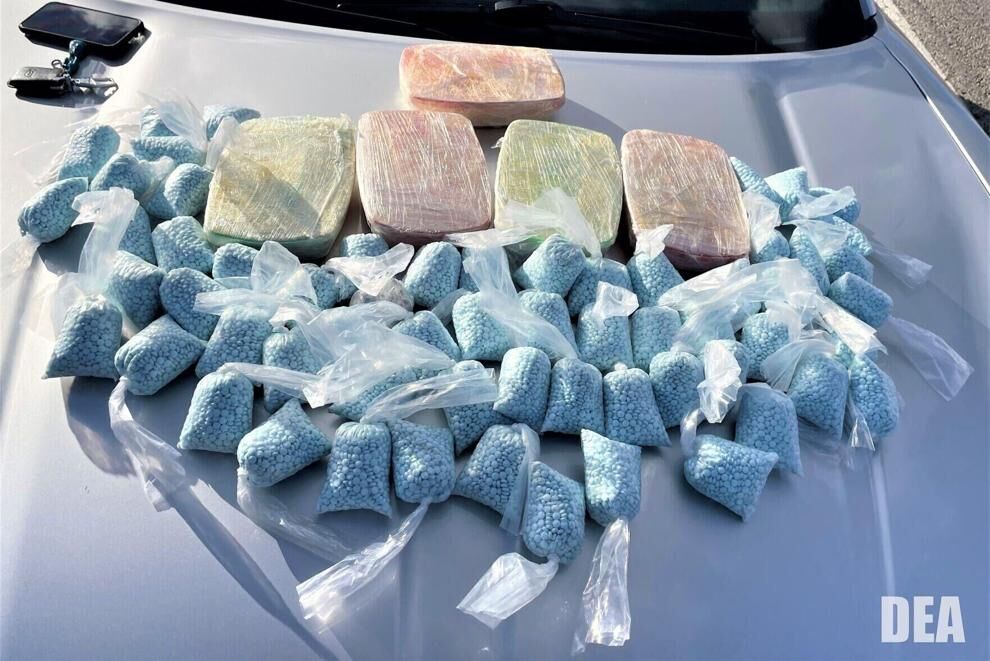
After the Colorado General Assembly spent last year’s session wrestling with legislation to address state’s fentanyl epidemic, lawmakers are back at it with a pair of bills proposing changes some want to see it the 2022 bill.
House Bill 1167 is sponsored by Speaker Pro tem Chris deGruy Kennedy, D-Lakewood, and was introduced late Thursday. House Bill 1164, also introduced on Thursday, is sponsored by House Minority Leader Mike Lynch, R-Wellington. Both have been assigned to the House Judiciary Committee.
Kennedy’s bill has to do with immunity and the Good Samaritan provisions in House Bill 22-1326. The intention with that law was that someone sharing fentanyl could avoid prosecution when the person they’re sharing it with overdoses or even dies. The provider of the fentanyl would have to call 911 and stay on scene until law enforcement and first responders arrive. Under that scenario, the provider would be granted immunity for distribution resulting in death.
According to Kennedy, the way the law is working could be discouraging people from calling police in an overdose situation.
“We broke the Good Samaritan” law, Kennedy said Thursday. “We created a new felony fentanyl possession law” that wasn’t intended.
It has to do with ensuring that all the I’s are dotted and the T’s crossed. Language in one section of statutes pertaining to Good Samaritan wasn’t applied in another, creating an unforeseen loophole.
The 911 Good Samaritan law was first put into statute in 2012 and updated in 2016. It was supposed to be updated in the 2022 law to address situations involving fentanyl, but that didn’t quite happen.
Lisa Raville, executive director of the Harm Reduction Action Center, who has worked with Kennedy on the 2023 bill, told Colorado Politics that if someone overdoses and the person who provided the drug – other than fentanyl – stays until first responders arrive, the bill would prevent the provider from incurring new drug distribution charges, even if granted immunity on the overdose.
What happened with HB 1326 was fentanyl was not included in the right place in the Good Samaritan law, and that could create felony charges for someone possessing drugs who are trying to do the right thing. Right now, “people are very afraid to call” for fear of those charges, she said.
Kennedy’s bill is to bring make the 2022 law keep up with the 2012 and 2016 laws, Raville explained. Saving the life of the person is the highest priority, Kennedy said.
The second provision in Kennedy’s bill has to do with affirmative defense.
Tristan Gorman, policy director of the Colorado Criminal Defense Bar, said that is not the same as immunity. It’s not attended to prevent arrest, charging or prosecution, she explained.
If and when a case reaches trial, which is a small percentage of cases, there’s two kinds of defenses a defense attorney can raise, depending on the facts of the case. One is an elemental defense: the defense argues that the prosecution hasn’t met the burden of proof, to prove one or more elements of the offense, beyond a reasonable doubt.
The second is affirmative defense, which is what’s in HB 1167. The reason it is so different from an elemental defense, she explained is that the defendant is not denying the offense. “Yes, my client did it but it was legally justified,” a defense attorney can claim. Gorman pointed out the best known of affirmative defenses is self defense.
Gorman said that what Kennedy is attempting to do in HB 1167 is to take the requirements of the Good Samaritan law, which includes immunity, and copy that into an affirmative defense for the distribution charge.
HB 1326 also had an affirmative defense provision, but there were misconceptions around it, she added. Before HB 1326, in order to be convicted of possession of a controlled substance, a person had to know what it was they possessed. “You know you have it on you and you know it’s a controlled substance,” she said.
One of the main arguments in the 2022 fentanyl bill was that fentanyl was different – possession had to be a felony, regardless of amount, because it’s lethal and dangerous. The compromise on the last day of the session was around affirmative defense: If you knew you possessed it and that you knew it was fentanyl, it’s a drug felony class 4. But if you can argue that you made a reasonable mistake and thought it was something else, you’re only guilty of a drug misdemeanor class 1, Gorman said.
It was never immunity, Gorman explained. What people got wrong was that if a defense lawyer uses that affirmative defense at trial, it’s not that the person would be acquitted. Instead of it being a drug felony conviction, it’s a misdemeanor conviction.
Kennedy’s bill brings in the affirmative defense to the distribution charges, and would only apply to distribution, manufacturing or sale of compound mixtures of 4 grams or less, which is considered a drug sharing offense rather than selling the drug for profit, Gorman added.
She said she’d prefer to see this section of the bill incorporated into the Good Samaritan law but thinks that might raise the ire of the law enforcement and district attorney communities.
“It’s a huge risk to use an affirmative defense,” Gorman added. “I wouldn’t expect this to be used successfully, but it’s an effort by Rep. Kennedy to show the distinction between sharing and high level dealers.”
The changes should encourage people to call 911 and incentivize people to save lives, she added. Without an affirmative defense, it creates a perverse incentive to leave the scene.
The Good Samaritan law is not without its faults, Gorman said. By requiring someone who is sharing a drug to remain on the scene in a 911 situation, and cooperate with law enforcement, it could lead to self-incrimination for distribution, although immunity could still apply to distribution resulting in death.
Lynch was initially a co-prime sponsor of HB 22-1326, but pulled his name off the bill on the last vote on the last day over the language on “knowingly,” and that’s what his bill intends to address.
HB 1164 would eliminate the requirement that a person had to “knowingly” possess fentanyl and the other similar drugs contained in HB 1326, which is tied to how felony charges are calculated.
It’s a fight he said he’s ready for, but pointed out that some Democrats in the House are in favor of that change. HB 1326 passed on a 35-30 vote in its final version on May 11, with nine Democrats voting “no,” although not all voted that way because of the language around “knowingly.”
Lynch’s bill has other provisions that will help with how Narcan, also known as naloxone, is used. Currently, it’s available to the Colorado Department of Public Health & Environment, but without any direction on where to distribute it, Lynch said. He intends to see the opioid antagonist provided to high schools, and if need be, to middle schools.
The third part of Lynch’s bill seeks to improve data around Narcan discharge to track when the antagonist is actually provided to someone. He’d like to see that information collected at the time that it is provided, so the state knows whether its use – and the law requiring it – is effective.
Fentanyl continues to be a growing problem in the United States: according to the National Center for Drug Abuse Statistics, the number of deaths from fentanyl overdoses has been nearly doubling every year. Fentanyl factors into more than half of all overdose deaths in the United States.

Colorado open records reform bill dies in Senate committee
Marianne Goodland
marianne.goodland@coloradopolitics.com
Updated 2 hours ago
Efforts to overhaul Colorado’s open records law have stalled again. Senate Bill 107, which would have extended response times for public records requests and added accountability measures for late responses, failed to advance out of its first committee and will...
Colorado Supreme Court blocks ballot initiative defining ‘fees’
Michael Karlik
michael.karlik@coloradopolitics.com
Updated 2 hours ago
The Colorado Supreme Court blocked a proposed ballot initiative on Monday that would have required voter approval for new fees above a certain threshold, while also enshrining a definition of “fee” into the state constitution for the first time. Chief...
Colorado joins multi-state call to keep ICE away from polling locations
Jacob Mauk
jacob.mauk@denvergazette.com
Updated 2 hours ago
Colorado Secretary of State Jena Griswold announced Monday that the state has formally requested written confirmation from the Department of Homeland Security that ICE agents will not be stationed at polling locations during the 2026 election cycle, according to a...
Colorado prostitution decriminalization bill shelved after sponsor says it lacks votes
Marianne Goodland
marianne.goodland@coloradopolitics.com
Updated 37 minutes ago
A bill that would have decriminalized prostitution in Colorado will not move forward this year after its sponsor said it lacks the votes to pass its first committee. Sen. Nick Hinrichsen, a Pueblo Democrat, said he will ask to postpone...
GOP senators push back against Schumer’s ‘Jim Crow 2.0’ description of SAVE Act
Asher Notheis, Washington Examiner
asher.notheis.washington.examiner@gazetteedit.wpenginepowered.com
Updated 3 hours ago
Sens. Rick Scott (R-FL) and Mike Lee (R-UT) pushed back on Senate Minority Leader Chuck Schumer’s (D-NY) framing of the SAVE America Act as “Jim Crow 2.0” on Sunday. President Donald Trump announced Sunday that he will not sign any...
Rubio warns US will no longer tolerate ‘hostage diplomacy,’ claims Iranian military is ‘being eviscerated’
Timothy Nerozzi, Washington Examiner
timothy.nerozzi.washington.examiner@gazetteedit.wpenginepowered.com
Updated 4 hours ago
Secretary of State Marco Rubio is warning hostile state actors, Iran in particular, that the United States will no longer engage in “hostage diplomacy.” Rubio made the remarks ahead of a flag-raising ceremony at the State Department to mark U.S....
Colorado justices, by 5-2, say Longmont detective did not violate suspect’s Miranda rights
Michael Karlik
michael.karlik@coloradopolitics.com
Updated 4 hours ago
The Colorado Supreme Court’s majority ruled on Monday that a Longmont detective did not coerce a suspect into talking by making references to how a judge would look at his character, and by suggesting he may get out of prison...
Colorado justices find Fort Collins police lacked probable cause to arrest suspect in park
Michael Karlik
michael.karlik@coloradopolitics.com
Updated 6 hours ago
The Colorado Supreme Court agreed on Monday that Fort Collins police lacked probable cause to arrest a man for a child sex offense based on his presence in a public park around the time they intended to meet with their...

Colorado board delays vote on banning soda purchases with SNAP benefits
Marissa Ventrelli
marissa.ventrelli@coloradopolitics.com
Updated 5 hours ago
The Colorado Board of Human Services voted to delay its decision on whether to allow Supplemental Nutrition Assistance Program recipients to use benefits to buy soft drinks. Under the “Healthy Choice Waiver,” SNAP recipients would be prohibited from using benefits...

Supreme Court to hold oral arguments, discipline commission releases report | COURT CRAWL
Michael Karlik
michael.karlik@coloradopolitics.com
Updated 8 hours ago
Welcome to Court Crawl, Colorado Politics’ roundup of news from the third branch of government. The state Supreme Court is holding oral arguments this week, plus Colorado’s judicial discipline commission released its annual report. Colorado Supreme Court news • The Supreme...
PREV
PREVIOUS

In desperate need of bus drivers, Colorado Springs school leaders find ways to fill transportation gaps
Julie Abeyta is no stranger to driving a bus, having served Lewis-Palmer School District 38 for more than a decade. But when she found herself stuck in a snowbank en route to pick up elementary students one January day, she wasn’t a bus driver. She was the transportation supervisor, head of the department, sent out […]

Except in Boebert's race, Democrats crush Republicans in Colorado congressional cash dash | TRAIL MIX
Before last year’s midterms fully recede in the rearview mirror and next year’s presidential election cycle begins to come into focus, there’s one last set of numbers to pick over. Colorado’s candidates for federal office – a U.S. Senate seat and eight U.S. House seats, including one in the new district the state gained due […]