

Growing pains | BIDLACK
If you’ve lived in Colorado for more than, say, a couple of months, you likely have noticed that, in a number of very interesting ways, we are kind of two states smushed together. There is the Front Range, wherein a bit more than eight of every 10 Coloradans live, and then there are the eastern and western areas, where far few people live, but where quite a bit of vital Colorado business takes place.
And I’ll admit, even that is an oversimplification. The eastern range of the state is rather different than the western slope, though many important factors like water and agricultural impact all three regions.
I bring this up because of a recent, and very important, Colorado Politics story. It’s an in-depth review of the differences between those of us on the Front Range and those of us who live a more rural life. It brings up yet another challenging problem facing those who deal with water issues for Colorado and the western U.S.
The Colorado River Compact of 1922 manages how much water every state the Colorado River touches gets to take out for use, both urban and rural. It is true that ever since the compact became law, there has been ongoing squabbles about one state thinking another state is acting unfairly. The compact notes: “The Colorado River flows for approximately 1,450 miles and provides water to seven states in the Western U.S. that are part of the Colorado River Basin. Divided into two regions; the Upper Basin includes Colorado, New Mexico, Utah, and Wyoming; and the Lower Basin includes Arizona, California, and Nevada. It also provides water to Mexico.” Frankly, it is the lower basin that accounts for most of the problems.
Now the states other than California are generally in support of counting water lost to evaporation (roughly 10%) be counted against the totals used by the various states. Not surprisingly, California – by far the largest user of the water – disagrees and has, so far, not signed onto any of the various ideas put forward. The upper basin states (Colorado, New Mexico, Utah and Wyoming) already take evaporation into account. It is not clear if or when the lower basin states will reach a consensus on evaporation, nor how that would count against a state’s entitlement. Simply put, any accounting for evaporation would likely result in a state getting less water annually, and for California’s agricultural communities in particular, that could spell big troubles, in particular if you like winter veggies.
And one might expect, legislators that represent the eastern and western parts of Colorado find water issues at the top of their daily concerns. As I sit here in my home in Colorado Springs, water is the twist of a dial away. While we try to be very conscience of water use (did a big chunk of xeriscaping last summer, for example), individual urban users are not really the problem. Rather, when we try to grow agricultural products in areas that do not typically receive enough rain to water the crops, irrigation is vital. While some 40 million of us rely on the Colorado River for drinking water, more than 5 million acres of farmlands in the compact are irrigated with that same water. With more than 3,000 farms in just Weld County, it’s not hard to see why, when you venture off the Front Range, agriculture and water become such a central issue.
For decades, those not living in that urban-ish line down the middle of Colorado have often felt, if not ignored, at least discounted by the state legislature. And it is not entirely unreasonable for a legislature to focus more on where 80% to 90% of the population lives. That said, the agricultural, mining and other industries that tend to find themselves in our rural areas are quite important in and of themselves. Clearly, a balance must be struck. The selection of a Western Slope legislator as the Speaker of the State House, is an interesting step forward, and may lead to greater understanding of the complex and often seemingly orthogonal issues we face across regions in Colorado.
And we, as consumers, may be faced with implications of a new and revised water plan that once might have seemed unreasonable. Can we really expect to always be able to buy, say, broccoli or lettuce during, well, January? Maybe not? And those of us who like beef (I’m a proud carnivore) may be facing higher costs as water becomes more scarce.
It will be interesting to see where the discussions on the Compact lead us, as well as how the balance of attention in the state legislature may shift a bit to non-urban issues. Water use, in both urban and rural areas, will likely be the bellwether of any real cooperation. Will folks in Denver give up their green Kentucky Bluegrass lawns? Will ranchers accept decreased water for their herds? These are challenging questions that, of course, I don’t have an answer to. But I’d suggest we all keep an eye on the current legislative session for clues.
Stay tuned…
Hal Bidlack is a retired professor of political science and a retired Air Force lieutenant colonel who taught more than 17 years at the U.S. Air Force Academy in Colorado Springs.


Let the state’s narrative-laundering season begin | Jon Caldara
Jon Caldara
jon-caldara@coloradopolitics.com
Updated 3 days ago
Politics is a game of narrative. Whoever controls the narrative wins. Sure, the truth is interesting. But truth doesn’t sell. It takes time to uncover, assuming people care enough to go digging for it. Narratives are easier. They’re simple, comforting...

Home rule has protected Colorado cities for more than 125 years | Cronin & Loevy
Tom Cronin Bob Loevy
tom-cronin-bob-loevy@coloradopolitics.com
Updated 2 days ago
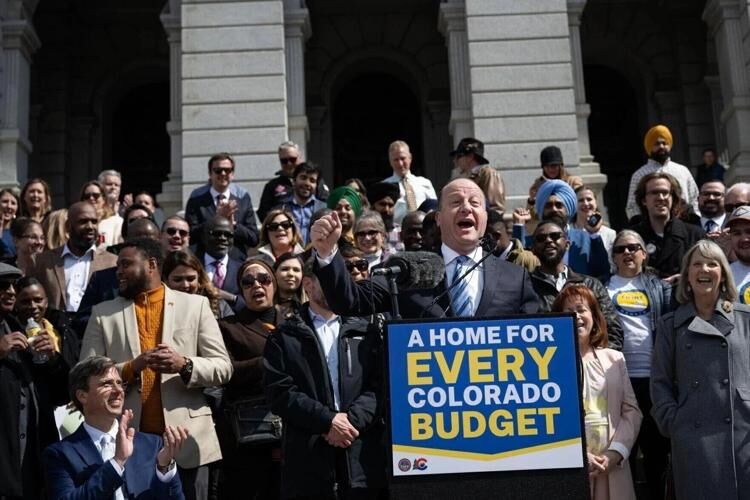
Colorado is currently gripped by a political struggle. It’s one between the governor and state legislature in Denver on one side and populous “home rule” city governments, mainly on the Front Range — such as Colorado Springs. The state legislature...
Home rule has protected Colorado cities for over 125 years | Cronin and Loevy
Tom Cronin Bob Loevy
tom-cronin-bob-loevy@coloradopolitics.com
Updated 19 hours ago
Colorado is currently gripped by a political struggle between the governor plus the legislature in Denver and populous home-rule city governments, mainly on the Front Range, such as Colorado Springs. In the past few years, the legislature has been passing bills that applied to city government policies, which...
An “-“ends tribute in a week full of “odds” | Capitol M | Week of April 11, 2026
Marianne Goodland
marianne.goodland@coloradopolitics.com
Updated 3 days ago
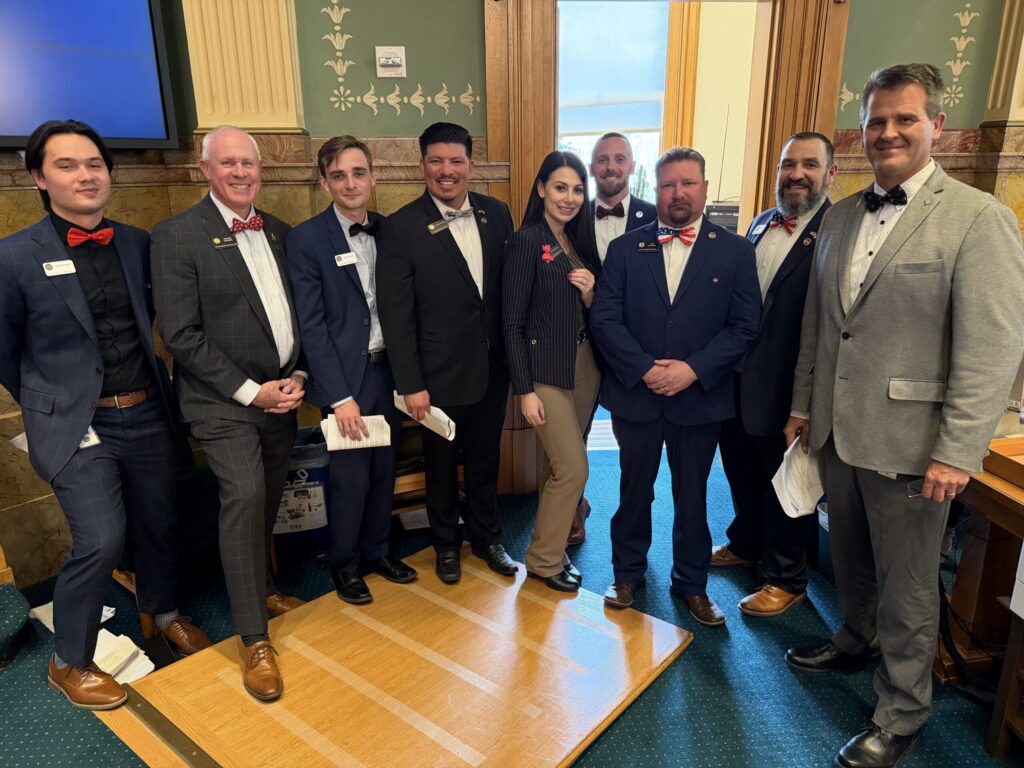
The lighter side of the Capitol, usually… The decision to read the budget bill — the long bill, which spans 661 pages this year — put a damper on the House’s already less‑than‑festive mood. So Capitol M decided to catch...
A longshot, upset bid and a few quick takes | SONDERMANN
By Eric Sondermann
by-eric-sondermann@coloradopolitics.com
Updated 3 days ago
It is hard to keep up these days. The flow of news often seems overwhelming. Let’s focus today on an unusual congressional race before moving on to a few quick, supplementary observations. Since its creation 54 years ago, Congressional District...

Colorado Medicaid director’s resignation long-overdue inflection point for our families, kids | OPINION
Colorado Politics
colorado-politics@coloradopolitics.com
Updated 2 days ago
By Heidi Baskfield For years, the consequences of a strained and fragmented Medicaid system have fallen on those least able to navigate it — the children with complex needs and the families fighting to care for them. Though policy debates...
Note to Colorado lawmakers — parents protecting kids isn’t abuse, it’s their job | OPINION
Colorado Politics
colorado-politics@coloradopolitics.com
Updated 2 days ago
By Matt Sharp and Sharon Supp During the last few years, the U.S. Supreme Court has made at least one thing clear: Colorado is consistently overreaching to apply its laws in unconstitutional ways. Colorado treated a cake artist with hostility...

H.R. 1 underscores unfairness in Colorado tax code | OPINION
Colorado Politics
colorado-politics@coloradopolitics.com
Updated 2 days ago
By Caroline Nutter On July 4, 2025, Colorado’s budget was overturned with the stroke of a pen. When President Donald Trump signed into law H.R. 1, or the One Big Beautiful Bill Act, he didn’t only cut federal funding by...
The danger of when government goes rogue | Paula Noonan
Paula Noonan
paula-noonan@coloradopolitics.com
Updated 2 days ago
It’s dangerous, even fatal, when government goes rogue whether in a democracy or autocracy. Government officials who ignore or taunt laws that constrain bad acts should be given the heave ho. We’re witnessing these egregious scenarios now at the federal...

The future of Colorado condo development | OPINION
Colorado Politics
colorado-politics@coloradopolitics.com
Updated 3 days ago
By Peter LiFari For nearly two decades, the story of condominium construction in Colorado has been mistold, misunderstood and misrepresented. This outcome reflects the cumulative effect of more than two decades of Colorado policy, beginning with the Construction Defect Action Reform...
PREV
PREVIOUS
The 2023 session will determine Colorado's water future | OPINION
Abby Burk Jessica Gelay “Water is the conversation. It will be the centerpiece of our agenda this year,” said newly elected Speaker of the House Julie McCluskie, setting the tone and elevating water issues for Colorado’s 2023 General Assembly. It’s no secret Colorado’s rivers and streams are suffering and our state’s challenges are a good […]
A bid to curb Colorado auto theft | Denver Gazette
Is the legislature finally ready to do an about-face and get tough on auto theft? It has skyrocketed in Colorado the past couple of years – giving our state the highest rate in the U.S. – in the wake of misguided “justice reforms” that watered down penalties in 2021. Just about everybody knows somebody whose […]