

Drifters endanger Colorado communities | Denver Gazette
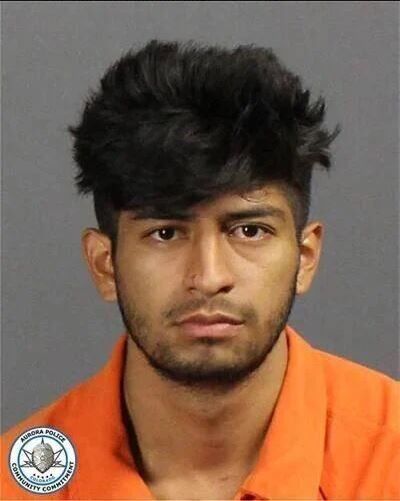
It is of course a relief to know that the man who committed a brutal attack on a woman along a bike path in Aurora – and had attacked another woman who was bicycling with her children – will spend at least some of the next 25 years in prison.
As reported in The Gazette this week, the 18th Judicial District Attorney’s Office announced the sentencing of Julio Cesar Gonzalez, 25, on Monday. It closes the case involving his terrifyingly random acts of violence back in 2020 and, perhaps, provides some closure for the victims.
Gonzalez was sentenced on charges of first-degree assault with a deadly weapon causing serious bodily injury, second-degree assault causing injury with a deadly weapon, and menacing with a real or simulated weapon. He had attacked a woman with a board while she was on her early-morning walk along Aurora’s stretch of the Denver metro area’s popular High Line Canal Trail. She sustained serious head and hand injuries but survived. Only days earlier, the woman who had been bicycling suffered hand injuries after a similar attack by Gonzalez.
The lasting takeaway here – aside from lifelong trauma for the two women and their loved ones – isn’t just that those recreating in public spaces should watch their backs. Indeed, exercising caution amid Colorado’s crime wave probably goes without saying these days.
Rather, the case has broader relevance for all Colorado metro areas; notably, authorities traced Gonzalez to a nearby illegal camp of street drifters. It was one of many such camps that foul urban and suburban areas along the Front Range. It was a potent reminder that the camps breed violence and other criminal activity. That’s over and above the impact of their squalor and disorder on the overall quality of life for nearby neighborhoods and businesses.
The occupants by and large lead a lifestyle of addiction to drugs and alcohol and in many cases suffer from mental illness. They need help, but not the false and futile help of “housing first” or other such nonsensical policies. They first need rehabilitation and recovery from their addictions and treatment for their mental illness before they can hold jobs and pay rent.
Meanwhile, it turns out police were able to implicate Gonzalez in the crime because – get this – he had been wearing a court-ordered, GPS ankle bracelet for a previous offense. That’s right; he was out and about, free to wreak havoc after having previously run afoul of the law.
Fortunately, investigators were able to trace Gonzalez’s virtual footprints via the bracelet’s GPS data, placing him at the time and place of his crimes.
Gonzalez’s sentence seems richly deserved; let’s never mind, for the moment, that in Colorado’s current, lax justice system, he is unlikely to serve anywhere near his full prison term.
Let’s face it: Colorado has been cultivating a permissive culture that fosters these kinds of crimes.
Our state’s elected policymakers as well as judges and even prosecutors in some Colorado communities are largely to blame. They have rewritten our laws and abdicated their own authority in ways that have led to a threefold leniency – toward criminal suspects, toward street vagrants and toward drugs. Too many suspects probably should be in jail rather than “sentenced” to wearing an ankle bracelet. Too often, vagrants are allowed to camp in clear violation of local camping bans. And decriminalization of hard drugs by the legislature in 2019 only lures more drifters and camps.
So long as law-abiding Coloradans expect no better of their elected leaders, the old saw will apply: We get the government we deserve. The same could be said of our justice system.
Denver Gazette Editorial Board

What exactly makes you a public figure? | Hal Bidlack
Hal Bidlack
hal-bidlack@coloradopolitics.com
Updated 8 hours ago
Well, once again, this non-lawyer columnist is going to jump in the deep end of legal scholarship and will explore a recent Colorado Court of Appeals decision. Buckle up. In yet another terrific Colorado Politics Court Crawl article, we learned...

Modernizing Pinnacol is about its members, not politics | IN RESPONSE
Colorado Politics
colorado-politics@coloradopolitics.com
Updated 8 hours ago
By Akasha Absher While we share the passion for protecting Colorado’s workers expressed in a recent op-ed from the perspective of trial attorneys and union representatives, the piece paints a picture of Pinnacol Assurance that is more rooted in 1915...

Mum on his own replacement, Bennet disrespects voters | Dick Wadhams
Dick Wadhams
dick-wadhams@coloradopolitics.com
Updated 3 days ago
U.S. Sen. Michael Bennet is playing an arrogant game of hide-and-seek with Colorado voters as he seeks to abandon his Senate seat to become governor. Bennet insists that if he is elected governor in November, he will wait until he...

What kind of energy independence did we pay for? | Miller Hudson
Miller Hudson
miller-hudson@coloradopolitics.com
Updated 3 days ago
It was during the summer of 1972 AT&T published an internal solicitation for installation and repair supervisors with “inner-city” experience to transfer to Mountain Bell. The catch was an applicant’s readiness to work 10 hours a day, six days a...

Those who cannot live without wild things | Rachel Gabel
Rachel Gabel
rachel-gabel@coloradopolitics.com
Updated 3 days ago
Aldo Leopold wrote in his Sand County Almanac, “There are some who can live without wild things and some who cannot.” The collection of essays first published in 1949 was accepted by a publishing house after a steady stream of...

Thank God for Wyoming — the un-Colorado | Jon Caldara
Jon Caldara
jon-caldara@coloradopolitics.com
Updated 3 days ago
Years ago, I interviewed a Canadian health-care broker whose job was helping his countrymen escape their own failing system. When their “free” health care turned into “free to wait until you die,” he’d save his clients by routing them to...
It’s time to let unaffiliated voters caucus | Vince Bzdek
Vince Bzdek
vince.bzdek@gazette.com
Updated 21 hours ago
There’s no getting around it: Colorado’s 3,000 county caucuses, which just wrapped up recently, left half the electorate out in the cold. Since unaffiliated voters now make up 51% of all Colorado voters, a majority of Colorado electors are barred...
A Mile High, again: Capitol M | Week of March 21, 2026
Marianne Goodland
marianne.goodland@coloradopolitics.com
Updated 6 days ago
The lighter side of the Capitol, usually…. Local Journalism Day, except they forgot their very own local journalists. The state Senate on Thursday, March 19, passed a resolution recognizing Local Journalism Day. Everyone voted for it, which is good, because...

The insular bubble of caucuses and assemblies | SONDERMANN
Eric Sondermann
eric-sondermann@coloradopolitics.com
Updated 5 days ago
Nearly 30 years ago, then-Federal Reserve Chairman Alan Greenspan coined the term “irrational exuberance” to describe the overheated stock market. That descriptive phrase could also apply to much of the political realm. The hype in politics often grossly exceeds the...
Set appropriate state guidelines for critical surveillance technology | OPINION
Colorado Politics
colorado-politics@coloradopolitics.com
Updated 4 days ago
I admit it: I’m worried. I’m hearing a lot about surveillance in the public arena. I hear cameras are capturing my car’s license plate wherever I drive, my face as I go in and out of stores and health facilities,...
PREV
PREVIOUS

Will conceit and contempt define legislative session? | SENGENBERGER
Jimmy Sengenberger Why is it that certain leaders under the Golden Dome insist on exemplifying their conceit and contempt through their legislation and actions? And yes – that’s exactly what is going on at the General Assembly right now. The most recent example is the forthcoming bill to mandate “Fair Workweek Employment Standards” through so-called “predictability […]

Stop protecting Aurora PD — the city must protect the public first | Sentinel Colorado
The state-required intervention into Aurora’s deeply troubled police department desperately needs an intervention. In just the past few days, an Aurora officer was charged with punching a disabled woman in the face while he was off-duty in his apartment complex. A notorious Aurora cop who was protected from being fired after passing out drunk in […]