

Colorado Springs City Council approves new zoning code

The Colorado Springs City Council approved a new zoning code Tuesday laying a foundation for more infill, future neighborhoods with a greater variety of housing and more drought-friendly yards, among a host of other changes.
The vote caps three years of work on the first full zoning code rewrite in 30 years. The effort featured 80 public meetings and input from residents calling for both greater zoning flexibility to address the housing crisis and steps to protect historic neighborhoods.
“I think this has been robust and we have taken time to do this,” Councilwoman Yolanda Avila said.
The new zoning code represents numerous compromises between neighborhood advocates and the city, residents said, noting at the beginning the city proposed allowing more housing density in existing neighborhoods that some people could drive destructive redevelopment in historic areas. Now, the city’s new flexible zone districts that reflect current building trends will apply to new building areas, unless someone requests a zone change.
“We are pleased with the outcome,” said Dutch Schulz, president of Old North End Neighbors. Schulz worked closely with numerous advocates from historic neighborhoods on changes to the code.
The council did not take public comment on the code Tuesday after hearing from residents two weeks ago and instead hammered out final lingering details on controversial issues, including who can appeal land-use decisions, such as rezoning needed for new apartment complexes.
The council broadened who can appeal from a 2-mile radius to a 3-mile radius of a project, so long as the person participates in the city’s decision-making process. For example, the person could speak on the project at a public meeting and have the right to appeal it later. The code allows anyone within 1,000 feet of a project to appeal without participating in the process. In the current code, anyone can appeal.
Councilman Dave Donelson was among those fighting for fewer restrictions on who is allowed to appeal development projects, proposing several alternatives, including not requiring citizens to participate in the process in order to appeal. He said he had heard from residents that they felt the proposed restrictions limited their voice.
“They feel like developers have too much access and too much power,” he said.
Councilman Wayne Williams supported some limits, noting that an out-of-town developer appealed a project on South Nevada Avenue.
“It’s been manipulated in the past,” he said.
The council also resolved concerns the Near North End Neighborhood Association and Historic Neighborhood Partnership raised about making changes to the office-residential zone district, that has allowed residents to operate businesses, such as law offices in old Victorian homes downtown, allowing them to preserve their homes.
Near North End President Cheryl Brown said she feared the proposed change to zoning in the neighborhood south of the Old North End could allow restaurants and other businesses to open too close to homes.
The council decided to preserve the zone district used in the Near North End and other parts of town to prevent those conflicts.
The board also backed an increase in how much space homes can cover on their lots, to allow residents to more easily expand their homes.
Historic Neighborhood Partnership representatives said previously they feared the change could encourage people to tear down older smaller homes and build larger homes, contributing to the housing shortage.
However, the code also allows neighborhoods to apply for a design-standards overlay for the first time that could help protect special architecture and setbacks in older neighborhoods that do not have homeowners associations with covenants to govern the look and feel of buildings.
Some of the other major new changes in the code include guidelines for tiny houses, the town’s first requirements for lighting on buildings and the rules for lawns in neighborhoods that have to be constructed.
The new code limits the amount of high-water-use grass around new homes to 25% of the yard and no less than 100 square feet. The city would allow native grasses that require far less water.



Federal judge rejects constitutional claims, ‘expressions of hatred’ by Club Q defendant
Michael Karlik
michael.karlik@coloradopolitics.com
Updated 4 minutes ago
A federal judge rejected a defendant’s claims that he received constitutionally ineffective assistance of counsel while facing federal hate crime and firearms charges for murdering five people at a Colorado Springs LGBTQ nightclub in 2022. Anderson Lee Aldrich is serving...

2Chamber names its Top 25 Most Powerful Women in Business | NONPROFIT REGISTER
Joanne Davidson Special to Colorado Politics
joanne-davidson-special-to-colorado-politics@coloradopolitics.com
Updated 2 hours ago
COLORADO WOMEN’S CHAMBER OF COMMERCE Denver News: Marielena DeSanctis, chancellor of the Colorado Community College System; Terri Jackson, executive director and co-founder of the African American Trade Association and Emily Trujillo, chief operating officer at HCA HealthONE Centennial, are among the 2026 Top 25 Most Powerful Women...

Space Force should measure workforce needs as it prepares to double in size, GAO report says
Mary Shinn
mary-shinn@coloradopolitics.com
Updated 2 hours ago
The Space Force needs more people. It’s just not precisely sure how many more. A Government Accountability Office report released earlier this month found that the youngest and smallest military branch does not have a process to consistently or accurately...

Colorado schools receive $24 million to fully implement Healthy School Meals for All
Marissa Ventrelli
marissa.ventrelli@coloradopolitics.com
Updated 3 hours ago
The Colorado Department of Education is providing Colorado schools with nearly $24 million in grant funding to fully implement the Healthy School Meals for All program. Approved by voters in 2022, the Healthy School Meals for All provides free breakfast...

Secret Service agent placed on administrative leave after arrest for near-deadly hazing ritual
Claire Carter
claire.carter@washingtonexaminer.com
Updated 4 hours ago
A Miami Secret Service agent in Florida was placed on administrative leave following his arrest on Sunday in connection with a near-deadly hazing incident at a University of Miami fraternity. Marquez Christopher Pinder, 29, was arrested alongside two other individuals...
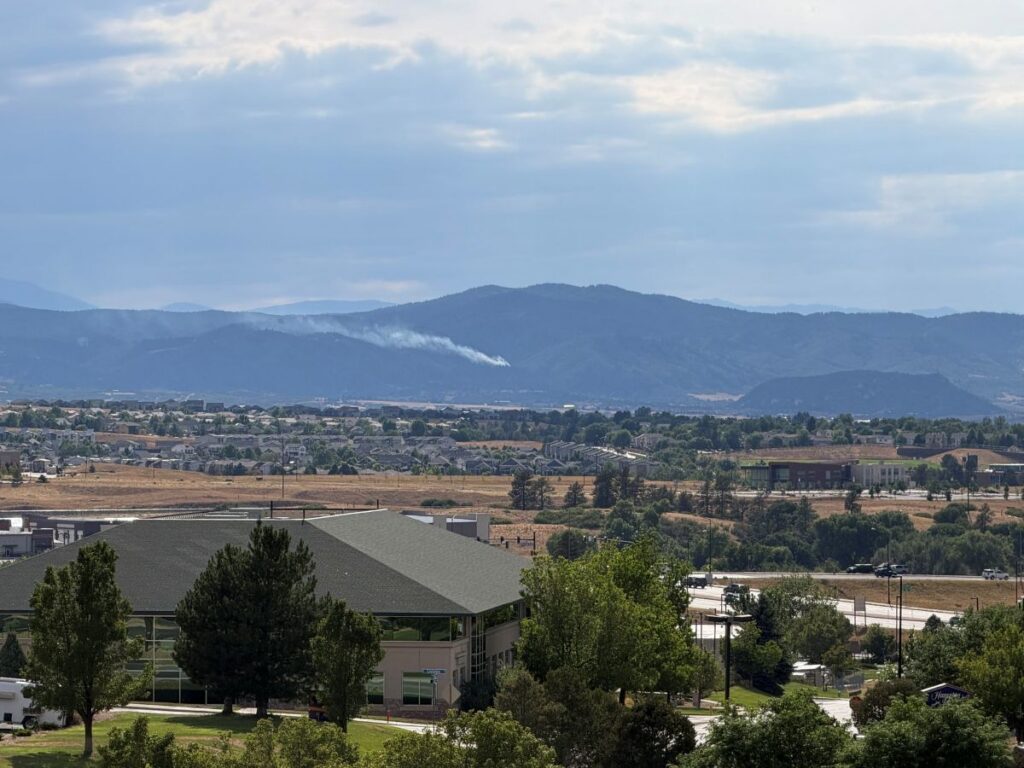
Forest fire west of Sedalia prompts evacuations in Douglas County
Nicholas Fogleman
nicholas.fogleman@denvergazette.com
Updated 6 hours ago
Emergency crews are responding to a forest fire burning west of Sedalia, prompting evacuation orders for nearby residents Sunday afternoon. At about 5 p.m. Sunday, the Douglas County Sheriff’s Office issued an evacuation order for residents within a 2-mile radius...

‘Be prepared to march in the streets’ | Miller Hudson
Miller Hudson
miller-hudson@coloradopolitics.com
Updated 3 days ago
It was early in 1974 when I first met Tim Wirth as he announced his candidacy for Congress, challenging Republican incumbent Don Brotzman. Although I had only resided in Colorado two years, I was drafted to serve as a Democratic...

A Colorado history lesson for Victor Marx | Dick Wadhams
Dick Wadhams
dick-wadhams@coloradopolitics.com
Updated 3 days ago
Victor Marx, who narrowly won the Republican nomination for governor by one half 1% after boasting of a massive 44-point lead, is just as misguided on Colorado political history. During the primary, Marx made a clumsy attempt to denigrate his...

Weiser’s leadership crucial for rural win-win | Rachel Gabel
Rachel Gabel
rachel-gabel@coloradopolitics.com
Updated 3 days ago
Attorney General Phil Weiser is going to win the gubernatorial election. That said, Colorado agriculture and rural communities have a 30-year track record of finding the win-win be it for species or industries or habitat. Former Governor Roy Romer possessed...

Airstrikes have paused and talks are pressing forward. But can the US and Iran take the off-ramp?
The Associated Press
the-associated-press@coloradopolitics.com
Updated 6 hours ago
WASHINGTON (AP) — The U.S. military has paused its airstrikes on Iran after nearly two weeks of intensifying bombing, while diplomatic efforts have pushed forward to try to avert a return to all-out war. But it remains to be seen...