

State Supreme Court returns for arguments, COVID-19 plays role in appeals | COURT CRAWL

Welcome to Court Crawl, Colorado Politics’ roundup of news from the third branch of government.
The state Supreme Court returns this week to hear an unusual docket of oral arguments, and appellate courts recently handed down other decisions implicating public health protocols during the early COVID-19 pandemic.
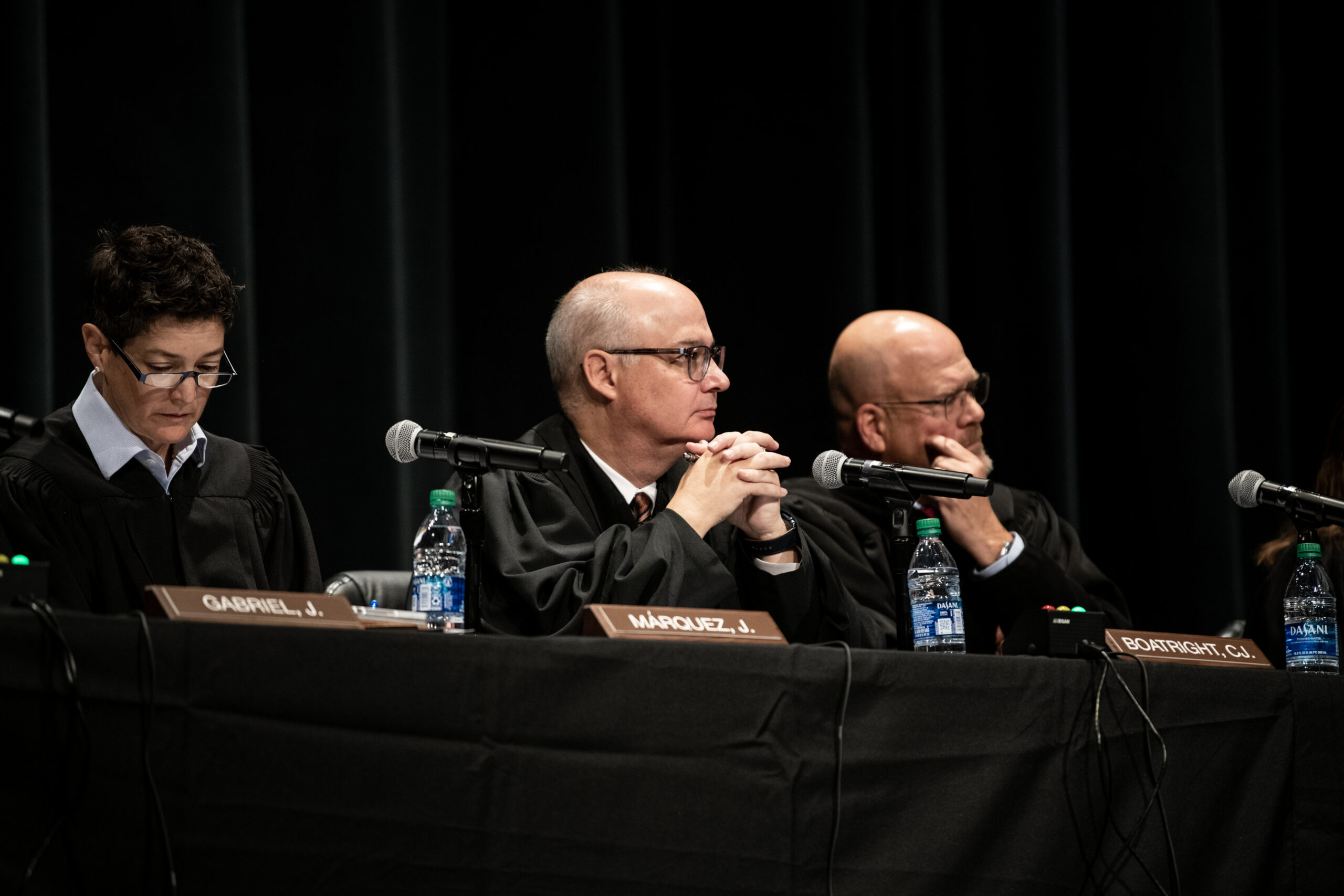
The justices come back to town
? The Colorado Supreme Court will hear only one day (specifically, one morning) of oral arguments this month, but the proceedings are structured a little differently. Four cases from around the state are before the justices that raise the same basic question: Did the COVID-19 pandemic and the accompanying public health regulations amount to “unusual conditions” that would require county assessors to recalculate the value of commercial properties outside of the normal schedule?
? “The fact that dozens of plaintiffs and multiple boards of equalization, from counties across Colorado, await resolution of these issues demonstrates the ‘significant public interest.'” -Court of Appeals Chief Judge Gilbert M. Román, writing to the Supreme Court in an unusual request to hear the appeals
? Also on the Supreme Court’s schedule this week is a public hearing at 3 p.m. on Wednesday, in which the justices will consider a rule governing when the court itself must recuse in the event of judicial disciplinary proceedings involving its members. The proposed rule would establish a “special tribunal” of Court of Appeals judges to hear those cases.
? Finally, Chief Justice Brian D. Boatright will speak to the state legislature on Friday at 11 a.m. to deliver the State of the Judiciary address. It will be streamed over the General Assembly’s video system.
Other COVID-19 appeals
? The state’s Court of Appeals has decided for the first time that COVID-19 safety precautions for jury trials during the early pandemic, specifically masking and physical distancing, did not violate the constitutional rights of a criminal defendant.
? The U.S. Court of Appeals for the 10th Circuit also found Colorado law doesn’t mandate that a property insurer must compensate a restaurant for its lost income back when COVID-19 forced businesses to shut down or limit their capacity to prevent spread of the virus.
In federal news
? Last summer, the 10th Circuit agreed Cherry Creek School District administrators violated a student’s First Amendment rights when they expelled him for making an anti-Semitic “joke” on social media outside of school. But now a trial judge has granted immunity to the officials for their actions.
? A federal judge has long refused to unseal the transcript to a sentencing hearing, in which the defendant and other witnesses spoke critically of a Colorado Springs church that reportedly harasses its enemies. The 10th Circuit said the continued sealing of the transcript was justified under the circumstances.
? The federal government produced 140,637 pages of documents in response to an open records request, but an environmental group sued, alleging the search for documents wasn’t good enough. Yes it was, the 10th Circuit concluded.
? The 10th Circuit green-lit a lawsuit for trial in which a Texas woman is accusing a purchaser of oil and gas royalties of misleading her into thinking there were no active wells associated with her rights, when the opposite was true.
? The Cherry Creek School District did not violate the law by delaying its evaluation of a student for a disability until after he threatened to shoot up his school, the 10th Circuit ruled.
? An environmental group may not sue the federal government to halt its extermination of prairie dogs in urban areas, after a judge ruled that the law allegedly being violated was not intended to protect animals.
? A Black woman formerly employed with Kaiser Permanente will now have a jury decide whether she faced a hostile work environment in which supervisors marginalized or ignored the only two Black massage therapists.
? A judge refused to block enforcement of the state’s ban on “conversion therapy” for LGBTQ children, despite a legal challenge from a Christian therapist.
? After the 10th Circuit decided, 2-1, a judge was wrong to issue an injunction against Denver for its “sweeps” of homeless encampments, the judge conceded the lawsuit was not viable.
? A man may proceed with his lawsuit against two Denver police officers for violating his rights when they arrested him for video recording inside the vestibule of a police station, despite nearby signage allowing him to record there.

? The lawyer for a troubled special district in Jefferson County can’t sue the elected board members for retaliation because the statements she made, which resulted in her firing, weren’t protected under the First Amendment.
? A judge in Washington, D.C. ruled that a lawsuit against the U.S. Environmental Protection Agency may proceed, stemming from a 2015 spill of mine waste near Silverton that ended up in the Animas River.
News from state courts
? An Arapahoe County judge had no authority to require two parents to submit to sobriety testing as a condition for visiting their child, the state’s Court of Appeals ruled.
? A criminal defendant was too poor to pay off the entirety of her restitution (which had actually ballooned in size due to interest) by the end of her probationary period. An El Paso County judge consequently extended her probation. But the Court of Appeals found the law didn’t allow him to do so.
? After the federal appeals court previously decided the Jefferson County sheriff and his deputies couldn’t be held liable for the death of a suicidal jail detainee, the state’s appellate court has now said the same thing.
? An Arapahoe County judge allowed prosecutors to dismiss a juror of color from a trial for reasons linked to her race, an error that requires a new trial for the defendant.

? It took three tries for prosecutors in Rio Blanco County to convict a man of drug and driving-related charges. But the Court of Appeals threw out the convictions and barred prosecutors from trying him a fourth time because the trial judge improperly declared a mistrial.
? An Arapahoe County judge failed to give jurors an instruction on evaluating self-defense, despite the fact that the defendant had presented some evidence of self-defense. The Court of Appeals ordered a new trial.
? Based on statements made at various points throughout the criminal proceedings, the Court of Appeals found it plausible that a public defender knew about, but failed to disclose to her client, a plea offer from the prosecution during the very early stages of his case.
? In three separate lawsuits, fast food workers at Wendy’s and McDonald’s locations throughout the state alleged they were not permitted to take 10-minute, compensated rest breaks as state law requires. The Court of Appeals has now permitted the lawsuits to proceed, in part, as class actions that could affect thousands of workers.
? A woman who left negative online reviews of her dentist succeeded in having the Court of Appeals toss the defamation suit filed against her, based on the lack of any malice in her statements.
? State law requires juries, not trial judges, to make findings that a defendant has prior domestic violence-related offenses. Because a Denver judge did not follow that directive, the Court of Appeals overturned the defendant’s felony convictions.

? A criminal defendant needs to show a request for an officer’s personnel files is not a “general fishing expedition” in order for a judge to review the records, the Court of Appeals decided.
? A woman being evicted discovered the former law firm of the Adams County judge hearing her case had once represented the landlord years ago in an unrelated case. She asked the judge to recuse himself, but the Court of Appeals agreed the link was too weak to find the judge had a conflict of interest.
? An athletic club in Denver had a membership waiver insulating it from liability for injuries occurring during “activities associated with the club.” The club used the waiver to argue it couldn’t be held responsible for a girl’s sexual assault by her tennis instructor. The Court of Appeals disagreed.
Vacancies and appointments
? The governor has appointed Dolores County Court Judge Anthony Nathaniel Baca to be a district judge in the Sixth Judicial District (La Plata, Archuleta and San Juan counties). He will succeed Judge Todd P. Norvell. Although the governor also appointed Baca to the La Plata County Court, the Judicial Department confirmed Baca will only serve as a district judge and another appointee will fill the county court vacancy.
? Applications to succeed Baca as a part-time Dolores County Court judge are due by Jan. 10.
? Applications are also due today to succeed District Court Judge Mark D. Thompson on the Fifth Judicial District bench (Eagle, Clear Creek, Lake and Summit counties).
Miscellaneous proceedings
? The Judicial Department held a discussion about a vacancy in the First Judicial District (Jefferson and Gilpin counties) that featured behind-the-scenes information from trial judges, the governor’s office and the judicial nominating commission.
? One of the law firms litigating a civil case against Aurora for the death of Elijah McClain can collect a $3 million fee from the $15 million settlement with the city, a judge ruled.
? Colorado Politics published a roundup of judicial news in 2022, touching on the new appointees to the federal bench, the fallout from recent U.S. Supreme Court precedent and the rare appearance of the chief justice in Colorado Springs last fall.


Federal judge dismisses malicious prosecution claim against former Denver prosecutor
Michael Karlik
michael.karlik@coloradopolitics.com
Updated 3 hours ago
A federal judge concluded on Monday that a former Denver prosecutor could not be sued for allegedly causing the arrests of two plaintiffs after they failed to appear for trial on the scheduled date, even though the trial had been...
Judicial discipline commission reports increased transparency, increased submissions
Michael Karlik
michael.karlik@coloradopolitics.com
Updated 4 hours ago
The Colorado Commission on Judicial Discipline received 473 misconduct complaints about judges in 2025, which was nearly 29% higher than in 2024 and substantially greater than any time in the past decade. However, only 31 complaints were referred to the commission...
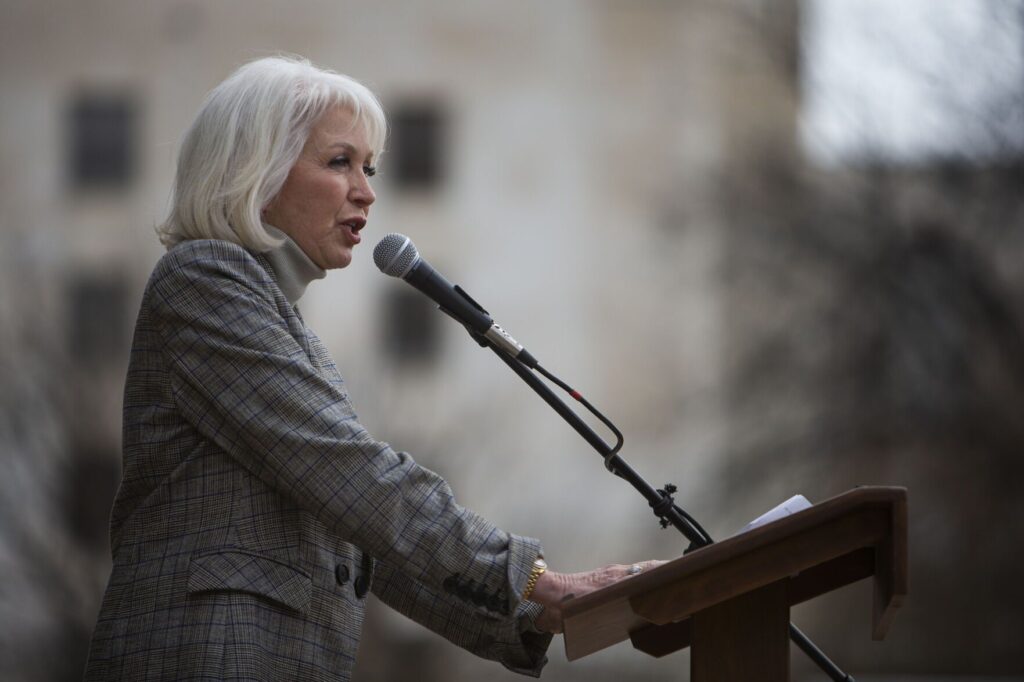
Colorado Gov. Jared Polis ignites fierce debate after raising clemency questions in Tina Peters case
Marianne Goodland
marianne.goodland@coloradopolitics.com
Updated 9 minutes ago
Gov. Jared Polis ignited a political firestorm Tuesday night after weighing in on the prison sentences of two former Colorado officials convicted of attempting to influence a public servant. The comments quickly fueled speculation about possible clemency for former Mesa...

Colorado Supreme Court signals intervention in dispute over treatment for trans children
Michael Karlik
michael.karlik@coloradopolitics.com
Updated 23 hours ago
The Colorado Supreme Court ordered Children’s Hospital Colorado on Tuesday to explain why it should not direct the organization to resume providing certain types of services to transgender children in compliance with the state’s non-discrimination law. Last month, a Denver...

Judge nixes latest policy requiring 7 days’ notice for Congress members to visit ICE facilities
Michael Kunzelman
michael.kunzelman@associatedpress.com
Updated 1 day ago
WASHINGTON (AP) — A federal judge agreed on Monday to temporarily suspend the latest version of a Trump administration policy that requires members of Congress to provide a week’s notice before they can visit immigration detention facilities. U.S. District Judge...
Judge nixes latest policy requiring 7 days’ notice for Congress members to visit ICE facilities
Michael Kunzelman
michael.kunzelman@associatedpress.com
Updated 23 hours ago
WASHINGTON • A federal judge agreed on Monday to temporarily suspend the latest version of a Trump administration policy that requires members of Congress to provide a week’s notice before they can visit immigration detention facilities. U.S. District Judge Jia...
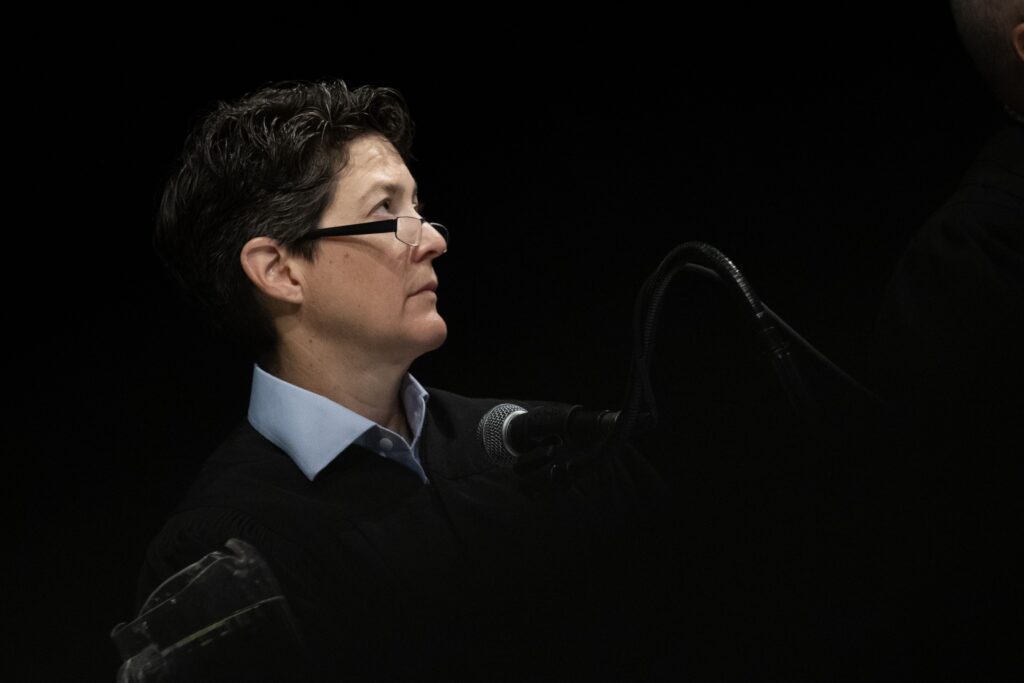
Colorado Supreme Court clarifies restraining order violations can always support burglary charge
Michael Karlik
michael.karlik@coloradopolitics.com
Updated 2 days ago
The Colorado Supreme Court’s majority ruled on Monday that a violation of a restraining order can also serve as a basis for finding a defendant guilty of burglary. Under state law, a person commits second-degree burglary by unlawfully entering or...

10th Circuit judge creates vacancy, district court gets new chief judge | COURT CRAWL
Michael Karlik
michael.karlik@coloradopolitics.com
Updated 1 day ago
Welcome to Court Crawl, Colorado Politics’ roundup of news from the third branch of government. A longtime member of the Denver-based federal appeals court will give the president a vacancy to fill, plus Colorado’s federal trial court will see a...

Morgan County man accused of killing wife, staging her suicide charged with first-degree murder
Kyla Pearce
kyla.pearce@gazette.com
Updated 22 hours ago
A grand jury announced the indictment of 52-year-old Ronald Lowry, who is accused of killing his wife in October 2023 and staging the crime scene to look like a suicide. Lowry, who was arrested Friday in Morgan County, was charged...
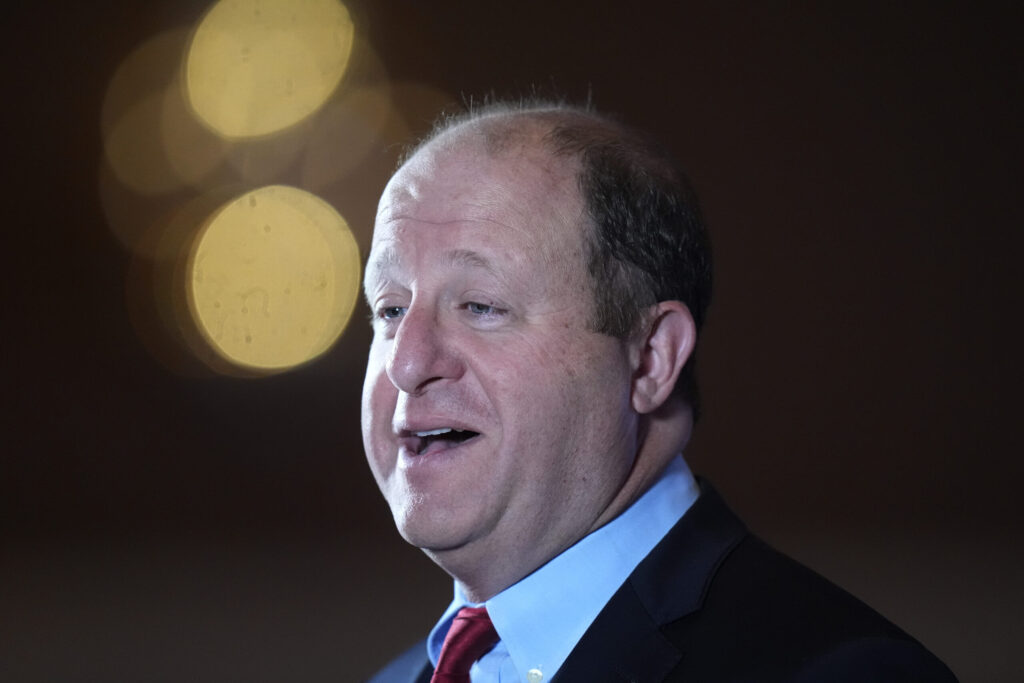
Gov. Jared Polis moves to end ICE subpoena fight over Colorado workers’ personal data
Marianne Goodland
marianne.goodland@coloradopolitics.com
Updated 5 days ago
The effort by Gov. Jared Polis to comply with an administrative subpoena from U.S. Immigration and Customs Enforcement for information held by several state agencies is over. Polis, in a motion filed Feb. 20, asked for a permanent injunction and...
PREV
PREVIOUS

Judge grants immunity to Cherry Creek schools officials who expelled student over anti-Semitic 'joke'
Although the federal appeals court based in Denver decided last year that Cherry Creek School District officials violated the constitutional rights of a student by expelling him for an off-campus social media post, a judge on Friday concluded they could not be sued for their actions after all. Last July, the U.S. Court of Appeals […]

Julie McCluskie elected House Speaker after challenge from freshmen Republicans
State Rep. Julie McCluskie was elected as Colorado’s new speaker of the House on Monday, following a challenge from newly elected Republican Rep. Scott Bottoms. McCluskie, D-Dillon, won the election in a 55-8 vote, which marks the second election in a row in which the vote for speaker was not unanimous. The speaker election in […]