

Appeals court dismisses dentist’s defamation lawsuit against woman who left negative reviews
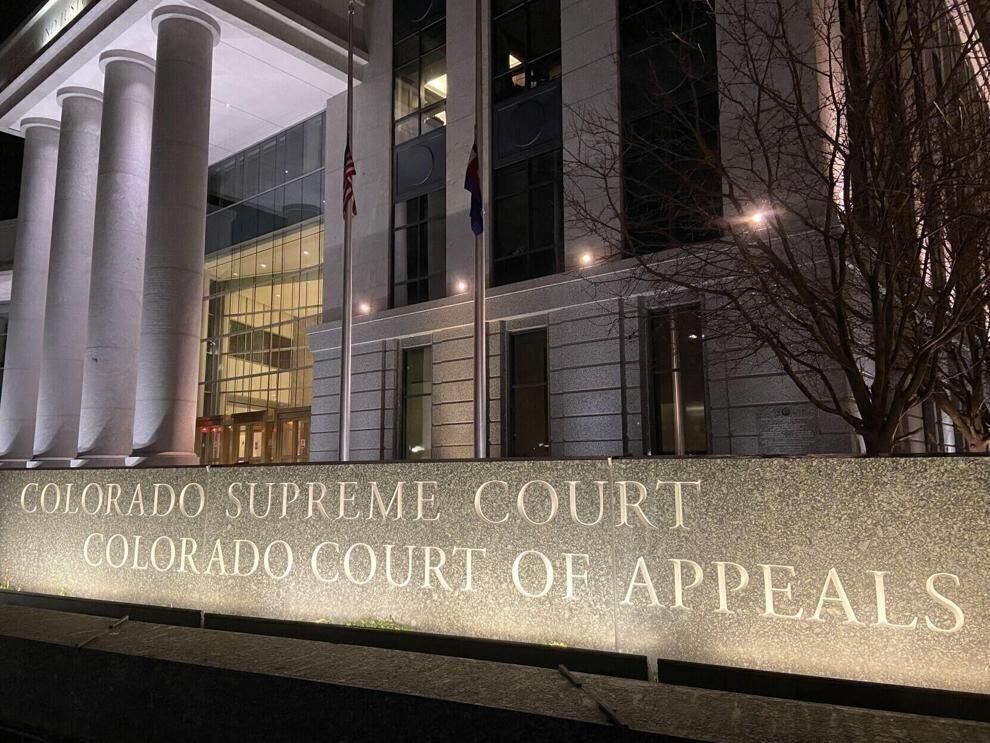
Colorado’s second-highest court has dismissed a dentist’s defamation lawsuit against a Crestone woman who left him negative reviews following her unsatisfactory root canals, basing its ruling on a recently-enacted state law designed to block meritless lawsuits involving First Amendment activity.
Creekside Endodontics of Lone Tree and its dentist, Andrew Stubbs, sued former patient Kathryn Sullivan for a series of Yelp and Google reviews in which she accused Stubbs of mishandling her procedure, ignoring her pain and attempting to “gaslight” her. Sullivan, in response, sought to quickly end the litigation under Colorado’s “anti-SLAPP” law, which stands for “strategic lawsuits against public participation.”
Although a trial judge declined to toss the lawsuit, reasoning that a jury could find Sullivan’s statements were not speech protected by the First Amendment, a three-judge panel of the Court of Appeals reversed that decision last week. Sullivan’s online reviews were ultimately based on legitimate information she received about Stubbs overfilling her root canals, wrote Judge Terry Fox for the panel.
“Sullivan engaged in a lengthy investigation, received conflicting viewpoints, and ultimately chose to believe one professional opinion over another,” she noted in the Dec. 22 opinion. “All told, plaintiffs did not show a reasonable likelihood that Sullivan made the statements related to Dr. Stubbs’ dental work with actual malice.”
Judge David H. Yun wrote separately to say that he agreed with the outcome, but barely. Both sets of litigants came into the appellate proceedings with the belief Stubbs would need to prove Sullivan made her statements with “actual malice,” a high standard that Colorado courts apply to public figures or issues of public concern. This case was not in that category, Yun felt.
“The record contains no evidence that Dr. Stubbs’ dental care affected anyone other than Sullivan or that Sullivan’s message was intended to enlighten the public about a political, social, or other concern in the community,” he wrote. “Accordingly, Sullivan’s online reviews do not involve a matter of public concern.”
But because the parties had not argued that point, Yun concurred with the defamation suit’s dismissal.
Sullivan first visited Stubbs’ dental office in July 2019 after being dissatisfied with work done by a prior dentist. Stubbs, an endodontist specializing in root canals and tooth pain, performed root canals on four of Sullivan’s teeth.
Initially, Sullivan appeared content with the procedure. In August 2019, she posted on Yelp that Stubbs “was responsive to all my communication and requests for paperwork” and it was “so refreshing to have a dentist who’s on top of communication.” Sullivan also called Creekside Endodontics a “Five star office all the way.”
However, Sullivan soon began experiencing pain. She corresponded with Stubbs over email, but also posted on a Facebook group entitled “Denver Dental Peeps Network.” Sullivan attached her x-rays and suggested Stubbs had overfilled her teeth, which was causing the pain.
The x-rays look “pretty darn good,” “look fine” and appear “WNL,” or within normal limits, people commented on her post. Although Stubbs did agree to retreat one tooth, he eventually stopped seeing her because he did not agree with her desired course of treatment. Sullivan requested a full refund, but Stubbs declined.
“Okay, but it is your reputation on the line,” Sullivan told him.
Sullivan went to three other dentists, who told her overfilling was indeed a problem and likely causing her pain near her sinuses. In October 2019, Sullivan proceeded to post three more reviews of Stubbs and Creekside Endodontics, describing his unsatisfactory work on her root canals.
“He has refused all accountability,” was “sub par and below the standard of care,” “tried to gaslight me to escape accountability” and “actively tried to hide the overfills,” she wrote. “SHAME ON YOU FOR NOT LISTENING TO ME AND DENYING MY PAIN, DR STUBBS!”
Stubbs then sued Sullivan for defamation. In her defense, Sullivan invoked the 2019 anti-SLAPP law, which the legislature enacted to quickly terminate lawsuits based on First Amendment-protected activity, specifically the rights to free speech and to petition the government. Unless there is a “reasonable likelihood” a defamation claim will succeed, the law empowers judges to dismiss the lawsuit.
“All of the statements in Ms. Sullivan’s reviews about Dr. Stubbs and Creekside are either true statements of fact, or opinions based on disclosed facts, and therefore are protected by the First Amendment,” wrote her attorney, Ashley I. Kissinger. “Ms. Sullivan posted her reviews only after multiple independent dental professionals told her the root canals were overfilled, they were likely the source of her pain, and she needed further treatment or extraction of the teeth.”
But in September of last year, Saguache County District Court Judge Crista Newmyer-Olsen denied the anti-SLAPP motion to dismiss the case. She found that Stubbs had shown there was at least “minimal merit” to the lawsuit, and a jury should decide whether Sullivan’s reviews amounted to defamation.
Sullivan appealed, arguing Stubbs had to show at the outset that she had acted with actual malice, meaning in reckless disregard of the truth, and Newmyer-Olsen was wrong for holding Stubbs to a minimal threshold.
“Can you help me understand why actual malice applies to the Yelp reviews in this case,” Yun asked Sullivan’s attorney during oral arguments, noting the dispute fundamentally revolved around dental work and not an obvious political or public policy concern.
“That’s right, but the purpose of her review is to warn other consumers of her experience. And Colorado courts have recognized that it’s important to provide extra protection to these types of statements,” responded lawyer Lauren Russell.
Weston Cole, representing Stubbs, countered that Sullivan’s sole purpose was to retaliate against his client, and she “manipulated or misrepresented” the other dentists’ opinions in her reviews.
Ultimately, the panel agreed Sullivan was correct. Stubbs needed to produce “clear and convincing evidence of actual malice.” Instead, the facts suggested Sullivan originally felt good about Stubbs’ treatment, but began to harbor doubts and sought out other professional opinions. Only after she learned from multiple sources that Stubbs had overfilled her teeth did she call him out publicly for his denials.
Although the trial judge had faulted Stubbs for discounting the Facebook commenters’ diagnosis that her teeth “look fine,” Fox explained that the online interaction was “but one small part” of Sullivan’s investigation.
“In the end, she chose to believe the opinions of three dentists – two of whom examined her in person – with credentials she trusted, rather than the Dental Peeps commenters who opined, based on screenshots of the images, that Dr. Stubbs’ work appeared normal,” she wrote for herself and Judge Ted C. Tow III.
Yun, in his concurrence, observed Colorado law does not clearly delineate whether a defamation issue is a “public concern” that requires a showing of actual malice. He did not believe the standard for public officials and issues should extend to private disputes, including Google and Yelp reviews of businesses.
“In my view, because of the proliferation of internet forums such as Yelp and Google, the majority’s opinion risks constitutionalizing defamation claims involving private disputes between private individuals,” Yun warned.
The case is Creekside Endodontics, LLC et al. v. Sullivan.

GoFundMe donations for victim do not lessen defendant’s restitution obligation, appeals court rules
Michael Karlik
michael.karlik@coloradopolitics.com
Updated 14 hours ago
Donations made to a victim’s crowdfunding page do not necessarily reduce the defendant’s obligation to pay crime victim restitution, Colorado’s second-highest court concluded on Thursday. Under state law, crime victim compensation boards reimburse victims for certain monetary losses, including funeral...
Colorado senators initially push for — then drop ‘identity’ factor in parenting time decisions
Marissa Ventrelli
marissa.ventrelli@coloradopolitics.com
Updated 14 hours ago
The sponsors of a proposal that would require suppression of records in name-change petitions for minors removed a provision that would have mandated the courts to factor in the issue of “identity” when allocating parenting time. In its original form,...
Appeals court divided over effect of retroactive sentence on parole calculation
Michael Karlik
michael.karlik@coloradopolitics.com
Updated 20 hours ago
Colorado’s second-highest court grappled last week with the framework for calculating a defendant’s earliest possible parole date in light of two intersecting legal principles — a judge’s ability to make an order retroactive, and the requirement that separate, simultaneous sentences...
Federal judge allows some claims to proceed over denial of cancer meds in El Paso County jail
Michael Karlik
michael.karlik@coloradopolitics.com
Updated 2 days ago
A federal judge allowed claims to proceed last week against some medical and sheriff’s office employees at the El Paso County jail over their alleged failure to ensure a detainee received his cancer medication during four months of incarceration. Stuart...
Colorado’s chief justice exceeds average number of dissents with 4-plus months left in term
Michael Karlik
michael.karlik@coloradopolitics.com
Updated 2 days ago
Since the start of the Colorado Supreme Court’s 2025-2026 term in September, Chief Justice Monica M. Márquez has now exceeded her average number of dissenting opinions, with more than four months remaining before the court breaks for the summer. The...
Appeals court finds state wrongly blocked ex-worker’s evidence in termination challenge
Michael Karlik
michael.karlik@coloradopolitics.com
Updated 2 days ago
Colorado’s second-highest court ruled last week that the Colorado State Personnel Board wrongly blocked a former employee from submitting documentation to challenge his termination, even though he followed the board’s instructions to obtain the materials. Eric Strumpf was the budget...

Colorado’s ‘first public Christian school’ sues state, alleges discrimination
Eric Young
eric.young@gazette.com
Updated 13 hours ago
Riverstone Academy, a public elementary school that opened last fall in Pueblo as a tuition-free option with Christian-based instruction, has filed a lawsuit against the state of Colorado over alleged religious discrimination. The lawsuit, filed in U.S. District Court for...
Divided Colorado Supreme Court rejects defendant’s claim of deficient DNA investigation
Michael Karlik
michael.karlik@coloradopolitics.com
Updated 2 days ago
The Colorado Supreme Court decided on Tuesday, by 4-2, that a defendant failed to allege how uninvestigated, inaccessible DNA evidence would have shown he was wrongly convicted. When Jamale D. Townsell filed a petition from prison seeking postconviction relief, he...
Colorado justices uphold shooting conviction despite jury saying defendant not the shooter
Michael Karlik
michael.karlik@coloradopolitics.com
Updated 2 days ago
The Colorado Supreme Court ruled on Tuesday that a man can stand convicted of murder, even though jurors found he was not the one who shot the victim and the evidence suggested he was not present for the shooting. There...
Susan Blanco new Colorado Supreme Court justice
Michael Karlik
michael.karlik@coloradopolitics.com
Updated 3 days ago
Chief Judge Susan Blanco of Larimer and Jackson counties is the newest member of the Colorado Supreme Court, Gov. Jared Polis announced on Tuesday. “A few words come to mind: Innovation. Excellence. Creativity. Hard work. These are values we need...
PREV
PREVIOUS

Southwest Airlines cancellation woes last another day Thursday going into holiday weekend
Denver continued to be a the top of the list for Southwest Airlines cancellations with around 300 into and out of Denver International Airport Thursday. In a Thursday news release which expressed “our deepest apologies,” the company is promising that the backlog will lift by the holiday weekend. In an email, the troubled company said […]

New laws going into effect Jan. 1 include more implementation on fentanyl bill
Twenty new laws are set to hit the books on Jan. 1, 2023. Here’s a look at what changes in the Colorado Revised Statutes. House Bill 22-1025: Repeals eight tax breaks that have had little usefulness. The state will gain revenue from the repeals, to the tune of about $400,000 in fiscal year 2023-24. What […]