

Judge green-lights lawsuit of Black former Kaiser employee for trial

A jury will now decide whether a former Colorado employee of Kaiser Permanente experienced a hostile work environment, after a federal judge concluded the evidence could show Moureene Taylor and her only other Black colleague were effectively ignored in their workplace.
Last month, U.S. District Court Judge Nina Y. Wang determined a series of incidents at Kaiser showed a theme of supervisors ostracizing Taylor or failing to act on her concerns. Although Kaiser asked Wang to grant summary judgment in its favor and find no severe and pervasive harassment was directed at Taylor because of race, Wang declined to do so.
“It is not the role of the court at summary judgment to determine credibility of the witnesses,” she wrote in a Nov. 10 order. “Rather, based on the evidence, if believed, a jury could find a work environment that was permeated with intimidation and insult that Ms. Taylor experienced because she is Black.”
Although Taylor did not point to a legal framework that would allow her to sue based on a theory of an employer ignoring its Black workers, Kaiser did not challenge the framing of her claim. Moreover, Wang pointed out that other courts have held “incidents of exclusion” are viable grounds to prove a hostile work environment.
Taylor worked as an on-call massage therapist between February 2018 and May 2019. Her employer was the Kaiser Foundation Health Plan of Colorado, a nonprofit health plan that is part of Kaiser Permanente. Initially, she was stationed at the Center for Complementary Medicine in Lakewood.
While there, an acupuncturist reportedly harassed Taylor by demeaning her to a patient, standing over her to read a list of his expectations, and placing his personal belongings and acupuncture needles on her desk, which Taylor interpreted as intimidation.
Her direct supervisor, Robert Smigelski, allegedly chuckled when Taylor complained, and instead transferred her to another facility. But other incidents continued to occur involving Taylor and the only other Black massage therapist, Roberta “Birdie” Johnson.
The two women were removed from Kaiser’s website, where they had been listed as providers. Although Johnson received an explanation that she had been removed because she was on medical leave, another white employee who was also on leave maintained his listing on the website.
Melissa de Picciotto, who was Smigelski’s supervisor, omitted Johnson and Taylor from a meeting invitation for all massage therapists. De Picciotto allegedly told Johnson at one point, “I just don’t know how to talk to you people,” which Johnson interpreted as racist.
When Kaiser decided in early 2021 it would disband the massage therapy group in Colorado, another massage therapist angrily approached Taylor and allegedly yelled, “This is your and Birdie’s fault.”
“She believed that management wanted to get rid of its two Black massage therapists and the easiest way to hide any possible discrimination was simply to disband the group,” Taylor claimed in her lawsuit.
Taylor named other seemingly-minor workplace slights against her, including supervisors not addressing the two Black women in a meeting, de Piciotto being dismissive of Taylor, the removal of Taylor’s personal belongings from her workspace, and Smigelski addressing Taylor by her last name, which made her feel differentiated from the rest of the massage group.
“What was happening? Ms. Taylor and Ms. Johnson were being ignored,” wrote Robert Liechty, an attorney for Taylor. “Not politely ignored, as in a Victorian novel – they were being ignored as if they were not there, as if they did not exist.”
In March of this year, Kaiser moved to end the lawsuit.
“None of these actions, alone or together, are objectively offensive. There is no evidence that Ms. Taylor was subject to any offensive remarks, physical threats, humiliation, or ridicule,” lawyers for the company wrote. “The evidence demonstrates, at most, a work environment containing intermittent and isolated personality conflicts.”
Wang disagreed. The differential treatment of Taylor and Johnson, as well as the supervisors’ alleged failure to do anything about Taylor’s ensuing complaints, suggested a strategy of ignoring the two Black massage therapists.
“Ms. Taylor’s hostile work environment claim is not based on the use of any overt race-based statements or slurs against her by anyone at Kaiser,” she wrote. Although Kaiser had cited the absence of any explicitly racist remarks made to Taylor, “these arguments fail to address plaintiff’s theory – namely, that defendants created a hostile work environment by ostracizing Ms. Taylor.”
At the same time Wang permitted Taylor’s hostile work environment claim to proceed, she sided with Kaiser on Taylor’s assertion that she was owed a $45,000 severance when the massage therapy unit shut down. Although the other employees had received a severance, Taylor’s status as an on-call employee meant she was ineligible for the payout.
A four-day jury trial is scheduled to begin in June.
The case is Taylor v. Kaiser Foundation Health Plan of Colorado.


New Supreme Court member announced, justices hear oral arguments | COURT CRAWL
Michael Karlik
michael.karlik@coloradopolitics.com
Updated 4 hours ago
Welcome to Court Crawl, Colorado Politics’ roundup of news from the third branch of government. The governor announced his pick to fill a vacancy on the state Supreme Court, and the justices heard oral arguments in multiple criminal and civil...

Colorado’s federal judges maintain approach to immigration detentions while escalating warnings
Michael Karlik
michael.karlik@coloradopolitics.com
Updated 2 days ago
Colorado’s federal judges are maintaining their view that the government’s assertion of broad immigration detention authority is unlawful, casting aside a recent appellate decision to the contrary as “unpersuasive” and out of step with the predominant interpretation by the judiciary....
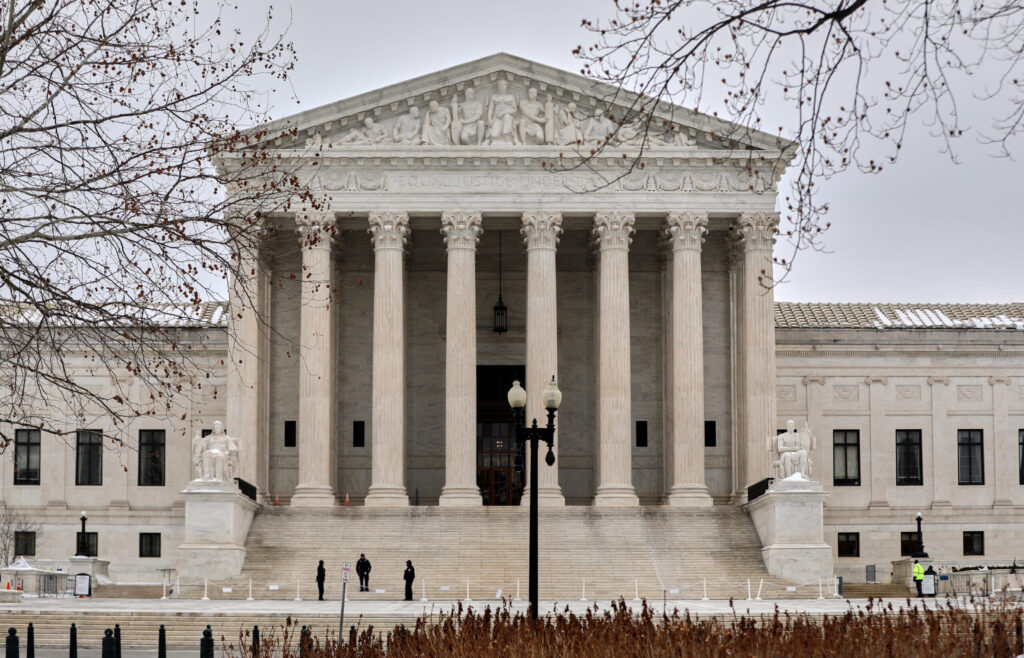
U.S. Supreme Court strikes down Trump’s tariffs, upending central plank of economic agenda
Lindsay Whitehurst
lindsay.whitehurst@associatedpress.com
Updated 3 days ago
WASHINGTON • The Supreme Court struck down President Donald Trump’s global tariffs on Friday, handing him a major loss on an issue crucial to his economic agenda. The 6-3 decision centers on tariffs imposed under an emergency powers law, including...

Federal judge partially allows challenge to proceed against Colorado unclaimed property program
Michael Karlik
michael.karlik@coloradopolitics.com
Updated 3 days ago
A federal judge allowed some claims to proceed last week against Colorado’s treasurer, based upon alleged constitutional violations flowing from the state’s process for reuniting people with their unclaimed property. Previously, U.S. District Court Judge Charlotte N. Sweeney dismissed the...
GoFundMe donations for victim do not lessen defendant’s restitution obligation, appeals court rules
Michael Karlik
michael.karlik@coloradopolitics.com
Updated 23 hours ago
Donations made to a victim’s crowdfunding page do not necessarily reduce the defendant’s obligation to pay crime victim restitution, Colorado’s second-highest court concluded on Thursday. Under state law, crime victim compensation boards reimburse victims for certain monetary losses, including funeral...
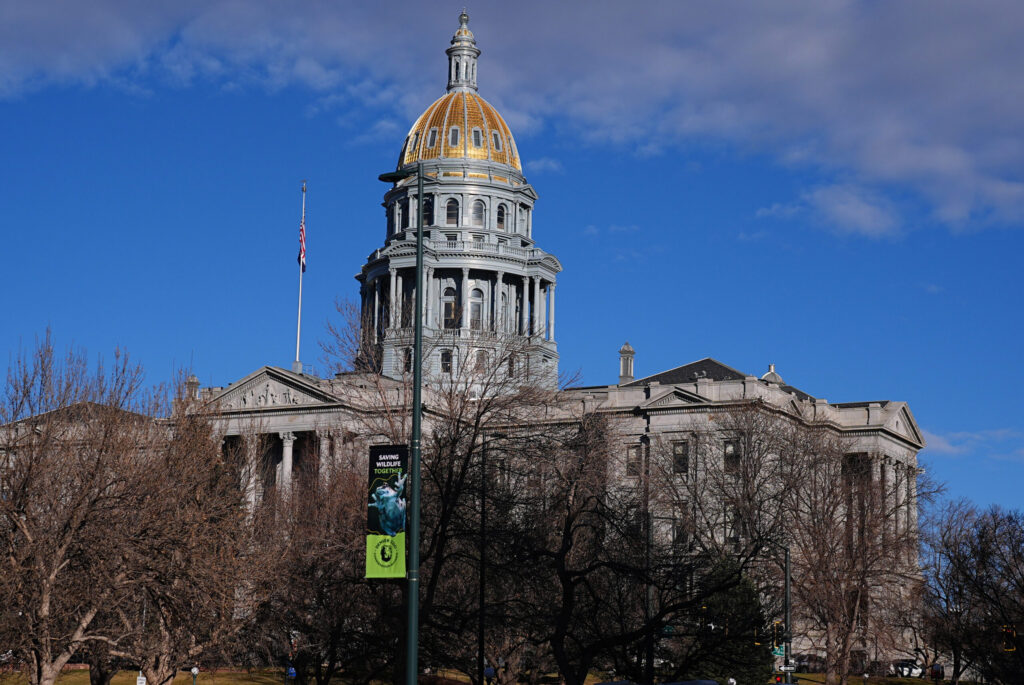
Colorado senators initially push for — then drop ‘identity’ factor in parenting time decisions
Marissa Ventrelli
marissa.ventrelli@coloradopolitics.com
Updated 3 days ago
The sponsors of a proposal that would require suppression of records in name-change petitions for minors removed a provision that would have mandated the courts to factor in the issue of “identity” when allocating parenting time. In its original form,...
Appeals court divided over effect of retroactive sentence on parole calculation
Michael Karlik
michael.karlik@coloradopolitics.com
Updated 23 hours ago
Colorado’s second-highest court grappled last week with the framework for calculating a defendant’s earliest possible parole date in light of two intersecting legal principles — a judge’s ability to make an order retroactive, and the requirement that separate, simultaneous sentences...

Federal judge allows some claims to proceed over denial of cancer meds in El Paso County jail
Michael Karlik
michael.karlik@coloradopolitics.com
Updated 2 days ago
A federal judge allowed claims to proceed last week against some medical and sheriff’s office employees at the El Paso County jail over their alleged failure to ensure a detainee received his cancer medication during four months of incarceration. Stuart...
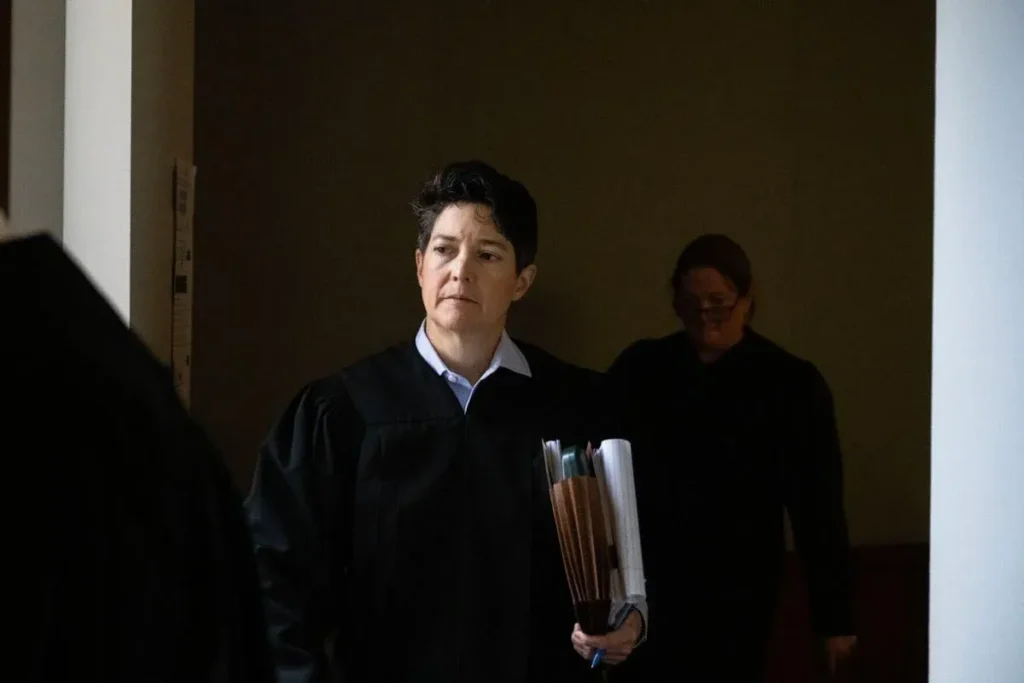
Colorado’s chief justice exceeds average number of dissents with 4-plus months left in term
Michael Karlik
michael.karlik@coloradopolitics.com
Updated 5 days ago
Since the start of the Colorado Supreme Court’s 2025-2026 term in September, Chief Justice Monica M. Márquez has now exceeded her average number of dissenting opinions, with more than four months remaining before the court breaks for the summer. The...
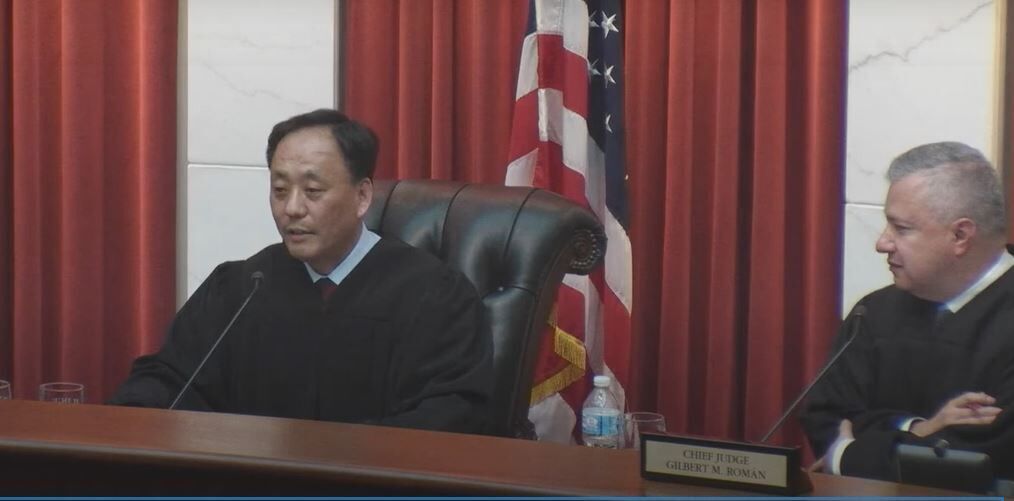
Appeals court finds state wrongly blocked ex-worker’s evidence in termination challenge
Michael Karlik
michael.karlik@coloradopolitics.com
Updated 5 days ago
Colorado’s second-highest court ruled last week that the Colorado State Personnel Board wrongly blocked a former employee from submitting documentation to challenge his termination, even though he followed the board’s instructions to obtain the materials. Eric Strumpf was the budget...
PREV
PREVIOUS
Colorado forms task force to fight online sale of stolen products
Colorado has formed a new task force charged with cracking down on products being stolen and anonymously resold through online marketplaces, such as eBay and Facebook. Attorney General Phil Weiser announced the formation of the statewide task force on Wednesday. He said it will enhance coordination between law enforcement agencies, allowing them to identify and […]

Denver International Airport to review thousands of flight cancellations over holiday weekend
The Denver International Airport will work with Southwest, Frontier and United Airlines to review why thousands of Colorado flights were canceled or delayed over the Christmas holiday weekend. Airport authorities announced Wednesday that it would conduct the reviews over the next two weeks. The reviews aim to uncover what happened, why it happened and how […]