

Don’t leave Denver in the deep freeze | Denver Gazette
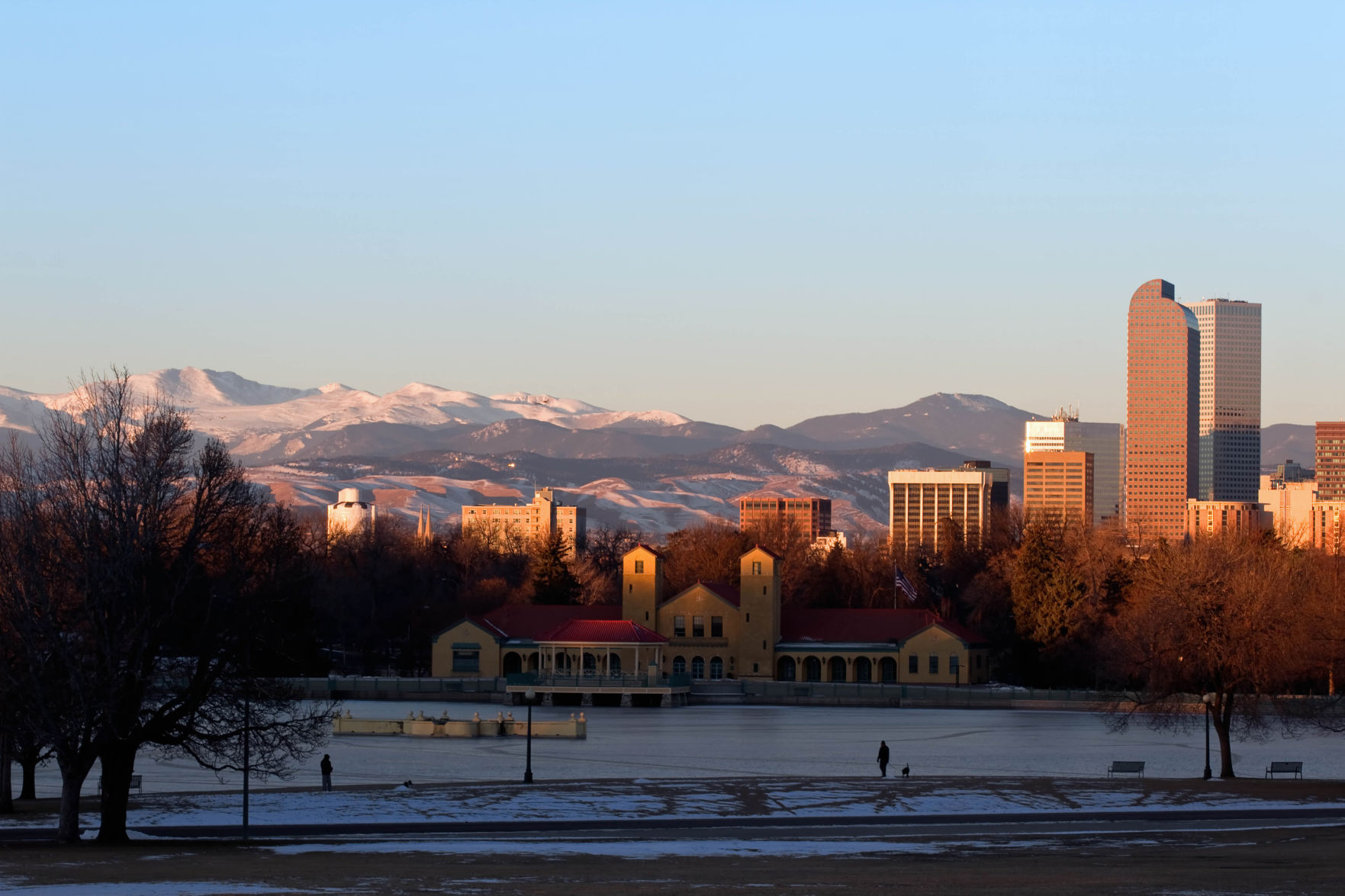
In a case of ironically awkward timing, a handful of climate activists called on the Denver City Council earlier this week to mandate that future homes in the city be all electric. As reported by The Gazette, the appeal was directed to a council committee deliberating changes to the city building code – only a day ahead of an arctic blast forecast for the city and entire state.
“We have to continue the equitable transition to good affordable housing that is pollution free, and this starts with the phase-out of gas in new construction,” said resident Megan Hebling. “The enormous cost of maintaining the city’s gas infrastructure is already driving up costs for working families.”
Added resident Anne Kramer, “Electric homes are simply better…They are more efficient, resulting in lower energy bills, they provide more comfort, they have healthier indoor air quality and they’re cleaner and better for the environment.”
As noted in The Gazette’s report, Kramer went on to claim it is cheaper to build an all-electric home, saving $800 in building costs and $300 annually.
The impact on the up-front cost of going electric-only is unclear. The cost of building homes that accommodate either approach – mixed gas-electric and all electric – is more expensive, builders say. That only stands to reason as a house would have to have that much more hardware – some of which never will be used either way.
What seems a lot clearer is the lack of any practical alternative to natural gas for heating homes, businesses, offices, schools or any other buildings in Colorado’s climate. Whether through gas-fired forced air, or gas-fired hot water circulated through radiators, natural gas is by far the most practical, cost-effective way to heat a home in a Colorado winter.
Never mind during the subzero cold fronts that blow in from time to time. Like this week’s.
Imagine trying to heat a Colorado home on a day like today with one of the electric heat pumps designed to ward off the mild winter chill in a place like Dallas or Phoenix. The mere thought makes you shudder.
And that’s not to mention the strain of going all electric on the state and regional power grid and its power-generation capacity – or lack thereof. Colorado’s energy infrastructure, like much of the country’s, just doesn’t have the carrying capacity to generate and deliver that much megawattage.
It also, of course, would mean burning that much more natural gas or coal as that is still how most of the state’s and nation’s electricity is generated.
We probably can’t expect climate activists who fret about incrementally rising sea levels to put their fears in perspective. Those for whom ideology trumps energy never will see reason.
But the rest of the community should be more thoughtful about what feel-good mandates are imposed on buildings – lest they turn into feel-bad realties.
It would be wise to maintain a balance among fuels in our state’s energy portfolio. Extreme-green policies based on hopes of locally influencing global climate only will leave Denver in the deep freeze.
Denver Gazette Editorial Board



If only walls could talk in Colorado governor’s office | Dick Wadhams
Dick Wadhams
dick-wadhams@coloradopolitics.com
Updated 13 hours ago
Restoring the office of the governor in the Colorado State Capitol to its historic glory was a worthy project despite its cost. There is probably never a good time to spend $2.4 million on such a restoration but it is...

TABOR and the Colorado Constitution’s fiscal Gordian Knot | Miller Hudson
Miller Hudson
miller-hudson@coloradopolitics.com
Updated 13 hours ago
A corporate president advised me once there are two kinds of lawyers: “those who tell you why you can’t do things and those who figure out how to get things done anyway.” He only hired the latter. Since the adoption...

Fierce, capable women at the Super Bowl of livestock shows | Rachel Gabel
Rachel Gabel
rachel-gabel@coloradopolitics.com
Updated 13 hours ago
The first cattle to show in the CoBank Arena in the Sue Anschutz-Rodgers Livestock Center at the National Western Stock Show were the Herefords of the Catch-a-Calf program. Anschutz is an ardent supporter of the program and a big fan...
Election 2026 will be a big Democratic year, unless President Trump avoids the ‘sixth-year’ jinx | Bob Loevy
Bob Loevy
bob-loevy@coloradopolitics.com
Updated 13 hours ago
Here is analysis of which political party, the Democrats or the Republicans, will win the 2026 general elections for the U.S. Senate and the U.S. House of Representatives next November. Because the U.S. president will not be on the ballot...

Colorado is shrinking — time for our elected officials to take notice | Jon Caldara
Jon Caldara
jon-caldara@coloradopolitics.com
Updated 57 minutes ago
Something strange is happening in Colorado — strange enough that the political class should notice. People are leaving Colorado. After years of being one of the fastest-growing states in the nation, net in-migration has stopped and may be reversing. According...

Capitol M: Return to Gold Dome High, 2026 edition, and a salute to old IU
Marianne Goodland
marianne.goodland@coloradopolitics.com
Updated 4 days ago
Welcome back, campers! The 2026 legislative session is upon the good citizens of Colorado, and for a few, the first Monday of the session, Jan. 19, was pretty special. There are at least four folks in the Capitol who are...
The biggest accelerant of our political tribalism | SONDERMANN
Eric Sondermann
eric-sondermann@coloradopolitics.com
Updated 5 days ago
In years past, my go-to word in describing our political condition was “polarization.” I used it endlessly and still do on occasion. But as time has moved on, and the divide has only grown in depth and toxicity, polarization no...
The ramifications of President Trump’s pursuit of Greenland | Kelly Sloan
Kelly Sloan
kelly-sloan@coloradopolitics.com
Updated 3 days ago
President Donald Trump has evidently stepped back from his threatened fantasy of invading Greenland — the sovereign territory of a U.S. ally — to which many a sigh of relief has been expressed, including by the markets. There was next...

Let’s find out who’s up to the gubernatorial task post Polis | Paula Noonan
Paula Noonan
paula-noonan@coloradopolitics.com
Updated 4 days ago
Gov. Jared Polis is bold and his policies are bolder than bold. That’s the paraphrase of his State of the State speech to open the 2026 General Assembly and start off his last year in office. His sweeping review of...

We dream, we dare, we decouple — how Colorado turns values into policy | OPINION
Colorado Politics
colorado-politics@coloradopolitics.com
Updated 4 days ago
By Kathy White Gov. Jared Polis’ final State of the State address was a clear victory lap. After eight years as governor, he used the moment to highlight accomplishments, reflect on progress and remind Coloradans what his administration has delivered....
PREV
PREVIOUS
State accountability system fails students | NOONAN
Paula Noonan The Colorado State Auditor hired the Human Resources Research Organization (HumRRO) to perform an audit on the state’s “K-12 Accountability System.” The audit covers five years of testing data from 2014-2015 to 2018-2019. The data is in the “past due” category because of COVID-related impacts on education delivery during the pandemic. To be […]

Colorado Springs lands more great employers | Colorado Springs Gazette
It is almost Christmas but feels like Thanksgiving. Colorado and Colorado Springs should give thanks for two announcements in the last week that signal jobs, economic growth and improved national security. Last August, a Gazette editorial lamented our technological dependence upon Taiwan – a critical ally that produces 90% of semiconductors essential to phones, cars, […]