

Federal judge dismisses excessive force claim against Sterling for police killing of man
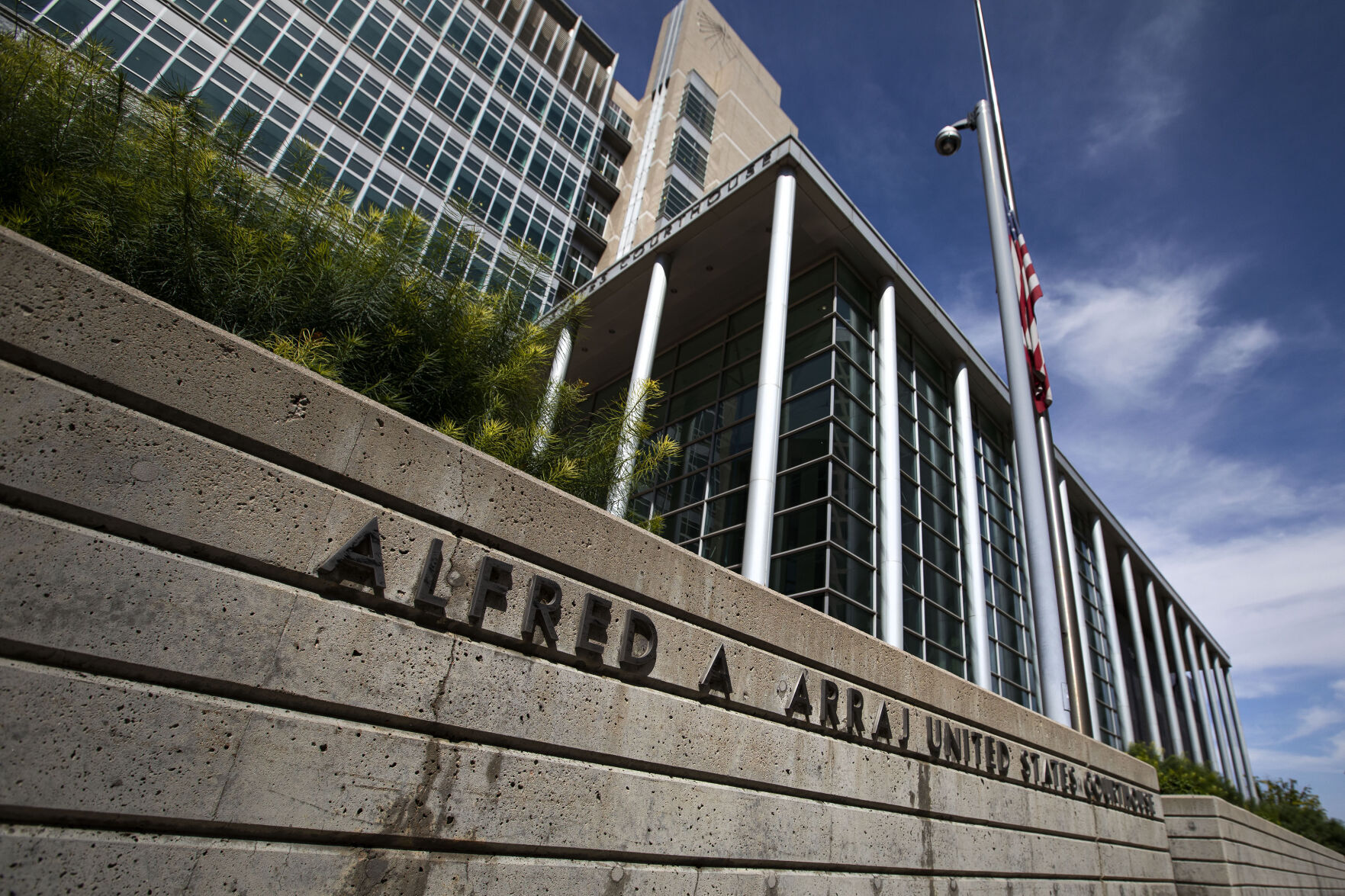
The city of Sterling cannot be held liable for the fatal shooting of a suspect by one of its officers, a federal judge has ruled.
Officer Austin Molcyk shot and killed Tyler Kracht on May 3, 2020, after a short chase in which Molcyk rammed Kracht’s car and disabled it. Kracht’s mother filed suit against Molcyk and the city, alleging the officer used excessive force in violation of her son’s constitutional rights.
Against the city specifically, the lawsuit claimed Sterling was responsible for failing to train its officers on the lawful use of deadly force and for approving of Molcyk’s conduct. Lawyers for Kracht’s mother cited statistics from a police reporting database showing Sterling has a higher number of police killings and shootings than other Colorado departments. They also alleged Molcyk had shot and killed another man months after killing Kracht.
But last week, U.S. District Court Judge Nina Y. Wang dismissed the claim against Sterling, finding the lawsuit failed to sufficiently outline the city’s role in any constitutional violation.
“The Court finds it unconvincing that two statistics and a subsequent shooting by the same officer in October 2020 – alleged without any context and further details – are adequate to demonstrate that Defendant Sterling was given sufficient notice of unconstitutional conduct by untrained employees and therefore was deliberately indifferent towards constitutional violations,” Wang wrote in a Nov. 3 order.
Molcyk has not moved to dismiss the excessive force claim against him.
Days prior to the deadly encounter, Sterling police responded to a call of shots fired. Although the driver who was shot at could not initially identify the perpetrator, he conceded to officers on May 3 that Kracht was the shooter.
Local authorities were familiar with Kracht, and he had active warrants for his arrest in multiple jurisdictions at the time. The same day Kracht was identified in the vehicle shooting, a police sergeant spotted Kracht’s blue Cadillac and gave chase. The sergeant terminated the pursuit, however, after Kracht accelerated to 100 mph and drove down the wrong side of Interstate 76.
Shortly afterward, Molcyk spotted the Cadillac on a local road and again began to pursue Kracht at high speed. Colorado Politics reviewed the nearly two-minute video footage from Molcyk’s body-worn camera, which captured the officer’s subsequent use of force.
Molcyk reported over his radio a “vehicle turning around.” He placed his gun on the steering wheel – pointed out the front windshield – before crashing into Kracht’s car.
The officer exited his vehicle and walked back to the Cadillac, which was sitting off the road with its driver-side front wheel and axle mangled. The back wheels spun as Kracht pressed the accelerator, but the Cadillac failed to move.
“Show me your f—ing hands! Hands up!” Molcyk screamed repeatedly, pointing his gun at the driver window. “I will kill you!”
Other officers joined him by the Cadillac and Molcyk yelled at them to “break the window.”
“I will shoot you in the f—ing head!” Molcyk screamed. The windows to the Cadillac were heavily tinted, making it difficult to see Kracht inside.
At least three officers were pointing their guns at the driver side of the car when sheriff’s Deputy Casey Swingle approached from the front to pull out his baton. But Swingle dropped it on the road and turned around to pick it up. Before Swingle had even bent down, Molcyk fired seven shots into the rear window of the Cadillac. No other officers fired their weapons.
Swingle broke the driver window with his baton as Kracht screamed in pain. Officers all yelled at Kracht to put his hands up.
“I’m dying,” Kracht cried as law enforcement continued to yell at him. Kracht later died of his wounds, aged 28.
In December 2020, then-District Attorney Brittny B. Lewton issued a report that found Molcyk had acted lawfully, with the officer believing Kracht intended to drive into Molcyk or others present.
“It is true that the vehicle, utilizing the benefit of hindsight, appears to have been rendered incapable of further movement due to the preceding collision,” she acknowledged. But Molcyk also allegedly saw, through the heavily-tinted windows, Kracht making “several furtive movements.”
While the investigation was pending, a Sterling police officer fatally shot another man, Douglas Sanchez, on Oct. 6. Travis J. Sides, who succeeded Lewton as district attorney, issued a similar report in March 2021 declining to charge the officer. Sides also refused to identify the officer for his “continued safety.”
Nevertheless, the description of the officer’s professional background matched that of Molcyk, and the attorneys for Kracht’s mother alleged Molcyk was the one who killed Sanchez.
In arguing the city should be held liable for Molcyk’s actions, the lawsuit cited to the Police Scorecard, a project of data scientists and developers cataloguing police shootings, arrests and killings. Sterling reportedly had a higher number of police killings than 94% of departments in Colorado, and more police shootings per arrests than half of departments in the years leading up to Kracht’s killing.
“Sterling did not terminate or discipline Defendant Molcyk or even counsel him for his actions. Further, SPD provided no additional training to Defendant Molcyk, or other SPD officers, related to the killing of Mr. Kracht,” the lawsuit alleged. “Indeed, Defendant Molcyk continued to act in the precise manner that SPD had trained him, shooting and killing another man in October 2020.”
Lawyers for the city countered that there was no rationale for why the statistics should have put Sterling on notice of any alleged unconstitutional behavior. They added the lawsuit had failed to describe any city policy or training deficiency that resulted in Molcyk’s force against Kracht.
Wang, in her order, agreed the lawsuit lacked any clear allegations that Sterling knew its level of training would result in near-certain constitutional violations, but had nonetheless stayed the course.
“Plaintiff has failed to allege with any specific details that anyone in general, let alone anyone with policymaking authority, affirmatively approved of Officer Molcyk’s actions,” she added.
The case is Estate of Tyler Kracht v. City of Sterling et al.


Appeals court reinstates Garfield County arson charge
Michael Karlik
michael.karlik@coloradopolitics.com
Updated 4 minutes ago
Colorado’s second-highest court reinstated a Garfield County defendant’s arson charge on Thursday, concluding a trial judge improperly credited a witness’s claim that she alone was responsible for starting the fire. A sheriff’s deputy responded to a brush fire near Parachute...
Federal judges rebuke ex-Colorado judicial discipline director for conduct in lawsuit
Michael Karlik
michael.karlik@coloradopolitics.com
Updated 1 hour ago
A pair of federal judges expressed a desire on Thursday to break the logjam on a lawsuit by Colorado’s former judicial discipline director against the state Supreme Court and related entities, while simultaneously showing little tolerance for the plaintiff’s scorched-earth...
Democratic bill would let recipients of ‘conversion therapy’ sue Colorado providers with no statute of limitations
Marissa Ventrelli
marissa.ventrelli@coloradopolitics.com
Updated 1 hour ago
Colorado lawmakers have advanced a proposal that would allow people who underwent conversion therapy to sue licensed providers for damages, moving the measure forward on a party-line vote in the House Judiciary Committee. House Bill 1322, proposed by Democratic Reps....
Federal judge refuses to authorize immediate appeal in World Cup trafficking lawsuit
Michael Karlik
michael.karlik@coloradopolitics.com
Updated 1 day ago
A federal judge declined to authorize an immediate appeal last week of a prior decision allowing companies operating out of Colorado to be sued for allegedly participating in a human trafficking venture involving Filipino laborers who constructed facilities for the...
Federal judge considers second round of sanctions against ex-Colorado judicial discipline director
Michael Karlik
michael.karlik@coloradopolitics.com
Updated 1 day ago
A federal judge ordered Colorado’s former judicial discipline director on Tuesday to explain why she should not sanction him a second time for filing documents for improper purposes, such as harassment or delay. U.S. District Court Senior Judge Kathryn H....

Colorado justices agree to review insurance question that has divided federal judges
Michael Karlik
michael.karlik@coloradopolitics.com
Updated 1 day ago
The Colorado Supreme Court granted a federal judge’s request on Friday to address an issue that has produced conflicting answers in policyholders’ lawsuits against insurance companies over unpaid benefits. “Parties (and judges) regularly spend undue time and money fighting in...

Federal judge dismisses background screeners’ challenge to Colorado law
Michael Karlik
michael.karlik@coloradopolitics.com
Updated 2 days ago
A federal judge dismissed a challenge on Friday to a portion of Colorado law that prohibits certain information from being included in consumer reports, in what seemed to be a conflict with federal law. Congress originally enacted the Fair Credit...
10th Circuit rejects ‘penalty’ for children of naturalized citizens seeking visas
Michael Karlik
michael.karlik@coloradopolitics.com
Updated 2 days ago
The Denver-based federal appeals court joined three of its peers earlier this month and determined the child of a newly naturalized U.S. citizen is not moved to a longer visa line as a result of his parent gaining citizenship, and...
Appeals court recognizes longer window to sue insurers for withholding policy details
Michael Karlik
michael.karlik@coloradopolitics.com
Updated 21 hours ago
Colorado’s second-highest court split with its own prior decision earlier this month and concluded injured motorists have two years, not one, to sue insurance companies for withholding relevant information about an at-fault driver’s policy. In 2019, Colorado lawmakers enacted a measure to...

Appeals court decides free speech cases, error-prone judge reversed again | COURT CRAWL
Michael Karlik
michael.karlik@coloradopolitics.com
Updated 3 days ago
Welcome to Court Crawl, Colorado Politics’ roundup of news from the third branch of government. The state’s Court of Appeals decided multiple cases implicating free speech rights, plus Colorado’s most error-prone judge was reversed on appeal yet again. Heard on...
PREV
PREVIOUS

Colorado’s ballot returns climb to over 2.4 million
More than 2.4 million ballots have been returned in Colorado, narrowing the gap between voter turnout during the 2022 and 2018 midterm elections after weeks of underperformance. As of 11:59 p.m. Tuesday, 2,444,585 ballots were returned, according to the Secretary of State’s Office. This number is expected to increase as counting continues in county clerk […]
Upgraded website forecasts avalanche danger in Colorado
Colorado Avalanche Information Center has upgraded its website in hopes of better preparing this winter’s backcountry travelers. The center’s director, Ethan Greene, called it “a much-needed upgrade” in a news release. The hope is an easier, more in-depth interactive experience, complete with “dynamic forecast zones” that color code ranges in terms of risk. Monarch Mountain […]