

Unlawful arrest, questionable evidence leads to reversal of Pitkin County man’s convictions
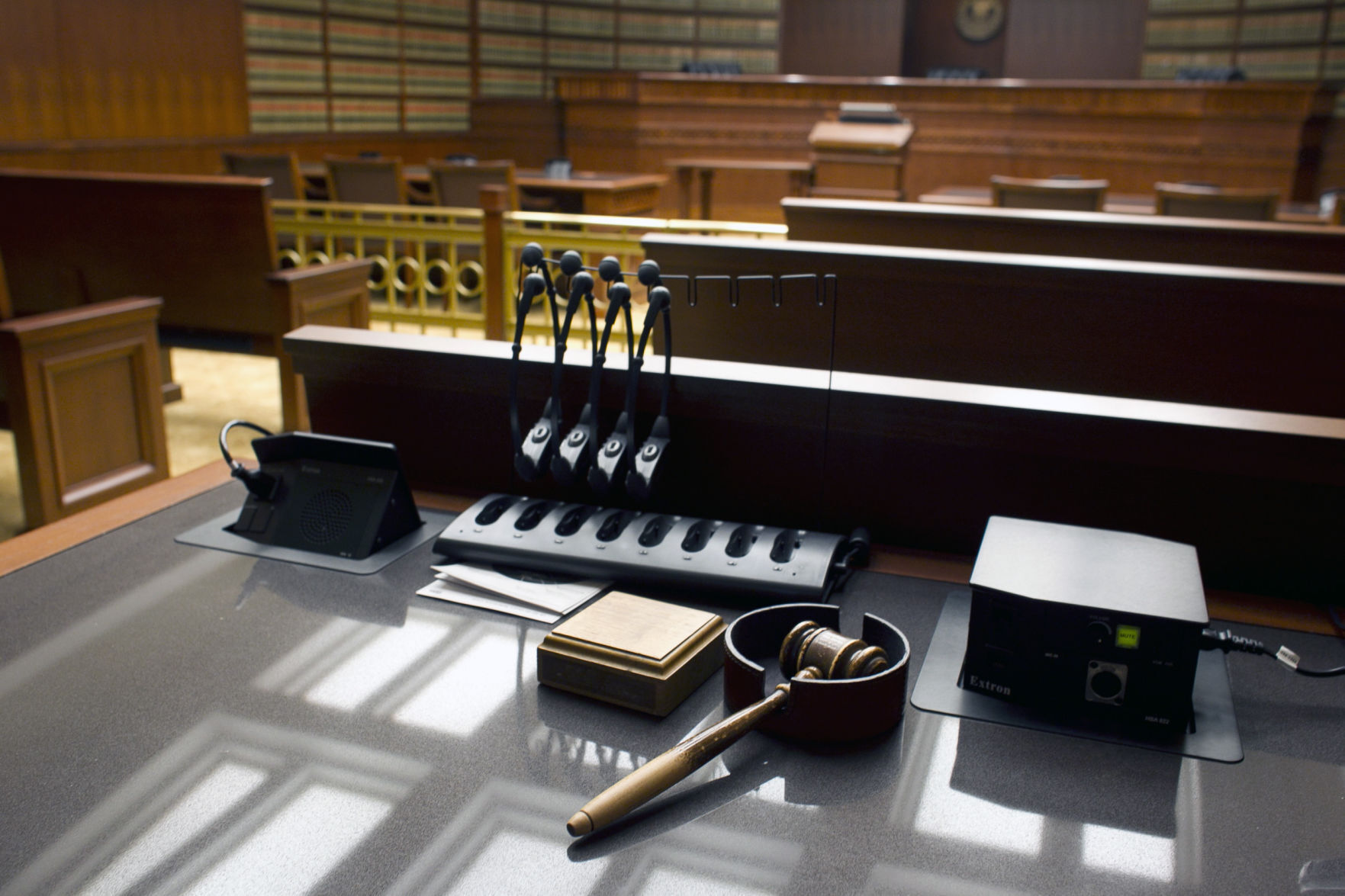
A Pitkin County judge improperly allowed evidence stemming from an unlawful arrest to be used at trial, and did not correctly instruct the jury about how to use a different set of evidence, the state’s Court of Appeals ruled on Thursday.
The three-judge panel of the Court of Appeals that reviewed Jeremiah Daniel Casper’s case ordered a new trial based on District Court Judge Christopher Seldin’s decisions about what evidence a jury would hear — including an incriminating statement Casper made after police arrested him without probable cause.
Casper, who has a long criminal history in Pitkin County of misdemeanor and lower-level felony charges, was sleeping in his Jeep on the morning of June 21, 2017. He was parked in the public Base Village parking garage in Snowmass Village when an employee found him around 7:30 a.m. and told Casper he could not sleep there. The employee directed Casper to leave, which he did.
The following morning, another worker at the garage found Casper there working on his vehicle, with scattered trash and leaking antifreeze around the Jeep. Again, the worker instructed Casper to depart, and he complied. The employee then called police.
Snowmass Village Police Chief Brian Olson and Officer Brian Vanderpool responded and began searching for Casper. Olson found Casper nearby and approached him, but Casper took off running. Olson then chased, tackled and arrested Casper for trespassing.
While paramedics were attending to Casper, a chef from the nearby Westin resort asked Olson to follow him to the conference center. There, Olson found a cache of food, alcohol and catering equipment in a stairwell — apparently the work of an intruder. The chef indicated the intruder had broken equipment, drank alcohol and left out food to spoil. Another employee told Olson he had seen a man matching Casper’s description in the hallway.
Among the items in the stairwell was a yellow and black tool bag, which Casper admitted was his at the jail.
Finally, officers discovered a pile of items in the men’s bathroom of the Base Village Conference Center, near the parking garage where Casper was allegedly trespassing. The items included wine, wine glasses, antifreeze and prescription pill bottles with Casper’s name.
Prosecutors charged Casper with trespassing in the garage, plus the burglary and theft at the Westin.
Casper’s attorneys moved to suppress the admission Casper made in jail about the tool bag being his. They argued Olson lacked probable cause to arrest Casper for trespass because there was no indication Casper had defied an order not to remain in the garage, which is a key element of trespassing. Casper was never told he could not return to the public parking garage, the defense pointed out, only that he could not sleep there.
The defense also challenged the relevance of the items found in the Base Village bathroom. Olson had conceded the wine, to his knowledge, was actually from the Base Village Conference Center, not the Westin. Casper was not facing any charges related to Base Village, as the burglary and theft allegations were solely for the Westin.
Seldin sided against Casper on both issues. The judge admitted he originally thought the wine and wine glasses in the bathroom were from the Westin. But even if they were not, they were “res gestae” evidence of trespassing — the legal term to describe evidence about other, uncharged conduct. As for Casper’s arrest, Seldin determined Olson had probable cause in part because Casper ran from him after Olson approached. Consequently, a jury heard that Casper identified the tool bag recovered at the Westin as his own.
Jurors convicted Casper of theft and burglary, but acquitted him of trespassing.
Casper reiterated on appeal the belief his arrest was unlawful. Police had no evidence Casper committed trespassing simply by being in the public parking garage with no instructions to permanently stay away, he told the appellate panel. He also argued Seldin had not only mistakenly allowed jurors to hear evidence about the items in the Base Village bathroom, but had failed to tell the jury exactly how to apply that evidence to the Westin-related charges.
The prosecution pushed back on both claims. Because Casper had apparently taken and used items from the Base Village Conference Center, it was more likely that he did the same thing at the Westin, argued Assistant Attorney General Jennifer L. Carty.
She also claimed police had probable cause to arrest Casper — for littering in the garage — or, at least, Casper’s flight from Olson contributed to the probable cause needed for an arrest.
“Defendant’s immediate flight after Olson asked him to stop and talk was highly suggestive of defendant’s wrongdoing,” Carty wrote.
The Court of Appeals panel agreed with Casper that police lacked information at the time of Casper’s arrest that he had defied an order to leave the garage. Telling Casper he could not sleep in the public parking garage was “meaningfully different” from telling him he could not be there at all, wrote Judge David J. Richman in the Sept. 1 opinion.
“While we agree that flight can be suggestive of wrongdoing, it cannot alone support a reasonable suspicion of criminal activity, much less supply probable cause,” he added.
As for the items in the Base Village bathroom, the panel noted the Colorado Supreme Court abolished the use of “res gestae” evidence earlier this year. Now, trial judges need to determine whether such evidence is logically relevant to a criminal charge. Further, the evidence may not be used to suggest a defendant committed a crime simply because he committed other, similar misconduct. Judges may also need to instruct jurors about how they are supposed to apply the evidence in their decision.
Because Seldin did not go through those steps for the bathroom evidence and was mistaken about whether Casper’s arrest was lawful, the Court of Appeals reversed the convictions and ordered a new trial.
The case is People v. Casper.

Federal judge declines to dismiss strike-breaking nurses’ lawsuit over wage violations
Michael Karlik
michael.karlik@coloradopolitics.com
Updated 8 hours ago
A federal judge last week declined to dismiss 39 nursing employees’ claims for compensation against a Greenwood Village-based company for its alleged violations of state and federal law. U.S. Nursing Corporation employs health care professionals to cross the picket lines...
Appeals judge argues prior decision on defendant’s ‘3-strikes’ sentence was wrong
Michael Karlik
michael.karlik@coloradopolitics.com
Updated 16 hours ago
A member of Colorado’s second-highest court argued on Thursday that a defendant stands wrongfully sentenced under the state’s “three-strikes” law, and an earlier appellate decision saying otherwise was incorrect. A three-judge Court of Appeals panel agreed that Kiki Lamount Douglas’...

Appeals court overturns convictions after Douglas County judge let biased juror serve
Michael Karlik
michael.karlik@coloradopolitics.com
Updated 16 hours ago
Colorado’s second-highest court reversed a defendant’s robbery-related convictions and 18-year prison sentence on Thursday because a Douglas County judge allowed a biased juror to serve. During Ahmarion Kaliel Shead’s trial in January 2023, one juror, identified as “J.H.,” indicated on...

Federal judge blocks USDA ‘pilot project’ affecting Colorado food assistance
Michael Karlik
michael.karlik@coloradopolitics.com
Updated 2 days ago
A federal judge blocked the U.S. Department of Agriculture on Wednesday from proceeding further with a “pilot project” that would require five Colorado counties to rapidly recertify more than 100,000 households for food assistance. In a brief ruling from the...
Colorado lawmakers hear about increased judicial discipline complaints, fallout from Missy Woods misconduct
Michael Karlik
michael.karlik@coloradopolitics.com
Updated 2 days ago
Members of the Colorado legislature’s judiciary committees heard about a large increase in complaints against judges and additional forensic misconduct that has come to light, during three days of oversight hearings last week. Leaders of several judicial-related agencies appeared between...
Federal judge warns DOJ against raising repeatedly rejected arguments in immigration detention cases
Michael Karlik
michael.karlik@coloradopolitics.com
Updated 2 days ago
A federal judge in Colorado warned the U.S. Department of Justice on Monday against raising arguments that she and other judges have repeatedly rejected in cases challenging the lawfulness of immigration detentions. In a Jan. 26 order finding the government...

Colorado Supreme Court to address child’s CCTV testimony
Michael Karlik
michael.karlik@coloradopolitics.com
Updated 3 days ago
The Colorado Supreme Court announced on Monday that it will review the impact of a victim’s closed-circuit testimony on the prosecution of a juvenile defendant. At least three of the court’s seven members must agree to hear an appeal. There...

10th Circuit to hold all-judges hearing, judicial committee turns down ‘civility code’ | COURT CRAWL
Michael Karlik
michael.karlik@coloradopolitics.com
Updated 3 days ago
Welcome to Court Crawl, Colorado Politics’ roundup of news from the third branch of government. The Denver-based federal appeals court agreed to hold a rare all-judges hearing in a criminal case, plus a state Supreme Court committee overwhelmingly rejected a...

Divided Colorado Supreme Court curtails use of laced-substances defense
Michael Karlik
michael.karlik@coloradopolitics.com
Updated 2 days ago
The Colorado Supreme Court on Monday walked back the ability of criminal defendants to claim their conduct was the result of consuming an intoxicating substance that secretly contained another behavior-altering substance. Under state law, “involuntary intoxication” is an affirmative defense,...
Colorado justices say utilities commission overreached by immunizing Xcel in rate document
Michael Karlik
michael.karlik@coloradopolitics.com
Updated 12 hours ago
Xcel Energy cannot rely upon a rate-setting document to broadly immunize itself from liability against electrocutions, the Colorado Supreme Court ruled on Monday. The justices originally heard the electrocution-related lawsuit from Francisco Cuevas to decide whether Xcel’s tariff, which sets...
PREV
PREVIOUS

Appeals court rejects 'low functioning' defendant's claim he was incompetent to stand trial
Despite his defense lawyers’ repeated concerns that his mental abilities were deteriorating and he failed to absorb meaningful information about his criminal proceedings, a man was not entitled to yet another evaluation after numerous psychologists found him competent to stand trial, the state’s Court of Appeals has ruled. A Denver jury convicted Matthew F. Rodriguez […]

Appeals court reverses Cortez man's conviction for judge's failure to give home defense instruction
There was enough evidence to support the theory that Shane Dean Darrell French was acting in defense of his home when he threatened his parole officer, Colorado’s second-highest court determined last week. Therefore, a Montezuma County judge acted improperly by failing to instruct the jury about the state’s home defense law. By a 2-1 decision, […]