

Influenza set to make an early comeback after 2-year hiatus

After more than two years of COVID-19, influenza is poised to make an early and impressive return.
And that has health providers in Colorado concerned.
“This year has the potential to be a bad flu year,” said Dr. Michelle Barron, senior medical director for infection prevention and control at UC Health. “A lot of the measures used during the COVID-19 pandemic such as masking and limiting gatherings that helped limit the spread of flu are no longer in place.”
As monkeypox vaccine eligibility expands, Colorado officials report ‘encouraging trends’
During COVID-19, flu numbers were at historic lows as most people socially distanced. Given the warnings, some providers say these best practices should be something people re-familiarize themselves with.
“If you feel sick, stay home,” said Michael Roshon, vice president of physician residencies and research operations at Penrose Hospital in Colorado Springs. “What we have is two years with very low numbers of flu and it looks like there are a lot more people that are susceptible to the strain that is out this year.”
Flu vaccine
Visit vaccines.gov/find-vaccines/ to find where you can get a free flu vaccine. Everyone 6 months and older is encouraged to get a flu vaccine.
A strain of the flu changes about every year. There are two major variants: influenza A and influenza B, each with their own subvariants or strains. Influenza B is far more common to humans. Researchers in Australia, which is seeing a spike in flu cases, are seeing mostly influenza A.
Roshon says experts watch data from countries like Australia, where flu seasons typically precede the United States by six months. Rates in Australia are “sky-high,” more than three times higher than a “normal” flu season.
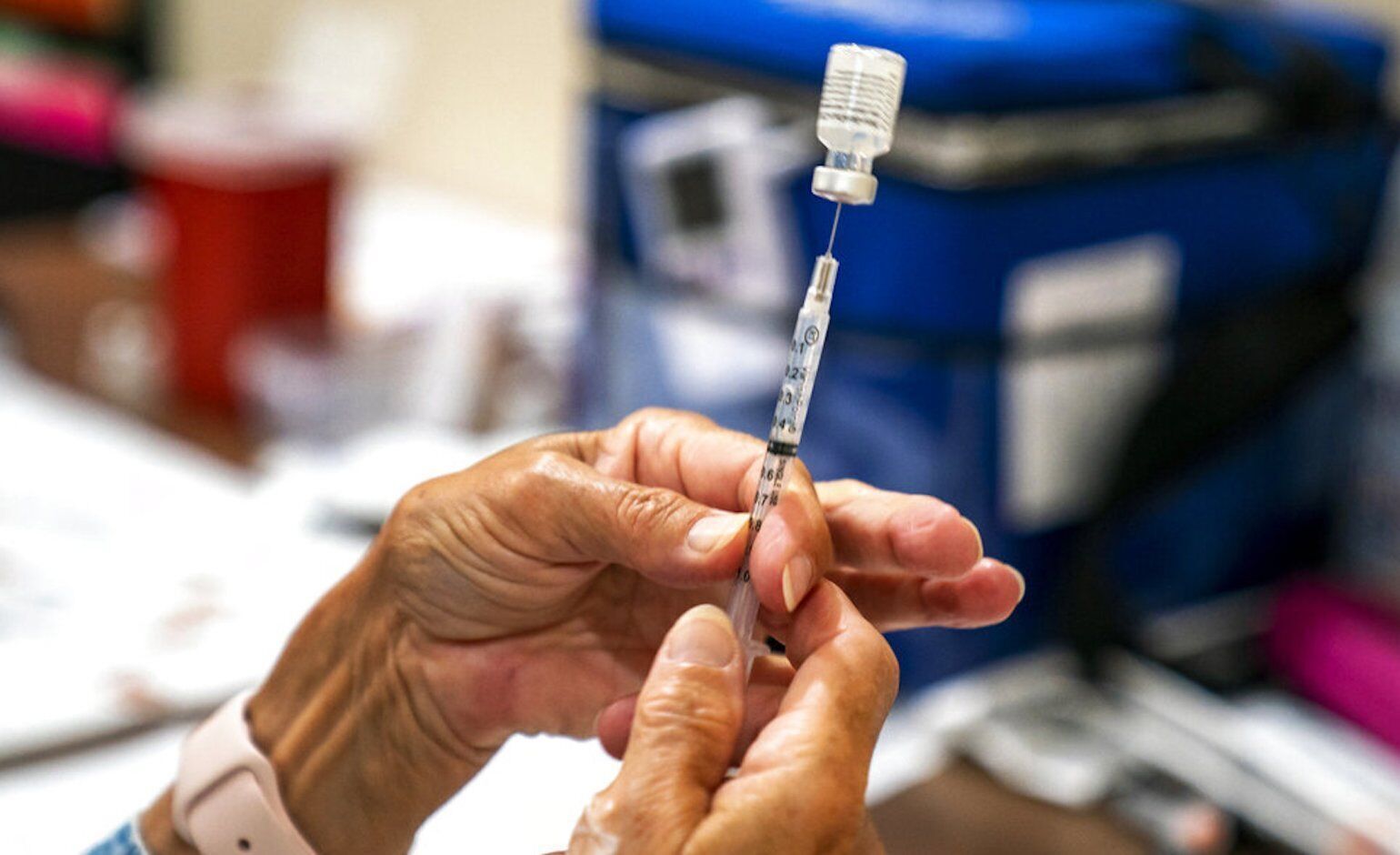
One of the best ways to fight the flu is to get a flu vaccine. Barron of UC Health likened being vaccinated against the flu to training for a race.
Colorado officials urge parents to get children school-required vaccinations
“By the time you do the race, you’re optimized and you’ve done everything you can to make sure you’re going to be successful,” she said.
Your immune system is constantly dealing with potential threats introduced to your body, but it doesn’t have the energy to fight everything. Your immune system has essentially had two years “off” from the flu, and the muscles it needs to engage to fight the flu have not been touched.
“We’ve been doing flu vaccines for a long, long time,” Roshon said. “The flu vaccine is old technology, we know it’s safe, and we know exactly how to make this vaccine.”
A flu vaccine gives your body a “blueprint,” Barron said.
“A flu vaccine tells your body, ‘This is what you need to be on the lookout for to attack,'” she said. “After two weeks, (your immune system) is primed and ready.”
State officials offered similar advice: Get vaccinated, if you feel sick stay home, and wear a mask if you fear you’ve been exposed or may be exposed to the flu vaccine.
While the state deals with a flu season every year, the COVID-19 pandemic was unprecedented. Colorado’s health department was able to learn from it and hopes practices put in place then can benefit Colorado during flu season.
Colorado to begin receiving omicron-specific boosters after Labor Day
“Across the state we established a combined hospital transfer center, where we had the ability in public health to work with our partners to monitor hospital capacity and then move patients across the state if we needed to,” said Dr. Rachel Herlihy, the state epidemiologist.
While the flu season could be more severe than in previous years, Herlihy says initial modeling done by the state shows influenza infections, even at a peak, will be lower than the COVID-19 surges.
“The volume of hospitalizations that we see with influenza, year to year, is much less than what we experienced in the last 2½ years,” she said.


Democrat Michael Bennet turns in petitions for Colorado’s gubernatorial primary, plans to skip caucuses
Ernest Luning
ernest.luning@coloradopolitics.com
Updated 11 hours ago
U.S. Sen. Michael Bennet, a Democratic candidate for governor, submitted nominating petitions for Colorado’s June primary ballot on Friday, his campaign and the Colorado Secretary of State’s Office said. Bennet plans to rely on his petitions to get on the...

Israeli officials say Iran’s Supreme Leader Khamenei is dead. No word from US or Iran
Aamer Madhani
aamer.madhani@associatedpress.com
Updated 13 hours ago
DUBAI, United Arab Emirates (AP) — Supreme Leader Ayatollah Ali Khamenei has died in a major attack on Iran launched by Israel and the United States, Israeli officials told The Associated Press on Saturday. There was no immediate comment from...

Colorado Republicans, Democrats clash over Iran military operation
Thelma Grimes
thelma.grimes@coloradopolitics.com
Updated 8 hours ago
Colorado’s congressional delegation split sharply along party lines Saturday after the U.S. and Israel attacked Iran, triggering a fresh debate in America over presidential war powers. Trump announced early Saturday morning that U.S and Israeli forces had begun “Operation Epic...

What to know about U.S.-Israel attacks on Iran
The Associated Press
the-associated-press@coloradopolitics.com
Updated 12 hours ago
The attack The U.S. and Israel attacked Iran on Saturday in what President Donald Trump said was a massive operation to destroy the country’s military capabilities and eliminate the threat of it creating a nuclear weapon. Iran’s Foreign Ministry said it would...

World leaders react cautiously to US and Israeli strikes on Iran
The Associated Press
the-associated-press@coloradopolitics.com
Updated 12 hours ago
BRUSSELS • World leaders reacted warily to U.S. and Israeli strikes on Iran on Saturday that triggered worries of a broader conflict. European leaders held emergency meetings and took measures to protect their citizens in the Middle East, with key leaders calling...
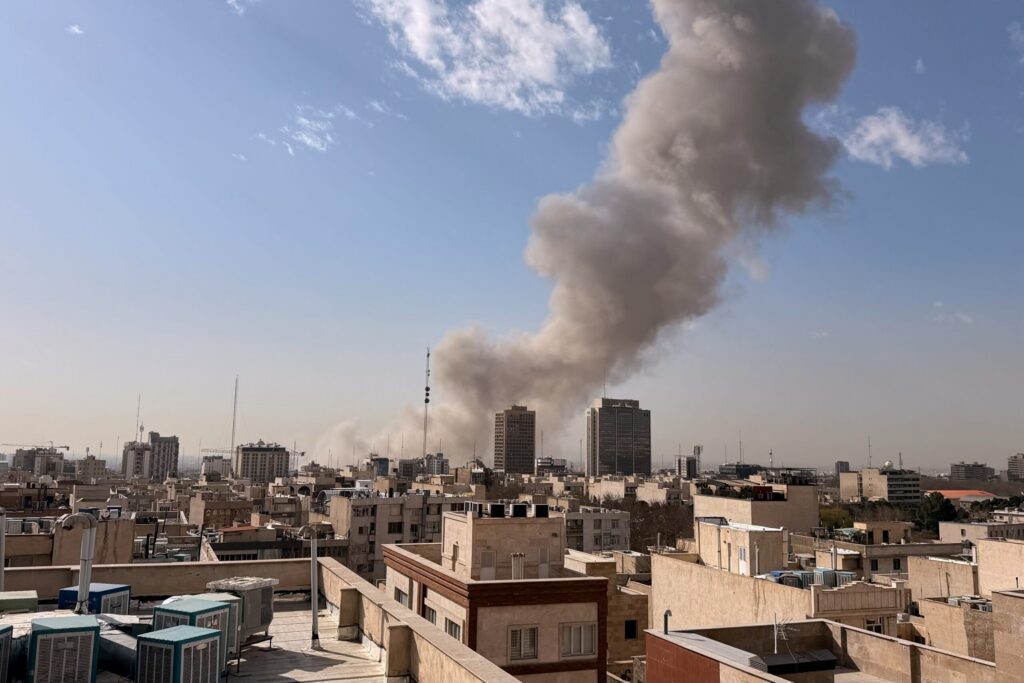
US and Israel launch a major attack on Iran and Trump urges Iranians to ‘take over your government’
The Associated
the-associated@gazette.com
Updated 20 hours ago
The U.S. and Israel launched a major attack on Iran on Saturday, and President Donald Trump called on the Iranian public to “seize control of your destiny” by rising up against the Islamic leadership that has ruled the nation since 1979. Some of the first...
Additional thoughts on State of the Union address/rally | Cronin and Loevy
Tom Cronin Bob Loevy
tom-cronin-bob-loevy@coloradopolitics.com
Updated 20 hours ago
The U.S. Constitution’s Article II states that “He (the president) shall from time to time give to the Congress Information of the State of the Union, and recommend to their Consideration such Measures as he shall judge necessary and expedient...

Competing overtime bills for agriculture workers split Colorado Democrats
Marianne Goodland
marianne.goodland@coloradopolitics.com
Updated 2 days ago
Competing bills setting the overtime threshold for farmworkers have split legislators at the Colorado state Capitol, with one group saying a law passed in 2021 has harmed, rather than helped, farming operations and workers alike, while the other side insists...
Cute puppy overload and an audition of a different kind: Capitol M | Week of Feb. 28, 2026
Marianne Goodland
marianne.goodland@coloradopolitics.com
Updated 3 days ago
The lighter side of the Capitol, and most days, you ought to be really grateful for it. There’s a rumor (jk) floating around that an amendment is coming for the bill to legalize prostitution. The amendment would ban condoms made...
A cynical import Colorado doesn’t need | SONDERMANN
By Eric Sondermann
by-eric-sondermann@coloradopolitics.com
Updated 18 hours ago
“But mommy, he started it.” Every parent, definitely those with more than one kid, has heard this instinctively defensive reaction to the point of exhaustion. It is the ultimate deflection or shifting of the blame. A similar rationale, often about...