

Independent monitor to oversee San Luis Valley District Attorney’s compliance with Victim Rights Act

San Luis Valley District Attorney Alonzo Payne is in the eye of a storm, a controversy that has been building in his 12th Judicial District since he took office a year and a half ago.
Colorado Attorney General Phil Weiser, who on Tuesday announced that his seven month investigation into nine complaints from crime victims into Payne’s alleged mistreatment has been completed, said the probe revealed complaints so severe they are unprecedented in the state of Colorado.
The seven-month investigation not only confirmed the allegations but that Payne did not do anything about them.
“It says to me that the lack of compliance in this case is deeply problematic happening in the face of prior efforts to do something about it,” Weiser said.
In a statement, Weiser said in some instances, Payne’s office “may even have placed victims’ safety at risk.”
Under the agreement, an outside independent monitor will oversee Payne’s office’s compliance with the Victim Rights Act and the Colorado Constitution. The state will choose the independent monitor, who will be funded by the district attorney’s office. Payne’s office must provide full access to its documents and personnel to the monitor.
In addition, Payne’s office must create a new policy that ensures it communicates with crime victims and with law enforcement related to cases which arise in the district. That agreement will last for three years or six months after a new DA takes office, “whichever comes first,” according Weiser.
In addition, the office must also:
- Adopt new mandatory training for employees to ensure compliance with new policies and procedures
- Revise the office’s website, create new informational materials, and notify victims of their VRA rights
- Hold quarterly meetings with staff and others, including law enforcement, to improve communication about VRA compliance and operations relating to VRA cases
During its investigation, Weiser’s office found that the vast six-county 12th Judicial District, Payne and his staff routinely failed to communicate with victims about their cases, failed to consult with them about plea deals and case dismissals, and generally not treated them with dignity.
One of those victims, Lani Welch, felt so strongly about Payne’s dismissal of her opinion in a case against her ex-fiancée that she started a recall campaign against the district attorney.
Of 4,557 signatures collected in that effort, 3,796 were verified.
Payne did not respond to the recall petition by last Friday. Under the process, he now has until Wednesday at the close of business day to step down from office.
If he doesn’t, Thursday Governor Polis is expected to set a date for a recall election, which must happen within a 30-60 day time period.
The recall effort is separate from Weiser’s investigation.
Payne, a San Luis Valley native who has been the top law enforcement officer there for a year and a half, did not respond to a request for comment. He ran for office on a platform of criminal justice reform, opposed mass incarceration, and argued the poor are all too often criminalized because they couldn’t afford an attorney to represent them.
He was endorsed by Bernie Sanders in June 2020 as a criminal justice reformer.
He has not had the support of most of the area’s law enforcement.
Frustrated with the lack of action on the work his officers have been doing to eradicate rampant drug use in the city of Alamosa, Police Chief Kenny Anderson told City Council this spring that his officers had compiled evidence of over 50 drug busts, but that none of them had been tried. At one point, he paused to wipe back tears as he told the story about a middle-schooler who had been bullied and eventually took his life as arrest documents, he said, sat on Payne’s desk.
Exasperated citizens complained of drug deals being made in what used to be safe neighborhoods and of the violence that tends to accompany the narcotics world getting too close for comfort.
The San Luis Valley has one of the highest incarceration rates in the country. Payne oversees six counties: Alamosa, Saguache, Conejos, Costilla, Mineral and Rio Grande.
In March, the Alamosa City Council voted to pitch in $10,000 in taxpayer dollars to support the recall. Mayor Ty Coleman told The Gazette he is looking forward to moving forward with the recall now that the number of signatures have been verified and added that Payne has “caused serious harm” to the citizens of the San Luis Valley.
A recall effort has been successful only one time in the entire history Colorado.
In December 2005, 9th Judicial District DA Colleen Truden was recalled and replaced by one of her employees, Martin Beeson, according to Tom Raynes, Executive Director for the Colorado District Attorney’s Council.
Truden served Pitken and Rio Blanco counties for just 11 months before she was forced to step down. A former judge, voters were displeased with her because of her lack of experience as a prosecutor, for overspending her budget and for hiring her husband to work on the county office computer system. She defended herself, however, touting her work on felony filings and convictions.
Emily Tofte, Executive Director of Rocky Mountain Victim Law Center, told The Gazette that additional victims may be come forward. The group works on Victims’ Rights Act complaints and sends them on to the Attorney General’s office.
In a statement, Weiser said by “excluding, disregarding, and disrespecting victims, District Attorney Payne and his office dishonored crime victims, and worse, compounded the trauma suffered from the crimes committed against them.”
“Because the district attorney’s office failed to allow victims’ input and consultation during the justice process as required by law, those victims lost the chance to contribute to just outcomes in their cases,” he said.
Welch said she was not notified of the agreement that the AG’s office made with Payne.
“This is just a waste of time,” she said. “This man needs to be removed from office. He’s been given too many chances. He has broken the law and needs to go to trial.”
Because the district attorney’s office failed to allow victims’ input and consultation during the justice process as required by law, those victims lost the chance to contribute to just outcomes in their cases. In some instances, the office may even have placed victims’ safety at risk,” Attorney General Phil Weiser said.

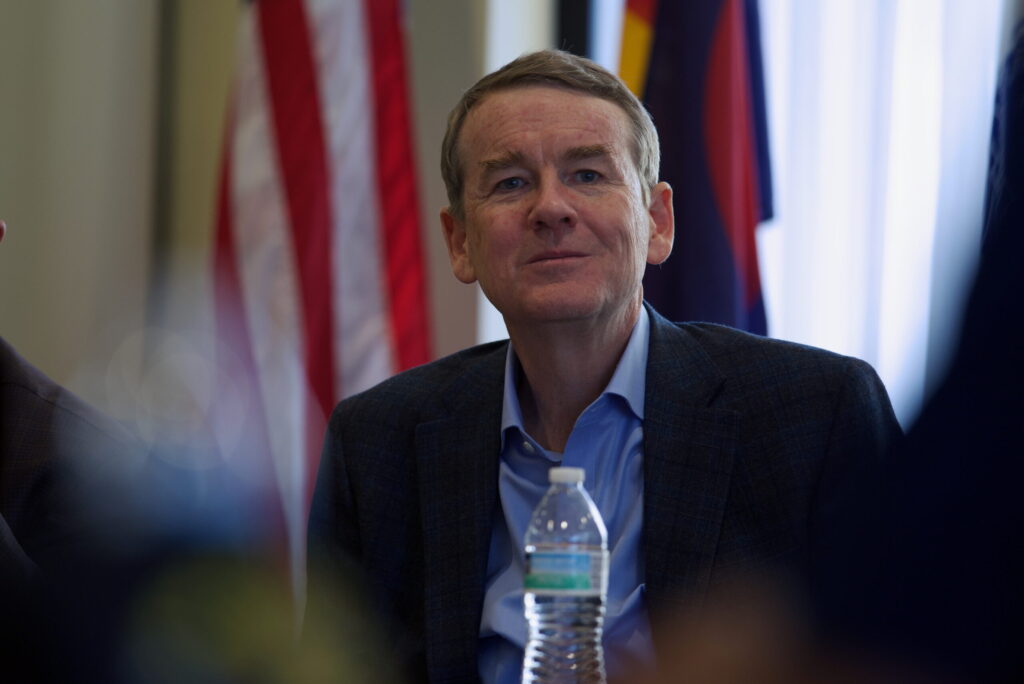
Veterans share their priorities with governor candidate Sen. Michael Bennet
Alexander Edwards
alexander-edwards@coloradopolitics.com
Updated 25 minutes ago
Veterans told Sen. Michael Bennet that they want more resources for county-level support services and suicide prevention during a discussion Tuesday at the Mt. Carmel Veterans Service Center in Colorado Springs. Having served at the federal level for 16 years,...
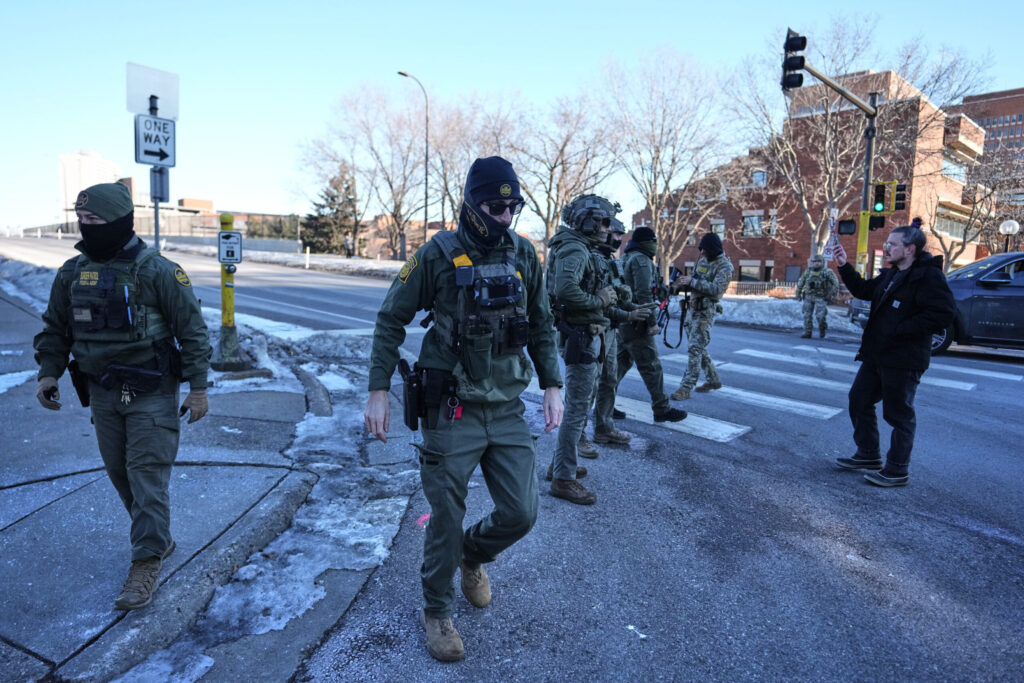
Colorado AG invites public to report ICE misconduct amid rising scrutiny of federal agents
Marissa Ventrelli
marissa.ventrelli@coloradopolitics.com
Updated 1 hour ago
Colorado Attorney General Phil Weiser has launched a new online tool that allows Colorado residents to report misconduct by federal immigration agents, his office announced on Wednesday. “Nobody is above the rule of law, including federal agents such as ICE...
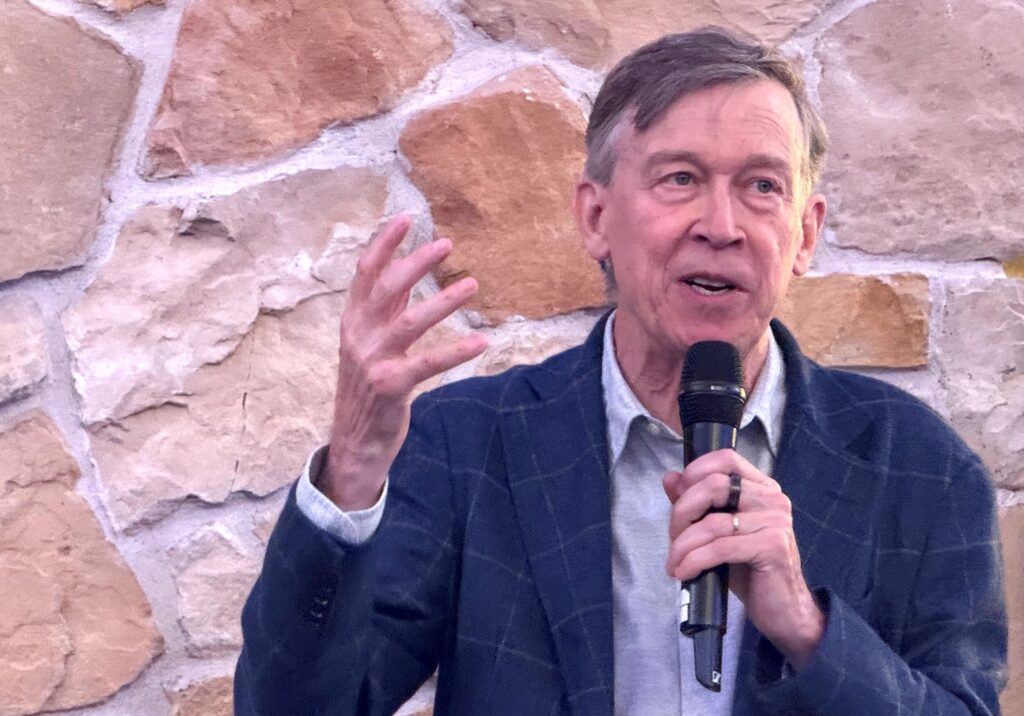
Colorado Democrat John Hickenlooper raises over $1.1 million in 4th quarter for reelection bid
Ernest Luning
ernest.luning@coloradopolitics.com
Updated 1 hour ago
U.S. Sen. John Hickenlooper’s reelection campaign raised over $1.1 million in the fourth quarter of 2025 and finished the year with more than $3.8 million in the bank, the Colorado Democrat’s campaign said Thursday. The fundraising haul brings Hickenlooper’s total...

Fort Carson soldier’s wife could be deported
Carol McKinley
carol-mckinley@coloradopolitics.com
Updated 2 hours ago
As the country’s largest immigration enforcement crackdown continues in Minnesota’s Twin Cities, a Fort Carson sergeant is fighting a personal immigration crisis — one that may implode his family. Sgt. Tyler Garza’s wife, Jennifer Maradiaga Baca, is not a legal...
Elizabeth School District dismisses challenge to book-ban injunction on eve of appellate arguments
Michael Karlik
michael.karlik@coloradopolitics.com
Updated 2 hours ago
An Elbert County school district has dismissed its challenge to a judge’s injunction ordering it to return banned books to library shelves, days before the Denver-based federal appeals court was set to hear oral arguments this week. Although a three-judge...

Monument town council proposes changes to regional water district charter
Savannah Eller
savannah-eller@coloradopolitics.com
Updated 12 minutes ago
In response to an ongoing disagreement about representation, the Town Council of Monument has drafted its own amendments to the charter creating the Fountain Creek Watershed District. “We’re due our own representation,” said councilman Marco Fiorito at a discussion about...

Colorado farmers warn U.S. Sen. John Hickenlooper tariffs and research cuts endanger agriculture
Marianne Goodland
marianne.goodland@coloradopolitics.com
Updated 17 hours ago
Northern Colorado farmers told U.S. Sen. John Hickenlooper this week that tariffs and President Donald Trump’s decision to import $40 billion worth of beef from Argentina have hurt Colorado’s agricultural industry. But the administration’s cuts to scientific research are almost...

‘Doesn’t do enough’: House Democrats reject GOP deal on cutting ICE funding
Rachel Schilke, Washington Examiner
rachel.schilke.washington.examiner@gazetteedit.wpenginepowered.com
Updated 16 hours ago
House Democratic leaders are planning to oppose a bipartisan homeland security funding bill set for a vote this week, even after Republicans agreed to cut funding for Immigration and Customs Enforcement. A source familiar with House Minority Leader Hakeem Jeffries’s...

Vance heading to Minneapolis amid Trump’s ICE crackdown
Christian Datoc, Washington Examiner
christian.datoc.washington.examiner@gazetteedit.wpenginepowered.com
Updated 20 hours ago
Vice President JD Vance will deliver remarks and visit with ICE agents in Minneapolis Thursday, as President Donald Trump continues his immigration crackdown in the state. The vice president has been a critical messenger for the administration combating public opposition...

Gov. Polis, Democratic lawmakers introduce trio of housing affordability bills
Marissa Ventrelli
marissa.ventrelli@coloradopolitics.com
Updated 3 hours ago
Democratic lawmakers were joined by housing advocates and Gov. Jared Polis at the Capitol on Wednesday to announce a trio of bills they say will increase affordable housing in Colorado. “This session, Colorado Democrats are focused on lowering costs, and...
PREV
PREVIOUS

Ranked choice voting floated as option to increase turnout in Colorado Springs races
Could rank choice voting increase dismal voter turnout numbers in Colorado Springs? During the last Colorado Springs City Council election in April 2021, about 27% of active registered voters participated, a drop from about 32% turnout in 2017, a comparable non-mayoral race. “Our people are not voting,” Councilman Bill Murray said Monday, during an informal […]

Colorado now offers online test for learner’s permits
Colorado drivers can now take the written learner’s permit test online from the comfort of their own homes, the Department of Revenue announced on Tuesday. The new service allows Coloradans to avoid taking the test at a DMV office or a private driving school, offering the test online with no appointment needed. While the test […]