

First images from James Webb Space Telescope revealed prompting celebration and shock

Ambre Trujillo is not a scientist. She’d be the first to tell you that when talking about space flight and NASA. But for nine years she volunteered with various space-related organizations as she tried to find her way into the space industry.
Her volunteer work paid off and she worked at the Griffith Observatory in Los Angeles for a time. Later on, she would volunteer with the Space Foundation at the annual Space Symposium. Now, she’s the social media and marketing specialist for the Space Foundation.
And this week was among the most exciting for space buffs like Trujillo as the James Webb Space Telescope sent stunning images to NASA in the culmination of a decades long development process.
James Webb Space Telescope images wow the world
Among the exciting results was data gathered from WASP-96b, a gas giant located over 1,000 light years away. The data, gathered using spectroscopy, revealed large amounts of water in the giant’s atmosphere.
“This is one of my favorite things,” Trujillo said. “I’m really excited about this because it’s so detailed that, when we go look at other exoplanets like the TRAPPIST system, it’s going to be able to tell us some incredible things.”
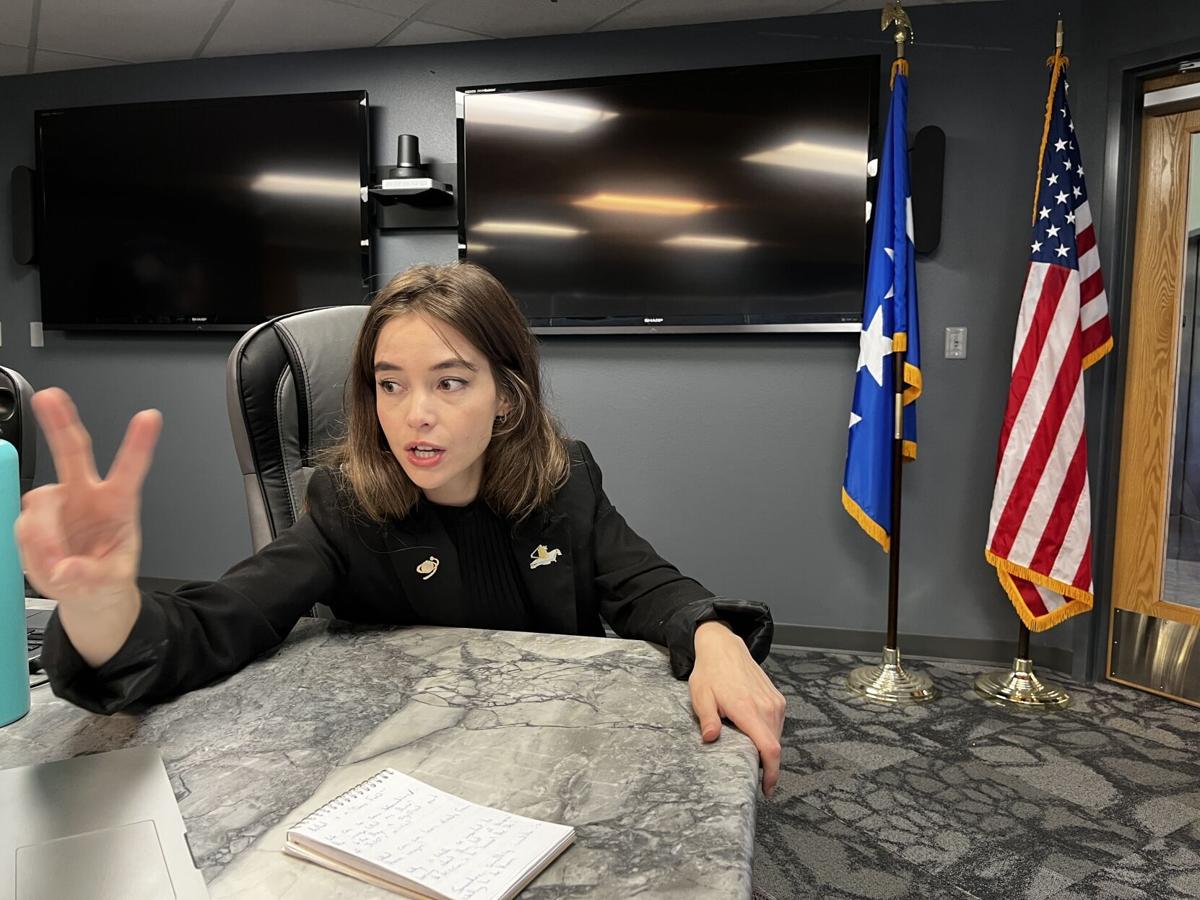
Ambre Trujillo, the social media manager at the Space Foundation explains some of the fascinating discoveries the James Webb Space Telescope has made, and some it will continue to make.
Alex Edwards, alex.edwards@gazette.com

Spectroscopy is the study of light spectra, and is used to determine the atmosphere or composition of a stellar body. By observing an object in space, and looking at what spectrum of light comes through – and what doesn’t – scientists can determine what elements and compounds that object is made of.
The TRAPPIST system is located 40 light years away and hosts several potentially habitable exoplanets. While searching for life is not Webb’s primary mission, Trujillo said data gathered by Webb could be the reason a future mission with that goal is authorized.
All of this is combined with Webb’s overall mission to “shed light on our cosmic origins.“
Far out: NASA space telescope’s 1st cosmic view goes deep
“Once we find other life, whether it’s intelligent or even if it’s microbial, it’s going to completely change the way we look at ourselves in the universe,” Trujillo said.
Trujillo joined the Space Foundation in December 2021. She is also a NASA solar system ambassador. Leading up to the release of Webb’s images, Trujillo interviewed NASA’s Thomas Zurbuchen, the associate administrator for the Science Mission Directorate.
Trujillo says she landed the position at the Space Foundation after years of trying to find a way in to the engineer dominated space industry.
“My journey started nine years ago, when I picked up a book from Carl Sagan,” she said. “I guess [the Space Foundation] saw that I was obsessed enough and they’re like ‘we want to hire you.'”
Trujillo said the Space Foundation is the first place that actively recruited her and has called the experience “amazing.”
As part of the ongoing summer of discovery, the Space Foundation’s Discovery Center will host a celebration of Webb’s images on Saturday. The event will run between 10 a.m. and 4 p.m. More information can be found at https://bit.ly/3ccijRs.
The success of the James Webb Space Telescope, proven by stunning images revealed this week, was made possible by the efforts of Ball Aerospace. Ball, headquartered in Broomfield, designed the 18 iconic gold-plated mirrors that make up the primary mirror.
Record spending reported at Colorado’s national parks in 2021
But there are two other mirrors: One located at the front of an extended arm (the secondary mirror) and a tertiary mirror that is used to keep the telescope pointed at the correct target. Ball also made the actuators that adjust and align the mirrors. If any of those had failed, no stunning images.
Erin Wolf, Ball Aerospace’s program manager for the telescope said that despite the noise made about potential failure points, she was not concerned once the launch was over.
“Launch was pretty tense because I have no control over that,” she said. “A lot of folks talked about those structural deployments and ‘they’re single point failures’ and things like that, and they all went so well it was almost surreal.”
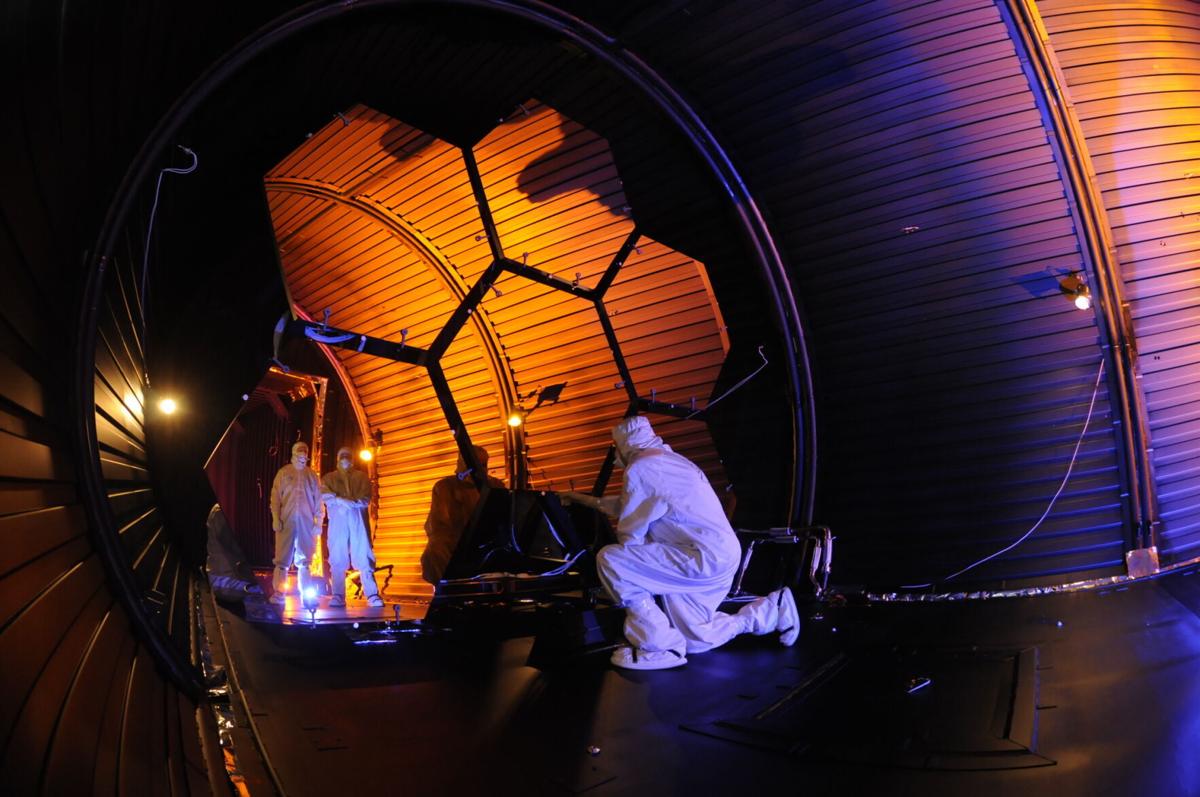
Several mirror segments of the James Webb Space Telescope undergo cryogenic testing. Courtesy Ball Aerospace
Ball Aerospace

Wolf said the week following launch was akin to “watching grass grow.” This was not a bad thing though, since that meant that nothing was going wrong.
Six months later, the grass had grown.
“I was surprised how awe inspiring [the images] are,” said Wolf, who was at NASA’s Goddard Flight Center attending a watch party when the images were revealed. “In that room there was a lot of us that have spent decades on this program, and there was an audible gasp when the images came up.”
Wolf has been involved with Webb for 13 years. Her first eight years on the program were spent with NASA at Goddard working with calibration systems for science instruments. She has been with Ball for the last five. Her time working on Webb accounts for nearly half of the program lifecycle, which began in 2002 when NASA selected teams to build instruments for the craft.
Scenic train between Denver and Moab growing in first full season
The Webb program dates all the way back to 1996, when a recommendation was formally made that NASA develop a next generation space telescope. Back then, there were only two options for a launch vehicle: The unproven Delta IV heavy and the French Ariane 5.
“At the time they didn’t think the Delta Heavy was going to be ready to launch,” Wolf said. “Of course, we ended up taking a little longer than the Delta Heavy to get into space. But the Ariane rocket did so well for us.”
The use of the Ariane 5 yielded another benefit: Incredibly precise course plotting. After launch, the telescope had to use onboard fuel to maneuver into the correct position, but due to the precision of the Ariane launch, some of that fuel was saved.
Webb’s primary mission is set to last five and a half years. The planned total lifespan of the craft is 10 years, but thanks to the brilliant launch, that can be extended further.
“They put us into an orbit just spot on,” Wolf said. “That allowed us to preserve a lot of our fuel, and it’s going to extend the mission life maybe two fold, maybe more.”

Jeff Crank, Jessica Killin set to face off in 2 debates in Colorado’s 5th Congressional District
Ernest Luning
ernest.luning@coloradopolitics.com
Updated 3 hours ago
Republican U.S. Rep. Jeff Crank and Jessica Killin, his Democratic challenger, have agreed to debate twice in the weeks leading up to the general election in Colorado’s 5th Congressional District, their campaigns have said. Crank is seeking a second term...
Colorado judge explores sanctions against DOJ, ICE for rearresting man 4 days after release on bond
Michael Karlik
michael.karlik@coloradopolitics.com
Updated 4 hours ago
A federal judge in Colorado is considering sanctions against the government after immigration agents rearrested a man four days after an immigration judge found him suitable for release on bond. On July 28, U.S. Magistrate Judge N. Reid Neureiter ordered...
White House deploys private companies to help crack down on cybersecurity breaches
David Zimmermann
david-zimmermann@coloradopolitics.com
Updated 11 hours ago
The White House intends to use private companies in the United States to help crack down on cybersecurity breaches perpetrated by transnational criminal organizations. President Donald Trump signed a memorandum on Wednesday, directing his administration to employ the private sector...
Voters prefer socialist over MAGA candidate in 2028 matchup: Poll
Mabinty Quarshie
mabinty-quarshie@coloradopolitics.com
Updated 9 hours ago
New polling released this week suggests that a socialist candidate would defeat a Make America Great Again candidate in a hypothetical 2028 presidential matchup, a move that implies the reach of progressive leftists isn’t abating despite recent setbacks in Wisconsin....
Fort Carson garrison commander says staff cuts created ‘uncertainty and fear’
Mary Shinn
mary-shinn@coloradopolitics.com
Updated 6 hours ago
The Fort Carson garrison commander departed Wednesday after what he described as a difficult 18 months for installation and garrison staff. “I know the last 18 months has been marked by profound uncertainty and fear, but you weathered the storm...
Divided disciplinary panel censures Montezuma County judge after agreement reached
Michael Karlik
michael.karlik@coloradopolitics.com
Updated 11 hours ago
A disciplinary panel formally imposed a public censure, suspension, and further training on Montezuma County Court Judge Ian J. MacLaren on Tuesday by a 2-1 vote. Under constitutional Amendment H, which voters adopted in November 2024, MacLaren was set to...
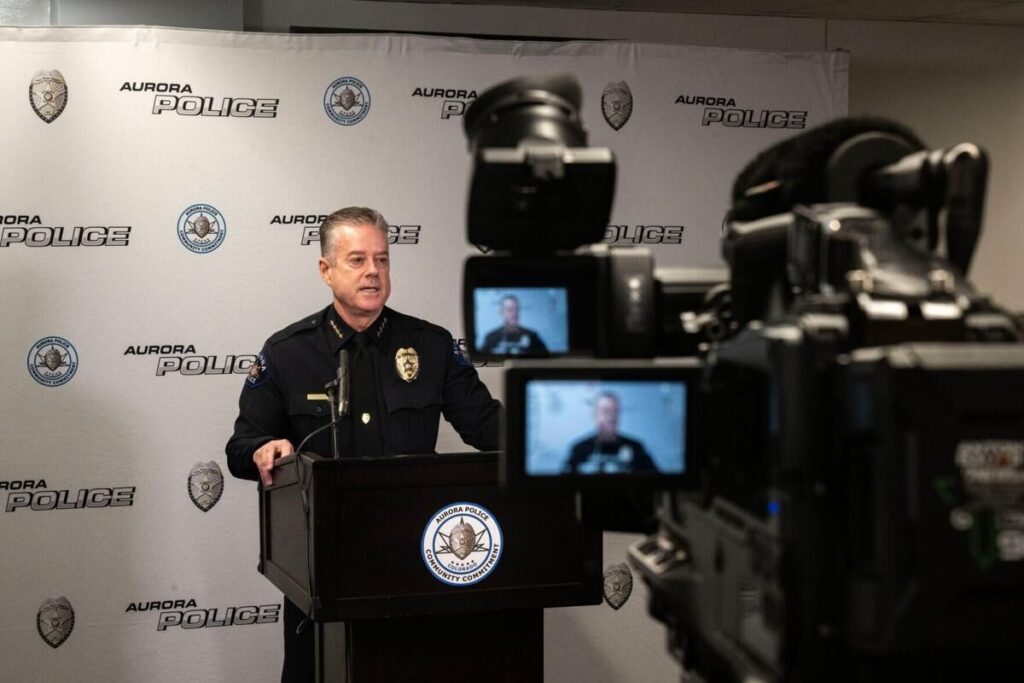
Aurora police officer resigns after taking narcotics found during traffic stop
Kyla Pearce
kyla.pearce@gazette.com
Updated 6 hours ago
An Aurora Police Department officer resigned after investigators found that he took narcotics that were collected as evidence during a traffic stop. Michael Gallagher violated several agency policies, including substance abuse, tampering with evidence and lying in a criminal investigation,...
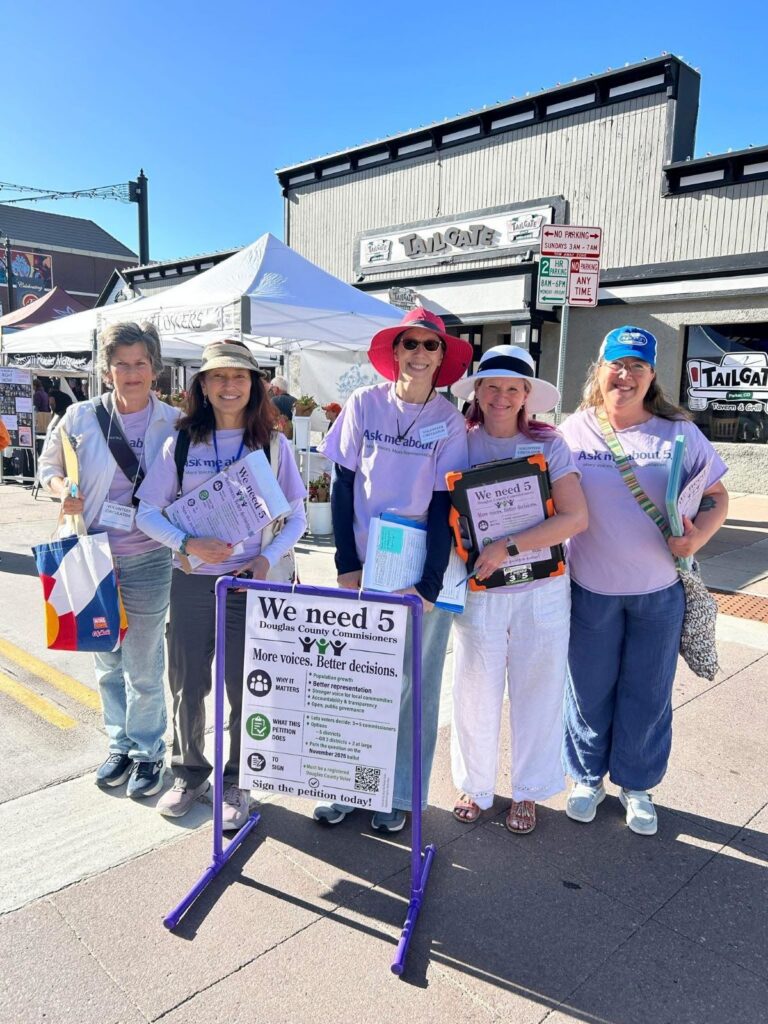
Douglas County measure to expand county commission advances to November ballot
Nicholas Fogleman
nicholas.fogleman@denvergazette.com
Updated 6 hours ago
Douglas County voters will decide in November whether to expand the county’s Board of County Commissioners from three members to five after election officials certified a citizen-led petition effort Wednesday. The Douglas County Clerk and Recorder verified 20,434 petition signatures,...
Colorado’s Western Slope magistrate judges describe unique role in federal judiciary
Michael Karlik
michael.karlik@coloradopolitics.com
Updated 1 day ago
Two of Colorado’s federal judges stationed on the Western Slope spoke to lawyers on Wednesday about their unique roles, the ways their workloads differ, and the need for more criminal defense lawyers to take cases outside the Front Range. “Here...
‘Ticked off’: Third-party U.S. Senate candidate in Colorado launches $1.3 million TV ad campaign
Ernest Luning
ernest.luning@coloradopolitics.com
Updated 3 hours ago
Bob Chew, the Forward Party nominee for U.S. Senate in Colorado, sends household objects flying in a TV ad set to run statewide through September, backed by $1.3 million in ad reservations across multiple platforms, his campaign told Colorado Politics....
PREV
PREVIOUS

Colorado now offers online test for learner’s permits
Colorado drivers can now take the written learner’s permit test online from the comfort of their own homes, the Department of Revenue announced on Tuesday. The new service allows Coloradans to avoid taking the test at a DMV office or a private driving school, offering the test online with no appointment needed. While the test […]

Mystery man identified in alleged Mesa County election breach
For months, one of the key questions surrounding the alleged election systems breach in Mesa County centered on the identity of a man who allegedly assisted with the copying of election software last year. That man has finally been identified as Conan James Hayes of California, according to an arrest affidavit for the county’s former elections […]