

Appeals court upholds convictions following claims of racial bias in jury selection
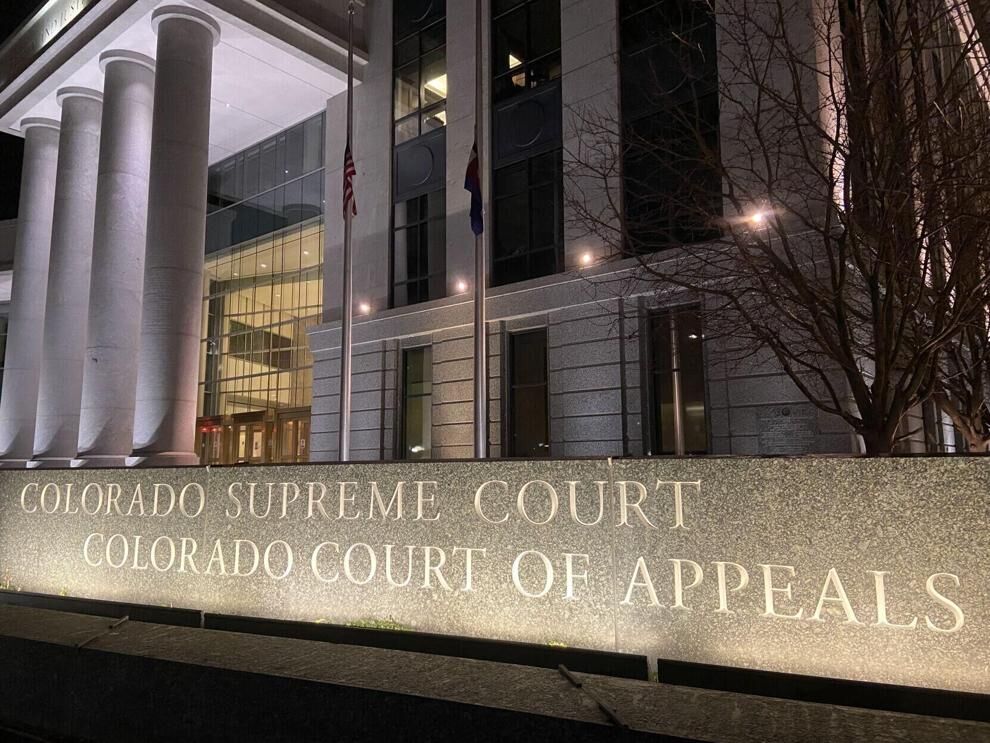
Colorado’s second-highest court upheld the convictions of two criminal defendants who alleged prosecutors improperly dismissed jurors of color from their trials, although one appellate judge believed a lower court had failed to properly evaluate the potential for discrimination.
Each appeal in the cases of Eve Martinez out of Weld County and D’Shay Damu Evans out of Denver implicated the U.S. Supreme Court’s landmark 1986 decision of Batson v. Kentucky, in which an all-white jury convicted a Black defendant. The ruling forbids intentional racial discrimination in jury selection.
The Supreme Court recognized at the time that race-based exclusions have an impact beyond the defendant and the juror, also undermining the public’s confidence in the justice system. When prosecutors attempt to excuse, or strike, a juror, the defense may raise a “Batson challenge,” requiring the trial judge to ultimately decide whether race is the motivating factor.
Martinez, who is Hispanic, stood trial for assaulting and obstructing a peace officer, for which a jury convicted her. A Hispanic man and Hispanic woman were both in the jury pool, and the prosecutor questioned each during jury selection.
The man, identified as Juror 9, stated he had “some really bad encounters” with law enforcement in the past. Although Juror 9 also acknowledged positive experiences with police, he told the prosecutor he “can’t guarantee you” that he would be fair and impartial.
Juror 19, the woman, reported no bad experiences with police. She stated officers “have a rough job” and she would not want to work in that profession.
The prosecutor exercised a peremptory strike on both jurors, meaning no reason is typically required for the dismissal. The defense raised a Batson challenge, triggering a three-step protocol: First, trial judges have to decide whether there is a plausible race-based objection. Second, the prosecution needs to offer “race-neutral” reasons for the strike. Finally, after the defense has the chance to respond to the prosecutor’s rationale, the judge decides whether to allow the dismissal.
In the case of Juror 9, the prosecutor’s race-neutral reason focused on the man’s poor experience with law enforcement. Because Juror 9 “still thinks about it actively,” the prosecutor believed Juror 9 was biased.
Without elaboration, and without a response from Martinez’s attorney, then-District Court Judge Thomas J. Quammen said the prosecution had given a race-neutral reason and he would deny the Batson challenge.
In contrast, the prosecutor’s reason for dismissing Juror 19 was entirely based on her demeanor.
“She was hesitant when she was giving me answers. She would nod a lot but not really answer verbally, so she just didn’t seem fully engaged in the process,” the unnamed prosecutor said.
Quammen again denied the Batson challenge with no input from the defense.
On appeal, Martinez claimed Quammen neither properly analyzed whether the prosecution had advanced credible, non-racial reasons nor had he allowed the defense to offer a rebuttal. The Colorado Attorney General’s Office argued in favor of upholding Martinez’s convictions, pointing out the defense had not called the prosecution’s rationale into question at the time.
“The fact that defense counsel in this case did not provide a rebuttal, or object, or otherwise respond to the prosecution demonstrates not a failure of the trial court to allow defense counsel an opportunity to respond, but rather reflects an expression from the defense that it did not want — or did not have a substantive response — to rebut the prosecution’s reasons,” wrote Assistant Solicitor General Joseph G. Michaels to the state’s Court of Appeals.
In a June 23 decision, a three-judge appellate panel decided, 2-1, in favor of the government. Quammen, wrote Judge Craig R. Welling for himself and Judge Jerry N. Jones, never prevented Martinez’s lawyer from weighing in. That silence signaled the defense’s “acquiescence” to the prosecution’s explanations.
Judge Timothy J. Schutz disagreed, writing that Quammen’s handling of the Batson challenges revealed little to nothing about the possibility of racial discrimination.
“Aside from stating its conclusion, the trial court made no findings, did not provide Martinez’s counsel an opportunity to respond, and did not even acknowledge the purported basis for the prosecutor’s challenge of the two Hispanic prospective jurors,” he wrote.
Schutz also raised a criticism of the Batson process, saying that “any competent attorney can articulate a race-neutral explanation.” Because of that possibility, Schutz emphasized the importance of trial judges laying out their reasoning for believing prosecutors who assert no racial motivations are at hand. In particular, he was concerned the prosecutor’s claim that Juror 19 “didn’t seem fully engaged in the process” was not what the record showed.
“Such generic Batson proffers based upon a juror’s undocumented demeanor create significant risk that express or implicit biases are at the root of the peremptory challenge,” he warned.
Earlier this year, a group of Democratic state legislators introduced a proposal to combat implicit racial bias in jury selection. The bill would have specifically invalidated demeanor-based explanations for peremptory strikes unless both parties or a judge could corroborate a juror’s behavior.
The legislation died in committee. The Colorado Supreme Court’s criminal rules panel is discussing a similar proposal that could take the form of a judicial rule change.
In the second Court of Appeals case, a jury convicted Evans for attempted aggravated robbery. Two men in the jury pool were Black, as was Evans. Both jurors expressed their reluctance to participate in the trial.
Juror M discussed his upbringing “in the projects and always in trouble with the cops and things like that.” He did not believe he could be fair and impartial.
“I don’t like judging people,” Juror M said. “I really don’t even want to be involved in this.”
The second man, Juror S, told the prosecutor he “would need to see video” to convict Evans, and that witness testimony would not be enough. He also alluded to a negative experience between his father and the police.
“In my experience, I don’t like cops. So disappointing. To me,” Juror S said. “Probably wouldn’t believe them.”
The prosecution attempted to dismiss both jurors for cause. Then-District Court Judge John W. Madden IV followed up with each man to probe their views in more detail. Juror M added he was also distracted by his daughter, who needed a kidney, but ultimately said he could focus. Juror S told the judge he could, in fact, be fair and treat police officers’ credibility the same as for any other witness.
Madden denied the dismissal for cause, prompting the prosecutor to exercise a peremptory strike. Evans’ attorney raised a Batson challenge.
The prosecutor outlined several reasons for dismissing the men, including Juror M’s discomfort with judging people and his daughter’s health, as well as negative views by Juror S of police officers and his unwillingness to serve.
Madden recognized Juror M and Juror S were the only Black jurors, but he allowed for their dismissal. Given their answers during jury selection, Madden said he “expected it was a likelihood of dismissal by the prosecution whether they were African American, Caucasian, (or) Hispanic.”
Evans asserted on appeal that other, non-Black jurors gave similar answers during questioning, but did not receive the same treatment by the prosecution. A Court of Appeals panel rejected those claims, concluding the prosecutor at trial was justified in worrying about potential bias.
“Based on the record before us, we conclude that the prosecutor’s proffered race-neutral reasons are facially valid,” wrote Judge Rebecca R. Freyre in the June 23 opinion.
The cases are People v. Martinez and People v. Evans.

Colorado Supreme Court concerned about police overreach in interrogations
Michael Karlik
michael.karlik@coloradopolitics.com
Updated 14 hours ago
Some members of the Colorado Supreme Court appeared hesitant on Tuesday to endorse the ability of police to interrogate a suspect after they have obtained a court order authorizing only the collection of physical evidence. Under Colorado’s criminal rules, law...
Colorado Supreme Court considers new requirement for leaving-the-scene convictions
Michael Karlik
michael.karlik@coloradopolitics.com
Updated 15 hours ago
In 2006, the Colorado Supreme Court ruled that leaving the scene of an accident resulting in serious injury is a “strict liability” offense, meaning a person is guilty solely through their conduct, without the need for prosecutors to prove the...
Colorado Supreme Court weighs trans rights case involving Children’s Hospital and federal threats
Michael Karlik
michael.karlik@coloradopolitics.com
Updated 1 day ago
Some members of the Colorado Supreme Court expressed discomfort on Tuesday with having to decide whether to order Children’s Hospital Colorado to resume providing certain services to transgender children, which could trigger a “death sentence” if the federal government imposes...
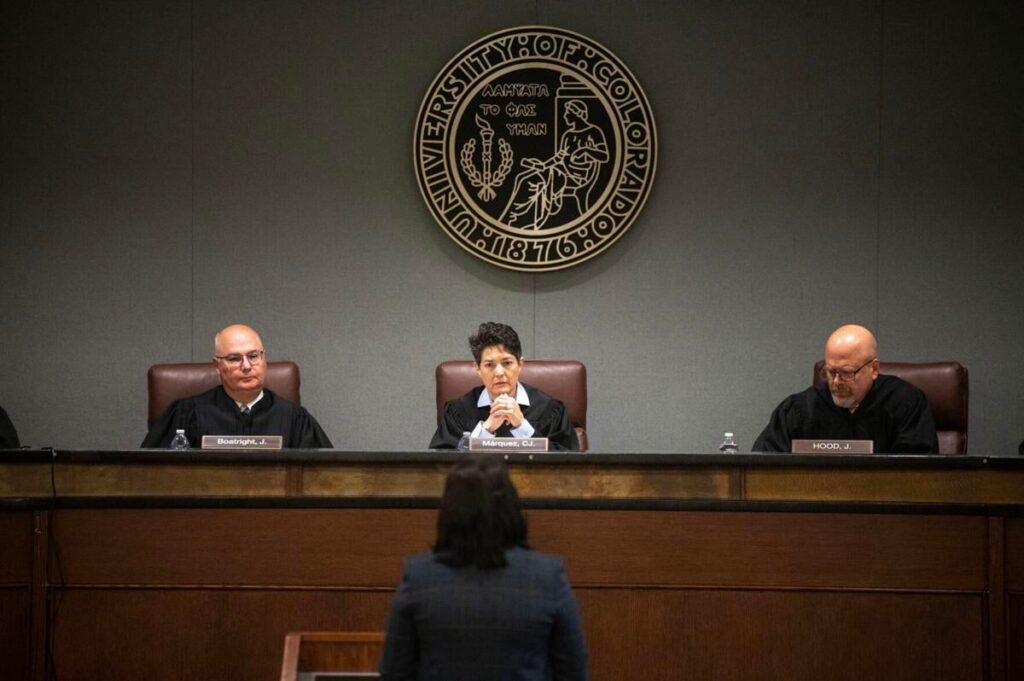
Colorado justices weigh constitutionality of unique disclosure requirement for ballot measures
Michael Karlik
michael.karlik@coloradopolitics.com
Updated 2 days ago
Members of the Colorado Supreme Court considered on Tuesday whether a unique feature of the state’s campaign finance system categorically violates the First Amendment by requiring the disclosure of a ballot measure committee’s legal representative on advertisements. No on EE...

Colorado justices block injured plaintiff from suing, despite alleged concealment by Manitou Springs
Michael Karlik
michael.karlik@coloradopolitics.com
Updated 2 days ago
The Colorado Supreme Court ruled on Monday that a woman injured on a Manitou Springs sidewalk could not sue the allegedly responsible entity, the city of Colorado Springs, even though she did not learn until too late of an agreement...
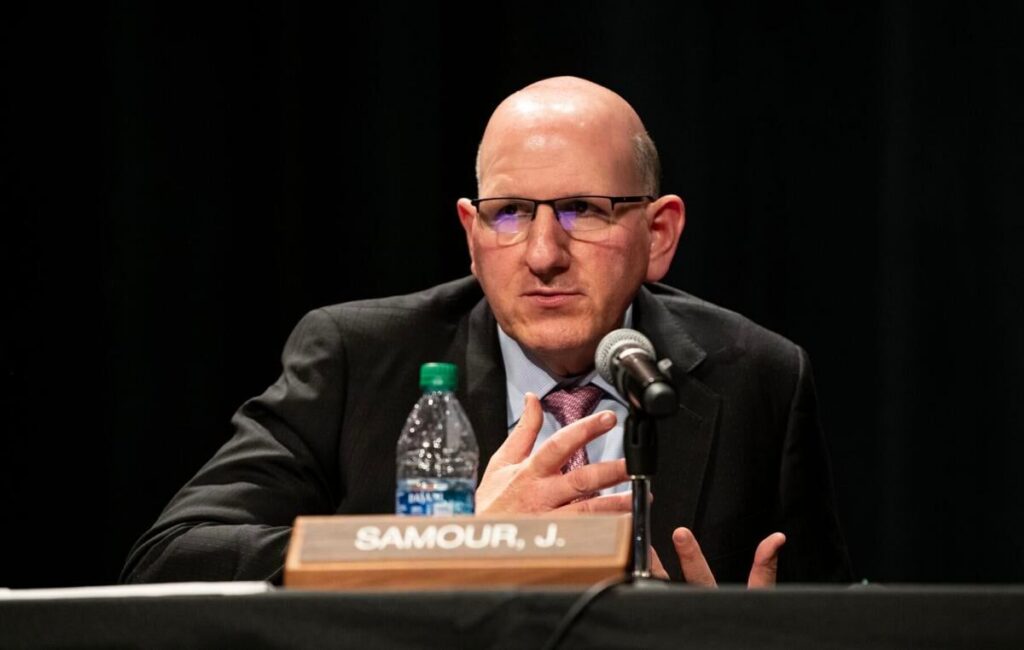
Divided Colorado Supreme Court opens door to experts’ views on children’s truthfulness
Michael Karlik
michael.karlik@coloradopolitics.com
Updated 1 day ago
The Colorado Supreme Court ruled on Monday that experts may, in certain situations, tell jurors whether child witnesses exhibited signs of being coached by adults, without running afoul of the general prohibition on witnesses testifying about the truthfulness of other...

State Supreme Court to hold oral arguments, federal judges find fault with bond hearings | COURT CRAWL
Michael Karlik
michael.karlik@coloradopolitics.com
Updated 2 days ago
Welcome to Court Crawl, Colorado Politics’ roundup of news from the third branch of government. The state Supreme Court will resume hearing oral arguments tomorrow, plus some federal judges are raising the alarm about immigration judges’ handling of bond hearings....
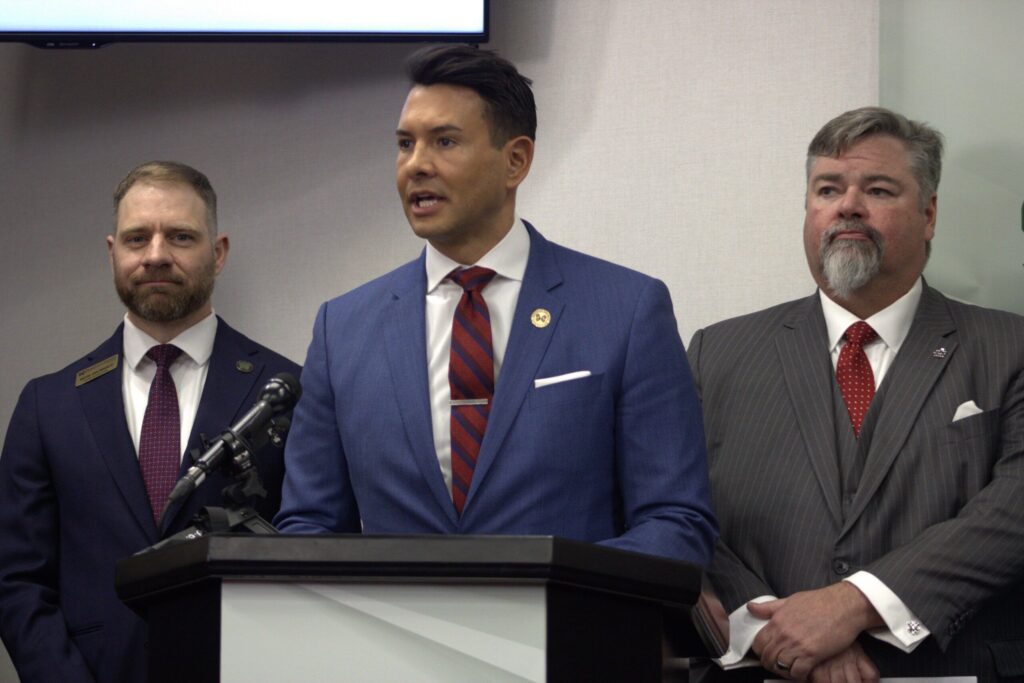
Douglas County seeks state Supreme Court review in open meeting case
Nicholas Fogleman
nicholas.fogleman@denvergazette.com
Updated 3 days ago
The Douglas County Board of Commissioners intends to petition the Colorado Supreme Court to review a recent court decision that found the board had violated the Colorado Open Meeting Law. The case stems from 11 “closed, unnoticed” meetings held by...
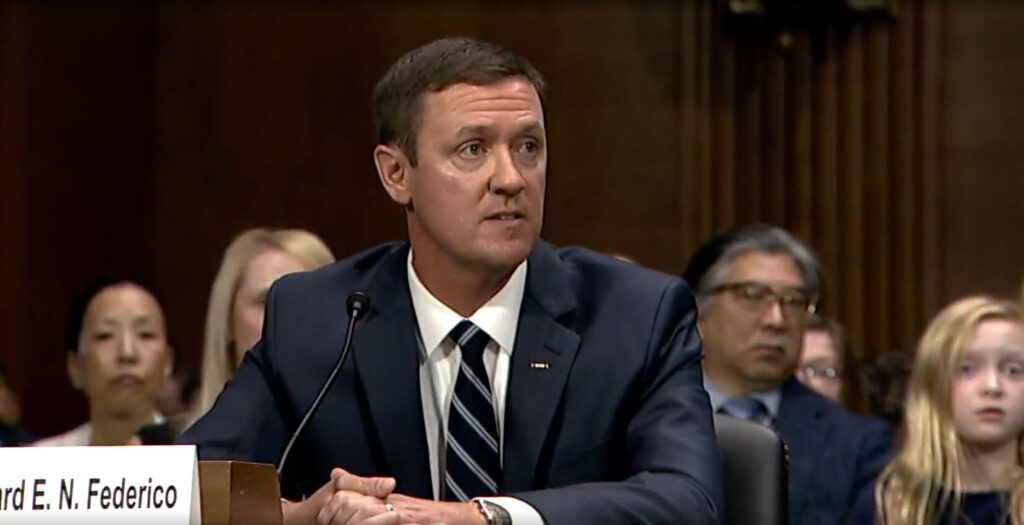
10th Circuit provides guidance on police searches of cloud-based data
Michael Karlik
michael.karlik@coloradopolitics.com
Updated 6 days ago
The Denver-based federal appeals court provided guidance to law enforcement agencies on Monday for ensuring that searches of cloud-based accounts comply with the Fourth Amendment’s requirements. A three-judge panel of the U.S. Court of Appeals for the 10th Circuit noted...
Federal judge releases man after 2 immigration judges disobey order
Michael Karlik
michael.karlik@coloradopolitics.com
Updated 6 days ago
A federal judge released a man from immigration detention on Thursday after two different immigration judges disobeyed his order in the same case. “At this point, the Court has granted Respondents two bites at the apple to prove detention of...
PREV
PREVIOUS

10th Circuit orders resentencing for brutal assault after judge's error
Although the federal appeals court based in Denver rejected nearly all arguments from a man convicted of brutally beating his wife into unconsciousness, it conceded the trial judge had improperly sentenced him at a higher level than guidelines allow. A three-judge panel of the U.S. Court of Appeals for the 10th Circuit vacated the 30-year […]
COVER STORY | While SCOTUS term rocks country, Colorado Supreme Court racks up quiet accomplishments
As June came to a close, some Americans looked on with anticipation — and others, with horror — at the last, transformative rulings of the U.S. Supreme Court’s latest term. The conservative majority on the nation’s highest court revoked the longstanding constitutional protection for abortion, put new constraints on the government’s regulatory powers and narrowed the scope […]