

Supreme Court ignored subpoena for evidence in scandal inquiry, report says
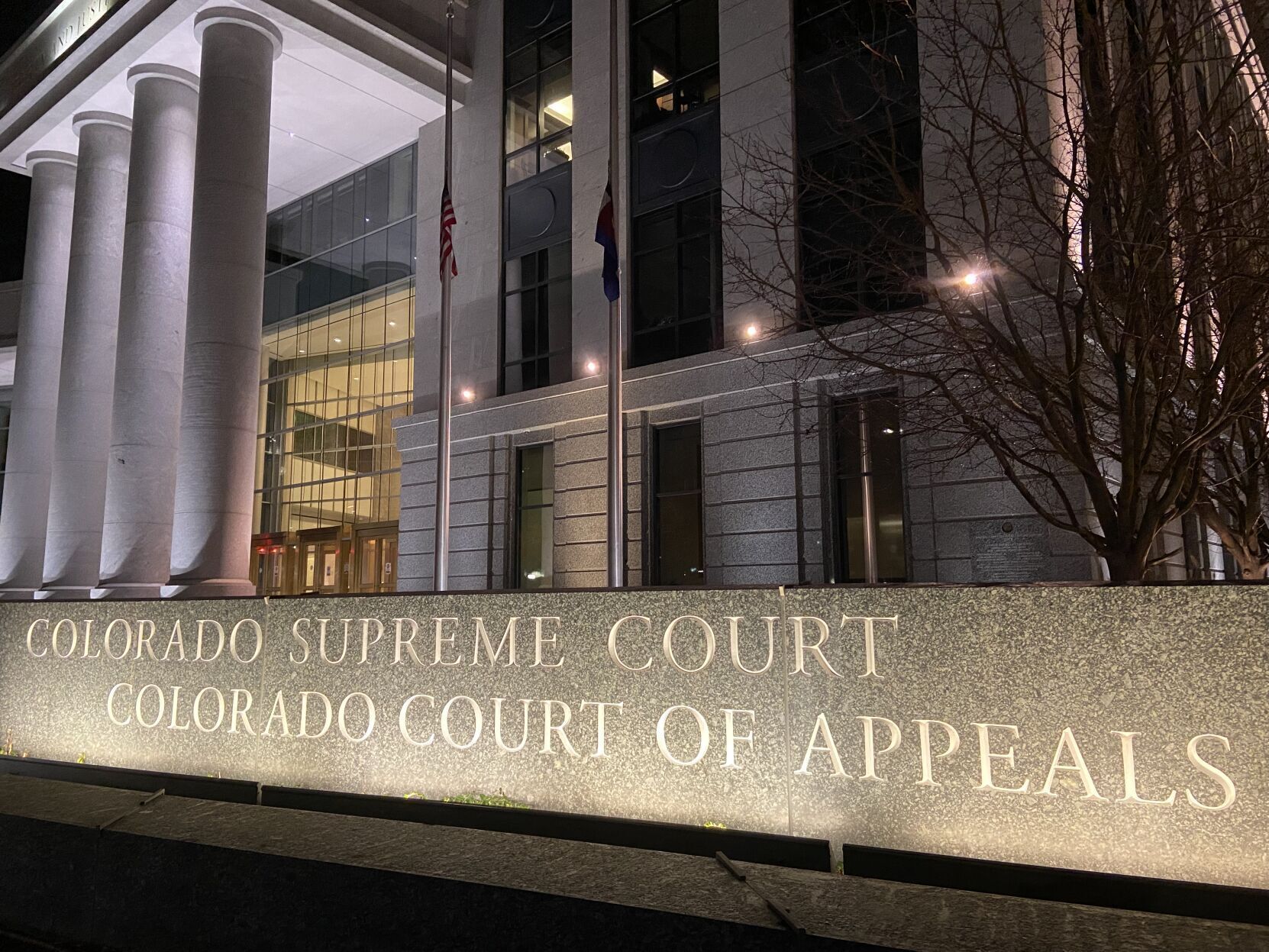
The Colorado Judicial Department – and by extension its Supreme Court – has refused to comply with a subpoena issued five months ago by the state’s Commission on Judicial Discipline in its effort to force the high court’s cooperation with its inquiry into the alleged coverup of misconduct by judges, the commission revealed Tuesday.
In a far-reaching 24-page report released at the first meeting of a legislative committee studying whether Colorado’s method of investigating and disciplining judges needs reform, the normally secretive commission said the Judicial Department has scoffed at the subpoena issued in late January, saying the body had no authority to compel the production of any evidence.
The discipline commission said curtailing its ability to investigate misconduct properly is a critical flaw in its process.
“This inconsistency of information access itself illustrates a critical problem in the structure of judicial discipline,” according to its report. “If information access is not reliable and predictable but, instead, is subject to subjective standards and decision-making involving those whose conduct is at issue, the investigatory system is neither effective nor credible.”
The commission reported that the Judicial Department on its own only recently decided whether the commission could even issue a subpoena.
“The Colorado Judiciary has recently taken the position that the Discipline Commission does not hold subpoena power or any other fact gathering authority” in its investigative process and that it can only begin formal proceedings against a judge when “the available evidence proves the misconduct by a ‘preponderance of the evidence,” according to the commission’s report.
Additionally, the commission said the Supreme Court told the body to file any objection it had to the high court, “the ultimate administrative decision-makers that originally invited, and later objected to, the subpoena that would be at issue.”
The commission recommended nine separate changes to the discipline process including firming up its right to subpoena evidence. Several of the recommendations would require a change to the Colorado Constitution, which established the commission. Those changes could only occur by a statewide referendum passed by voters.
Minus the changes, the Supreme Court ultimately determines how the commission operates.
The 8-member legislative committee was formed with the recent passage of Senate Bill 22-201, which also created an independent funding source for the discipline commission. The commission had said — and reiterated in its report to the committee — how it was thwarted in beginning its own investigation into the scandal when the Supreme Court refused to issue the funding the commission needed to pay investigators it hired.
The subpoena revelation is the latest in a string of disagreements between the judiciary and commission over the scope of the commission’s ability to investigate alleged misconduct. The dustup began in February 2021, when it was revealed the court’s then-chief justice allegedly approved a multi-million dollar contract for a high-level employee who faced firing and had threatened a tell-all sex-discrimination lawsuit. That lawsuit would allegedly reveal years of judicial misconduct that went unpunished or was intentionally covered up.
The Supreme Court has publicly said it was cooperating with all investigations.
The scandal resulted in at least six separate investigations — two of them by the Judicial Department itself. One of the inquiries, by the state auditor, referred four people to the Denver district attorney for criminal investigation. That matter was closed because prosecutors didn’t have enough time to look into the matter before the statute of limitations to file charges expired, a delay that was largely caused by attorneys at the Judicial Department and the Attorney General’s office, people familiar with the issue previously told The Denver Gazette.
Prosecutors also said they were given “highly redacted” copies of the report.
Two investigations conducted by companies hired by the Judicial Department are ongoing. The first, looking into the contract-for-silence allegation, is expected to be concluded in the next 10 days. The inquiry looking into the culture within the Judicial Department is expected to be finished and made public shortly thereafter, State Court Administrator Steve Vasconcellos told the committee.
Vasconcellos said several extensions were given to the investigating companies.
“This is the most important moment in the department’s history,” Vasconcellos said, noting he is closely involved in the process. “This needs to be done right.”
Vasconcellos added that his office had no role in the fraud audit being referred late to prosecutors.
“We neither had nor sought input on the timing of the referral to law enforcement,” he said. “We never had any control of that timing and that would have been highly inappropriate for us to do so.”
At least one committee member said they were “dismayed” that the inquiries have dragged on for months.
Committee chairman Sen. Pete Lee, D-Colorado Springs, said the hearings are designed to determine if the discipline system works.
“If judges who control the budget, the rules, the appeals and the outcomes, is that a system that inspires public confidence?” Lee said in opening the committee’s opening hearing.
The scandal laid bare a number of alleged shortcomings with the judicial discipline process. The commission noted how the Supreme Court chooses the judges for any formal discipline proceeding, known as special masters, whose job is not much different than a grand jury. The commission recommends the creation of a pool of judges who could be chosen to be special masters rather than the arbitrary process now in place.
“It does seem to me the process of special masters is one where we have all judges doing the judging,” committee member Sen. Bob Gardner, R-Colorado Springs, noted.
Colorado Court of Appeals Judge Ted Tow, a former member of the discipline commission when he was a district judge in Adams County, said judges serving as special masters is a good idea, largely because they understand the process best.
“They are bound by the same code of conduct and ethics as the very judges facing the charges,” Tow said. “They are experts.”
Rep. Mike Weissman, D-Aurora, was quick to point out that citizens make up regulatory bodies in state government, such as those who oversee doctors and plumbers.
“I don’t think there’s a fair analogy that other professions oversee their regulation, but we cannot miss this very very big difference: Doctors are not one-third of constitutional government, likewise plumbers, electricians and anyone else,” Weissman said.
Additionally, the commission noted how allowing the Supreme Court to be the ultimate decider of any public discipline the commission might recommend has problems, particularly when the commission’s inquiry takes it to the justices themselves.
“As the public statements of the Supreme Court raise disqualification issues for the justices as a whole and the current system makes no provision for functioning when the final discipline decision-maker has conflicts, the ability of the current system design to function on the conflict matters is in doubt,” according to the commission’s report. “More importantly, the system lacks credibility with the public.”
When it happens, most of the commission’s punishment is private and not public, ranging from a letter of admonition or sanction.
The commission recommended a broader decision-making body than just the Supreme Court, one that would include citizens and others outside the judiciary.
Vasconcellos said the justices have expressed to him concerns the state Constitution never anticipated conflicts of interest by the high court.
“The current Constitution is not constructed with Supreme Court recusal in mind,” Vasconcellos said. “It’s a flaw (the justices are) concerned about and one they very much want addressed. No member of the Supreme Court wants to be in a situation where there is clearly a conflict and unclear guidance in the law in how to address it.”
The committee is to meet several more times, all of it public, before it makes any recommendations about potential changes to the Legislature. Its deadline is Aug. 19.



Federal judge blocks USDA ‘pilot project’ affecting Colorado food assistance
Michael Karlik
michael.karlik@coloradopolitics.com
Updated 17 hours ago
A federal judge blocked the U.S. Department of Agriculture on Wednesday from proceeding further with a “pilot project” that would require five Colorado counties to rapidly recertify more than 100,000 households for food assistance. In a brief ruling from the...
Colorado lawmakers hear about increased judicial discipline complaints, fallout from Missy Woods misconduct
Michael Karlik
michael.karlik@coloradopolitics.com
Updated 21 hours ago
Members of the Colorado legislature’s judiciary committees heard about a large increase in complaints against judges and additional forensic misconduct that has come to light, during three days of oversight hearings last week. Leaders of several judicial-related agencies appeared between...
Federal judge warns DOJ against raising repeatedly rejected arguments in immigration detention cases
Michael Karlik
michael.karlik@coloradopolitics.com
Updated 21 hours ago
A federal judge in Colorado warned the U.S. Department of Justice on Monday against raising arguments that she and other judges have repeatedly rejected in cases challenging the lawfulness of immigration detentions. In a Jan. 26 order finding the government...
Colorado Supreme Court to address child’s CCTV testimony
Michael Karlik
michael.karlik@coloradopolitics.com
Updated 2 days ago
The Colorado Supreme Court announced on Monday that it will review the impact of a victim’s closed-circuit testimony on the prosecution of a juvenile defendant. At least three of the court’s seven members must agree to hear an appeal. There...

10th Circuit to hold all-judges hearing, judicial committee turns down ‘civility code’ | COURT CRAWL
Michael Karlik
michael.karlik@coloradopolitics.com
Updated 2 days ago
Welcome to Court Crawl, Colorado Politics’ roundup of news from the third branch of government. The Denver-based federal appeals court agreed to hold a rare all-judges hearing in a criminal case, plus a state Supreme Court committee overwhelmingly rejected a...

Divided Colorado Supreme Court curtails use of laced-substances defense
Michael Karlik
michael.karlik@coloradopolitics.com
Updated 19 hours ago
The Colorado Supreme Court on Monday walked back the ability of criminal defendants to claim their conduct was the result of consuming an intoxicating substance that secretly contained another behavior-altering substance. Under state law, “involuntary intoxication” is an affirmative defense,...
Colorado justices say utilities commission overreached by immunizing Xcel in rate document
Michael Karlik
michael.karlik@coloradopolitics.com
Updated 3 days ago
Xcel Energy cannot rely upon a rate-setting document to broadly immunize itself from liability against electrocutions, the Colorado Supreme Court ruled on Monday. The justices originally heard the electrocution-related lawsuit from Francisco Cuevas to decide whether Xcel’s tariff, which sets...
Colorado Supreme Court committee rejects civility proposal amid fears of weaponization by judges, ‘jerks’
Michael Karlik
michael.karlik@coloradopolitics.com
Updated 3 days ago
The Colorado Supreme Court’s Civil Rules Committee overwhelmingly rejected a proposal last week to create an enforceable “civility code” for lawyers and legal paraprofessionals, which would allow judges to quickly impose corrective action without a formal complaint and investigation by...
10th Circuit to address resentencing of probation violators in rare all-judges hearing
Michael Karlik
michael.karlik@coloradopolitics.com
Updated 5 days ago
The Denver-based federal appeals court agreed on Thursday to hold a rare all-judges hearing to determine the proper procedure for resentencing a criminal defendant who has violated the terms of his probation. In the federal appellate courts, the vast majority...
Appeals court overturns Adams County sex offense convictions due to prosecutor’s misconduct
Michael Karlik
michael.karlik@coloradopolitics.com
Updated 4 days ago
Colorado’s second-highest court reversed multiple child sex assault convictions on Thursday after concluding an Adams County prosecutor committed misconduct while cross-examining the defendant. A three-judge Court of Appeals panel observed the charges against Daniel Michael Boerner depended on the jury...
PREV
PREVIOUS

New suicide-prevention program for military veterans, families gets underway in Colorado Springs
At least one military veteran or active-duty service member died by suicide every week in El Paso County last year, according to the coroner’s 2021 investigative death report released Tuesday. “The number is upsetting,” said Damian McCabe, director of behavioral health-military affairs for UCHealth, which operates three hospitals and numerous clinics in Colorado Springs. Of […]

Elbert County commissioners blast Griswold for 'partisan political action' in appointing election supervisor
Elbert County’s commissioners this week blasted Secretary of State Jena Griswold for pursuing what they described as a blatant “partisan political action” when she appointed a supervisor tasked with ensuring an accurate primary election in the county. The commissioners said they have “full and complete confidence” in Elbert County, where Clerk Dallas Schroeder, who copied the hard […]