

Colorado courts banned from ordering juveniles to pay restitution to insurance
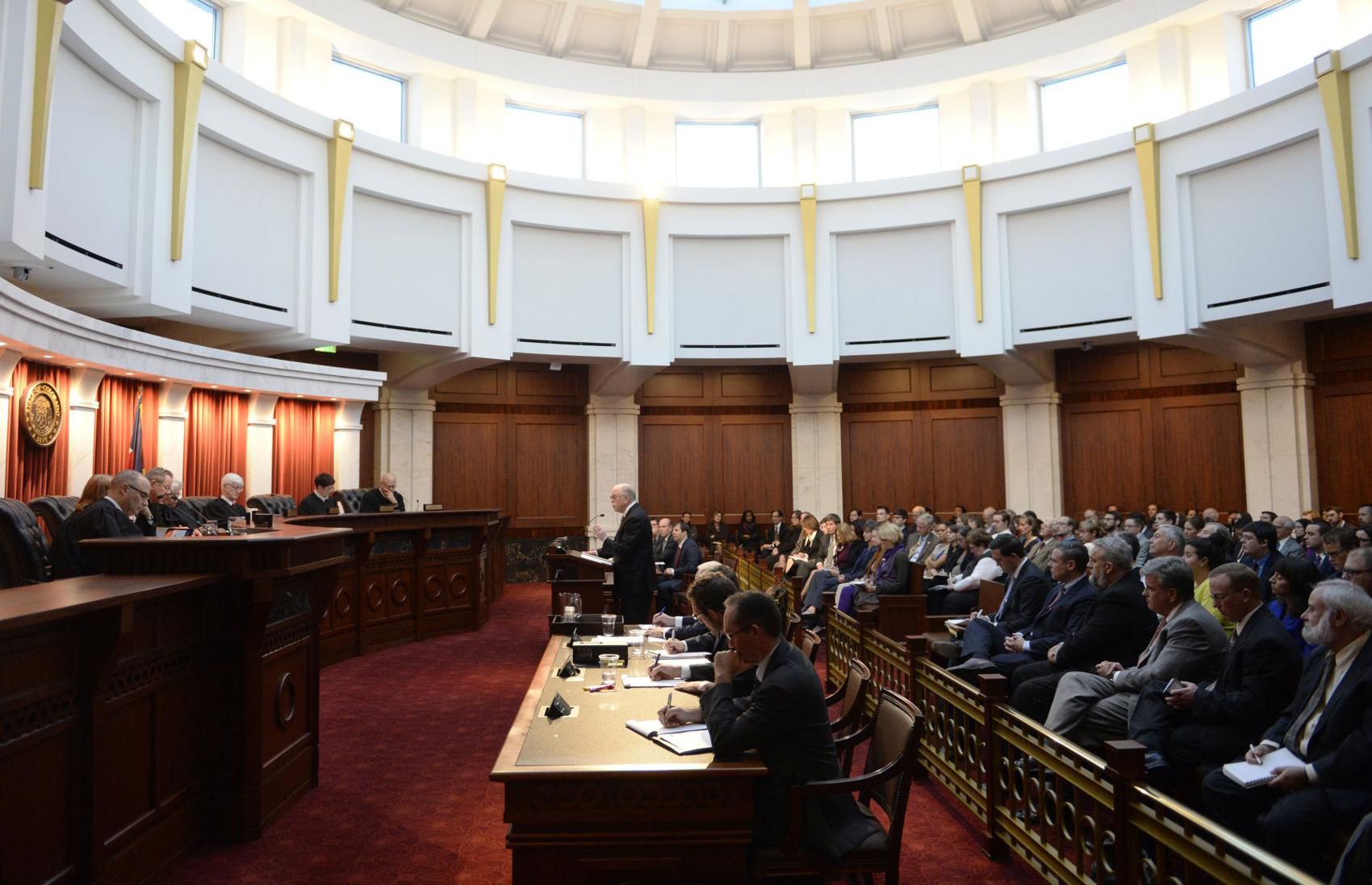
From 2016 to 2020, more than 200 juveniles in Colorado were ordered to pay more than $3.57 million in restitution fees to insurance companies. Now, that practice is over with the enactment of new legislation that immediately prohibiting courts from ordering juveniles to pay restitution to insurance companies, though it still allows the courts to mandate juveniles pay restitution to victims.
Gov. Jared Polis signed that measure, House Bill 1373, into law on Tuesday.
“For the young people we work with every day, this bill means hope,” said Mirror Image Arts, a Denver theater organization that works to rehabilitate juvenile offenders and which inspired the creation of the bill. “It is a step in the right direction for young people having a second chance and breaking cycles of crime, violence and poverty.”
Supporters of the bill say restitution fees from insurance companies push juveniles to reoffend to pay off impossibly high debts as they struggle to find work with criminal records. Of the $3.57 million ordered from juveniles, only $146,348 – or 4% – has been paid, according to state data.
Bill sponsor Sen. Julie Gonzales, D-Denver, said restitution fees have 8% interest rates, are not dischargeable by filing for bankruptcy and can prohibit youth from activities, such as getting a driver’s license or taking out loans for school or work. These debts also often get pushed onto parents, as many juvenile offenders are not old enough to legally work.
In a written testimony in support of the bill, 20-year-old Shawn Pollock said he currently faces $275,000 in debt from restitution fees to insurance companies due to crimes he committed when he was 14 and 15.
“I asked (my mentor), ‘If I pay $100 a month, how many years will it take me to pay that off?’ She told me 213 years,” Pollock said. “I was heartbroken. … I understand I need to pay for the harm I’ve done, but does it have to be a life sentence?”
The state Senate passed the bill in a 20-15 vote, while the House approved it, 38-25.
Opponents to the bill – all of whom are Republicans – argued that it could result in insurance companies raising rates and victims of crimes not being fairly compensated. Supporters countered that more than 95% of the restitution fees are already not being paid.

Colorado’s national correspondent recounts violent KKK march in D.C. | A LOOK BACK
Rachael Wright
rachael.wright@coloradopolitics.com
Updated 4 days ago
by Rachael Wright Thirty-Five Years Ago This Week: “I had forgotten about the Ku Klux Klan,” said Ann Downing Schmidt, The Colorado Statesman’s Washington, D.C., correspondent. In a commentary piece published in The Statesman, Schmidt described trying to make the ten-minute drive from...
Ethics investigations, scandals plague Colorado Capitol | 2025 Unfiltered
Marianne Goodland
marianne.goodland@coloradopolitics.com
Updated 4 days ago
Over the course of the year, a series of investigations, allegations and controversies emerged at the state Capitol, drawing scrutiny to the behavior of elected officials and, in some cases, overshadowing policy debates. Here are some of the notable investigations,...
Top stories of the Colorado General Assembly | 2025 Unfiltered
Marianne Goodland
marianne.goodland@coloradopolitics.com
Updated 4 days ago
In 2025, the Colorado legislature faced a budget deficit, sought to tackle a lingering housing crisis and saw a wave of lawmakers leaving for other opportunities, prompting multiple vacancy committees to act. Here are a look at the year’s top...

2025 Unfiltered: Colorado Supreme Court vacancy, surge in federal filings and more
Michael Karlik
michael.karlik@coloradopolitics.com
Updated 3 days ago
This year was awash in legal news nationally, with federal courts taking an outsize role in responding to executive branch actions. In Colorado, that effect was evident, but it was not the only factor at play. Here are the top...
Unions, guns and vetoes — inside Colorado’s political year | 2025 Unfiltered
Marissa Ventrelli
marissa.ventrelli@coloradopolitics.com
Updated 4 days ago
From affordability and labor rights to gun policy — as well as public safety and gubernatorial vetoes — 2025 proved to be one of the most consequential and contentious years in recent Colorado political history. Lawmakers entered the session pledging...

Calendar Dec. 29-Jan. 4
Rachael Wright
rachael.wright@coloradopolitics.com
Updated 4 days ago
CoPo’s weekly political calendar will help you find political and public-policy events throughout Colorado. It includes candidate and issue campaign events, public policy meetings, court hearings, state and local party conventions, assemblies, debates, rallies, parades, speaking engagements, traveling dignitary appearances,...

2025 Unfiltered: Remembering those we lost in Colorado
Marianne Goodland
marianne.goodland@coloradopolitics.com
Updated 4 days ago
Rod Bockenfeld Former Rep. Rod Bockenfeld, R-Watkins, died on Feb. 13, 2025, at his home in Watkins. He was 69. Bockenfeld served in the Colorado House from 2019 to 2025, including on the Joint Budget Committee. He battled cancer during...

Colorado Politics in focus: the year’s top in-depth cover stories and series | 2025 unfiltered
Thelma Grimes
thelma.grimes@coloradopolitics.com
Updated 22 hours ago
In 2025, Colorado Politics went beyond the daily headlines, delivering in-depth reporting on the major issues shaping the state — from congressional action to legislative proposals to the urban-rural divide and the future of Colorado’s economy. Here’s a look at...

2025 Unfiltered: Moments that marked Colorado’s decidedly off-kilter political year
Ernest Luning
ernest.luning@coloradopolitics.com
Updated 3 days ago
From the flurry of executive orders that ushered in President Donald Trump’s second term to a blizzard of lawsuits filed by the state’s Democratic officials, the state’s political year was marked by near-constant conflict between the GOP-controlled federal government and...

From Pope Francis to Charlie Kirk, many deaths in 2025 had a wide impact
The Associated Press
the-associated-press@coloradopolitics.com
Updated 10 hours ago
The death of Pope Francis brought change to the Catholic Church, which counts 1.4 billion adherents and is now led — for the first time — by an American pope. The fatal shooting of conservative activist Charlie Kirk as he...
PREV
PREVIOUS

Polis OKs study on raising minimum age to criminally charge children
Gov. Jared Polis on Tuesday signed a bill into law to study raising the minimum age that Colorado children can be charged with most crimes. House Bill 1131 will create a task force to recommend how to better serve children ages 10, 11 and 12 who commit crimes without putting them in the criminal justice […]

Weiser's office refers complaint against Boebert on use of campaign funds to revenue, labor agencies, Boebert calls it 'another swing and miss'
Colorado’s Attorney General has referred a complaint to the Department of Revenue and Colorado Department of Labor and Employment over the use of campaign money by U.S. Rep. Lauren Boebert, R-Silt, for mileage claims. Lawrence Pacheco, a spokesman for the the Department of Law, said the agency “received an investigation request. We referred it to […]