

OUT WEST ROUNDUP | Oklahoma governor signs nation’s strictest abortion ban

OKLAHOMA
Governor signs the nation’s strictest abortion ban
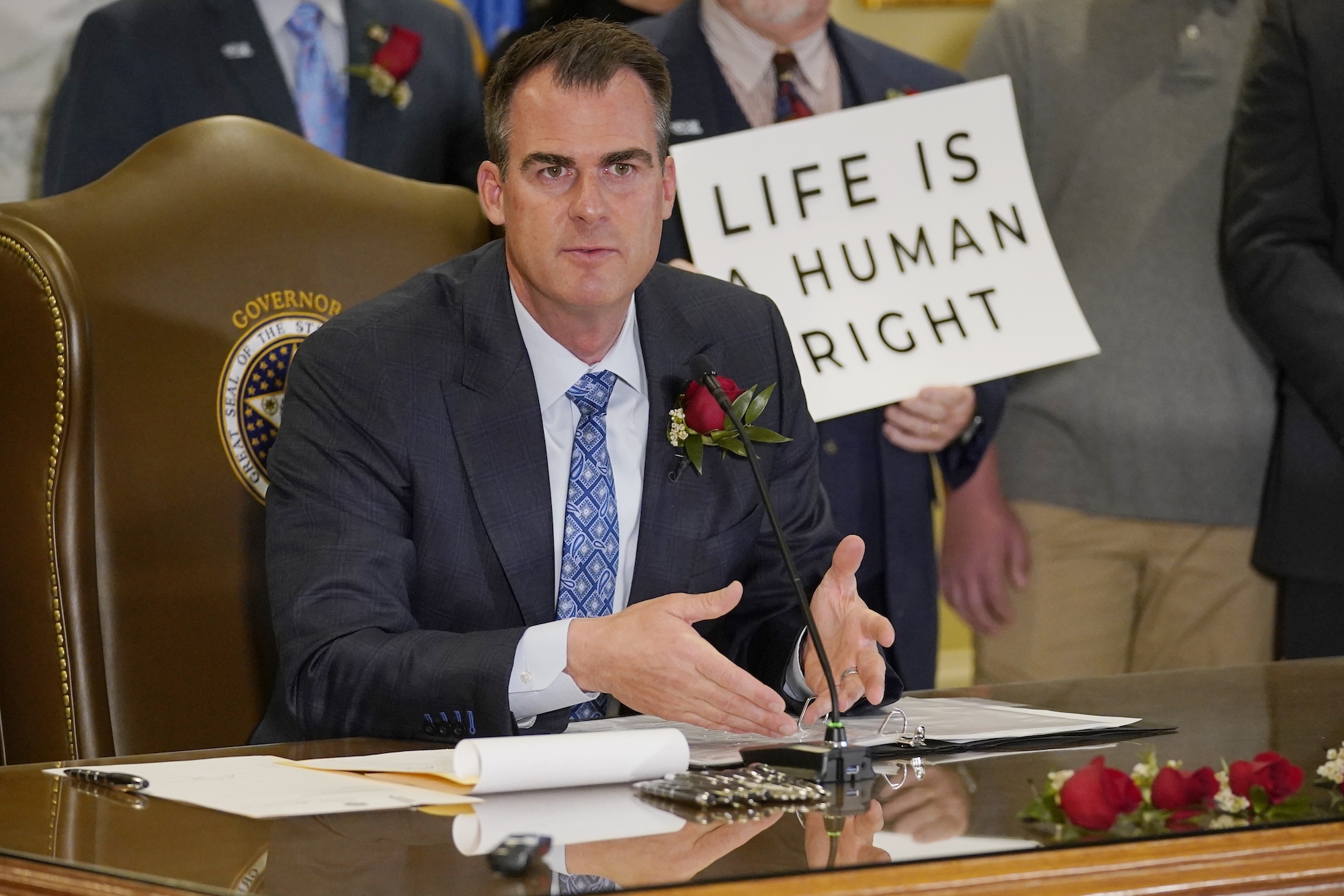
OKLAHOMA CITY – Oklahoma Gov. Kevin Stitt on May 25 signed into law the nation’s strictest abortion ban, making the state the first in the nation to effectively end availability of the procedure.
State lawmakers approved the ban enforced by civil lawsuits rather than criminal prosecution, similar to a Texas law that was passed last year. The law takes effect immediately upon the first-term Republican’s signature and prohibits all abortions with few exceptions. Abortion providers have said they will stop performing the procedure as soon as the bill is signed.
Abortion providers across the country have been bracing for the possibility that the U.S. Supreme Court’s new conservative majority might further restrict the practice.
The bills come on the heels of a leaked draft opinion from the nation’s high court that suggests justices are considering weakening or overturning the landmark Roe v. Wade decision that legalized abortion nearly 50 years ago.
The only exceptions in the Oklahoma law are to save the life of a pregnant woman or if the pregnancy is the result of rape or incest that has been reported to law enforcement.
The bill specifically authorizes doctors to remove a “dead unborn child caused by spontaneous abortion,” or miscarriage, or to remove an ectopic pregnancy, a potentially life-threatening emergency that occurs when a fertilized egg implants outside the uterus.
The law also does not apply to the use of morning-after pills such as Plan B or any type of contraception.
Two of Oklahoma’s four abortion clinics already stopped providing abortions after the governor signed a six-week ban earlier this month.
The third Oklahoma bill is to take effect this summer and would make it a felony to perform an abortion, punishable by up to 10 years in prison. That bill contains no exceptions for rape or incest.
WYOMING
Police working with FBI to investigate possible arson at clinic
Casper police are working with the FBI to investigate suspected arson at a Casper clinic that planned to open and provide abortions starting in June.
Investigators found “several areas” inside the clinic where an “accelerant,” like gasoline, was used in the fire, according to a May 26 statement. The incident is still under investigation, and surveillance images cannot yet be released.
On May 25, police said they received a report around 4 a.m. from someone living nearby that a person with a “gas can and black bag” was seen fleeing the building. The caller also told police they heard glass break.
Officers arrived and saw smoke coming from the clinic, and called fire crews. Casper Fire Deputy Chief Devin Garvin said the fire was relatively small, and police said it was “quickly extinguished.”
Police on the scene said there was extensive smoke damage inside. According to authorities, the fire was on the building’s west side – the side nearest to the Sinclair gas station next door.
No one was inside the building at the time, and no injuries were reported.
Burkhart said the clinic’s setup was in the final stages, and her team was planning to start training staff.
In addition to the FBI, Casper police are also working with the Bureau of Alcohol, Tobacco, Firearms and Explosives to investigate the cause of the fire.
Utility gets nod to build 416-mile wind power line across West
CHEYENNE- U.S. land managers on May 26 said they’ve given final permission for a 416-mile transmission line that would connect wind farms in eastern Wyoming with customers in Utah and elsewhere across the West.
The U.S. Bureau of Land Management said it has notified Portland-based PacifiCorp it can proceed with its Energy Gateway South Transmission line. It will run from the Medicine Bow, Wyoming area, across northwestern Colorado and end near Mona, Utah, south of Salt Lake City.
The Biden administration has promoted renewable energy in the West but delivering that power to customers will require major upgrades to the nation’s aging electrical grid.
Gateway South is part of a broader plan by PacifiCorps to install roughly 2,000 miles of new transmission lines across the West at an estimated cost of $8 billion.
Construction on Gateway South is expected to begin in June. In August PacifiCorps expects to start work on part of another line, known as Gateway West, that would stretch across 75 miles in eastern Wyoming. said utility spokesperson Tiffany Erickson. The two projects combined will cost an estimated $2.2 billion and they are expected to be in service by late 2024, she said.
ARIZONA
Cops: 500,000 fentanyl pills seized in traffic stop
CASA GRANDE – Two women were arrested after about 500,000 fentanyl pills were found in an SUV pulled over for speeding on Interstate 10 in Arizona, police said.
The pills that were seized were discovered concealed in collagen supplement bottles on May 23 during a search that also turned up a handgun and a large amount of cash, police from the small city of Casa Grande south of Phoenix said in a statement.
U.S. overdose deaths have risen most years for more than two decades. The increase began in the 1990s with overdoses involving opioid painkillers, followed by waves of deaths led by other opioids like heroin and – most recently – illicit fentanyl.
Last year, overdoses involving fentanyl and other synthetic opioids surpassed 71,000, up 23% from the year before. There also was a 23% increase in deaths involving cocaine and a 34% increase in deaths involving meth and other stimulants.
Over a two-month period in Arizona late last year, the U.S. Drug Enforcement Administration working with Arizona law enforcement agencies made seizures of more than 3 million fentanyl pills, 99 pounds of fentanyl powder and 35 firearms.
In the Arizona traffic stop, two children in the vehicle were turned over to state child protection officials, police said.
NEW MEXICO
Firefighters rescue ‘Cinder’ the elk calf from fire’s ashes
SANTA FE – Firefighters have rescued an abandoned newborn elk calf found amid the ashes of the nation’s largest wildfire as calving season approaches its peak in New Mexico and fires rage across the American West.
Missoula, Montana-based firefighter Nate Sink said on May 24 that he happened upon the motionless elk calf on the ground of a fire-blackened New Mexico forest as he patrolled and extinguished lingering hot spots.
“I didn’t think it was alive,” said Sink, who was deployed to the state to help contain a wildfire that by May 25 had spread across 486 square miles and destroyed hundreds of structures.
It was one of five major uncontained fires burning in New Mexico amid extremely dry and windy conditions.
Wildlife officials in general discourage interactions with elk calves that are briefly left alone in the first weeks of life as their mothers forage at a distance. Sink says he searched diligently for traces of the calf’s mother and found none.
The 32-pound, singed bull calf, dubbed “Cinder,” was taken for care to a nearby ranch and was regaining strength at a wildlife rehabilitation center in Espanola, north of Santa Fe.
Veterinarian Kathleen Ramsay at Cottonwood Rehab says she paired Cinder with a full-grown surrogate elk to be raised with as little human contact as possible.
“They do elk things, they don’t do people things,” said Ramsay, noting Cinder arrived at a tender days-old age with his umbilical cord still attached.
Ramsay said the calf hopefully can be released into the wild in December after elk-hunting season.


Ballot access, dual-office ban bills move swiftly through Colorado legislature
Marianne Goodland
marianne.goodland@coloradopolitics.com
Updated 43 minutes ago
With an eye on the 2026 election cycle and mounting tensions with the Trump administration, Colorado lawmakers are fast-tracking a pair of election bills they say will protect the state’s mail ballot system and tighten rules for elected officials. The...
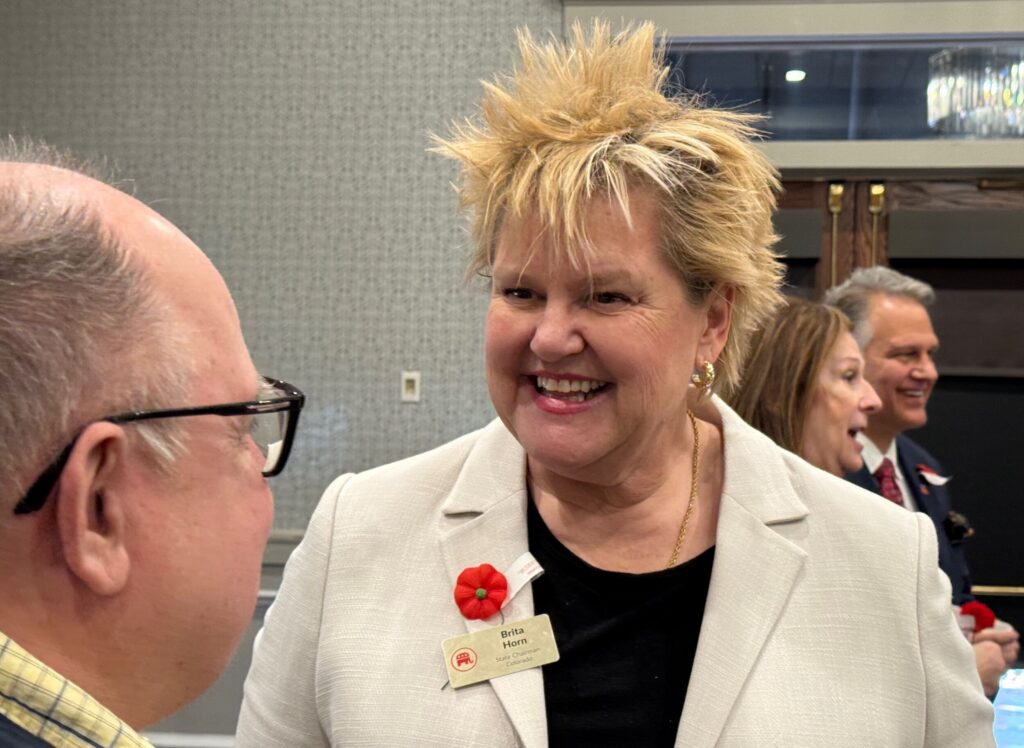
Colorado GOP chair Brita Horn loses ‘no-confidence’ vote, vows to refocus on ‘mending that divide’
Ernest Luning
ernest.luning@coloradopolitics.com
Updated 1 hour ago
The Colorado Republican Party’s state central committee approved a resolution expressing “no confidence” in state chair Brita Horn in a landslide late Monday night near the end of an online meeting marked by rancor and confusion. Almost 80% of the...

Trump to attend White House Correspondents’ Dinner for first time as president
Washington Examiner Staff, Washington Examiner
washington.examiner.staff.washington.examiner@gazetteedit.wpenginepowered.com
Updated 4 hours ago
President Donald Trump announced on Monday that he accepted an invitation to this year’s White House Correspondents’ Dinner. It would mark the first time Trump has attended the dinner, in either term, since he’s been president. Trump announced the decision...
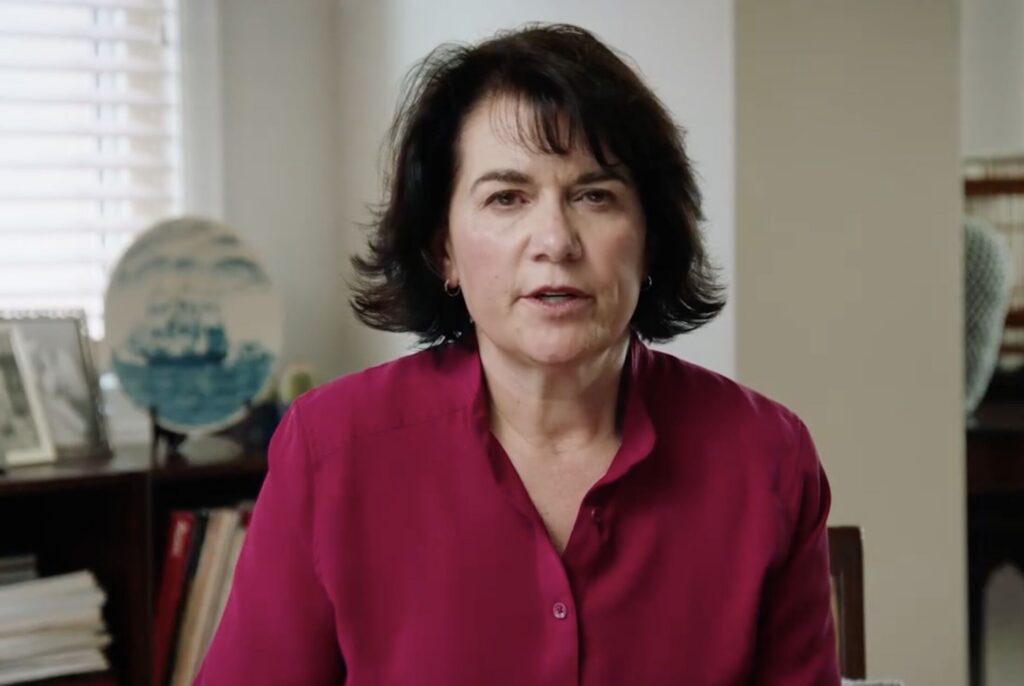
Primary rival sues to prevent Democrat Eileen Laubacher from going through assembly in Colorado’s 4th CD
Ernest Luning
ernest.luning@coloradopolitics.com
Updated 6 hours ago
Democratic congressional candidate Trish Calvarese on Monday asked a judge to prevent one of her primary rivals, Eileen Laubacher, from participating in the caucus and assembly process to seek the nomination to challenge Republican U.S. Rep. Lauren Boebert in Colorado’s...
Colorado lawmakers tackle legislation on sexual assault
Jenny Deam
jenny-deam@coloradopolitics.com
Updated 8 hours ago
A panel of Colorado lawmakers on Monday unanimously approved a bill that supporters say will offer protections and support to victims of domestic violence, stalking, sex trafficking and sexual assault, including mandatory training for law enforcement on trauma. The measure,...

Denver adopts face mask ban for law enforcement
Deborah Grigsby
deborah.smith@denvergazette.com
Updated 5 hours ago
Members of the Denver City Council unanimously approved an ordinance Monday that prohibits law enforcement officers, including federal immigration agents, from wearing a mask or face covering while interrogating, detaining, or arresting an individual within Denver, including in city-owned buildings....

More than 20 Colorado counties receive grants to improve land record-keeping systems
Maren Prince
maren.prince@denvergazette.com
Updated 5 hours ago
More than 20 Colorado counties received $2.5 million to improve their land record-keeping systems, according to a Monday news release. The State’s Electronic Recording Technology Board awarded 22 counties with grants ranging from $5,000 to $350,000, according to the release....

Denver among top 5 finalist cities for 2028 DNC
Deborah Grigsby
deborah.smith@denvergazette.com
Updated 5 hours ago
Denver is among the five cities that could host the 2028 Democratic National Convention, the Democratic National Committee announced Monday. Along with Denver, Philadelphia, Atlanta, Boston and Chicago have advanced in the application process to host the next DNC, which...

Colorado bill would require employers to grant legislative leave to state lawmakers
Marissa Ventrelli
marissa.ventrelli@coloradopolitics.com
Updated 5 hours ago
When she was elected to the legislature in 2022, Sen. Janice Marchman was hopeful she could bring real-world experience to the state’s education policy. Marchman, a Loveland Democrat, was the only actively-working teacher in the General Assembly for the past...
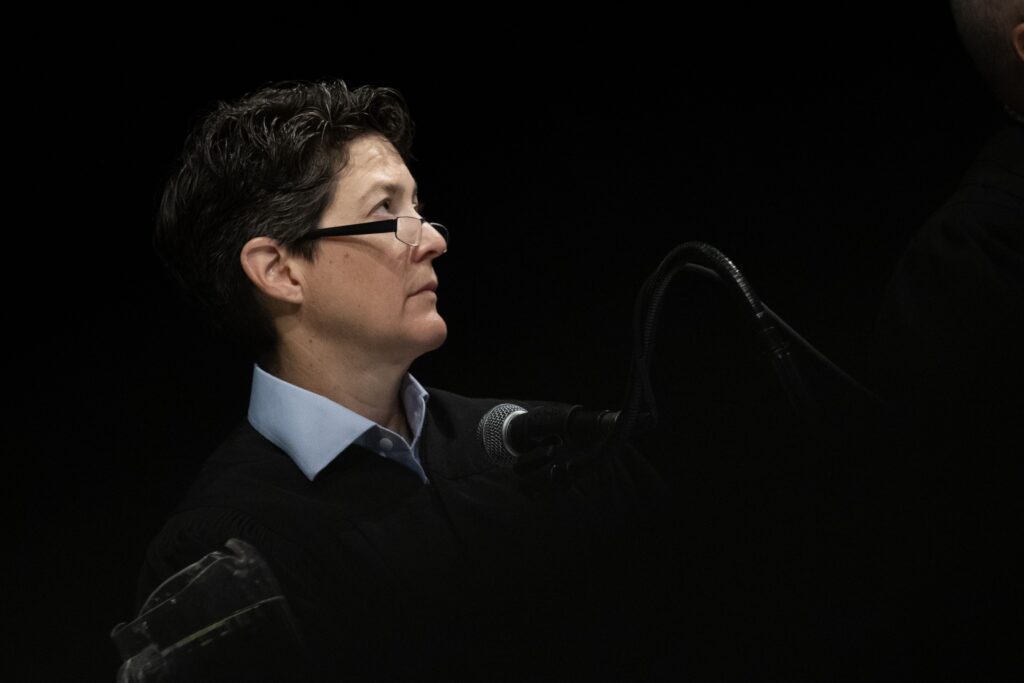
Colorado Supreme Court clarifies restraining order violations can always support burglary charge
Michael Karlik
michael.karlik@coloradopolitics.com
Updated 22 hours ago
The Colorado Supreme Court’s majority ruled on Monday that a violation of a restraining order can also serve as a basis for finding a defendant guilty of burglary. Under state law, a person commits second-degree burglary by unlawfully entering or...
PREV
PREVIOUS

SONDERMANN | A call for a bit of grace and understanding
Eric Sondermann Every so often, it is necessary to return to a subject. In that vein, let us again discuss the coming Supreme Court decision that shows every likelihood of overturning the 49-year-old case of Roe v. Wade. In early April, I wrote a column supporting a women’s right to choose, but making the case […]

Denver City Council set to vote on affordable housing policy
Denver City Council will hold a public hearing and final vote on its Expanding Housing Affordability guidelines Monday, making changes to building requirements across Denver city codes to require affordable housing be built with market-rate projects. The full council has been in support of the program, which was made possible after the Colorado Legislature passed […]