

2022 SESSION: Legislators wrap up work after tackling fentanyl, passing largest budget in history

Colorado’s legislators wrapped up their work for the year just before midnight on Wednesday after tackling some of the most monumental measures in years, notably passing a sweeping response to the fentanyl crisis and adopting a record-breaking spending plan.
Here are some of the major bills lawmakers passed:
Fentanyl
The most significant bill of the 2022 session wound up being about public safety, a priority for both parties, but the issue that dominated the session wasn’t on the radar of lawmakers when they gaveled in on Jan/ 12. The February deaths of five Commerce City residents, who allegedly did not know they were taking fentanyl, pushed lawmakers to spend three months coming up with a solution to the spiraling crisis.
House Bill 1326 was among the last bills of the 2022 session to cross the finish line following a week of back-and-forth between the House and Senate over incompatible differences. A conference committee finally came up with a solution with five hours to go in the session, and the two chambers passed the bill with less than two hours before lawmakers are constitutionally required to conclude their work for the year.
Abortion
When Polis signed legislation affirming the right to an abortion in Colorado in April, supporters described it as a bulwark against a potential U.S. Supreme Court decision to overturn Roe v Wade. That possibility inched closer to reality a month later, when Politico published a leaked draft of an opinion striking down both Roe and the high court’s ruling in Planned Parenthood v. Casey in 1992.
Known as the Reproductive Health Equity Act, House Bill 1279 establishes a fundamental right to continue a pregnancy and give birth, or to have an abortion. The bill also says fertilized eggs, embryos and fetuses do not have independent rights under the law, and it prohibits state and local public entities from denying or restricting an individual’s right to use or refuse contraception, or to either continue a pregnancy or have an abortion. In guaranteeing that right, Colorado became the second state this year to adopt a law protecting legal access to the procedure.
And should the court ultimately unwind Roe, Colorado could become “an island in the middle of an abortion desert,” as one abortion-rights activist put it.
Record spending
Legislators passed and the governor signed a $36.4 billion spending plan – the biggest so far in Colorado’s history – that funds the state’s priorities in the upcoming fiscal year. Indeed, the budget for fiscal year 2022-2023 allocated roughly $2.5 billion more compared to current spending levels.
Counting general fund money alone, the budget includes major increases in several areas, notably health care and public safety.
“We are bringing real relief to Coloradans with this bipartisan balanced budget, and ensuring we have a cleaner, healthier and safer Colorado for years to come,” Gov. Jared Polis said in April.
Collective bargaining
The fight to extend the right to collective bargain to Colorado’s 38,000 county workers came down to the wire, but lawmakers ultimately approved that measure after making several concessions to counties and to Republicans who opposed the measure and dragged out the session in its final days to force the bill’s Democratic sponsors to the negotiating table.
As amended, Senate Bill 230 made it optional for county commissioners to agree to collective bargaining contracts with their employees. The bill, which has been in the works for at least two years, started out as a plan to allow all public sector employees to engage in collective bargaining. That would have included those who work for municipalities, counties, special districts, K-12 schools and public colleges and universities.
As the bill got closer to introduction this year and the opposition grew, including from some quarters in organized labor, the bill was narrowed down first to just counties and higher education, and then to its final version, which as approved applies to only 38 of the state’s 64 counties. The bill was among the last to win approval in the House, with last-minute amendments part of a larger deal crafted in the wee hours of Tuesday morning designed to resolve an impasse between House Republicans and Democrats.
Wildfires
The nature of the Marshall fire, a wildfire that tore through a suburban neighborhood in the dead of winter, horridly illustrated Colorado’s new reality – a state that could face its worst wildfire season in history.
Indeed, experts fear the situation will only get worse in the coming years. Legislators this year focused on confronting that reality, passing several bills that offer an array of strategies and funding to help firefighters and strengthen communities.
House Bill 1132 requires all controlled burns on private property to be reported to local fire departments. Senate Bill 7 implements an enhanced wildfire awareness month outreach campaign over the next two years. House Bill 1011 allocates nearly $27 million to match money that local governments designate for forest management or wildfire mitigation efforts, and House Bill 1012 spends over $7 million on forest health and restoration. Earlier this session, the legislature also passed House Bill 1007, which creates a grant program funding wildfire mitigation outreach, House Bill 1111, which increases insurance coverage of wildfire losses, and Senate Bill 2, which spends $5 million on volunteer firefighting resources. The legislative response sits atop another $20 million of federal funding the state allocated for fire prevention to pay for additional contracts with air tankers and helicopters, expanded dispatch services and new technology for on-the-ground coordination.
Fiscal relief
Polis and his allies in the Democrat-dominated legislature pursued several strategies to offer fiscal relief to Coloradans who face spiking inflation and soaring energy prices, and on the last day of session, lawmakers approved a proposal that sends $400 – or more – in Taxpayer’s Bill of Rights refund checks to residents.
House members amended Senate Bill 22-233 to allow the state to refund up to 85% of the TABOR surplus, which could make the money higher if revenue forecasts hew to Democrats’ expectations. However, if state revenues fall short of expectations, the refund checks would be lowered to avoid overpayment.
A spokesman for House Democrats told Colorado Politics on Tuesday that, based on conversations with the Department of Revenue and the governor’s Office of State Planning and Budgeting, the rebate checks will increase to at least $500 for single filers and $1,000 for joint filers.
Taxpayers will receive equal payments, regardless of income.
Not every proposal lawmakers conjured during the 2022 legislative session made it across the finish line.
Here are some of the most notable bills killed by the General Assembly:
Flavored tobacco ban
House Bill 1064, one of the most high-profile bills of the session, sought to curb youth tobacco and nicotine use by prohibiting the sale of flavored products, such as vapes, e-cigarettes, menthol cigarettes and chewing tobacco beginning in 2024. Lawmakers earlier amended the bill to exempt hookah products, premium cigars and pipe tobacco.
But it met an unceremonious end when the Senate Appropriations Committee voted, 5-2, to shut the bill down. The meeting featured no public comment and little debate, unlike the other six votes on the bill that saw hours of discussion and dozens of community members testifying in support and opposition to the measure.
The vote came after Gov. Jared Polis said he opposed the bill, spurring concerns of a veto. Though Polis said the issue is better left to local governments, the ban would have slashed funding for his new universal preschool program funded by state tobacco and nicotine taxes. Polis’ office declined to comment on the bill.
Hand-held cellphones while driving
A casualty of the end of session crunch in the House, Senate Bill 175 died despite winning bipartisan votes at nearly every stage of the legislative process.
Under current law, adult drivers are allowed to use cellphones for calls but they cannot text or browse the internet. If passed, the bill would have prohibited all hand-held cellphone use. Drivers under the age of 18 are already prohibited from all cellphone use, including hands-free.
Though the bill passed the Senate in a 24-10 vote in April and the House Transportation Committee in a 12-1 vote on May 2, the House Appropriations Committee failed to schedule the bill before Tuesday’s midnight deadline.
Recycling
Another bill that went down to the wire was House Bill 1355, a controversial attempt to boost the state’s abysmal recycling rate. The measure would have set up multiple non-profits with authority to levy “dues” primarily to retailers and beverage companies, but it exempted out a long list of materials and companies that use them that critics said made the bill unfair to those who are left.
The measure also would have allowed the non-profit to levy fines to companies, which critics pointed out is not a role of non-profits and which could fine out-of-state companies who don’t participate in what’s called the “producer responsibility organization.” The bill had a long lead time, with full implementation not expected for several years.
Alternative transportation for workers
As drafted, House Bill 1138 would have required businesses with over 100 employees to provide alternative transportation options for employees, offer cash allowance in lieu of parking spaces and also transportation fringe benefits. The bill would have also created an income tax credit to incentivize businesses of all sizes to provide alternative transportation options.
But the legislative proposal, which has been in the works in other sectors of Colorado’s state government, faced a tough reception before the House Finance Committee. The panel panel voted to indefinitely postpone the measure.
Metro district reform
Senate lawmakers late in the session opted to indefinitely postpone House Bill 1363, a measure that at first prevented, then allowed, then again prevented metro district developers from owning their own public financing.
The bill began its life by attempting fix a number of perceived issues with metro district operations but scaled back to only the provision dealing with developer-purchased bonds. It left the House with a last-minute amendment added on the floor that allowed the practice, but failed to remove the provisions that prevented it. In the Senate committee, bill sponsors managed to land a vote to strip the House floor change before moving to a final vote to end its progress.
Implicit bias in jury selection
The attempt from a pair of the most progressive members of the Colorado Senate’s Democratic caucus to combat implicit racial bias in jury selection also failed to advance.
The measure from Sens. Pete Lee, D-Colorado Springs, and Julie Gonzales, D-Denver, would have altered the protocol for allowing attorneys to excuse, or strike, potential jurors in a criminal trial. Most controversially, Senate Bill 128 listed several reasons associated with race – but are not explicitly racial – that would be presumably invalid justifications for striking a juror.
In the face of opposition from all 22 of the state’s district attorneys, Lee and Gonzales opted against moving forward with their proposal, asking instead that the Colorado Supreme Court exercise its rulemaking power before the next legislative session.
Marijuana and employment
House Bill 1152 from Boulder Democrat Rep. Edie Hooton generated internet buzz early in the session before ultimately meeting the same end as the five previous iterations of the legislation.
As originally written, the bill would have allowed people to use marijuana outside of work and allowed card-carrying medical marijuana individuals to use the drug during work without negative professional consequences.
But lawmakers in the Colorado House Business Affairs and Labor Committee unanimously opted to completely rewrite the bill, replacing it with a proposed task force to study medical marijuana use in employment, before ultimately voting to kill it.




Can deliberation save democracy? | Vince Bzdek
Vince Bzdek
vince.bzdek@gazette.com
Updated 5 hours ago
In September 2019, 523 Americans traveled to Dallas for an experiment called “America in One Room.” The gathering was designed to test a theory: Could representative citizens deliberate productively even in an era of intense polarization? The event took place...
Redistricting scheme would give Colorado Democrats seven House members, split El Paso County | Bob Loevy
Bob Loevy
bob-loevy@coloradopolitics.com
Updated 2 hours ago
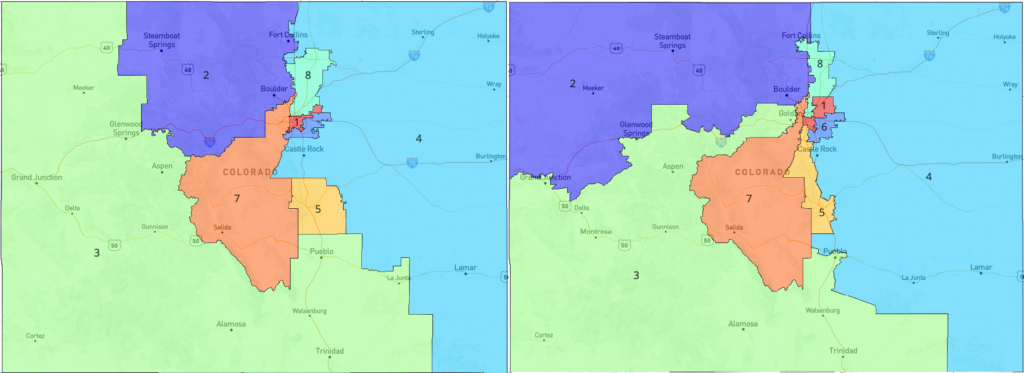
A proposed redistricting plan, which could give Colorado seven Democratic members of the U.S. House of Representatives and only one Republican, would split El Paso County into two parts and thereby weaken the county’s influence in Congress. El Paso County,...
Colorado Democrats, Republicans fight over ballot fiscal information
Marissa Ventrelli
marissa.ventrelli@coloradopolitics.com
Updated 1 day ago
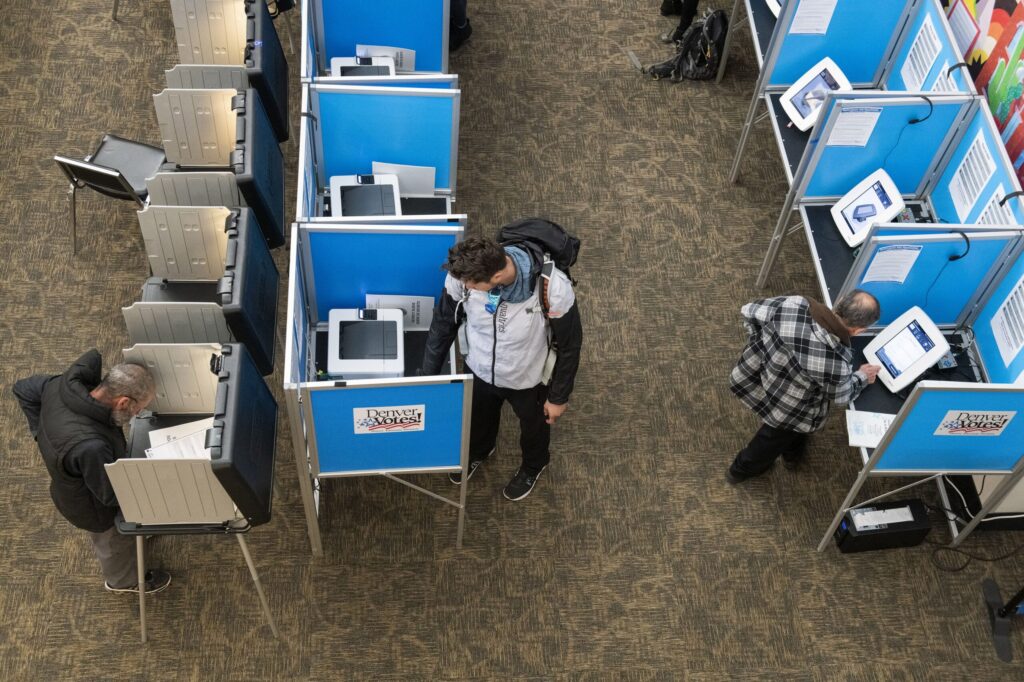
Republicans and Democrats clashed anew over legislation that would require identifying which programs would see a funding reduction if a ballot measure passed, with the former saying it’s yet another way for the government to control the campaign narrative and...

Democrat Dwayne Romero jumps in primary to challenge Republican Jeff Hurd in Colorado’s 3rd CD
Ernest Luning
ernest.luning@coloradopolitics.com
Updated 2 days ago
The Democrat who has been running for nearly a year to unseat Republican U.S. Rep. Jeff Hurd in Colorado’s 3rd Congressional District got some company in the primary this week. Dwayne Romero, a Snowmass Village business owner and decorated Army...

Colorado’s congressional redistricting proposal could flip three Republican House seats | ANALYSIS
Michael Braithwaite
michael.braithwaite@gazette.com
Updated 2 days ago
A Democrat-backed proposal to redraw Colorado’s congressional map for the 2028 election could flip three Republican districts. The proposal, introduced by a group called Coloradans for a Level Playing Field, is yet another development in a national redistricting debate after...

Judge declines to block potential Boebert challenger from going through assembly process in Colorado’s 4th CD
Ernest Luning
ernest.luning@coloradopolitics.com
Updated 3 days ago
Congressional candidate Eileen Laubacher, one of the Democrats seeking to challenge Republican U.S. Rep. Lauren Boebert, can participate in the party’s caucuses and assemblies pending a court hearing later this month, a Denver judge ruled Tuesday in response to a...
Colorado Gov. Jared Polis ignites fierce debate after raising clemency questions in Tina Peters case
Marianne Goodland
marianne.goodland@coloradopolitics.com
Updated 3 days ago
Gov. Jared Polis ignited a political firestorm Tuesday night after weighing in on the prison sentences of two former Colorado officials — a Democrat and a Republican — convicted of attempting to influence a public servant. The comments quickly fueled...
Bills on ballot access, dual office ban move swiftly through Colorado legislature
Marianne Goodland
marianne.goodland@coloradopolitics.com
Updated 3 days ago
With an eye on the 2026 election cycle and mounting tensions with the Trump administration, Colorado lawmakers are fast-tracking a pair of election bills they say will protect the state’s mail ballot system and tighten rules for elected officials. The...

Colorado GOP chair Brita Horn loses ‘no-confidence’ vote, vows to refocus on ‘mending that divide’
Ernest Luning
ernest.luning@coloradopolitics.com
Updated 4 days ago
The Colorado Republican Party’s state central committee approved a resolution expressing “no confidence” in state chair Brita Horn in a landslide late Monday night near the end of an online meeting marked by rancor and confusion. Almost 80% of the...
Primary rival sues to prevent Democrat Eileen Laubacher from going through assembly in Colorado’s 4th CD
Ernest Luning
ernest.luning@coloradopolitics.com
Updated 5 days ago
Democratic congressional candidate Trish Calvarese on Monday asked a judge to prevent one of her primary rivals, Eileen Laubacher, from participating in the caucus and assembly process to seek the nomination to challenge Republican U.S. Rep. Lauren Boebert in Colorado’s...
PREV
PREVIOUS

House kills bill to ban law enforcement from lying to minors
In the last act of the 2022 legislative session, the state House Wednesday killed a bill to prohibit law enforcement from lying while interrogating suspects younger than 18. The House sponsors of Senate Bill 23 chose to shut the bill down without opposition less than an hour before the legislature’s midnight deadline to conclude operations. The decision came […]
Colorado's Democratic US senators vote for federal abortion-rights bill that fails to advance
Senate Democrats failed to advance legislation to establish a federal right to abortion on Wednesday in a vote party leaders expected to lose. Intended to put lawmakers on the record ahead of this summer’s expected Supreme Court ruling to overturn Roe v. Wade, the 49-51 vote fell short of the 60 votes needed to overcome […]