

Denver expects to meet its revenue goal from increased parking meter rates

Denver has more than doubled its revenue from downtown parking meters in the first quarter since doubling the cost from $1 to $2 an hour, according to new figures released by the city.
From January through March, Denver generated $3,775,066 in revenue from parking meter fees, while during the same period in 2021 the city generated $1,714,435. This means Denver has $1,877,533 in new revenue this year to go toward safety and mobility improvements.
The city doubled the cost at its downtown parking meters at the start of the new year with the goal of generating an additional $9.5 million annually. The change came as part of Mayor Michael Hancock’s 2022 budget plan, and Department of Transportation and Infrastructure officials said the higher hourly rate better aligned Denver with comparable cities.
Colorado’s Paradise Cove getting new payment option
In Seattle, Chicago, Austin, Salt Lake City and Minneapolis, hourly meter parking costs between $2 and $2.75 in downtown areas. Other Colorado cities like Colorado Springs and Boulder also charge more than $1 an hour for meter parking.
Steven Byers, a senior economist with the Common Sense Institute, said while folks may not be happy about the increase in the cost of parking, this brings Denver more in line with similarly sized cities. He did note that with automobile crime increasing lately, people may prefer to park in an attended lot.
“Whether or not this $9.5 million in revenue will be realized really is dependent on whether or not the increase in the meter fees drive down the use of those meters or if it stays the same,” Byers said. “The price is not unreasonable in that it’s still a more affordable option than going to one of the attended parking lots or private parking lots. So, clearly, the price is not going to inhibit people from using them based on first-quarter evidence.”
Search for missing man turns to recovery operation at Cherry Creek Reservoir
City staff with the Department of Finance and the Department of Transportation and Infrastructure said the first quarter is typically one of the slowest for revenue due to weather and February being a shorter month than the rest. But, with revenue more than doubling, it shows that the city’s downtown is bouncing back from a couple of slow, pandemic years.
“We see the highest meter usage in the spring and summer as the Rockies games and outdoor festivals attract people to the city,” city staff said in an email. “We also see some minor increases in the later part of the year due to Broncos games, holiday events and shopping.”
If the city is correct in noting the first quarter is slower than the rest of the year, the city should be well on its way to exceed its goal of $9.5 million in new revenue, and city staff are still confident it’s on track. City staff said revenue from January through March 2021 accounted for 19.1% of what the city brought in from parking meters for the whole year. The March year-to-date amount of $3.78 million is 19.8% of what the city hopes to bring in for all of 2022.
Jill Biden pays surprise visit to Ukraine, meets first lady
The city said spring and summer bring additional meter usage due to Colorado Rockies games as well as various outdoor events and festivals.
The city’s 2022 budget allocates the extra revenue as funding for transit, sidewalks, bikeways and Vision Zero safety improvements. Specific projects funded by the rate increase are expected to be released in the summer.
Around 40% of the new revenue will go to transit projects and 20% each will go to constructing bicycle infrastructure, constructing/repairing sidewalks and safety projects that support Denver’s Vision Zero initiative to eliminate traffic deaths and serious injuries by 2030.

10th Circuit dismisses paralyzed man’s claims against Colorado Springs, officer
Michael Karlik
michael.karlik@coloradopolitics.com
Updated 7 hours ago
The Denver-based federal appeals court upheld the dismissal last week of a man’s excessive force claims against the city of Colorado Springs and the officer who tased him, causing him to fall down a sloped surface and break his neck....

Powell will attend Supreme Court hearing on Trump power to fire Fed governor
Zach Halaschak, Washington Examiner
zach.halaschak.washington.examiner@gazetteedit.wpenginepowered.com
Updated 8 hours ago
Federal Reserve Chairman Jerome Powell will attend oral arguments at the Supreme Court for a case in which President Donald Trump is testing the bounds of his power by attempting to fire a member of the central bank’s board of...
Pentagon orders 1,500 active-duty troops to prepare for Minnesota deployment
David Zimmermann Washington Examiner
davidzimmermannwashingtonexaminer@wpstage.coloradopolitics.com
Updated 8 hours ago
The Pentagon has ordered roughly 1,500 active-duty troops to remain on standby for a possible deployment to Minnesota, where anti-ICE protests are prevalent after an officer-involved shooting that killed a woman. Tensions between federal and state officials are growing increasingly...

With guidelines expiring, federal agency releases draft plan for Colorado River operations
Marianne Goodland
marianne.goodland@coloradopolitics.com
Updated 8 hours ago
Two months after the seven states of the Colorado River basin failed to reach consensus on managing the waterway, the U.S. Bureau of Reclamation issued a set of proposed alternatives. The alternatives are familiar concepts, including “no action” — an...
Colorado justices weigh overlap between child prostitution offenses
Michael Karlik
michael.karlik@coloradopolitics.com
Updated 10 hours ago
Members of the Colorado Supreme Court last week appeared willing to uphold a man’s conviction for an attempted child prostitution offense, which the state’s second-highest court previously found to be a violation of his right to equal protection under the...

State Supreme Court holds oral arguments, 10th Circuit revives dormant initiative | COURT CRAWL
Michael Karlik
michael.karlik@coloradopolitics.com
Updated 11 hours ago
Welcome to Court Crawl, Colorado Politics’ roundup of news from the third branch of government. The state Supreme Court heard oral arguments last week in multiple civil and criminal cases, plus the Denver-based federal appeals court is doing something unusual...
Denver gas prices surge but diesel mix-up not to blame, expert says
Dan Boniface
dan.boniface@denvergazette.com
Updated 6 hours ago
Denver gas prices surged 16.6 cents per gallon last week, but one expert said the public should not blame the hike on a recent diesel mix-up that damaged hundreds of vehicles and contaminated nearly 50 gas stations. “No, it has...
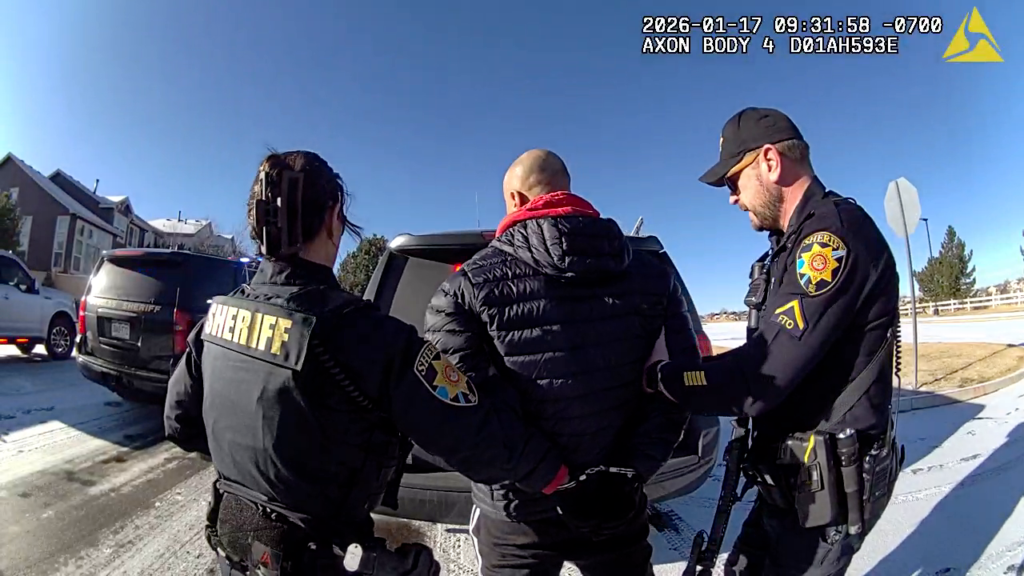
Flock cameras assist in road rage shooting arrest in Douglas County
Dan Boniface
dan.boniface@denvergazette.com
Updated 8 hours ago
Douglas County deputies on Monday said Flock Safety cameras were critical in an investigation that led to the arrest of a road rage shooting suspect. Deputies with the Douglas County Sheriff’s Office said 43-year-old Mitchell Aaron Weber was arrested Saturday...
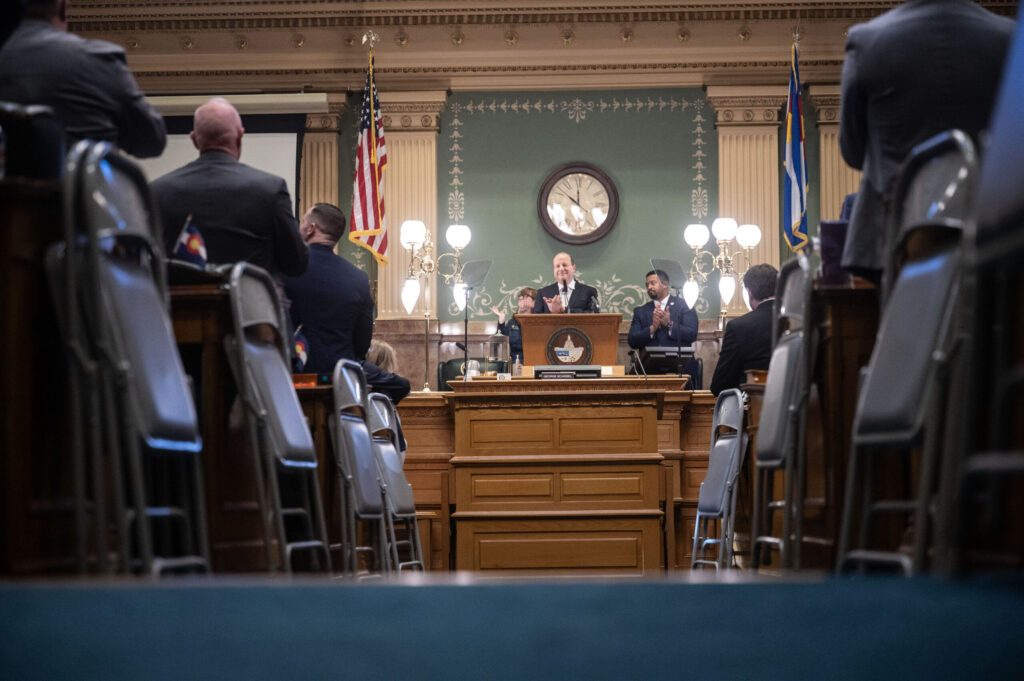
Colorado governor insists local officers can work with DEA agents amid non-cooperation law
The Denver Gazette
the-denver-gazette@coloradopolitics.com
Updated 7 hours ago
Gov. Jared Polis on Friday insisted that local law enforcement officers in Colorado can — and should — work with federal drug enforcement authorities to go after criminal activity. An official of the U.S. Drug Enforcement Agency earlier said Colorado’s...
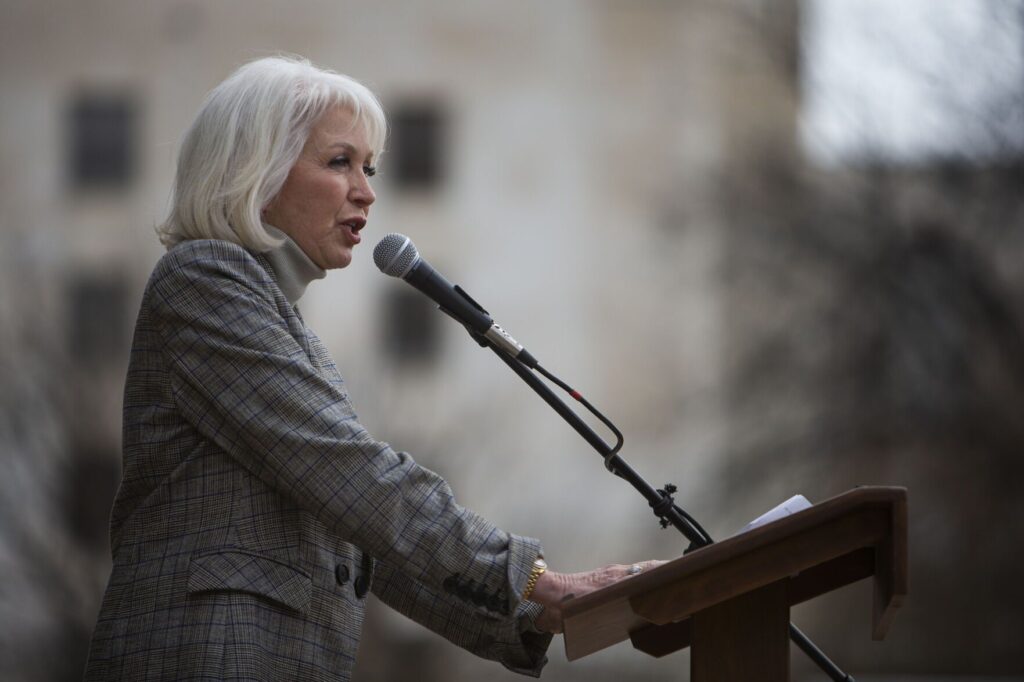
Is a pardon for Tina Peters coming? Colorado governor confirms he is weighing options
The Denver Gazette
the-denver-gazette@coloradopolitics.com
Updated 5 hours ago
Gov. Jared Polis on Friday strongly indicated he is considering clemency for Tina Peters, the former county clerk convicted of a security breach at her election office. When pressed about the matter, Polis didn’t offer an explicit answer, but he...
PREV
PREVIOUS

Colorado's overdose rates for teens and young people have skyrocketed
Bradyn Heit was a month from his 18th birthday and his high school graduation when he fatally overdosed on fentanyl pills in July 2017. His mother’s golden child, he’d wanted to play professional football. His mother also had struggled with substances. She died a month after Bradyn. The teenager who had apparently given Bradyn the […]

A decision to overturn Roe v. Wade could jolt Colorado's November election, strategists say
Supporters of abortion rights and Democratic strategists tell Colorado Politics that the shockwaves felt last week in response to a leaked draft of a Supreme Court opinion to overturn Roe v. Wade could echo through the November election, scrambling the typical midterm equation by turning a referendum on an unpopular President Biden and the Democrats’ […]