

Adams County judge mistakenly found woman too risky to release, appeals court concludes

A woman spent nearly two decades in the state’s custody after she was found not guilty by reason of insanity of killing her husband. An Adams County judge denied her unconditional release in 2020, despite testimony from medical experts that Priscilla Lee Jansma presented little to no risk of violence.
Now, the state’s second-highest court has ordered Jansma’s release from government supervision after concluding that former District Court Judge Tomee Crespin failed to apply the correct standard when evaluating Jansma’s level of dangerousness.
“Jansma – who was sixty-five years old at the time of the hearing – has no criminal history and has been violent only once in her life, when she shot her concededly abusive husband more than twenty years ago,” wrote Judge David H. Yun in the Court of Appeals’ decision issued on Feb. 14.
In June 1999, Jansma shot and killed her husband during a psychotic episode. The Denver Post reported at the time Jansma had said to police, “Jesus told me it was OK to do it.” A trial judge found her not guilty by reason of insanity and committed Jansma to the Colorado Department of Human Services.
Jansma spent time at the Colorado Mental Health Institute at Pueblo to receive treatment, then transitioned to a community placement in 2005. She never experienced a manic episode or exhibited symptoms of severe mental illness since. In early 2018, a court granted Jansma’s release, subject to conditions for continued treatment, given the low risk of danger she presented to herself or the community.
Shortly afterward, Jansma petitioned the court for unconditional release, saying she wanted to “move forward with her life and just go somewhere and build a quiet life for herself.”
Under Colorado law, if the government wants to prevent a person’s release from state supervision, it must present evidence showing the person does not meet the release criteria. Those requesting release must then demonstrate that they do not have an “abnormal mental condition” that would likely cause them to be a danger to the community or to themselves.
In August 2020, two years after Jansma filed her petition for unconditional release, Crespin held a hearing. Jansma called several witnesses, while the government called none. The testimony all pointed toward Jansma’s suitability to leave state supervision.
Psychologist Mac Bradley concluded that Jansma’s psychotic symptoms resolved quickly and she had no impairment in her perception of reality for the subsequent 20 years. Bradley told the court that it would be concerning if Jansma stopped taking her medication, but even if she did, he doubted Jansma would be dangerous.
Another doctor, Heath Canfield, determined in 2019 that Jansma was ineligible for unconditional release because of his concerns about Jansma’s ability to continue taking medication and her potential for marijuana use if the state’s supervision went away entirely. However, Canfield’s concerns dissipated by the time of the hearing and he believed Jansma was no longer a risk – even off of her medication.
Finally, Crespin heard from Jansma and her son, who personally guaranteed that his mother would never stop taking her medications.
Crespin issued an order in October 2020 denying Jansma’s unconditional release. She acknowledged Jansma had complied with her conditions of treatment since 2018, but also pointed out that Jansma had once, in 2014, ceased taking her medication. Crespin believed the “history of noncompliance” was problematic.
Given the “consistent opinions of the medical professionals that the Defendant’s risk level is unknown should the Defendant stop taking her medications, the Court finds that such conditions remain to be necessary,” she wrote.
Upon review, a three-judge panel for the Court of Appeals determined Crespin had misapplied the legal standard by focusing on the “unknown” risk if Jansma were to stop taking her medication.
“The critical question is whether Jansma is likely to be dangerous, not whether some possibility exists that she could be,” Yun explained. “And the evidence did not support a probability of dangerousness. The most Dr. Bradley and Dr. Canfield conceded was that they could not say for sure whether Jansma would be dangerous if she stopped taking her medications.”
Yun pointed out that even after Jansma went off her medications in 2014, she remained nonviolent. The panel ordered the district court to grant Jansma’s unconditional release.
The case is People v. Jansma.


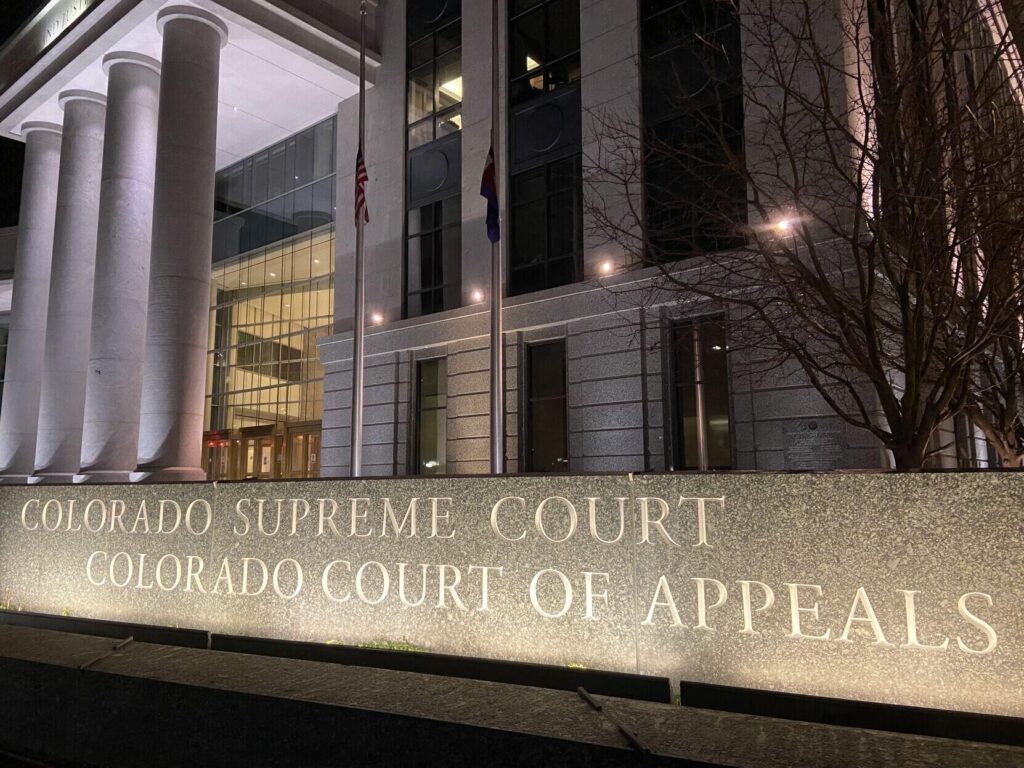
Divided appeals court reverses murder convictions due to faulty self-defense instruction
Michael Karlik
michael.karlik@coloradopolitics.com
Updated 11 hours ago
Colorado’s second-highest court concluded last week that an incomplete self-defense instruction required the reversal of an El Paso County defendant’s murder convictions. Demetrius Montez Martin was among those present late at night at a club in Colorado Springs. An argument...

New Supreme Court member announced, justices hear oral arguments | COURT CRAWL
Michael Karlik
michael.karlik@coloradopolitics.com
Updated 15 hours ago
Welcome to Court Crawl, Colorado Politics’ roundup of news from the third branch of government. The governor announced his pick to fill a vacancy on the state Supreme Court, and the justices heard oral arguments in multiple criminal and civil...
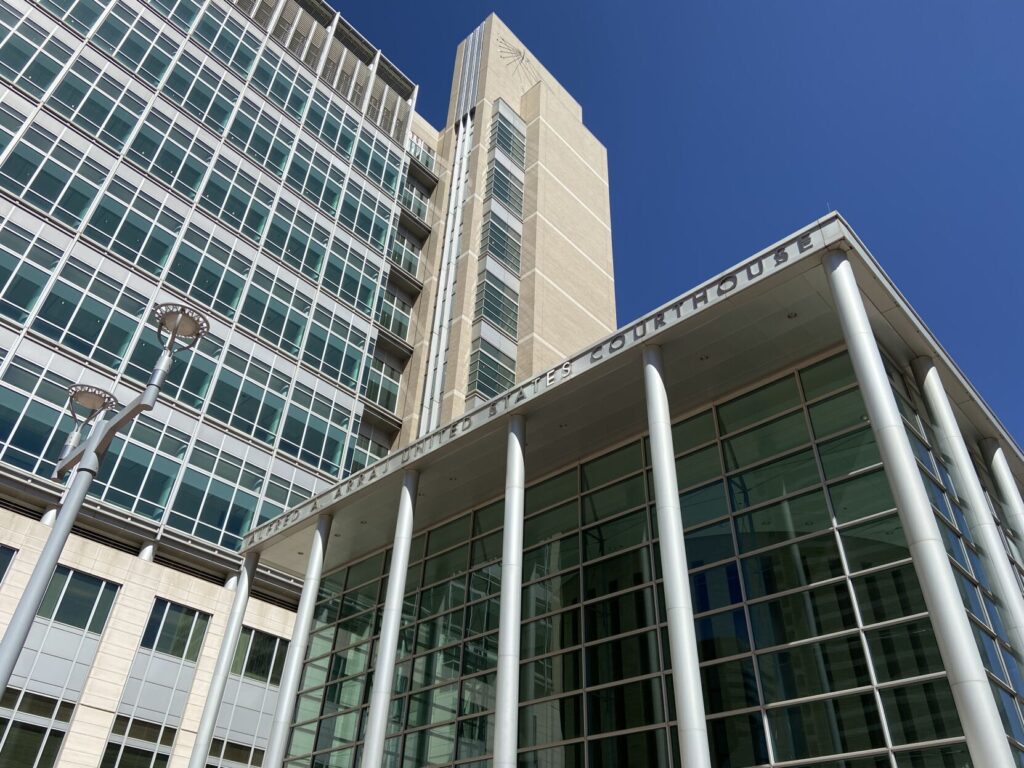
Colorado’s federal judges maintain approach to immigration detentions while escalating warnings
Michael Karlik
michael.karlik@coloradopolitics.com
Updated 2 days ago
Colorado’s federal judges are maintaining their view that the government’s assertion of broad immigration detention authority is unlawful, casting aside a recent appellate decision to the contrary as “unpersuasive” and out of step with the predominant interpretation by the judiciary....
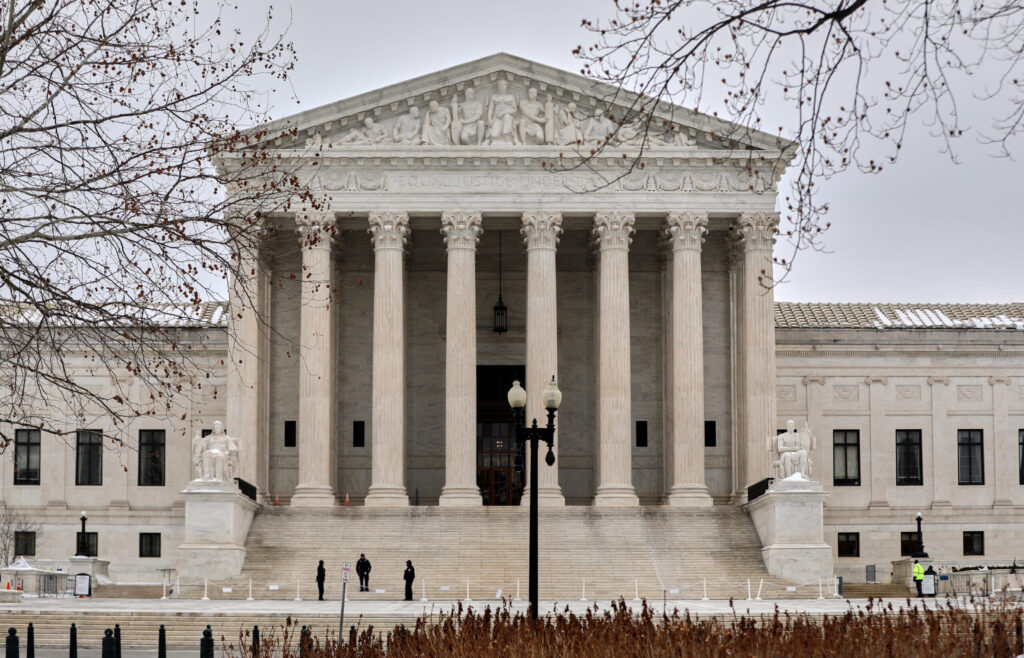
U.S. Supreme Court strikes down Trump’s tariffs, upending central plank of economic agenda
Lindsay Whitehurst
lindsay.whitehurst@associatedpress.com
Updated 3 days ago
WASHINGTON • The Supreme Court struck down President Donald Trump’s global tariffs on Friday, handing him a major loss on an issue crucial to his economic agenda. The 6-3 decision centers on tariffs imposed under an emergency powers law, including...
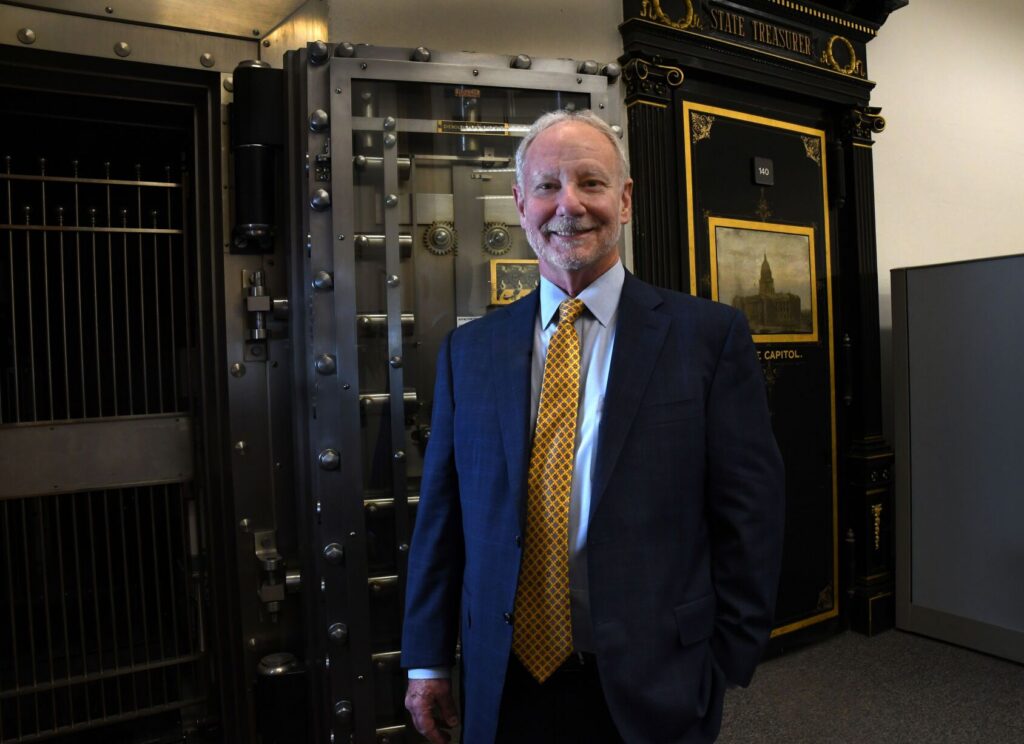
Federal judge partially allows challenge to proceed against Colorado unclaimed property program
Michael Karlik
michael.karlik@coloradopolitics.com
Updated 4 days ago
A federal judge allowed some claims to proceed last week against Colorado’s treasurer, based upon alleged constitutional violations flowing from the state’s process for reuniting people with their unclaimed property. Previously, U.S. District Court Judge Charlotte N. Sweeney dismissed the...
GoFundMe donations for victim do not lessen defendant’s restitution obligation, appeals court rules
Michael Karlik
michael.karlik@coloradopolitics.com
Updated 1 day ago
Donations made to a victim’s crowdfunding page do not necessarily reduce the defendant’s obligation to pay crime victim restitution, Colorado’s second-highest court concluded on Thursday. Under state law, crime victim compensation boards reimburse victims for certain monetary losses, including funeral...
Colorado senators initially push for — then drop ‘identity’ factor in parenting time decisions
Marissa Ventrelli
marissa.ventrelli@coloradopolitics.com
Updated 4 days ago
The sponsors of a proposal that would require suppression of records in name-change petitions for minors removed a provision that would have mandated the courts to factor in the issue of “identity” when allocating parenting time. In its original form,...
Appeals court divided over effect of retroactive sentence on parole calculation
Michael Karlik
michael.karlik@coloradopolitics.com
Updated 1 day ago
Colorado’s second-highest court grappled last week with the framework for calculating a defendant’s earliest possible parole date in light of two intersecting legal principles — a judge’s ability to make an order retroactive, and the requirement that separate, simultaneous sentences...
Federal judge allows some claims to proceed over denial of cancer meds in El Paso County jail
Michael Karlik
michael.karlik@coloradopolitics.com
Updated 2 days ago
A federal judge allowed claims to proceed last week against some medical and sheriff’s office employees at the El Paso County jail over their alleged failure to ensure a detainee received his cancer medication during four months of incarceration. Stuart...
Colorado’s chief justice exceeds average number of dissents with 4-plus months left in term
Michael Karlik
michael.karlik@coloradopolitics.com
Updated 5 days ago
Since the start of the Colorado Supreme Court’s 2025-2026 term in September, Chief Justice Monica M. Márquez has now exceeded her average number of dissenting opinions, with more than four months remaining before the court breaks for the summer. The...
PREV
PREVIOUS

COURT CRAWL | DaVita trial overview, update on federal judges' financial conflicts
Welcome to Court Crawl, Colorado Politics’ roundup of news from the third branch of government. Over the past two weeks, the U.S. Department of Justice tested its theory in Colorado that a certain type of corporate agreement is so anticompetitive as to be illegal – and lost its case. Also, Colorado Politics looked at what happened […]

Q&A with Rep. Richard Holtorf | As long as they aren't shooting at him, he's fine
Richard Alonso Holtorf never sought political office. It sought him. The Akron-based representative for House District 64 was content to work on his Buffalo Springs ranch, until Rep. Kimmi Lewis, R-Kim, passed away in December 2019 from breast cancer. Even though he had no elected experience and wasn’t particularly active in the Republican Party, several people […]