

State Supreme Court declines to give Weld County prosecutors another chance to argue for unlawful seizure
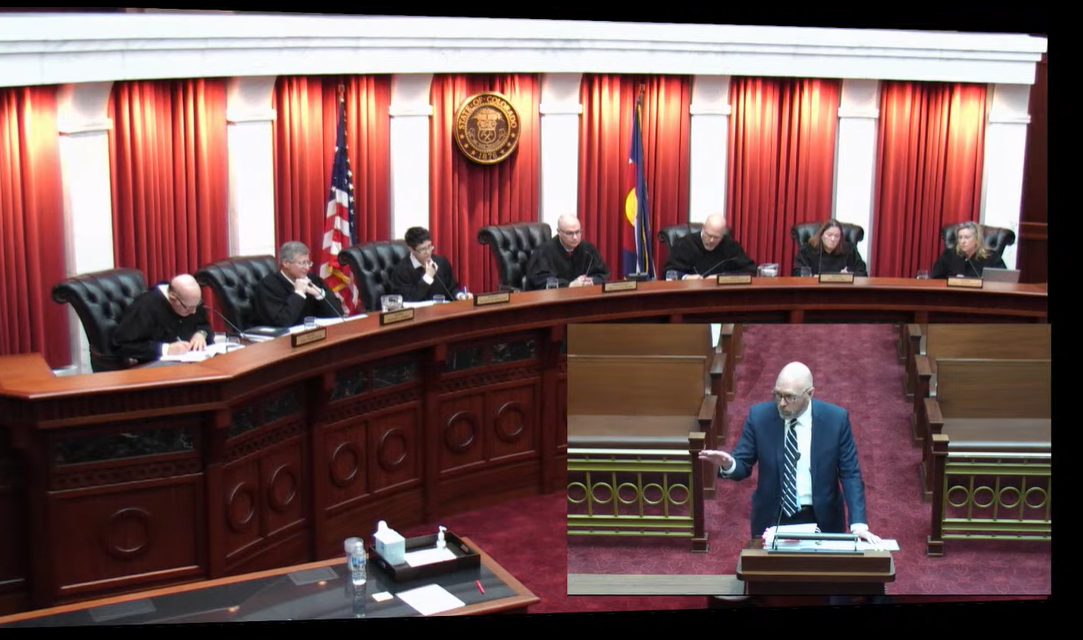
There was little truth to Weld County prosecutors’ claim that a trial judge failed to give them the opportunity to defend a warrantless police seizure, the Colorado Supreme Court ruled on Monday.
The justices unceremoniously swatted away an appeal from the Weld County District Attorney’s Office in an unusual unsigned opinion. The appeal arose after District Court Judge Marcelo A. Kopcow suppressed evidence found on a suspect’s cell phone as part of a child pornography investigation. The prosecution alleged they should have another opportunity to offer evidence and arguments in defense of a Greeley detective’s decision to snatch the cell phone.
In reality, the court said in a terse, four-page decision, the district attorney’s office had ample time to show why the seizure did not amount to a Fourth Amendment violation, given that Kopcow and the defense repeatedly raised the subject in the presence of prosecutors.
“We will not reverse and remand to the trial court to allow the People to make additional arguments that they declined to make when initially asked by the court,” the justices wrote.
Greeley Detective Dave Arpin received a tip in July 2019 from an anonymous informant who stated that he or she had seen naked images of girls on Joe Ramos’ cell phone. Arpin then learned that Ramos had two active warrants and was at the address that the informant, later identified as Ramos’ ex-girlfriend, provided.
When Arpin and officers arrived at the residence, they went to the backyard where they saw two men who matched Ramos’ description. Arpin called out to them, but the men entered the residence and refused to answer the door. While they intended to arrest Ramos for his warrants, officers spied cell phones on a table in the yard. Arpin called a number he had listed for Ramos and one of the phones rang.
Arpin took the phone and left his business card in its place. Ten months later, in May 2020, a judge approved a warrant to search the phone. Police reportedly found child pornography in several files on the phone.
Prosecutors filed 13 charges against Ramos related to the sexual exploitation and assault of children, all of which were felonies. In response, Ramos moved to suppress evidence from the phone, claiming Arpin retrieved it in violation of the Fourth Amendment’s general prohibition on warrantless searches and seizures.
Kopcow held a hearing in November and December 2021 to consider various motions in the case. The issue of suppression arose at multiple points.
“I think it makes sense for the Court to hear the evidence from the People relating to the suppression motion,” the prosecutor said. The defense also questioned Arpin in detail about the warrantless seizure.
After hearing the evidence, Kopcow told the prosecution that “the biggest issue that I have is the seizure of the cellphone. Everything else I – I could probably rule on today. I’m just not sure what the prosecution’s theory is for obtaining the cellphone and whether they are arguing – I’m not sure exactly what the argument is going to be.”
The parties then filed written briefs, in which the prosecution touched on the phone seizure. Kopcow ended up granting the defense’s motion to suppress, noting that Arpin’s actions were presumed to be unreasonable under the Fourth Amendment. When courts find that police have conducted an unlawful search or seizure, the general consequence is to exclude at trial the evidence stemming from the search, unless an exception to the warrant requirement applies.
Although the prosecution could attempt to justify Arpin’s warrantless seizure, the district attorney’s office, Kopcow wrote, “has failed to overcome this presumption and has offered no credible evidence in support of a recognized exception.”
The district attorney’s office turned directly to the Supreme Court, as is the procedure when prosecutors challenge suppression orders in interlocutory – or mid-case – appeals. Deputy District Attorney Arynn E. Clark complained that the defense had not made the prosecution aware of what it was arguing about the cell phone seizure, despite the title of the motion being “Motion to Suppress Evidence.”
“Because the issue was not properly raised by the defendant, the People were not on notice of the issue and therefore were not provided sufficient opportunity to present evidence and argument,” Clark wrote to the Supreme Court. “Thus, the District Court, prior to suppressing the defendant’s cell phone must provide the People with an opportunity to present additional evidence and argument.”
The public defender’s office countered that the prosecution knew before, during and after the trial court hearing that the exclusion of phone evidence was an issue.
The Supreme Court flatly rejected the idea that the district attorney’s office had insufficient notice that they needed to justify the warrantless seizure to the trial court or risk the exclusion of evidence.
“Indeed, six days after the court stated that it did not understand the People’s theory for obtaining the cell phone, the People submitted a brief addressing Ramos’s motions to suppress. That brief specifically discussed the seizure of Ramos’s cell phone, contending that it was justified based on the informant’s tip and the officers’ lawful presence in Ramos’s backyard,” the court wrote. “The People, thus, had an opportunity to raise any relevant arguments.”
The court upheld Kopcow’s suppression order. The case is People v. Ramos.

Colorado Supreme Court clarifies restraining order violations can always support burglary charge
Michael Karlik
michael.karlik@coloradopolitics.com
Updated 2 hours ago
The Colorado Supreme Court’s majority ruled on Monday that a violation of a restraining order can also serve as a basis for finding a defendant guilty of burglary. Under state law, a person commits second-degree burglary by unlawfully entering or...

10th Circuit judge creates vacancy, district court gets new chief judge | COURT CRAWL
Michael Karlik
michael.karlik@coloradopolitics.com
Updated 6 hours ago
Welcome to Court Crawl, Colorado Politics’ roundup of news from the third branch of government. A longtime member of the Denver-based federal appeals court will give the president a vacancy to fill, plus Colorado’s federal trial court will see a...
Gov. Jared Polis moves to end ICE subpoena fight over Colorado workers’ personal data
Marianne Goodland
marianne.goodland@coloradopolitics.com
Updated 3 days ago
The effort by Gov. Jared Polis to comply with an administrative subpoena from U.S. Immigration and Customs Enforcement for information held by several state agencies is over. Polis, in a motion filed Feb. 20, asked for a permanent injunction and...

Ex-Colorado Sen. Sonya Jaquez Lewis avoids prison, gets probation for forged ethics letters
Marianne Goodland
marianne.goodland@coloradopolitics.com
Updated 3 days ago
Former state Sen. Sonya Jaquez Lewis, D-Longmont, was sentenced Friday to two years of supervised probation and 150 hours of community service, and a $3,000 fine, to be waived if she completes an additional 100 hours of community service. The...

Toll to sexual assault survivors rises if they feel blamed and disbelieved
Jenny Deam
jenny-deam@coloradopolitics.com
Updated 3 days ago
Natalie, a single mother, dropped off her son at daycare, went to therapy and then returned home. She swallowed a fistful of pills, washing them down with a six-pack of beer. She was ready to end her life. “I just...
Colorado rape cases rarely result in an arrest and prosecution
Evan Wyloge
evan-wyloge@coloradopolitics.com
Updated 3 hours ago
Authorities say they are especially difficult cases. In Colorado, most go nowhere. Over the past decade, for every 10 reports of rape, there is only one arrest. Warning: This story contains descriptions of sexual violence. Kiersten May remembered a fuzziness...
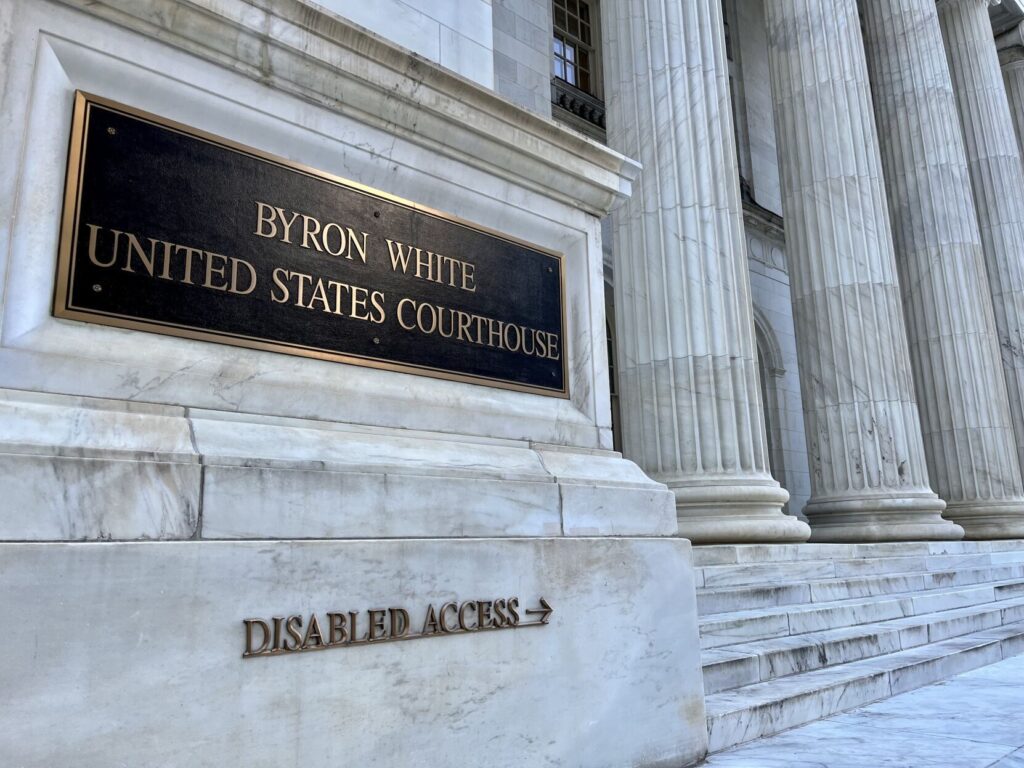
10th Circuit upholds finding of no misconduct against Colorado federal judge
Michael Karlik
michael.karlik@coloradopolitics.com
Updated 4 days ago
A judicial committee for the Denver-based federal appeals court upheld the chief judge’s finding last week that a federal judge in Colorado did not engage in misconduct by handling a civil case involving other attorneys and judges in the state....
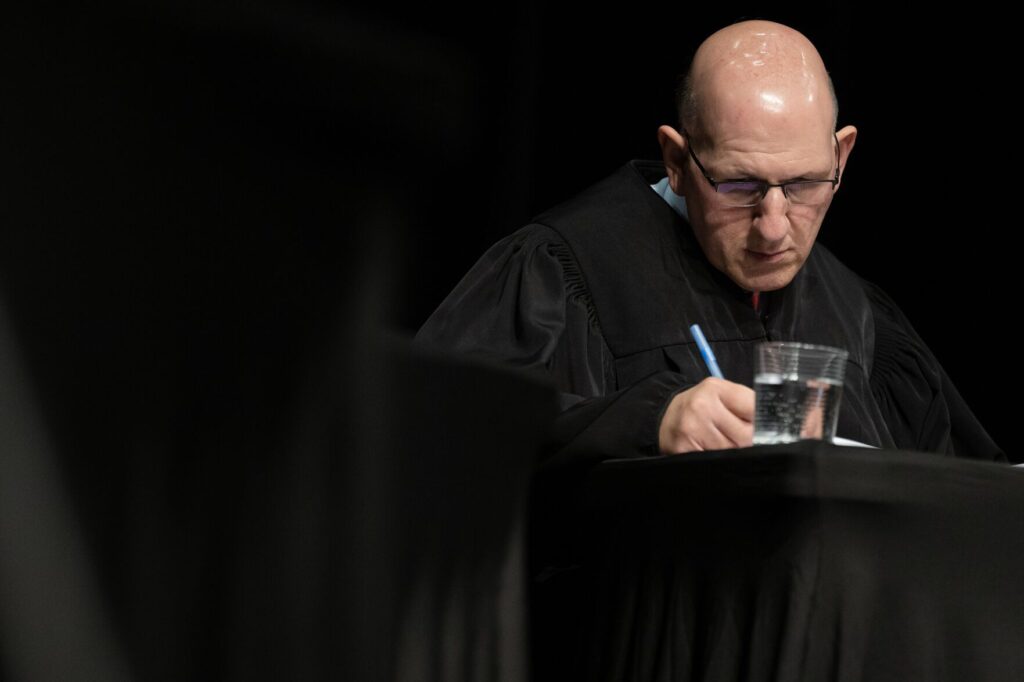
SCOTUS whisperer? Justice Carlos Samour may get second opportunity to turn state dissent into national precedent
Michael Karlik
michael.karlik@coloradopolitics.com
Updated 3 days ago
For the second time in two years, Justice Carlos A. Samour Jr. occupies an unusual position: Having his dissent in a Colorado Supreme Court case potentially forming the basis of U.S. Supreme Court precedent. Earlier this week, the nation’s highest...
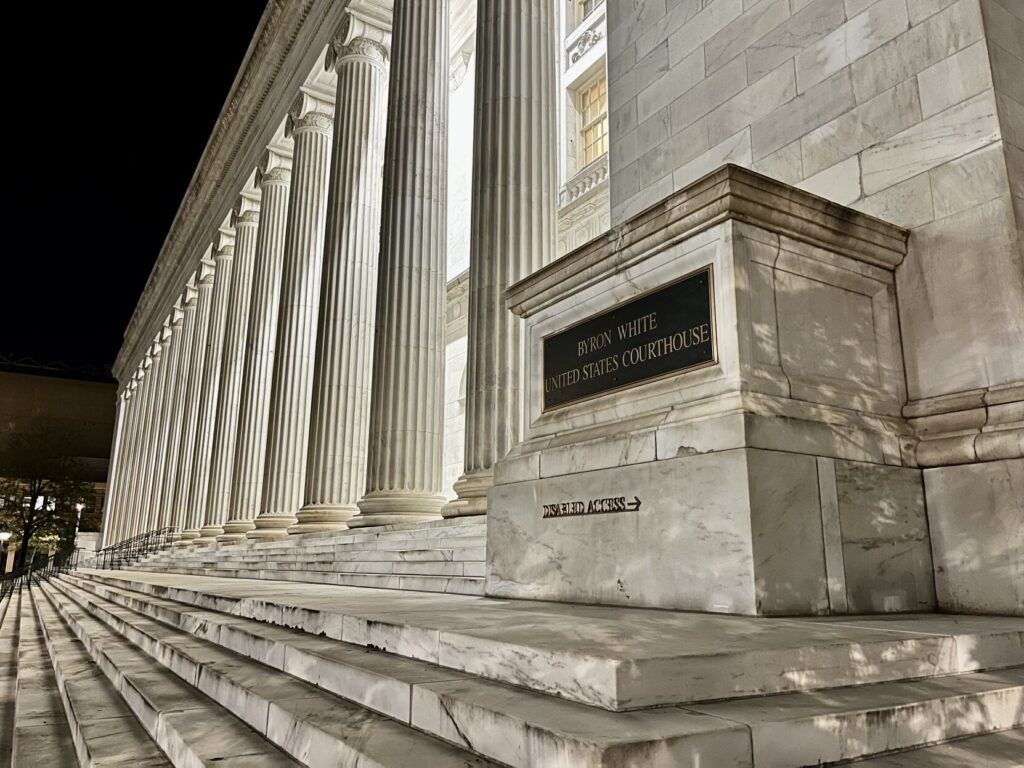
10th Circuit appoints ex-Colorado solicitor general to argue issue after federal government declines
Michael Karlik
michael.karlik@coloradopolitics.com
Updated 3 days ago
The Denver-based federal appeals court took the unusual step earlier this month of appointing an attorney to independently argue a key issue in a criminal sentencing appeal after the government indicated it would not contest the defendant’s view of the...
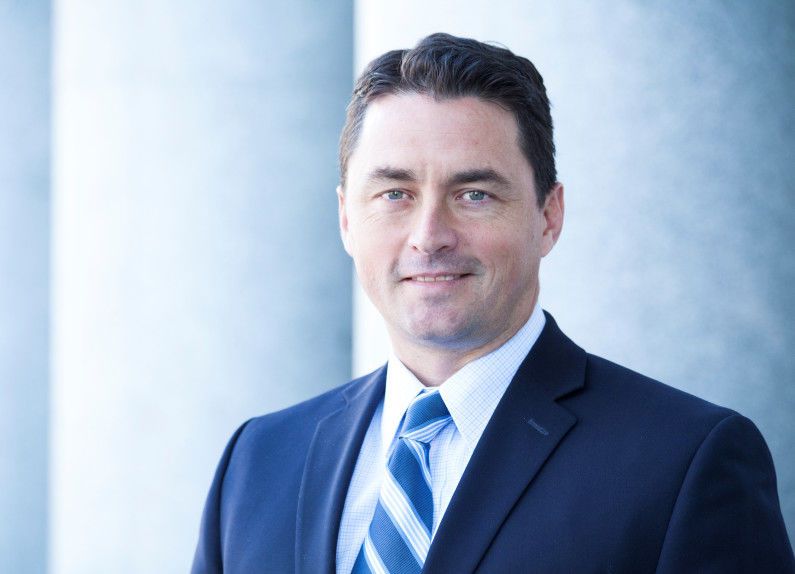
Daniel Domenico to take over as Colorado’s chief federal judge
Michael Karlik
michael.karlik@coloradopolitics.com
Updated 1 day ago
Daniel D. Domenico will become the new chief judge of Colorado’s federal trial court next week, a role that encompasses the administration of the court as well as a judicial caseload. Under federal law, the chief judge of a U.S....
PREV
PREVIOUS

10th Circuit says inmate cannot sue for cruel and unusual punishment over amputated fingers
An incarcerated man allegedly told his supervisor of faulty equipment on a work assignment and ended up losing two fingers as the result of an accident, but the federal appeals court based in Denver has thrown out his lawsuit alleging cruel and unusual punishment. Gregory Morris Sanders was working through Colorado Correctional Industries, the state’s […]

GOP congressional candidate Tim Reichert pours $500K into race, adds $340K in donations
Jefferson County Republican Tim Reichert, who launched his bid to represent Colorado’s 7th Congressional District in January by loaning his campaign $500,000, plans to report raising an additional $339,409 during the first three months of 2022, bringing his total receipts for the quarter to nearly $840,000, his campaign told Colorado Politics. Reichert is one of […]