

Appeals court finds Arapahoe prosecutor misstated facts to eject Black juror, overturns convictions
When asked to explain why he wanted to excuse a Black woman from the jury, an Arapahoe County prosecutor got offended, claimed he was being called racist, and offered inconsistent and factually untrue explanations for his actions. But while the prosecutor succeeded in convincing the trial judge to dismiss the juror, the state’s second-highest court ordered a new trial on Thursday after determining it was a mistake to accept the prosecutor’s dubious, allegedly non-racial reasons.
Judge Rebecca R. Freyre, writing for a three-judge panel of the Court of Appeals, did not mince words in concluding the prosecutor had sought to excuse the Black juror from a Black defendant’s trial in violation of the U.S. Supreme Court’s longstanding prohibition on intentional racial discrimination in jury selection. Batson v. Kentucky, the 1986 decision that provided a means to challenge dismissals of jurors of color, requires “race-neutral” reasons be given to stave off a challenge.
The trial transcript “shows that the prosecutor’s reasons for striking Juror J were so internally inconsistent as to be implausible,” Freyre wrote in the March 24 opinion. Furthermore, “the prosecutor misstated the record three times when providing his purported race-neutral reason.”
Those red flags, she continued, “constitute pretextual evidence of discriminatory intent.”
The appeal of Joshua Daniel Fletcher comes amid a focus in Colorado on racial bias in jury selection. Last month, the state Supreme Court issued a rare decision finding purposeful race discrimination in a Denver prosecutor’s dismissal of a Hispanic man from a Hispanic defendant’s jury. Soon afterward, a bill in the legislature seeking to crack down on dismissals of jurors of color faltered in the face of opposition by prosecutors.
Also on Thursday, a different Court of Appeals panel decided a case out of Gilpin County, in which the trial judge declined to dismiss a juror from a Black man’s trial, despite the juror saying he had moved to the largely white jurisdiction because he “didn’t want diversity.”
An Arapahoe County jury convicted Fletcher of aggravated robbery, felony menacing and misdemeanor theft in 2019. Fletcher, who is Black, argued that his attempt to steal a cell phone amounted to theft only.
During voir dire, which is the part of jury selection when the parties ask questions of potential jurors, the prosecutor made contact with Juror J, who was a Black woman. She responded to his questions about her prior service on a jury.
“Sounds like you gave everyone a fair trial,” said the prosecutor, who the 18th Judicial District Attorney’s Office identified to Colorado Politics as former Deputy District Attorney Francisco Martinez. He later came back to Juror J and asked whether she would make a good juror in Fletcher’s case.
“Yes,” she responded. “I am keenly observant.”
“That’s good. We’ll need that,” Martinez responded.
After dismissals of other jurors enabled Juror J to move into the jury box, Martinez immediately attempted to dismiss her using a peremptory challenge, which typically does not require a reason for the strike. The defense raised a “Batson challenge,” which triggers a three-step process requiring the trial judge to hear any non-racial reasons for striking the juror and deciding whether intentional racial discrimination is likely taking place.
However, Martinez reacted by quickly taking offense to the process.
“This challenge, it’s my understanding, is basically calling the People racist, which is how I view the situation,” he said.
“I don’t see it as an allegation that you are racist at all,” District Court Judge Andrew Baum reassured him. “I think it’s just to make sure there is a race-neutral reason.”
The prosecutor continued to protest, saying, erroneously, the defense needed to show a pattern of discrimination. Only after further prompting from Baum did Martinez volunteer that Juror J “seemed engaged” but simultaneously “seemed disinterested in what the parties were talking about.” Martinez also claimed Juror J “would listen to the evidence in the case,” but at the same time he “had concerns with her ability to be fully engaged throughout the trial process.”
Yet again, Baum asked the prosecutor to give a specific, race-neutral reason. Finally, Martinez alleged Juror J “was often staring up above, staring not at the ceiling but off into the distance.”
Both the judge and the defense attorney noted that they had not noticed any such behavior from Juror J, but Baum called a recess so he could research the matter. Upon returning, Baum concluded that the Batson decision did not require him to personally witness the demeanor that Martinez cited. As such, the explanation about Juror J sufficed, and Baum allowed for her dismissal.
On appeal, Fletcher claimed Martinez, in fact, did not have a reason for dismissing Juror J other than her race. He said the prosecutor failed to advance a satisfactory race-neutral explanation until Baum offered multiple chances to explain himself. Further, neither the judge nor the defense attorney noticed Juror J allegedly staring “off into the distance.”
During oral arguments this month, Judge Elizabeth L. Harris questioned why the panel should permit unverified assertions of “staring” to be the sole basis for removing a juror of color.
“So, now the prosecutor can just say that and the judge says, ‘Well I didn’t see that, but I guess I don’t have to see it. So, OK, I guess you can strike the Black person’?” she quizzed. “And we say, ‘All right, what are we gonna do?'”
Assistant Attorney General Jacob R. Lofgren denied that Martinez ever shifted his reasoning and urged the panel to defer to Baum’s handling of Juror J’s dismissal. Lofgren conceded, however, that the prosecutor “expressed some lack of knowledge” about the Batson process.
“This is like the tenth time we’ve all sort of agreed that the problem here is that the prosecutor didn’t understand Batson,” Harris interrupted sternly. “Batson is a case from the mid-’80s. That guy did understand Batson. What he was trying to do is weaponize Batson against the trial court by saying … ‘If you grant her challenge, if you go one step further on this, that’s the equivalent of you calling me a racist.'”
She added, “I don’t agree that he didn’t understand Batson. I think he very much understood Batson and thought he could use it to push the judge.”
The panel’s opinion reinforced that skepticism of the prosecutor’s motivations. Freyre emphasized that a Batson challenge is not the equivalent of calling an attorney racist, and using it as a proxy for a lawyer’s character “substantially undermines its purpose.”
Among its findings, the Court of Appeals ultimately did not see Martinez’s race-neutral reasons as credible. His initial answers were nonresponsive, suggesting he did not actually have a reason for dismissing Juror J. Moreover, his eventual justifications – Juror J “seemed engaged” but also “seemed disinterested” – were illogical.
Finally, Martinez made untrue statements about Juror J’s responses to questioning, the panel said. Consequently, Baum had ample reason to reject the attempted dismissal of Juror J, the appellate panel said, if he had stood by his own observations and not accepted the prosecutor’s misrepresentation.
“While Batson does not require a court to personally observe a juror’s demeanor to support a prosecutor’s explanation, it also does not require trial courts to put aside their own observations or to accept implausible explanations,” Freyre wrote.
The legislation to address jury bias that failed this year would have placed additional conditions on the use of demeanor-based reasons to excuse a juror. The measure was modeled on changes first adopted by the Washington Supreme Court, a version of which Colorado’s highest court briefly considered in 2021. The Colorado Supreme Court declined to take action on that jury bias proposal, indicating a desire for greater consensus.
The case is People v. Fletcher.

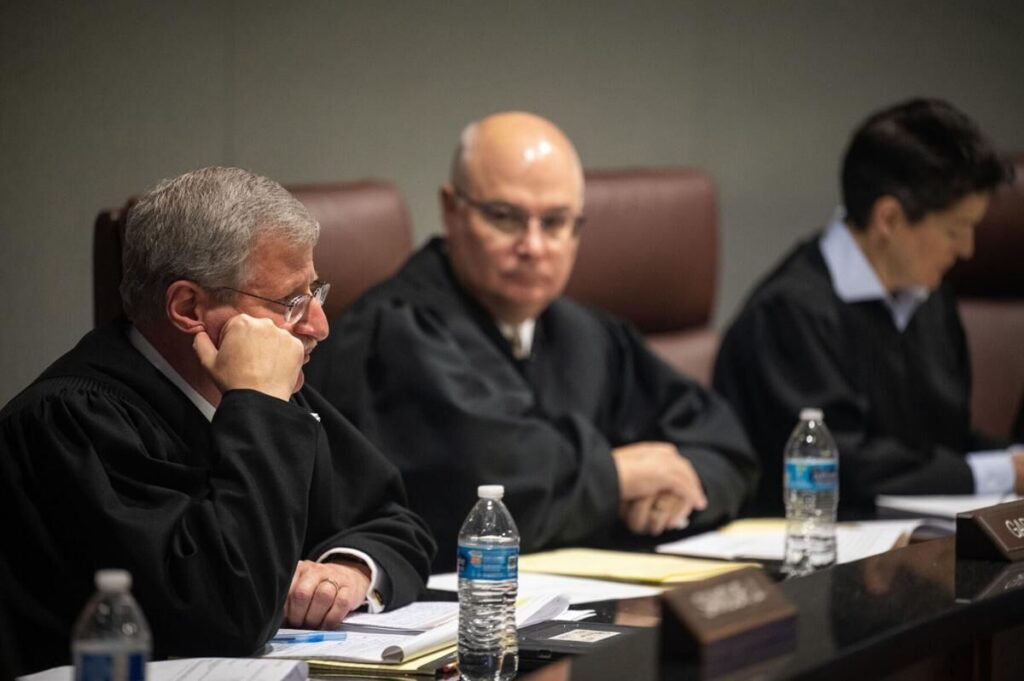
Colorado Supreme Court concerned about police overreach in interrogations
Michael Karlik
michael.karlik@coloradopolitics.com
Updated 31 minutes ago
Some members of the Colorado Supreme Court appeared hesitant on Tuesday to endorse the ability of police to interrogate a suspect after they have obtained a court order authorizing only the collection of physical evidence. Under Colorado’s criminal rules, law...
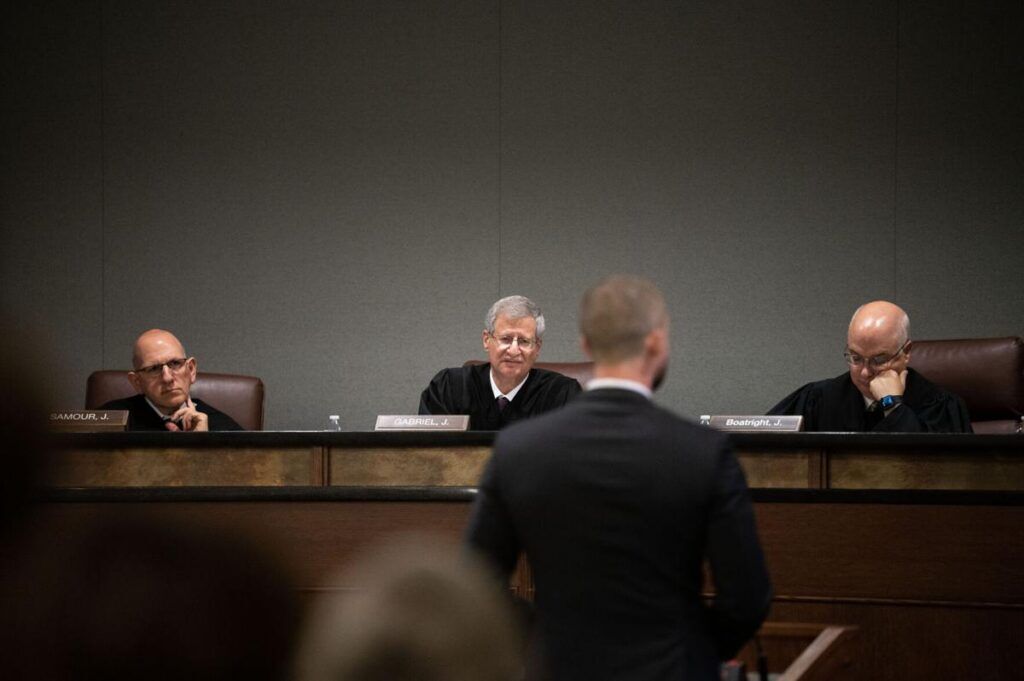
Colorado Supreme Court considers new requirement for leaving-the-scene convictions
Michael Karlik
michael.karlik@coloradopolitics.com
Updated 1 day ago
In 2006, the Colorado Supreme Court ruled that leaving the scene of an accident resulting in serious injury is a “strict liability” offense, meaning a person is guilty solely through their conduct, without the need for prosecutors to prove the...
Colorado Supreme Court weighs transgender services case involving Children’s Hospital and federal threats
Michael Karlik
michael.karlik@coloradopolitics.com
Updated 10 hours ago
Some members of the Colorado Supreme Court expressed discomfort on Tuesday with having to decide whether to order Children’s Hospital Colorado to resume providing certain services to transgender children, which could trigger a “death sentence” if the federal government imposes...
Colorado justices weigh constitutionality of unique disclosure requirement for ballot measures
Michael Karlik
michael.karlik@coloradopolitics.com
Updated 2 days ago
Members of the Colorado Supreme Court considered on Tuesday whether a unique feature of the state’s campaign finance system categorically violates the First Amendment by requiring the disclosure of a ballot measure committee’s legal representative on advertisements. No on EE...

Colorado justices block injured plaintiff from suing, despite alleged concealment by Manitou Springs
Michael Karlik
michael.karlik@coloradopolitics.com
Updated 3 days ago
The Colorado Supreme Court ruled on Monday that a woman injured on a Manitou Springs sidewalk could not sue the allegedly responsible entity, the city of Colorado Springs, even though she did not learn until too late of an agreement...
Divided Colorado Supreme Court opens door to experts’ views on children’s truthfulness
Michael Karlik
michael.karlik@coloradopolitics.com
Updated 2 days ago
The Colorado Supreme Court ruled on Monday that experts may, in certain situations, tell jurors whether child witnesses exhibited signs of being coached by adults, without running afoul of the general prohibition on witnesses testifying about the truthfulness of other...

State Supreme Court to hold oral arguments, federal judges find fault with bond hearings | COURT CRAWL
Michael Karlik
michael.karlik@coloradopolitics.com
Updated 3 days ago
Welcome to Court Crawl, Colorado Politics’ roundup of news from the third branch of government. The state Supreme Court will resume hearing oral arguments tomorrow, plus some federal judges are raising the alarm about immigration judges’ handling of bond hearings....
Douglas County seeks state Supreme Court review in open meeting case
Nicholas Fogleman
nicholas.fogleman@denvergazette.com
Updated 3 days ago
The Douglas County Board of Commissioners intends to petition the Colorado Supreme Court to review a recent court decision that found the board had violated the Colorado Open Meeting Law. The case stems from 11 “closed, unnoticed” meetings held by...
10th Circuit provides guidance on police searches of cloud-based data
Michael Karlik
michael.karlik@coloradopolitics.com
Updated 6 days ago
The Denver-based federal appeals court provided guidance to law enforcement agencies on Monday for ensuring that searches of cloud-based accounts comply with the Fourth Amendment’s requirements. A three-judge panel of the U.S. Court of Appeals for the 10th Circuit noted...
Federal judge releases man after 2 immigration judges disobey order
Michael Karlik
michael.karlik@coloradopolitics.com
Updated 6 days ago
A federal judge released a man from immigration detention on Thursday after two different immigration judges disobeyed his order in the same case. “At this point, the Court has granted Respondents two bites at the apple to prove detention of...
PREV
PREVIOUS

Appeals court says pandemic justified denying DUI breath test to driver
Colorado Springs police were justified when, three months into the COVID-19 pandemic, they offered only a blood draw to a suspected drunk driver in lieu of a breath test, the state’s second-highest court has determined. Under Colorado law, a driver has expressed their consent to taking a blood or breath test when law enforcement has […]
Jury finds Denver police violated rights of protesters during 2020 George Floyd demonstrations; awards $14M
It took jurors around four hours to find that Denver police violated the constitutional rights of demonstrators by using excessive force during George Floyd protests in 2020. The jury awarded the protesters $14 million in damages. The case went to the jury Friday morning when attorneys wrapped up their closing statements after three weeks of […]