

U.S. Senate says ‘yes’ to permanent daylight saving time

Are you ready to stop changing the clocks twice a year and not lose an hour of sleep every March?
Supporters of locking the time throughout the year finally see a light at the end of the tunnel.
The U.S. Senate on Tuesday gave unanimous consent to a bill to make daylight saving time permanent beginning in November 2023.
Versions of S. 623, the Sunshine Protection Act, have been in the works for several years under the sponsorship of Sen. Marco Rubio, R-FL.
Rubio said that holding off until 2023 would allow airlines and other industries to make schedule changes.
According to co-sponsor Sen. Sheldon Whitehouse, D-RI, and as quoted by Politico, the sponsors intentionally waited until this week to make another try at the bill to allow the clocks to change once again. Whitehouse, however, is unsure if the U.S. House will act on the measure anytime soon. The Senate bill has 17 co-sponsors, but neither U.S. Sen. Michael Bennet nor U.S. Sen. John Hickenlooper is among them.
An identical bill, HR 69, is awaiting action in the U.S. House. Sponsored by Rep. Vern Buchanan, R-FL, the bill – which has 33 co-sponsors, including a lone Coloradan, U.S. Rep. Lauren Boebert, R-Silt – has been awaiting action for six weeks from the House Energy and Commerce’s subcommittee on Consumer Protection and Commerce.
The House Energy and Commerce committee held a hearing last week on the issue, in which lawmakers were told about the health effects of the time change, including sleep disruptions and cardiac problems, as well as other safety risks.
“It’s about time!” quipped Colorado state Sen. Jeff Bridges, D-Greenwood Village, the co-sponsor of two bills on the issue. His Senate bill would ask voters in November to make Mountain Standard Time permanent. The bill, from his House co-sponsor, Rep. Cathy Kipp, D-Fort Collins, instead says Colorado will adopt daylight saving time once Congress acts.
Not everyone wants to stop resetting the clock twice a year. The airlines, Colorado’s ski industry and broadcasters said it would disrupt their scheduling and operations. United Airlines, Frontier Airlines, Colorado Ski Country USA, the Colorado Competitive Council, the Colorado Hotel and Lodging Association, Denver Metro Chamber of Commerce and the Tourism Industry Association of Colorado have registered in opposition to the Senate bill.
“We could pass both, one or the other, or neither,” Bridges said Monday. “I believe the most likely outcome is just one of them will pass. We’re still working on both.”
When reached by Colorado Politics, former Sen. Greg Brophy, R-Wray, who carried several bills over the years to get Colorado onto daylight saving time should Congress act, said, “Awesome!”


House Ethics Committee to begin hearing on Weinberg complaint
Marianne Goodland
marianne.goodland@coloradopolitics.com
Updated 18 minutes ago
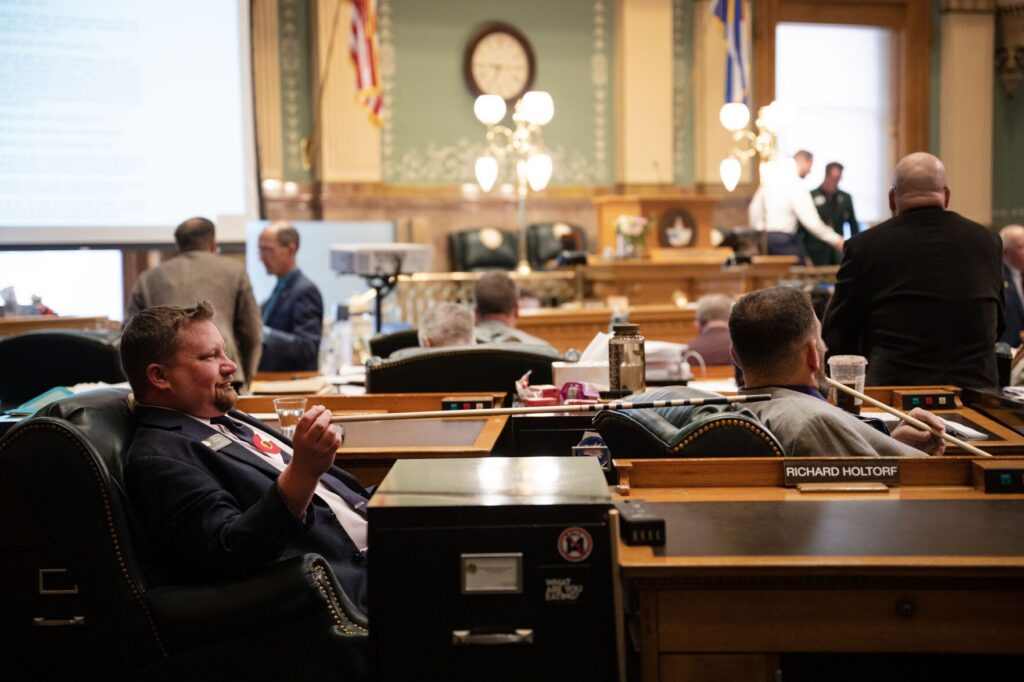
The House Ethics Committee on Tuesday will begin a hearing requested by Rep. Ron Weinberg, R-Loveland, tied to an ethics complaint filed against him by Rep. Brandi Bradley, R-Roxborough Park. The ethics committee had found probable cause on two issues...

Iran war enters next phase of destroying entire missile supply chain: Hegseth
Brady Knox, Washington Examiner
brady.knox.washington.examiner@gazetteedit.wpenginepowered.com
Updated 2 hours ago
Secretary of War Pete Hegseth said the war with Iran was entering a new phase, as the United States was focusing on destroying Tehran’s defense industrial base. At a Friday Pentagon briefing, Hegseth and Gen. Dan Caine, chairman of the Joint...

Colorado plans to slash interim committee work amid budget woes
Marianne Goodland
marianne.goodland@coloradopolitics.com
Updated 41 minutes ago
In a tight budget year, the work of interim committees — those off-session groups that look at transportation, agriculture, water, healthcare, wildfires, pensions, and anything else that lawmakers want to look at — is on the chopping block. And this...
Xcel Energy: Power shutoff ‘likely’ Saturday in Boulder, Jefferson counties
Dan Boniface
dan.boniface@denvergazette.com
Updated 2 hours ago
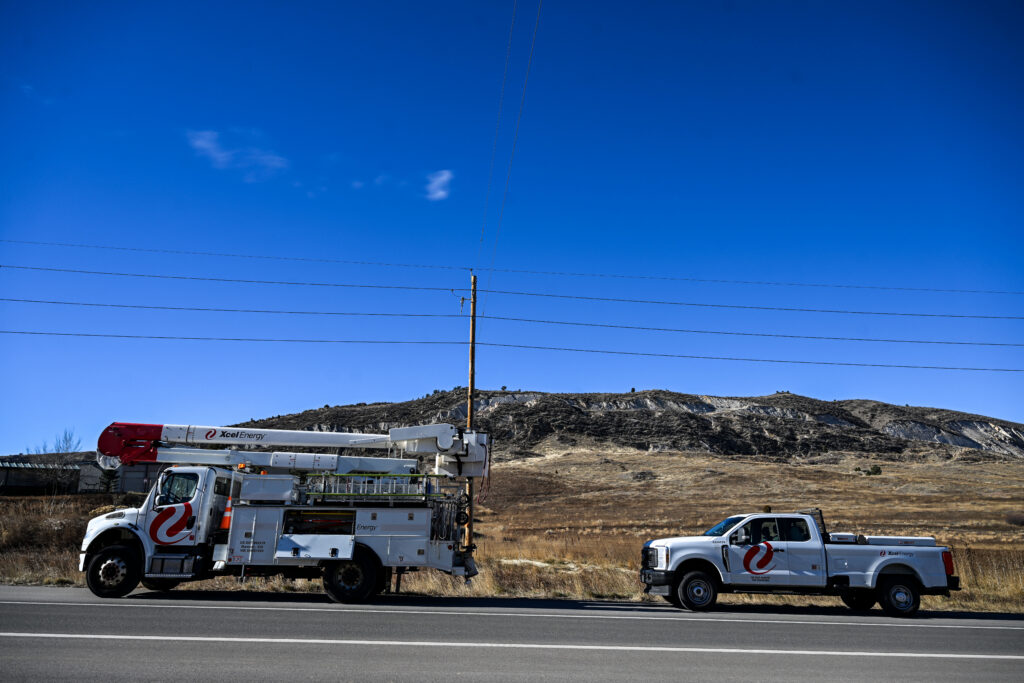
Up to 43,000 residents in parts of Boulder and Jefferson counties should be prepared to have their power shut off Saturday afternoon, Xcel Energy said. The power company said it was “planning for a likely Public Safety Power Shutoff (PSPS)...

Colorado GOP chair Brita Horn says she’ll resign next month, points to ‘divide within our party’
Ernest Luning
ernest.luning@coloradopolitics.com
Updated 18 hours ago
Colorado Republican Party Chair Brita Horn said Thursday that she will resign her position next month following the GOP’s state assembly, citing what she described as an “enduring divide” within the party “marked by vitriol and hostility.” Horn’s announcement came...
Colorado justices skeptical of appellate court’s limitation on prosecution’s appeal
Michael Karlik
michael.karlik@coloradopolitics.com
Updated 22 hours ago
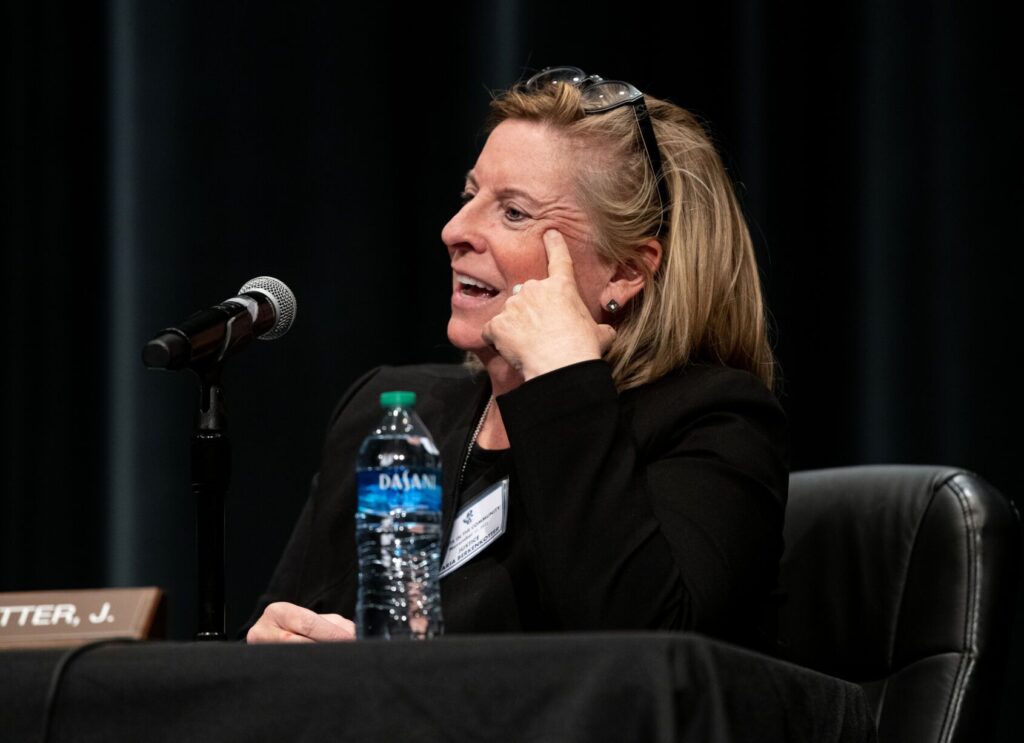
The Colorado Supreme Court seemed skeptical on Tuesday that Denver prosecutors should be barred from appealing a trial judge’s permanent dismissal of a criminal case, based upon the sequence of events after the original ruling. Prosecutors charged Quinn M. Jebe...

Senate committee moves forward with Colorado ballot measure to redirect TABOR refunds to schools
Marianne Goodland
marianne.goodland@coloradopolitics.com
Updated 1 hour ago
A Senate panel on Thursday voted along party lines to move forward with a bill that would ask voters for permission to eliminate Taxpayer’s Bill of Rights refunds and redirect those dollars to K-12 public education. The 6-3 vote in...

Federal judge: Government violated order shielding man from deportation in ‘one-off mistake’
Michael Karlik
michael.karlik@coloradopolitics.com
Updated 23 hours ago
A federal judge acknowledged on Thursday that the government violated his order by deporting a man in immigration detention during his pending court case, but it “serves nobody’s interests” to require the government to return him. On Feb. 18, Tesfami...

Wolf depredation payouts in Colorado top $700,000 in 2025
Marianne Goodland
marianne.goodland@coloradopolitics.com
Updated 1 hour ago
The Colorado Parks and Wildlife Commission approved more than $706,000 in wolf depredation claims for 2025 during its March meeting last week, an amount that exceeds the state’s annual wolf compensation fund by more than double. The commission rejected another...

U.S. intelligence report suggests Iranian regime is not at risk of imminent collapse
Washington Examiner Staff, Washington Examiner
washington.examiner.staff.washington.examiner@gazetteedit.wpenginepowered.com
Updated 23 hours ago
Washington Examiner Recent U.S. intelligence reports have assessed that after nearly two weeks of Operation Epic Fury, Iran’s government leadership is not in danger of imminent collapse. The evaluation comes after 12 days of regular military strikes by United States...
PREV
PREVIOUS

Federal judge tosses lawsuit against Douglas County school district from defunct charter group
A federal judge has thrown out a lawsuit from a now-dissolved charter school group against the Douglas County School District, saying the plaintiffs waited too long to sue the district for terminating its contract. Milestone Academy, formed by a group of Douglas County residents, submitted a charter school application to the school district’s board of […]

Ellen Kessler, ag critic and former Polis appointee to veterinary board, charged with 13 misdemeanor counts of animal cruelty
Ellen Kessler, an animal rights activist who was appointed to the state veterinary board by Gov. Jared Polis but resigned earlier this year, has been charged with 13 counts of misdemeanor animal cruelty. According to CBS Denver, which first reported the charges Monday, Kessler had 13 birds in her Jefferson County home, and Jefferson County […]