

Colorado’s fentanyl crisis: Team of bipartisan legislators searches for elusive solution
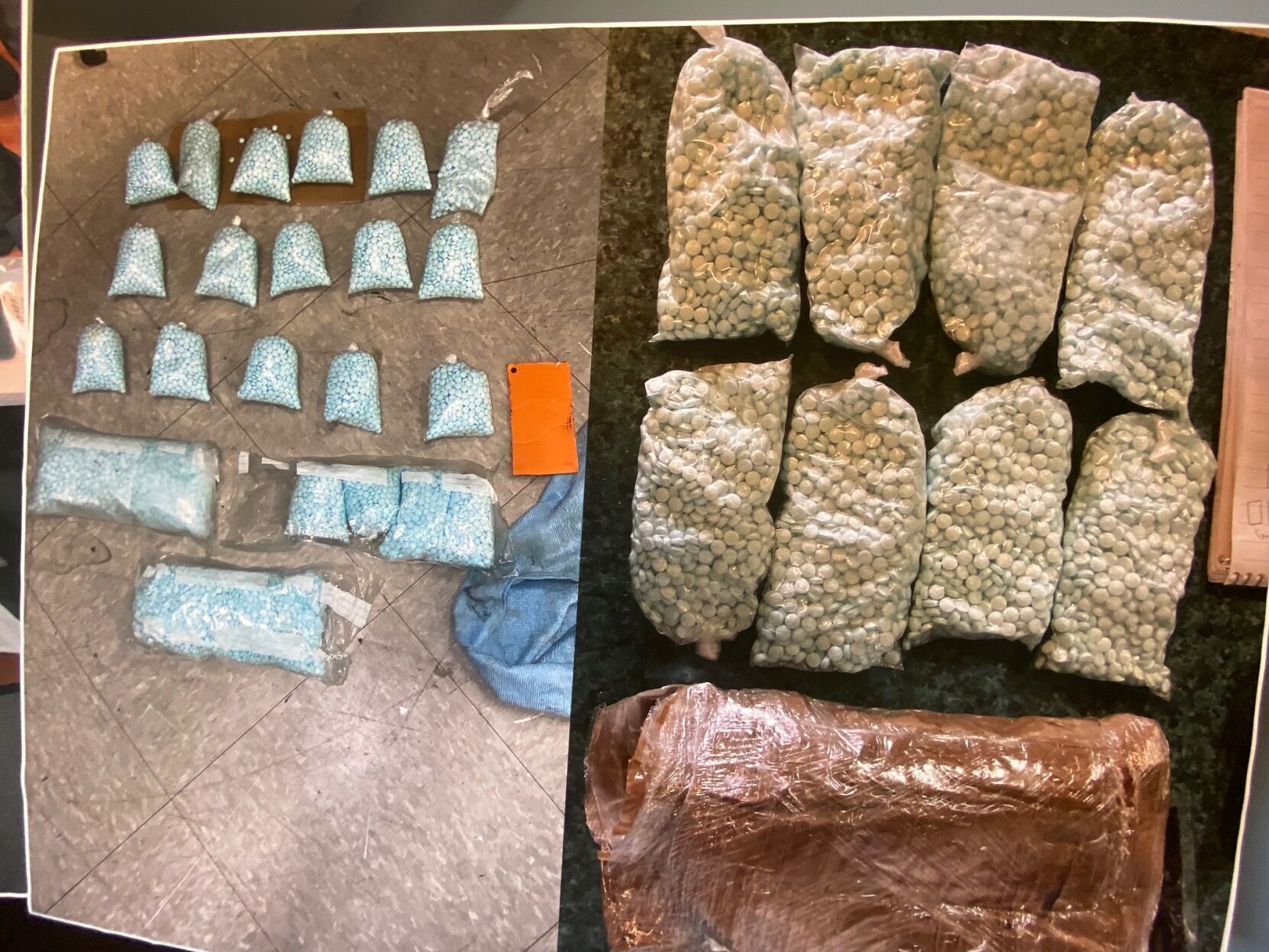
As Colorado legislators, lobbyists, public health officials and law enforcement seek ways to confront the fentanyl crisis, efforts are complicated by the synthetic opioid’s deadly and increasingly omnipresent nature and differing opinions on how the next phase of the drug war should be waged.
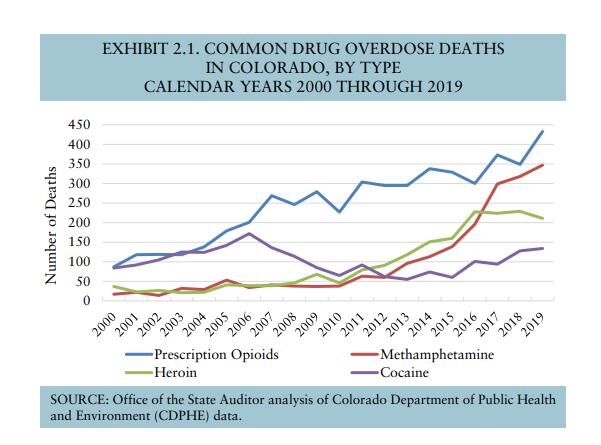
An increasing number of Coloradans are fatally overdosing with fentanyl with each passing year, and fatalities have exploded eight-fold since 2018 alone, state data show. The grim trend already triggered a public outcry, and the suspected overdose deaths of five people in Commerce City last month intensified the discussion about what should be done to address the spiraling crisis. Attorney General Phil Weiser and Gov. Jared Polis both vocally support tightening penalties for fentanyl possession, while others decry a return to what they describe as failed drug control policies of past generations.
In the wake of the Commerce City deaths, a 2019 bill that lowered the penalty for possession of less than 4 grams of Schedule II drugs, which includes fentanyl, has drawn intense public scrutiny. But fentanyl’s unique placement within the drug trade complicates any attempt to simply reverse that law: A cheap, synthetic opioid manufactured primarily by Mexican cartels with ingredients shipped from China, fentanyl is more lucrative, more available, more powerful and easier to produce than heroin. It’s also being mixed into other substances – from cocaine and heroin to methamphetamine, which makes using those substances far more dangerous. This also means efforts to curtail fentanyl possession must take into account the other drugs, as well.
The challenges facing policymakers are technical, and, to some extent philosophical.
Technically speaking, how does the state make possession of smaller amounts of fentanyl a felony when experts expect it to be in an increasing amount of the illicit drug supply from here on out?
Fentanyl, experts and officials said, is unlike any substance seen before, and it heralds the beginning of a drug market dominated by synthetic substances.
“Look, the drug trade has completely changed. The drug supply has changed forever,” said Christie Donner, executive director of the Colorado Criminal Justice Reform Coalition. “It’s not just an adaptation for now. It’s an adaptation from now until infinity.”
Lawmakers, lobbyists and families have hunkered down to draft legislation to address that adaptation and escalate penalties for possessing fentanyl without, they say, throwing drug users into prison because of their addiction. With fentanyl so ubiquitous, a user may have what he or she believes to be 3 grams of cocaine or meth, while, in reality, it’s a substance laced with fentanyl. Those involved in discussions over how to crack down on fentanyl have struggled to figure out how to piece together that puzzle: If the possession laws were to be changed, should a person be charged with a felony because he or she had 3 grams of cocaine laced with fentanyl?

For the Colorado District Attorneys’ Council, the priority isn’t reversing the 2019 law but lowering the weight threshold for what qualifies as a level three drug felony or DF3. Under current law, a person needs to carry 14 grams of fentanyl to face a DF3 intent to distribute charge. That charge carries a two-to-four year prison sentence, although aggravating factors can bump that to four to six years.
Tom Raynes, the executive director of the council, said last week that Colorado’s district attorneys want the threshold lowered from 14 grams to 4. That would still require that prosecutors prove that a person intended to distribute the substance, he said.
The attempts to find solutions also encroach into philosophical territory.
Weiser and other law enforcement officials have said that there should be harsher penalties for people carrying 4 grams or fewer of fentanyl, arguing that amount of such a potent substance could not be for personal use.
But others on the public health and advocacy side vehemently oppose that approach, warning that increased criminal penalties would simply return to old “War on Drug” policies that have failed to stop drug use in the past.
The shift in focus from possession to intent to distribute clarifies that somewhat, in that prosecutors would now have to prove intent, advocates of that approach say. But the underlying challenge posed by fentanyl’s frequent presence in other substances remains, those involved in the deliberations said.
And there are still voices blasting any move to further incarcerate users.

Lisa Raville, who runs the Harm Reduction Action Center in Denver, has criticized what she says are efforts to incarcerate the very people who are dying as a result of the shift in the drug market. She’s repeatedly called for improved harm reduction measures, from more available naloxone to a renewed discussion about safe, monitored drug-use sites in Denver. She seeks to squarely frame the situation as a public health, not criminal justice, crisis.
“No one has the magic bullet here,” said Raynes, who represents the district attorneys.
He said that under the proposal he supports, a person caught with 4 grams of an illicit substance with fentanyl mixed in could be charged with a level-three drug felony, if there’s evidence of intent. But Donner, of the reform coalition, worried that change would “obliterate” the state drug framework.
Under that change, fentanyl’s growing presence in other drugs, Donner and others argued, that the weight threshold for an intent to distribute charge for any substance could be impacted via a specific change for fentanyl.
Donner agreed that fentanyl needs to be added to the state’s drug laws.
How to do it remains unclear.
“There’s agreement, but there’s also still a lot of concern about unintended consequences of just doing that because it’s not like this fentanyl exists in isolation, in powder form,” she said.
Sen. Bob Gardner, R-Colorado Springs, among the team of bipartisan lawmakers working on a comprehensive solution, also sees the complication.
“It’s easy to sit around a table with a bunch of stakeholders and talk about simple distribution, an addict and a drug dealer. The reality is that the user and addict may also be a distributor, and those are different problems,” he said.
The 2019 bill led to accusations from Republicans, including from state GOP chair Kristi Burton Brown, that the recent surge in fentanyl overdoses is the fault of Democrats. In fact, the 2019 bill, while championed by the majority, received bipartisan support. Its sponsors came from both sides of the aisle in both the House and Senate, and it received a final bipartisan vote in both chambers.
That’s likely to be the way the next public policy on fentanyl is dealt with: as a bipartisan solution.
Denver Police Chief Paul Pazen explained what, from his point of view, is the problem with the section of the 2019 bill dealing with Schedule II drugs created for law enforcement.

Pazen told Colorado Politics that when the 2019 bill was introduced, lawmakers made date rape drugs, such as MDMA – a DEA Schedule 1 drug – an exception to the decriminalization portion of the bill. The view was that MDMA and similar drugs “were too dangerous to de-felonize,” which Pazen said he agreed with.
But the same concept was not applied to fentanyl, despite concerns raised at the time that it, too, was something that should have been exempted, the Denver police official said.
“Fentanyl is too dangerous a drug, particularly since we’re now seeing a five-fold increase in deaths,” Pazen said. “People are dying on our streets every day, and that’s not okay.”
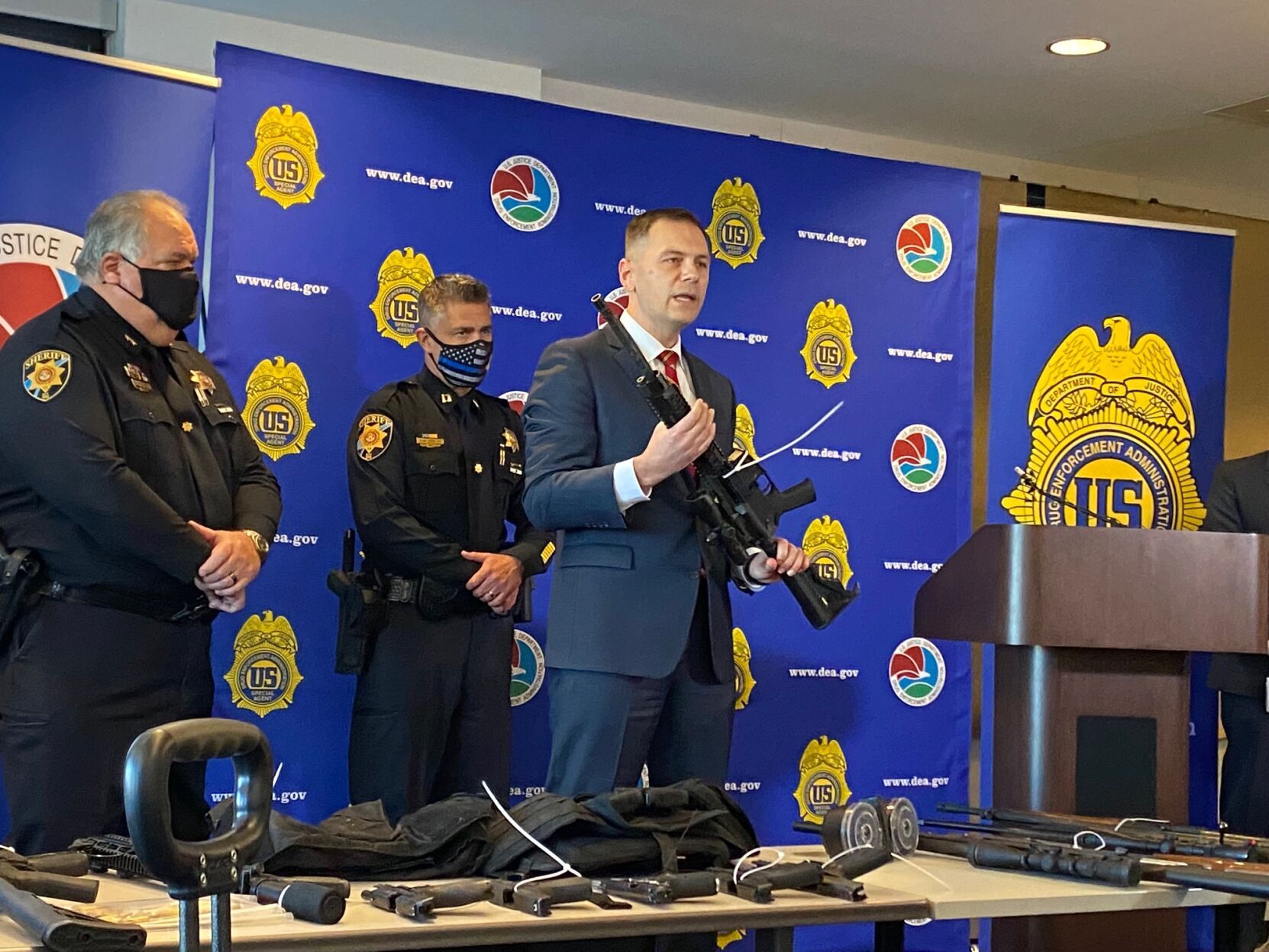
He said that law enforcement is having tremendous success in taking the big dealers – those who are caught with tens of thousands or even hundreds of thousands of pills – off the streets.
“Yet we’re still seeing this problem. We are very limited in our ability to address the low- and mid-level dealers,” he said.
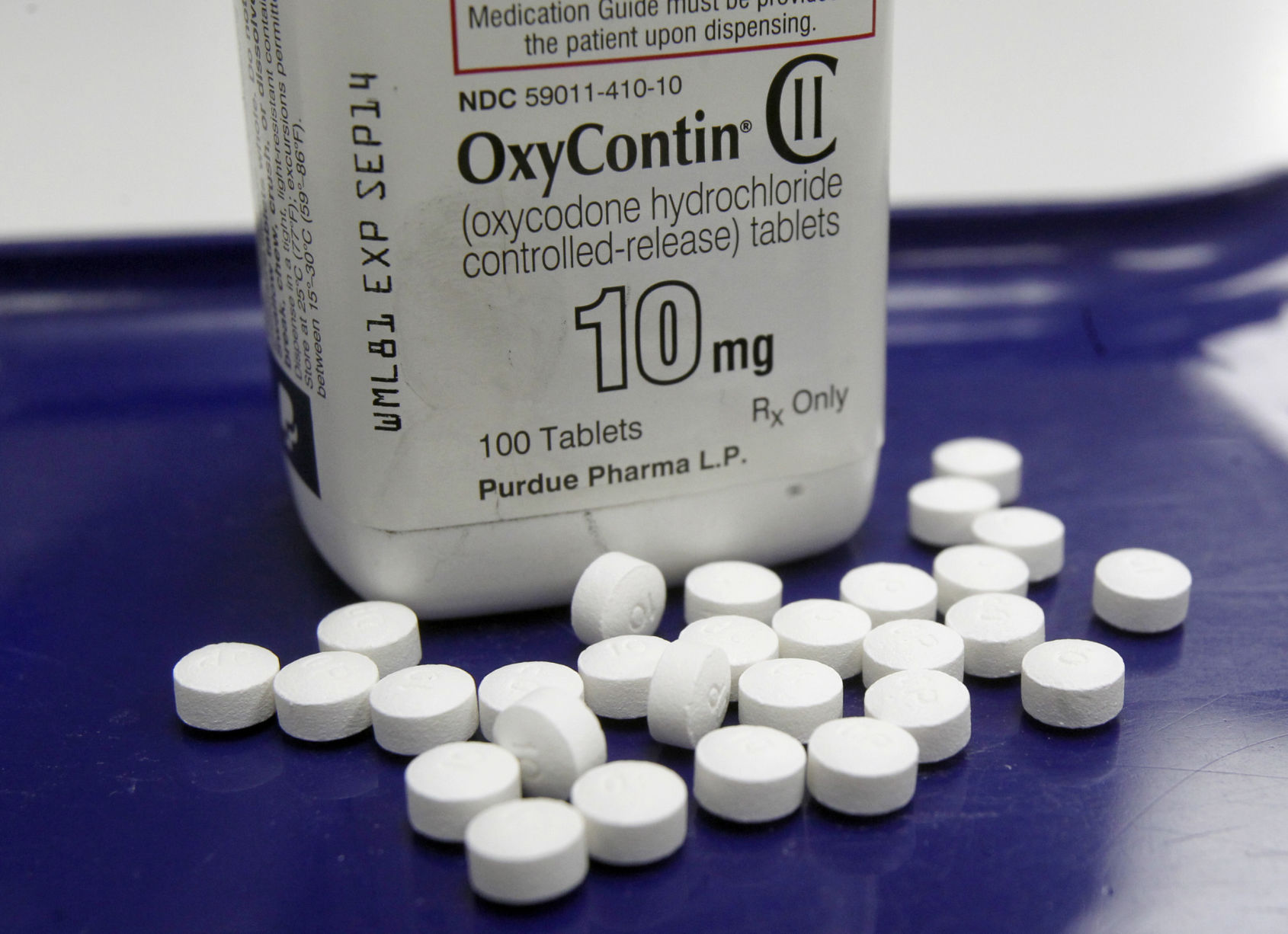
Pazen said dealers have learned that, if they’re caught with 39 pills, they’re under the four gram limit, given that pills are generally about one-tenth of a gram.
“This legislative tool is hurting our ability to address those” low- and mid-level dealers, the ones law enforcers would most like to get off the streets, Pazen said.
As for the possession issue, Pazen said law enforcement could get people into treatment before 2019.
“You used to be able to use leverage” to do that – but not anymore, Pazen said.
Pazen said prior to the 2019 bill, if someone was arrested for possession of fentanyl, that person could be persuaded to get into treatment, such as into Denver’s Law Enforcement Assisted Diversion, in lieu of serious felony criminal charges.
The district attorneys would hold off on filing charges, as long as the person who was arrested did their part. Pazen said that, nine out of 10 times, the arrested person would take that deal. The one person who said “no” would still get a medical assessment and offered medically-assisted treatment, “so no matter what door you go through, you have an opportunity to connect someone to some level of treatment,” the police official said.
With the 2019 law firmly in place and the threat of a felony charge no longer a motivator, he said, the situation is “here’s your ticket and hopefully you’ll still be alive in six months when you have a court date.”
As for the conversations around a new public policy, Pazen said only that “we’re hopeful folks will come up with solutions that will help keep the community safe.”
Gardner told Colorado Politics he’d like to see a repeal of the portion of the 2019 law imposing lower penalties for drug possession, leaving the bill’s other provisions on treatment, for example, alone.
He believes, as Pazen does, that the threat of a felony charge can offer a lot of leverage in getting users into treatment and rehab. But there have also been suggestions of other ways to do that, such as mandatory treatment or misdemeanor charges of possession, he said.
Gardner said the legislature needs to deal with relatively small quantities of drug possession and that he isn’t interested in punishing users.
There’s little chance, however, of a walk-back on that 2019 bill, according to House Speaker Alec Garnett of Denver, who is also working on the bipartisan bill with Gardner and Reps. Leslie Herod, D-Denver and Mike Lynch, R-Wellington.
“I didn’t go looking for this issue,” Garnett said. “It kind of found me.”
He’s trying to come up with legislation that he calls a “Colorado solution, and that means bipartisan.”
“We will do the best we can to empower law enforcement with the tools they’re asking for and the families who have lost loved ones,” he said.
He acknowledged the issue has become politicized but said he is trying to keep that from creeping into the discussions around solutions.
Among the issues the legislation is likely to deal with is cross-contamination.
That’s when fentanyl is mixed with other drugs, often heroin but also cocaine and even methamphetamine. One issue is whether a drug dealer knows what he or she is peddling is laced with fentanyl, let alone if users are aware of what they’re taking.
“What we’re looking at, on the distribution side, is that drug dealers had better know whether what they’re selling has fentanyl in it,” Garnett said, adding that will count toward the penalty being considered.
But another challenge is that law enforcement – including the Colorado Bureau of Investigation – doesn’t have the tools to figure out just how much fentanyl is in a mixed drug. CBI officials told Colorado Politics that such tools don’t exist, and they questioned whether it’s even something they need to pursue.
Garnett said he envisions a day when there will be no pure fentanyl, that most illicit drugs will be cross-contaminated with fentanyl, a future he calls scary.
Herod, who views Fentanyl, by itself, as dangerous, said it’s in every drug “and it’s killing people, and we have to do something about it.”
But it’s not about the 2019 law, she argued.
“It’s about what laws are we going to create today to address the situation that fentanyl is being laced in almost every illicit drug,” she said.
It’s the “knowingly” piece that Herod is most interested in. If dealers are knowingly distributing fentanyl, they should fully account for it in the law, she said.
Herod agrees with Garnett that, if drug users don’t know fentanyl is in what they are taking, they should not be penalized with a felony for what Herod calls surviving “the worst day of their lives.”
The Commerce City situation raised other questions: Can investigators find the dealer who provided the fentanyl-laced drugs, given that the five people who died were reportedly casual drug users?
Herod seems skeptical. She added that she’s focused on the amount tied to possession.
“Is someone dealing it or providing it to others?” she said, noting that wasn’t covered in the 2019 law, which she pointed out was about possession, not distribution.
Garnett called possession the most challenging issue for the bill from a public policy standpoint.
“We punish a drunk driver for getting behind the wheel and putting public safety at risk,” but, he said, the same does not apply to an alcoholic.
A similar standard ought to apply to drug users, he argued.
“Punishing addicts for being addicted doesn’t solve the problem,” he said.
But what also doesn’t work is relying on fentanyl users to take the step to get into treatment, something Garnett said has worked with other users of other drugs. Fentanyl is, even in the opioid family, more addictive and harmful than other substances. Being thoughtful and creative on how to approach this challenge is required by the drug itself, and that’s where the conversations are taking place, the speaker said.
Garnett said he understands how the treatment leverage on felony drug charges against drug addicts worked, but argued there are other ways – and reasons – to create that leverage, adding that, for those who are seriously addicted, it’s questionable whether a felony charge is going to change behavior.
There’s also the issue of felony convictions on the rap sheets of those who do get treatment and get clean, he said, which can hang over their heads for life.
Garnett said he’s looking for a way to get to what Pazen talked about and recreate that leverage “without the blunt instrument of a felony.”
Donner said the debate around a fentanyl-specific bill is happening in tandem along with two other significant pieces of legislation: One is Polis’s public safety package, and the other is recommendations on how to spend nearly a half-billion dollars from the state’s behavioral health task force. Policymakers and others now are trying to figure out not only how to legislate around fentanyl but also which item should go into which bill.
Donner said she wants harm reduction provisions in the broader fentanyl-specific bill. She said recommendations include a grant program funded by the state for community awareness to educate the public on fentanyl, on overdoses, on naloxone – what it is, how to get it and how to use it. She also pushed expanding medication-assisted therapy – the use of prescriptions, such as methadone or buprenorphine to help those addicted to opiates – and improving access to and availability of treatment.
Those harm-reduction pieces will require funding, though. For the moment, the state has it. The American Rescue Plan Act money can be used to tackle some of those issues. But the money isn’t recurring – it has to be spent by the end of 2026. After that, any program funded by those dollars will need a new piggy bank. There’s also general fund money, but what’s most available is also one-time only dollars, leaving the same problem of how to keep those programs going past the first year.
Garnett appeared lukewarm to the idea of using ARPA money, but he also said Thursday the spending side hasn’t been decided.
There are some areas, such as harm reduction, that can be paid for with one-time money, such as testing strips or bulk buys of naloxone, he said.
How to pay for intensive inpatient treatment, however, is an ongoing question, Garnett said.
There’s also been discussion about a sentence enhancement or additional homicide charge for a person who gave fentanyl to someone who then overdoses, Raynes and others said.

Weiser said he supports a sentence enhancement, but others warn that it would make some people less likely to call 911 should someone overdose in their presence.
Raynes said conversations about any homicide-related charge or sentencing enhancement have been “robust and difficult, but people I think earnestly are trying to find” some common ground.
Donner opposes a homicide charge, as does Raville, of the Harm Reduction Action Center in Denver.
“I’m concerned that we’re doubling down on criminalization efforts at a time where we should be leading with public health efforts,” she said. “(A new homicide charge) will actually increase overdose deaths because folks will not call 911 in the case of an emergency. Most people spending time across the country in jail and prison for drug-induced homicide are friends, family members and loved ones of a person who used drugs and who also used drugs themselves. Drug-induced homicide doesn’t get to the cartel, not even the mid-level dealer.”
Colorado’s Good Samaritan law protects a person from criminal liability should he or she call 911 for someone who’s overdosing.

Herod pointed out that law enforcement, district attorneys, public defenders, harm reduction advocates and legislators are all getting together to find the right solution, “instead of pointing fingers and being mad about past criminal justice reform.”
“That’s not where we’re going to find the solution,” she said. “We have to wade through the politics and get to the facts.”


10th Circuit appoints ex-Colorado solicitor general to argue issue after federal government declines
Michael Karlik
michael.karlik@coloradopolitics.com
Updated 11 hours ago
The Denver-based federal appeals court took the unusual step earlier this month of appointing an attorney to independently argue a key issue in a criminal sentencing appeal after the government indicated it would not contest the defendant’s view of the...

Greeley voters halt landmark development project
Hap Fry, Special to The Gazette
hap-fry@gazette.com
Updated 11 hours ago
GREELEY – The landscape-altering Cascadia development project has been put on ice, according to unofficial results of a city referendum on the project Tuesday. The proposed development would have included an 8,600-seat multiuse arena and ice center that would be home to the Colorado Eagles,...
State audit: Rape kit backlog reduced but more work needed to hit goal
Jenny Deam
jenny-deam@coloradopolitics.com
Updated 13 hours ago
In the past year, the Colorado Bureau of Investigation has slashed the time it takes to process DNA collected in sexual assault cases, but the agency still is far short of its turnaround goal, the state auditor reported on Wednesday....
Daniel Domenico to take over as Colorado’s chief federal judge
Michael Karlik
michael.karlik@coloradopolitics.com
Updated 17 hours ago
Daniel D. Domenico will become the new chief judge of Colorado’s federal trial court next week, a role that encompasses the administration of the court as well as a judicial caseload. Under federal law, the chief judge of a U.S....
10th Circuit upholds violations, sanctions against Colorado Springs mental health hospital
Michael Karlik
michael.karlik@coloradopolitics.com
Updated 18 hours ago
The Denver-based federal appeals court agreed earlier this month that the government properly cited and penalized a Colorado Springs psychiatric hospital for failing to protect its staff from known risks posed by patients. The Occupational Safety and Health Administration inspected...
Vance working with DOJ and Treasury after Trump announces ‘war on fraud’
David Zimmermann Washington Examiner
davidzimmermannwashingtonexaminer@wpstage.coloradopolitics.com
Updated 18 hours ago
Vice President JD Vance confirmed on Wednesday that he is working with the Justice and Treasury Departments to root out fraud nationwide. During the State of the Union address Tuesday night, President Donald Trump announced Vance would lead the administration’s “war on...
House Ethics Committee dismisses some claims, advances others against Rep. Ron Weinberg
Marianne Goodland
marianne.goodland@coloradopolitics.com
Updated 16 hours ago
The House Ethics Committee voted on Wednesday to accept three allegations filed against Rep. Ron Weinberg, R-Loveland, but combined two into one subject area. The two issues involve inappropriate comments made to female lawmakers in two separate incidents and the...

Bipartisan opposition sinks eviction bill in Colorado
Marissa Ventrelli
marissa.ventrelli@coloradopolitics.com
Updated 14 hours ago
Two Democrats sided with Republicans on a legislative panel to reject a proposal that would have made several changes to eviction filings and proceedings, including requiring judges to suppress court records. Sponsored by Rep. Junie Joseph, D-Boulder, House Bill 1047...
Appeals judges tell Boulder students about workload, ‘attack mode’ during school visit
Michael Karlik
michael.karlik@coloradopolitics.com
Updated 19 hours ago
Three judges on Colorado’s second-highest court traveled to Boulder on Tuesday to hear oral arguments in real cases and field questions from students about their professional paths, their workload on the Court of Appeals, and their approach to interacting with...
State of the Union: Here’s what Trump didn’t say
W. James Antle III Washington Examiner
wjamesantleiiiwashingtonexaminer@wpstage.coloradopolitics.com
Updated 20 hours ago
President Donald Trump made the case that happy days are here again in the first State of the Union of his second term, but there was little talk of transition or pain. “The state of our union is strong,” he...
PREV
PREVIOUS

Denver's new deputy fire chief makes history as highest-ranking woman in department history
When Kathleen Vredenburgh was named deputy chief of the Denver Fire Department last month, she became the highest ranking woman in the department’s 156-year history. “Right now, it is surreal,” Vredenburgh, 53, told The Denver Gazette. “I didn’t necessarily think about it that way when I was putting my name in the hat, but it […]

House OKs bill rolling back 2021 law that eased gun restrictions for felony convictions
A year after Colorado’s legislature overhauled crime laws, lawmakers are working to roll back a portion of the legislation that effectively eased the ability of individuals convicted of a wide array of felony offenses to possess a gun. One of the bill’s sponsors said last year’s crime overhaul went too far, and law enforcement advocates […]