

Battle over physician assistants’ practice in Colorado heats up in both Democratic, Republican caucuses

A bill that would allow physician assistants to take on more primary care duties turned into a battle royale between its sponsor, who chairs the House Health & Insurance Committee, and two fellow Democrats who are health care professionals.
That divide also extends to the Republican caucus, whose members found themselves on the opposing ends of the proposal to give physician assistants more independence to practice.
House Bill 1095 won a 10-1 vote from the House committee on Feb. 23. The lone “no” vote came from Rep. Kyle Mullica, D-Northglenn, a registered nurse in the emergency room at Presbyterian/St. Luke’s Medical Center in Denver.
But when the bill came up for a final vote in the state House on Monday, the votes weren’t there to pass it, according to sources within the chamber. Action on the bill was postponed until Thursday.
Under the bill, the supervisory relationship between a physician and a physician assistant (PA) would change, giving the latter more independence depending on the length of time the physician assistant has been in practice. Once the PA has completed 3,000 practice hours, that PA is no longer required to be in a “collaborative plan” with a supervising physician. An amendment raised that minimum to 5,000 hours; another said a physician would not be obligated to enter into a collaborative plan with a PA as a condition of employment.
At that point, PAs are required only to consult with and refer to appropriate members of their health-care team based on a patient’s condition, their education, experience and competencies, and standards of care.
The battle within both caucuses over the bill was on full display Friday, when HB 1095 came up for a second reading and a lengthy debate ensued.
Co-sponsor Rep. Susan Lontine, D-Denver, described the fight over the bill as a “turf war” between physicians and PAs.
Rep. Perry Will, R-New Castle, said the bill would help with a problem in rural Colorado – the lack of supervising physicians. Experienced PAs will be able to practice where they are needed, within their scope, and still consult with members of the healthcare team when appropriate, he said. In contrast, under current law, experienced PAs are limited to providing services in the specialty area their supervising physician is trained in, he said.
That’s limiting care in rural Colorado, he argued, adding, “There are enough patients to go around for everyone.”
Lontine added that PAs will be more employable under the bill, allowing them to use the skills they’re trained in, instead of limiting them to the skillset of their supervising physician. Nineteen other states and the District of Columbia have similar laws, she said. PAs, which are not physicians, cannot do what physicians do nor do they want to, she said.
Rep. Yadira Caraveo, D-Thornton, a pediatrician, said the bill is not the solution for rural Colorado. She said she spent an estimated 12,000 hours in training or about five years under another doctor. She supported the amendments to increase the hours, but said that still doesn’t provide sufficient training and expertise for PAs to practice independently. Technically, PAs would, under the proposal, still collaborate with a medical team, but supervision and collaboration are very different things, she said. With collaboration, it’s up to the PA to decide whether to get input from a doctor, Caraveo said.
Caraveo said after she went back to her practice after the 2021 session, she caught four errors in two days made by those she supervised, including whether to hospitalize an infant. She said they had no idea they made those mistakes, and probably would never have asked her, as a collaborating physician, for her input. Their training does not justify changing the rules, she argued.
There are many ways to address shortages in rural areas, she added.
“What is presented as a solution is to lower the requirements for training and hopefully fill the shortage that way,” Caraveo said, adding it would “disincentivize” people from going to medical school since someone could practice in the same manner with less schooling and debt.
The doctor runs the show, and that’s appropriate since they have the training, Mullica said.
Both Mullica and Caraveo said they love the PAs they work with, but this bill is a “butcher knife when what is needed is a scalpel … independent practice is not a solution.” They argued it could hurt patients.
Rep. Julie McCluskie, D-Dillon, said that, while HB 1095 will not solve the rural health care crisis, rural Coloradans are looking for medically sound, innovative solutions. In Summit County, without those PAs and others providing services where no one else does, kids and families would be left without care, she said. In rural areas, which face dramatic shortages in physicians, well-trained PAs are a complimentary way to deliver cost-effective, high-quality care and in a safe and responsible way, she said.
On the other side of that debate is Rep. Lindsay Daugherty, D-Arvada, who said the bill would create a danger to public health, given that PAs would be able to treat patients without any supervision. She argued the bill would not increase access to health care nor would it make it cheaper, and it wouldn’t provide an incentive for PAs to move to rural areas, either.
“If you’re talking about a rural-urban divide, this is it,” Daugherty said. “This provides substandard care to rural areas, and that’s what you’ll do by voting for it. If you’re in a rural area, you get a PA. If you’re in Denver, you get a doctor.”
House Republicans are equally divided between those who believe rural Coloradans need the care a PA would provide, and those who argue it would not encourage PAs to move to rural areas or leave rural Coloradans with substandard care.
On one hand is Rep. Richard Holtorf, R-Akron, who supports the measure.
“This bill is one of the most difficult and complicated bills of the day,” Holtorf said.
He said in the far reaches of his district, there are small towns with a population of 50 or 500 near the borders with Kansas, Oklahoma or New Mexico, that struggle to attract health practitioners.
“We cannot get medical care because we don’t have the medical practitioners [to provide it],” he said. “Some care is better than none.”
He added he would support any kind of health care for those areas.
On the other side of that argument is Rep. Matt Soper, R-Delta, who sits on the board of a Delta County hospital, who argued the bill would continue the war on rural Colorado by creating a substandard class of care for rural hospitals.
“We can already get PAs. The real struggle is getting doctors,” he said. “I don’t want to treat rural Colorado as the ugly stepchild.”
The bill isn’t only dividing the caucuses. The medical community is deeply divided, as well.
The opposing side includes the Colorado Medical Society, the American Academy of Pediatrics; COPIC, which provides medical liability insurance; trade organizations representing emergency room doctors, psychiatrists, anesthesiologists, radiologists, eye doctors, and Kaiser. On the supporting side stand physician assistants, the Colorado Community Health Network, the Colorado Center on Law and Policy, Colorado Rural Health Center and United Healthcare.
The bill was amended in committee hearing to add a petition clause, which would allow citizens to contest the law with a ballot measure if filed within 90 days of the end of the session.




Healthcare Freefall: Longer drives, fewer options for maternity care in Colorado
Thelma Grimes
thelma.grimes@coloradopolitics.com
Updated 19 hours ago
Editor’s Note: Colorado’s healthcare system is entering a period of accelerating instability — a “tsunami,” as multiple leaders describe it — driven by collapsing hospital finances, shrinking Medicaid reimbursements, disappearing services and a political fight over who is responsible for...

Judge grants partial injunction to GEO in fight against state health inspection law
Kyla Pearce
kyla.pearce@gazette.com
Updated 11 hours ago
A judge ruled Thursday that The GEO Group does not have to follow parts of a new state law requiring more frequent health and safety inspections at the U.S. Immigration and Customs Enforcement processing center in Aurora. Under the order...
Parker man faces 20 years to life for serial sexual assaults
Nicholas Fogleman
nicholas.fogleman@denvergazette.com
Updated 13 hours ago
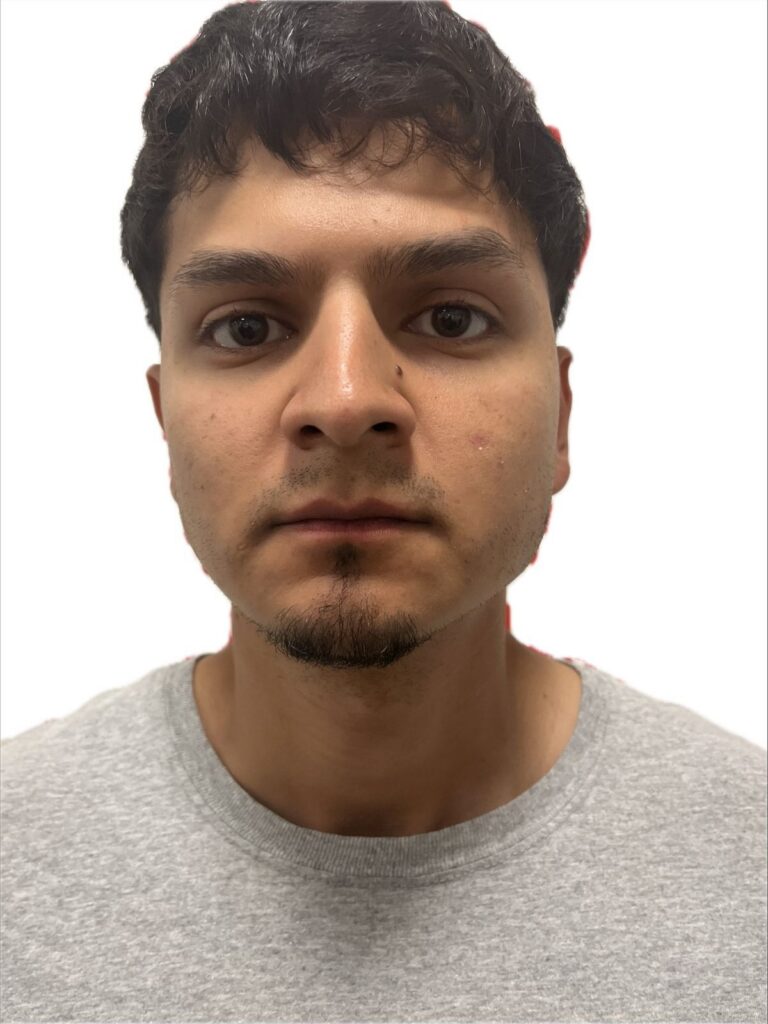
A 25-year-old Parker man who sexually assaulted three women in 2025 pleaded guilty Wednesday and will serve 20 years to life in prison. Javier Rodriguez-Andrade pleaded guilty to charges stemming from three sexual assaults involving women ages 19 to 24. ...
Buttigieg performs best among Democrats against Rubio or Vance in possible 2028 contest: Poll
David Zimmermann
david-zimmermann@coloradopolitics.com
Updated 15 hours ago
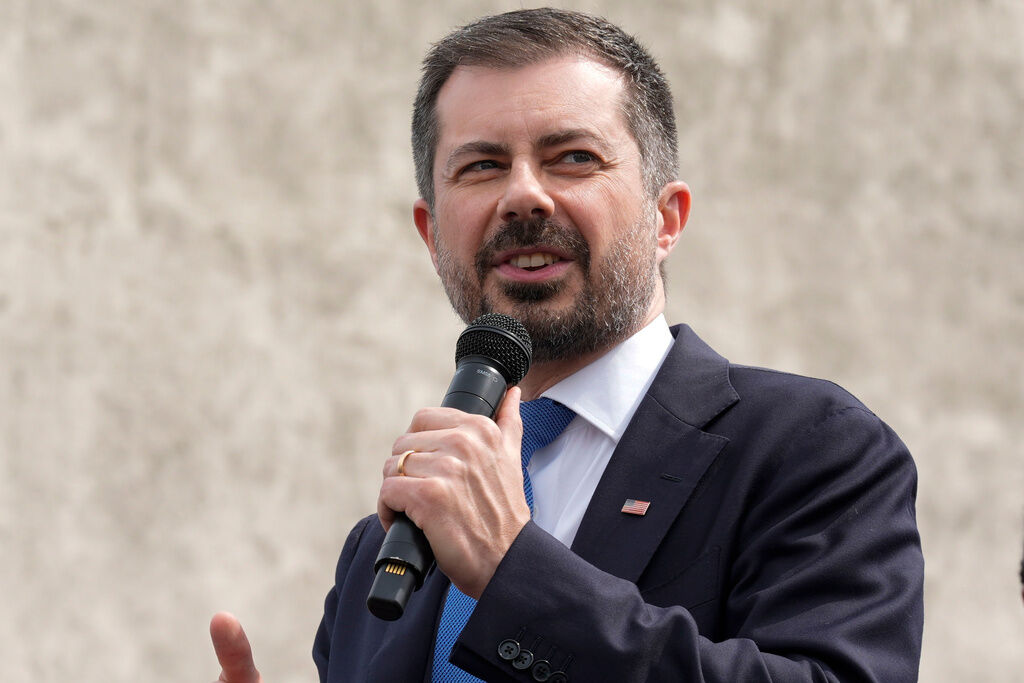
Former Transportation Secretary Pete Buttigieg appears to be the Democratic Party’s best chance at winning the presidency against Secretary of State Marco Rubio or Vice President JD Vance in 2028, according to a poll released on Thursday. In hypothetical matchups...

Douglas County moves to Stage 1 fire restrictions following recent rain
Nicholas Fogleman
nicholas.fogleman@denvergazette.com
Updated 13 hours ago
Douglas County has downgraded its fire restrictions from Stage 2 to Stage 1 on Thursday following recent rainfall and moderate fire conditions, according to the Douglas County Sheriff’s Office. The change applies to unincorporated Douglas County, as well as the...
Divided appeals court upholds warrantless DNA collection in Colorado cold case, cautions of government overreach
Michael Karlik
michael.karlik@coloradopolitics.com
Updated 12 hours ago
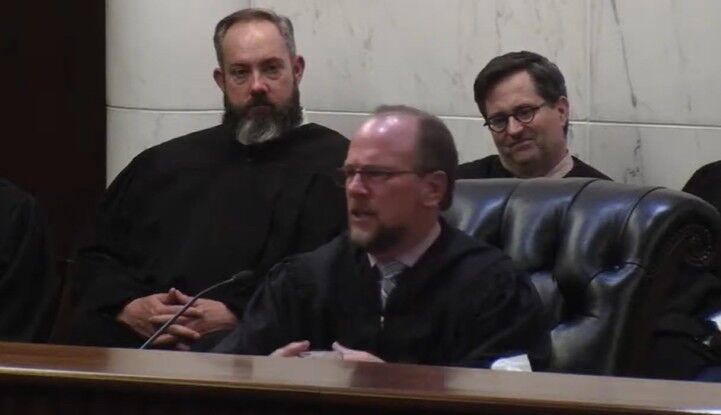
Colorado’s second-highest court upheld the warrantless collection of a suspect’s DNA from a discarded soda can as constitutional on Thursday, while warning about potential abuse of DNA privacy in the absence of further guardrails. By 2-1, a three-judge Court of...

Democratic gubernatorial candidate Phil Weiser promises to appoint rural outreach director, water adviser
Marianne Goodland
marianne.goodland@coloradopolitics.com
Updated 12 hours ago
Democratic gubernatorial candidate and current Attorney General Phil Weiser told the Colorado Water Congress Thursday he intends to appoint a rural outreach director and a water policy adviser should he win the election in November. Weiser’s speech at the Steamboat...
Man charged in Northglenn homicide of wife
Matt Kyle
matt.kyle@denvergazette.com
Updated 13 hours ago
A man has been formally charged with murder and burglary relating to a homicide last week in Northglenn. Alexei Munive-Rodriguez, 48, was arrested Sunday after he was at large following the homicide, which occurred Friday. Police were dispatched around 10:30...
Attorney General candidates present priorities at Colorado Water Congress
Marianne Goodland
marianne.goodland@coloradopolitics.com
Updated 12 hours ago
The two major-party candidates for attorney general — Republican Michael Allen, the district attorney for Teller and El Paso counties, and Democratic Secretary of State Jena Griswold — on Thursday outlined their priorities at the Colorado Water Congress. Griswold attended...

US aircraft carrier arrives in Middle East, relieving long-deployed USS Lincoln
The Associated Press
the-associated-press@coloradopolitics.com
Updated 17 hours ago
WASHINGTON (AP) — The Asia-based USS George Washington aircraft carrier is now operating in the Middle East, the U.S. military said Thursday, relieving a long-deployed carrier following reports of mental health challenges and supply shortages aboard while it was supporting...
PREV
PREVIOUS

Judge blocks Douglas County order allowing exemptions to mask mandates
A judge has issued an early blow to the Douglas County Health Department in a lawsuit that alleges the agency was illegally formed and its order hollowing out mask requirements is illegitimate, in the latest burst of courtroom drama in a county divided over masking and the COVID-19 pandemic. The lawsuit was filed in early […]

Bipartisan proposal would provide $30.5 million in grants for law enforcement
A bipartisan pair of lawmakers in the state Senate are seeking to provide $30.5 million to Colorado law enforcement over the next two years through new grant programs. The grant programs – which would fund law enforcement training, staffing and resources – intend to increase community safety and public trust in law enforcement, said bill […]