

House Democrats shut down Republican-backed bills curtailing vaccine mandates

Democratic members of a House panel voted down a pair of Republican-backed bills Thursday that, if passed, would have limited vaccine mandates by allowing exemptions for various reasons.
House Bill 1200 would require employers to allow exemptions for vaccine mandates for health concerns or religious beliefs. If an employee was fired for refusing a vaccine for any reason, the bill would make them eligible for unemployment benefits. House Bill 1201, meanwhile, would prohibit mandates for vaccines not approved by the U.S. Food and Drug Administration, not tested for at least one year or not manufacturer-liable for injury or death.
The House Business Affairs and Labor Committee indefinitely postponed both bills in 5-8 votes along party lines, with Republicans in support and Democrats in opposition. The votes came after more than five hours of debate and testimony from dozens of people who came to speak on the bills.
“I saw first-hand in our hospitals how important it’s been to have a vaccinated workforce,” said Rep. Kyle Mullica, D-Thornton, an emergency room nurse. “The vaccine is the best tool we have to prevent people from getting sick and missing work, which is why I am disappointed that we continue to see dangerous bills that spread misinformation about the vaccine. This is not the time to handcuff our state’s small businesses, which is exactly what these bills would do.”
“My heart breaks for the families of Colorado who have been staying up at night trying to decide between receiving a vaccine with questionable effectiveness or keeping their job,” argued Rep. Kevin Van Winkle, R-Highlands Ranch, sponsor of HB-1200. “There are many Coloradans now struggling to pay their bills, to live or to work because their employer forced them to make a choice between their job and injecting a new type of vaccine. That is not right.”
The legislature tackled the bills as the COVID-19 pandemic brought vaccine mandates to a sharp focus. Many businesses have implemented vaccine mandates to slow the pandemic’s spread in the workplace. Mandates have also been established for certain situations, such as organ transplants. Statewide, 3.99 million people – 69.3% of the population – are vaccinated against COVID-19. That is higher than the national average of 65.3%.
Thursday’s speakers were roughly evenly divided between who support and oppose the bills. Supporters included multiple people who said they lost their jobs for refusing to get the COVID-19 vaccine and felt they’re being treated like “second-class citizens.”
“If you don’t vote yes, families like mine become unemployable,” said Jody Davison, a former state employee who said she was fired in December for refusing the vaccine due to health concerns because she could not obtain a medical exemption. “The only person liable for my health today is me, so I have to be empowered to make this decision.”
Colorado issued a COVID-19 vaccine mandate for state employees in September 2021. Since then, less than 1% of employees have applied for a vaccine exemption – 546 out of 65,000 employees, according to state data.
The bills’ critics included many in the health care industry who said the measures would put their patients at risk by preventing businesses, such as hospitals and nursing homes, from mandating vaccines for employees who come into contact with the medically vulnerable.
Others said the portion of HB-1201 that prohibits mandates for vaccines that haven’t been tested for at least a year would have deadly consequences if and when another pandemic hits.
A study from the Yale School of Public Health estimated that, if the U.S. had not started distributing the COVID-19 vaccine in December 2020, an additional 279,000 people would have died and 1.25 million would have been hospitalized by July 2021. If only half as many vaccinations were administered, there would have been 120,000 additional deaths and 450,000 additional hospitalizations, the study added.
“(The COVID-19 vaccine) was a medical miracle and it has saved countless lives,” said Dr. David Keller of Children’s Hospital Colorado. “Had this bill been in effect, we would have been forced to continue to use non-biologic measures to control the pandemic and would have had more illness, more hospital utilization and more death. The bill will certainly impair out ability to finish recovery from the last wave of omicron and will impair our response to the next pandemic.”
Several businesses spoke in opposition to the bills, as well, saying it should be up to employers to decide what mandates to adopt. They include the Colorado Mining Association, South Metro Denver Chamber of Commerce and Colorado Competitive Council.
When voting against the bill, some lawmakers raised additional concerns about conflicting with vaccine mandates for federal workers within the state.
Each bill included an approximately $1 million price tag to settle lawsuits expected to be brought against the state due to these kinds of conflicts.



Colorado Supreme Court signals intervention in dispute over treatment for trans children
Michael Karlik
michael.karlik@coloradopolitics.com
Updated 17 hours ago
The Colorado Supreme Court ordered Children’s Hospital Colorado on Tuesday to explain why it should not direct the organization to resume providing certain types of services to transgender children in compliance with the state’s non-discrimination law. Last month, a Denver...

Trump faces first domestic test on Iran conflict with Senate war powers vote
Ramsey Touchberry, Washington Examiner
ramsey.touchberry.washington.examiner@gazetteedit.wpenginepowered.com
Updated 19 hours ago
Administration officials are scrambling to sell members of Congress on President Donald Trump’s military operations in Iran ahead of bipartisan attempts to limit his war powers in the Middle East without approval from lawmakers. The Senate and House are set...
Supreme Court hands California parents win over secret gender transition policy
Jack Birle, Washington Examiner
jack.birle.washington.examiner@gazetteedit.wpenginepowered.com
Updated 19 hours ago
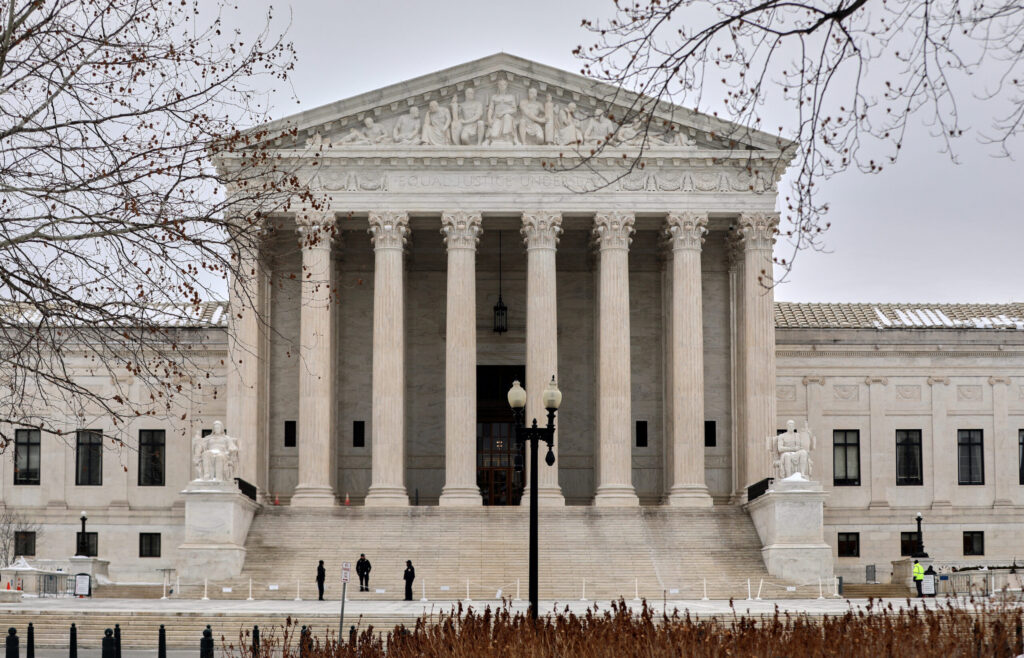
The Supreme Court gave California parents a significant victory late Monday when it kept in place a lower court’s block of the Golden State’s public school policy hiding students’ gender identity and preferred pronouns from parents. A 6-3 majority on...

Judge nixes latest policy requiring 7 days’ notice for Congress members to visit ICE facilities
Michael Kunzelman
michael.kunzelman@associatedpress.com
Updated 19 hours ago
WASHINGTON (AP) — A federal judge agreed on Monday to temporarily suspend the latest version of a Trump administration policy that requires members of Congress to provide a week’s notice before they can visit immigration detention facilities. U.S. District Judge...
Judge nixes latest policy requiring 7 days’ notice for Congress members to visit ICE facilities
Michael Kunzelman
michael.kunzelman@associatedpress.com
Updated 17 hours ago
WASHINGTON • A federal judge agreed on Monday to temporarily suspend the latest version of a Trump administration policy that requires members of Congress to provide a week’s notice before they can visit immigration detention facilities. U.S. District Judge Jia...

Gov. Polis, Upper Basin states criticize federal draft plan for managing the Colorado River
Marianne Goodland
marianne.goodland@coloradopolitics.com
Updated 19 hours ago
With no agreement among the seven Colorado River states and federal deadlines now passed, the Upper Colorado River Commission on Monday sharply criticized the U.S. Department of the Interior’s draft plan for managing the river after current guidelines expire this...

Ballot access, dual-office ban bills move swiftly through Colorado legislature
Marianne Goodland
marianne.goodland@coloradopolitics.com
Updated 20 hours ago
With an eye on the 2026 election cycle and mounting tensions with the Trump administration, Colorado lawmakers are fast-tracking a pair of election bills they say will protect the state’s mail ballot system and tighten rules for elected officials. The...

Colorado GOP chair Brita Horn loses ‘no-confidence’ vote, vows to refocus on ‘mending that divide’
Ernest Luning
ernest.luning@coloradopolitics.com
Updated 4 hours ago
The Colorado Republican Party’s state central committee approved a resolution expressing “no confidence” in state chair Brita Horn in a landslide late Monday night near the end of an online meeting marked by rancor and confusion. Almost 80% of the...

Trump to attend White House Correspondents’ Dinner for first time as president
Washington Examiner Staff, Washington Examiner
washington.examiner.staff.washington.examiner@gazetteedit.wpenginepowered.com
Updated 23 hours ago
President Donald Trump announced on Monday that he accepted an invitation to this year’s White House Correspondents’ Dinner. It would mark the first time Trump has attended the dinner, in either term, since he’s been president. Trump announced the decision...
Primary rival sues to prevent Democrat Eileen Laubacher from going through assembly in Colorado’s 4th CD
Ernest Luning
ernest.luning@coloradopolitics.com
Updated 1 day ago
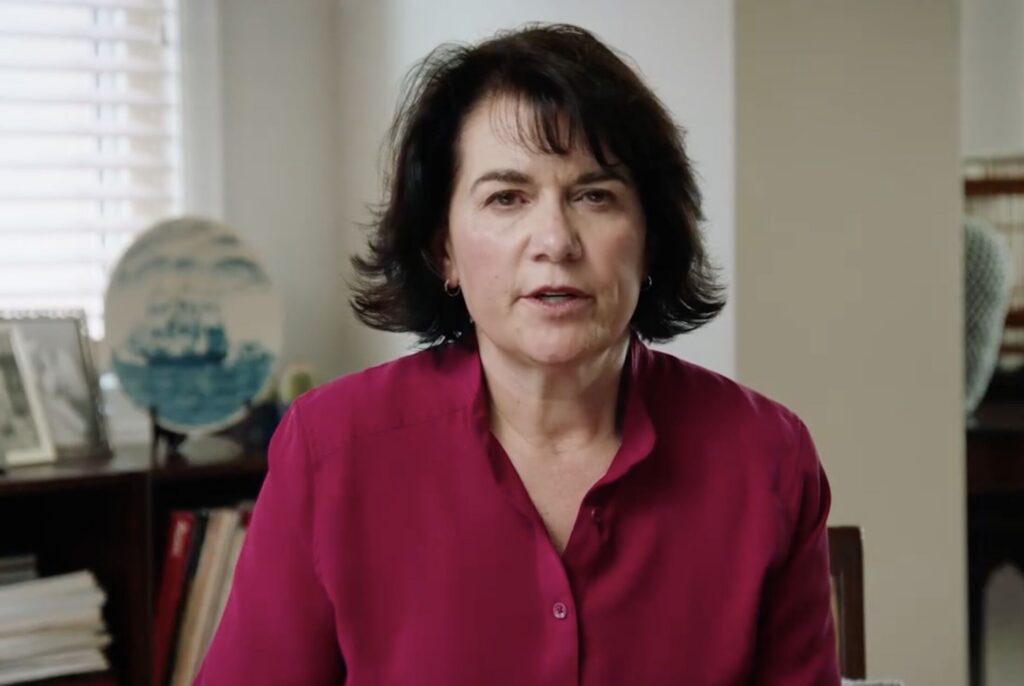
Democratic congressional candidate Trish Calvarese on Monday asked a judge to prevent one of her primary rivals, Eileen Laubacher, from participating in the caucus and assembly process to seek the nomination to challenge Republican U.S. Rep. Lauren Boebert in Colorado’s...
PREV
PREVIOUS
Insurance companies are 'victims' under state restitution law, appeals court says
The Court of Appeals agreed that insurance companies qualify as “victims” that are entitled to restitution under state law. A three-judge panel for the state’s second-highest court interpreted a change in the law from 2000 and concluded the legislature had not intended to erase insurers from receiving compensation for losses due to crime. The panel […]

Former attorney in Denver DA's office alleges systemic pay discrimination in new lawsuit
A former employee in the Denver District Attorney’s Office has filed a lawsuit alleging systemic pay discrimination. Adrienne Greene worked for the office from 1996 until February this year. She first was hired as a deputy district attorney, and then as a chief deputy and ultimately promoted to senior chief deputy in April 2021. Denver City Council […]