

SENGENBERGER | On collective bargaining, heed FDR
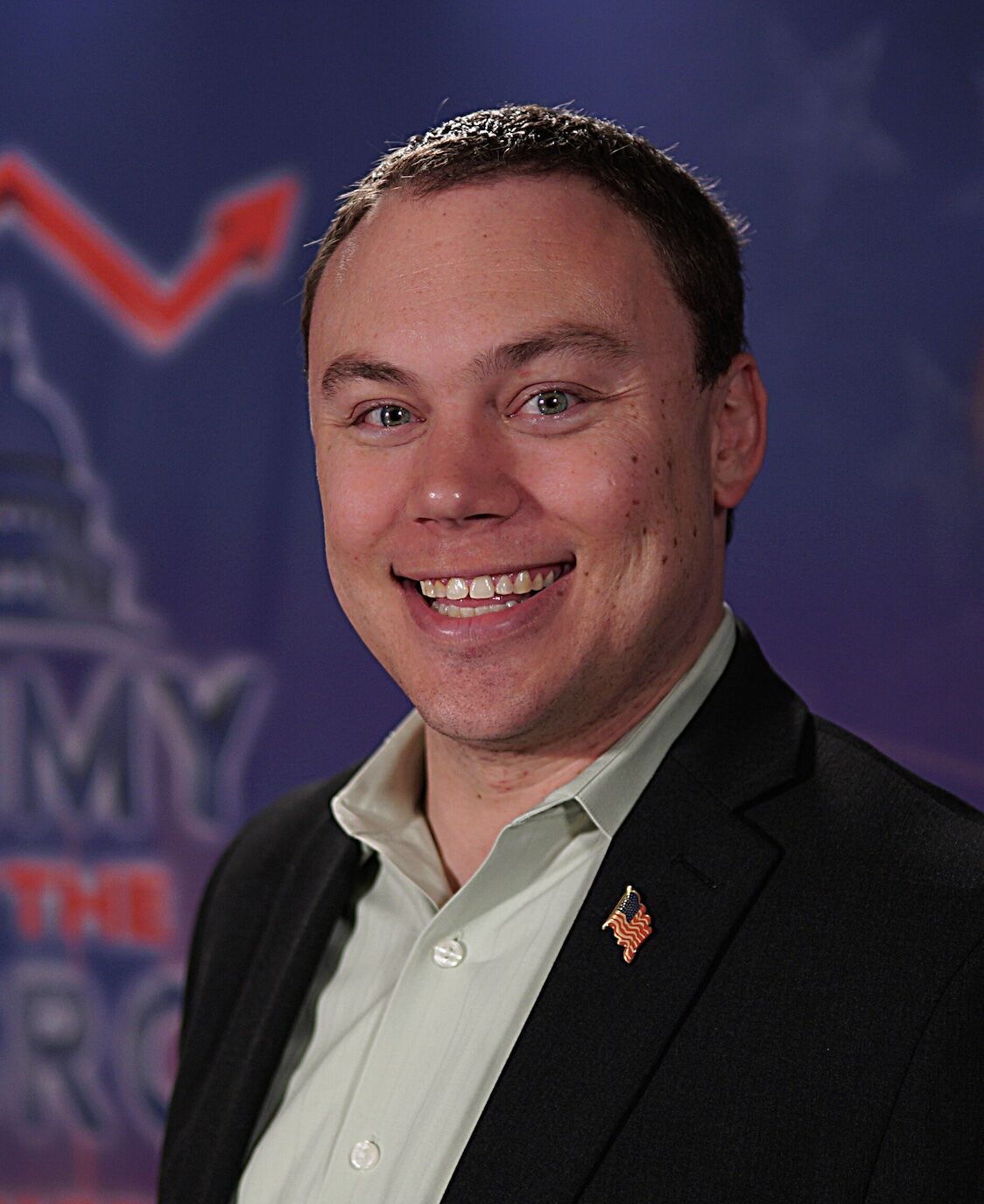
For countless parents in Douglas County, the union-orchestrated teacher sickout on Feb. 3 – the day after a snow day – underscored yet again how vulnerable their kids’ education really is.
Although at most a quarter of the district’s 4,400 teachers participated, the sickout was enough to steal another day of schooling from students because DCS had to close altogether. And for what?
As I detailed in The Gazette Wednesday, “the teacher’s union goaded some educators into faking a sick day to protest while kids were forced home from school yet again! Leaked footage from a Jan. 31 Zoom meeting shows union leaders insisting this was acceptable because ‘everyone’s gonna be equally behind.’ They expressed their desires to ‘disable the school district from operating,’ ‘close the school district down’ and ‘gain our power back.’ All ‘for the kids,’ right?”
Nah. Try “for the union.”
During their Zoom, Douglas County Federation leader Kevin Dipasquale listed three “messaging” purposes for the planned sickout that differ distinctly from their closed-door claims. Among them was “a seat at the table for educators to have a say in what is going on with their work in the classroom that impacts students.”
Read: Dipasquale wants a collective bargaining agreement with DougCo Schools.
Democrats in the General Assembly want to help him out. Having already mandated the right for state employees to bargain collectively in 2020, they wish to force the same upon local governments statewide.
In an op-ed this week, State Rep. Daneya Esgar of Pueblo strangely denies that her yet-to-be-introduced legislation is “force.”
“The bill we’re currently working on does not and will not force anything on anyone,” the House majority leader insists. “It gives workers the choice as to whether or not they want to form a union and join together to negotiate better working conditions, benefits and wages.”
Not so fast. The upcoming bill, which is cosponsored by Senate President Steve Fenberg of Boulder, embraces the use of force – upon local governments everywhere.
Esgar and Fenberg want to compel local officials – who are independently elected – to bargain collectively if employees vote to, whether their constituents like it or not.
Last I checked, a one-sided decision with no recourse is the definition of force.
“I cannot think of a purer form of local control than giving hundreds of thousands of public servants a seat at the table when decisions are being made that directly impact the communities they serve every single day,” Esgar wrote.
Really? Progressive icon Franklin D. Roosevelt would disagree.
“All Government employees should realize that the process of collective bargaining, as usually understood, cannot be transplanted into the public service,” FDR explained in a 1937 letter to the president of the National Federation of Federal Employees. “…The very nature and purposes of Government make it impossible for administrative officials to represent fully or bind the employer in mutual discussions with Government employee organizations.”
FDR emphasized how “meticulous attention should be paid to the special relationships and obligations of public servants to the public itself and to the Government” because “(t)he employer is the whole people, who speak by means of laws enacted by their representatives.”
Public servants serve the people, by and through their elected representatives. Plus, their jobs are financed by taxpayers.
Let’s be clear: If the state revokes the right of local governments to decide whether to bargain collectively with taxpayer-funded workers who serve the public, that’s the opposite of local control.
The implications are dangerous. With collective bargaining comes the right to strike. If DCS was forced to bargain collectively, the one-day sickout might have been more. This would render DougCo students at the mercy of union leaders and their insincere justifications for the protest.
“(A) strike of public employees manifests nothing less than an intent on their part to prevent or obstruct the operations of Government until their demands are satisfied,” FDR wrote.
Remember the union’s goals to “disable the school district from operating” and “close the school district down?” The progressive godfather didn’t mince words about that kind of thing.
“Such action, looking toward the paralysis of Government by those who have sworn to support it, is unthinkable and intolerable,” he added.
Public-sector union advocates also wrongly conflate unions with the workers. “Unions are their workers,” Esgar declares.
It’s actually important to separate public sector unions from the workers they claim to represent or support, however.
As a DougCo teacher named Tom told me on KNUS radio, “Teachers are not monolithic in their thoughts.” He isn’t in the union, and he showed up to work during the sickout even though school was closed. He was far from alone.
When a public sector union declares a strike and shuts things down, any workers who dissent are harmed alongside the constituents they serve.
Union workers are often ill-served by their own union. Last October, I walked through how “educators in Colorado today – and especially Denver Public Schools – are being utterly failed by the teachers’ union.”
From every angle, Democrats’ collective bargaining proposal is pernicious and disingenuous. If Gov. Polis doesn’t heed FDR and put the kibosh on it, he will inflict a huge blow upon local control, local governments and the constituents they serve – especially Colorado’s students who are already suffering.
Jimmy Sengenberger is host of “The Jimmy Sengenberger Show” Saturdays from 6-9am on News/Talk 710 KNUS. He also hosts “Jimmy at the Crossroads,” a webshow and podcast in partnership with The Washington Examiner.


Colorado’s GOP at its best — and worst | Dick Wadhams
Dick Wadhams
dick-wadhams@coloradopolitics.com
Updated 2 days ago
By Dick Wadhams Colorado Republicans are fighting to be relevant in the face of gross mismanagement by Democrats who totally control state government. While the Colorado Republican Party is mired in controversy, several Republican elected officials and candidates represent the...

Someone’s lying in latest activist embarrassment for Polis’ CPW Commission | Rachel Gabel
Rachel Gabel
rachel-gabel@coloradopolitics.com
Updated 2 days ago
Either Samantha Miller is lying, or Gov. Jared Polis is. If Miller is lying, she is so secure in the red carpet rolled out for animal activists by this administration she is willing to put words in the governor’s mouth....

Ask Secretary of State candidates if they’re in favor of independent election audits | Jon Caldara
Jon Caldara
jon-caldara@coloradopolitics.com
Updated 4 days ago
This part will disappoint angry people on Twitter: Relax. Put the pitchforks down. I am not relitigating the 2020 election or mail ballots or even Tina Peters. But I am saying people don’t trust elections like they used to. And...

Redistricting plan to give Colorado Dems 7 members of the U.S. House will split El Paso County | Bob Loevy
Bob Loevy
bob-loevy@coloradopolitics.com
Updated 2 days ago
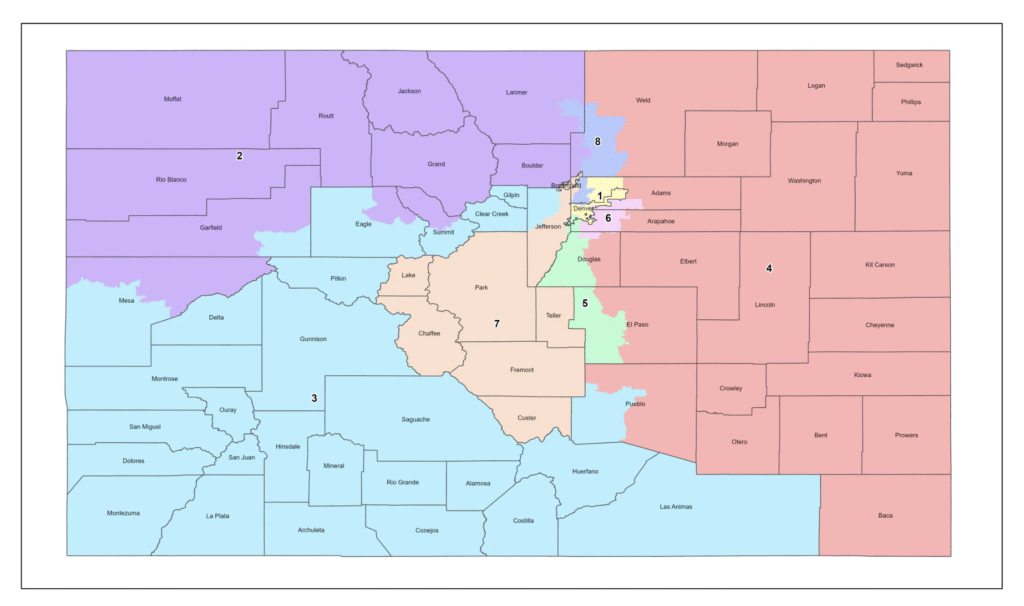
A proposed redistricting plan, which would give Colorado seven Democratic members of the U.S. House of Representatives and only one Republican, will split El Paso County into two parts and thereby weaken the county’s influence in Congress. El Paso County,...

Can deliberation save democracy? | Vince Bzdek
Vince Bzdek
vince.bzdek@gazette.com
Updated 7 hours ago
In September 2019, 523 Americans traveled to Dallas for an experiment called “America in One Room.” The gathering was designed to test a theory: Could representative citizens deliberate productively even in an era of intense polarization? The event focused on...
Redistricting scheme would give Colorado Democrats seven House members, split El Paso County | Bob Loevy
Bob Loevy
bob-loevy@coloradopolitics.com
Updated 2 days ago
A proposed redistricting plan, which could give Colorado seven Democratic members of the U.S. House of Representatives and only one Republican, would split El Paso County into two parts and thereby weaken the county’s influence in Congress. El Paso County,...

Is Trump a builder or just a latter-day headhunter? | SONDERMANN
By Eric Sondermann
by-eric-sondermann@coloradopolitics.com
Updated 4 days ago
It was well under 100 hours after President Donald Trump’s overly long, overly theatrical State of the Union speech that he unleashed American bombers across Iran. As I write, it is now less than 100 hours since those bombers started...
Pueblo board violates Open Meetings Law | Dennis Maes
Dennis Maes
dennis-maes@coloradopolitics.com
Updated 3 days ago
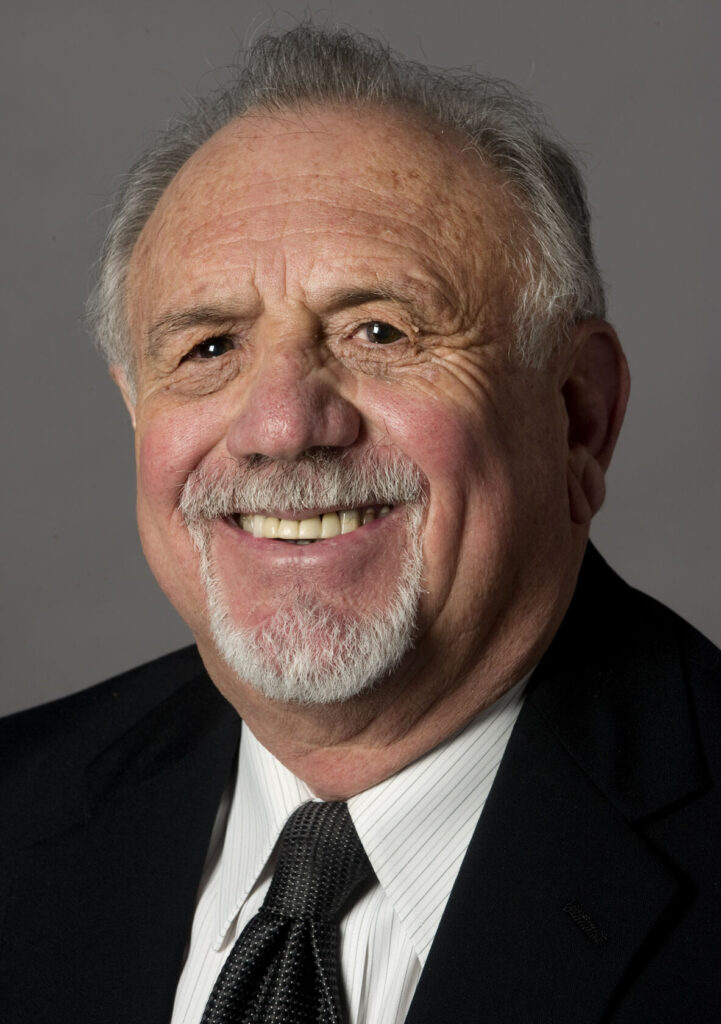
By Dennis Maes I recently witnessed two serious violations of the Colorado Open Meetings Law by the Pueblo Urban Renewal Authority (PURA) board. Both were brought to the attention of the board in an open meeting and entered on the...

Legislation would undermine educational opportunity | OPINION
Colorado Politics
colorado-politics@coloradopolitics.com
Updated 4 days ago
By Norton Rainey and Weston Kurz New legislation under consideration by Colorado lawmakers could have far-reaching consequences for Colorado students and families looking for new educational options. HB26-1292, currently under consideration by the Colorado General Assembly, would severely limit the...

Medicaid cuts for critical care hurts providers, reduces access to the best care for patients | OPINION
Colorado Politics
colorado-politics@coloradopolitics.com
Updated 4 days ago
By Gurdev Rai This year, the legislative session started with one thing on everyone’s minds: the state budget, and the major hole created by Congress’ HR 1 law. Costs, including for health care, have ballooned across the board, and we...
PREV
PREVIOUS

BIDLACK | Legislative workhorses at work
Hal Bidlack Ask most folks about our elected leaders and chances are quite good that there will be a general outcry of disappointment and anger. The US congress has a current approval rating of near 20%, or so, and roughly two-thirds of respondents hold a negative opinion. There have certainly been times when those low […]

The ‘1619 Project' is wrong — Lincoln stood for racial equality
Mark Hillman Nearly 160 years after Abraham Lincoln issued the Emancipation Proclamation, his place in history as “The Great Emancipator” of black slaves is firmly established. Nevertheless, a defense of Lincoln is a required response to the fallacy-ridden 1619 Project in which the New York Times seeks to rewrite American history through a racist lens. […]