

In marijuana case, state Supreme Court weighs appeal procedures
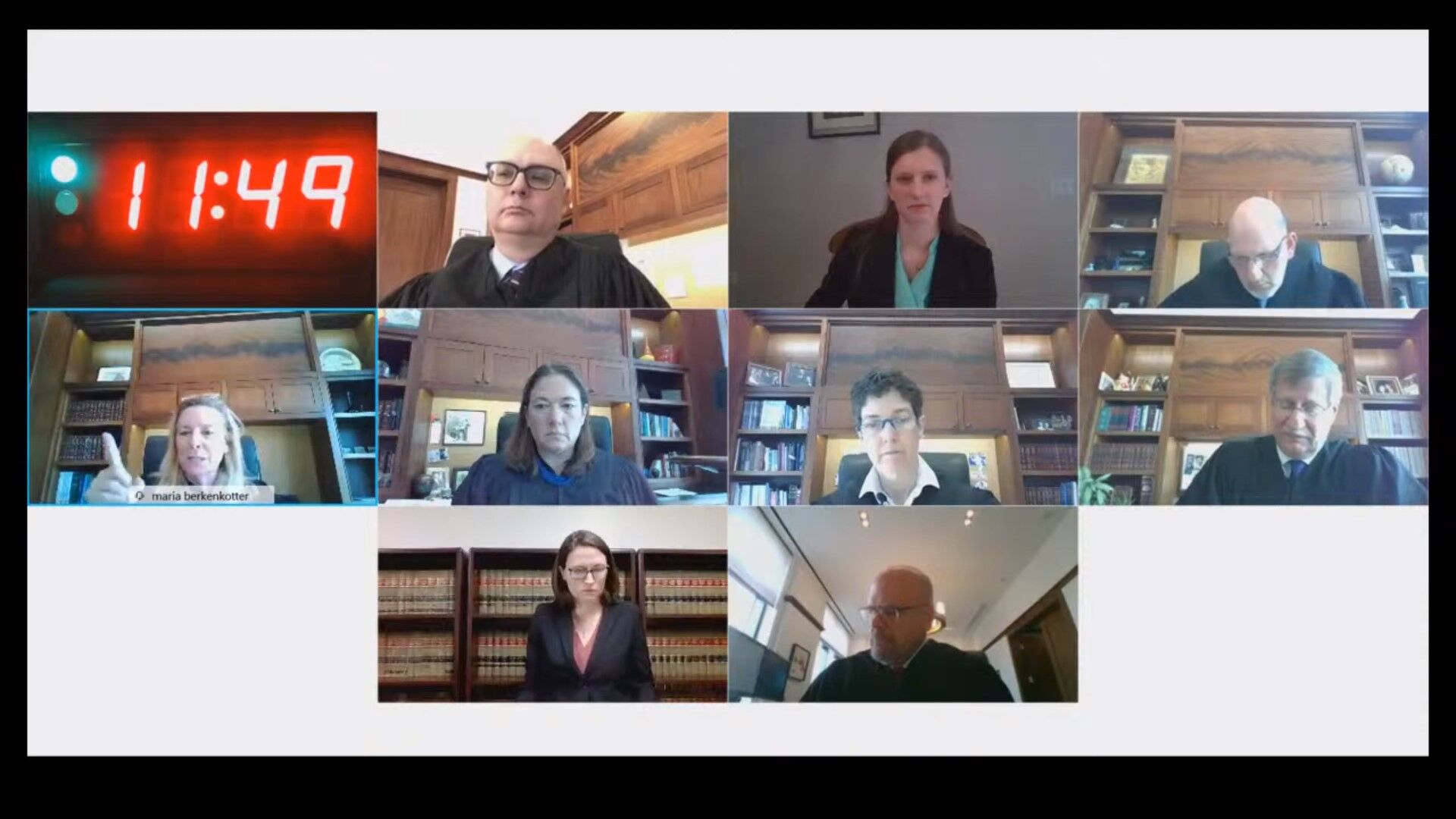
A case that began when two Denver police officers smelled marijuana in a parked car has morphed into a question about the kinds of arguments criminal defendants are allowed to make to the Colorado Supreme Court when prosecutors challenge a trial court’s ruling.
The Supreme Court’s decision will implicate how broadly or narrowly defendants can argue issues decided in favor of the government at the same time the government is appealing issues decided in favor of the defense.
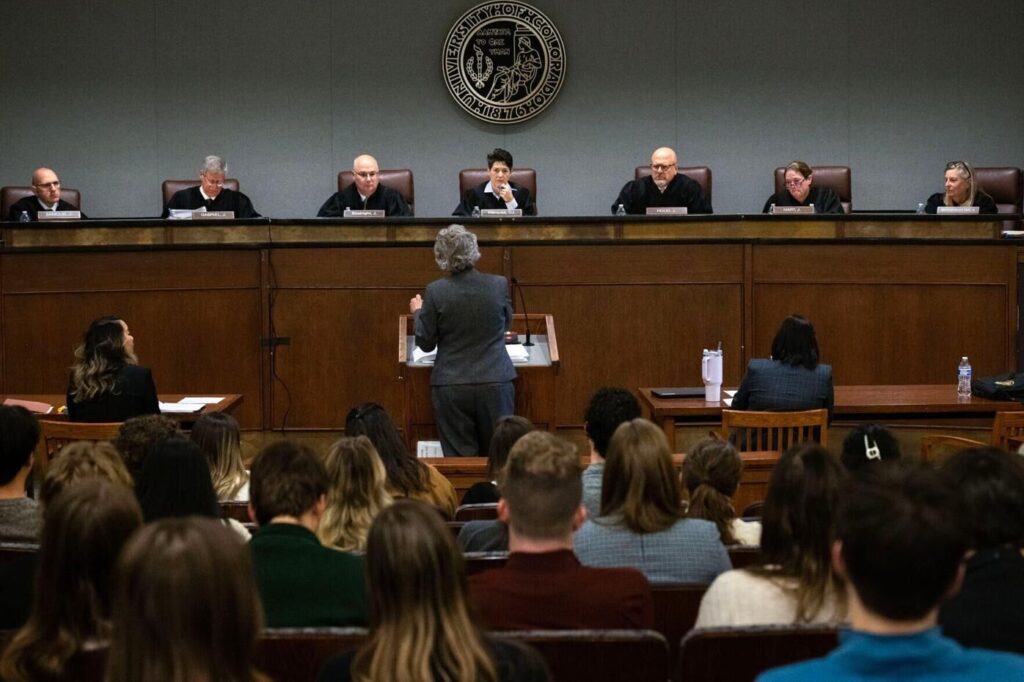
The legal points the justices considered during oral arguments on Tuesday were fairly technical. Prosecutors are able to appeal directly to the state’s highest court when a trial judge decides to suppress certain evidence. The rationale for such an interlocutory appeal – the name for appeals that occur while a case is in progress – is that the government cannot appeal an evidence-related decision after acquittal. A defendant, in contrast, can appeal their case following a conviction.
Because the rule governing interlocutory appeals, Rule 4.1, provides the pretrial appeal route for the benefit of the prosecution, the Denver District Attorney’s Office argued that defendant Alexander Brown could not “piggyback” his own disagreements with the trial judge’s decision onto the government’s appeal.
“Not only will that create delay,” Deputy District Attorney Richard F. Lee told the justices, “but the more issues that are raised in these interlocutory appeals, the more complicated and time consuming it will be for this court to sift through those issues and issue a decision.”
The underlying case stems from a discovery two Denver officers made in February 2020 inside the parking lot of an apartment complex. They spotted a vehicle involved in a hit-and-run, plus two other vehicles without license plates, which they suspected were stolen.
Nearby, Brown was sitting in a parked car with a woman. Although the officers looked up the license plate of Brown’s car and found nothing amiss, they spied smoke coming from the windows. The officers pulled their vehicle behind Brown’s and one of them, Jesus Galvan, smelled the odor of marijuana when he walked up to speak to Brown.
Galvan asked to search the car and Brown refused. Galvan reportedly responded that he would call for a drug-detection dog. The officer went to his patrol car, learned a dog was unavailable, and returned to Brown’s vehicle. At that point, Brown conceded he had marijuana. Galvan responded he was more concerned with firearms. When Galvan pressed the issue, Brown agreed the officer could search Brown’s person and his car.
The woman in the passenger seat indicated she wanted to return to her apartment, but the second officer patted her down and found a gun. Brown immediately acknowledged the gun was his, after which the officers arrested him. Prosecutors charged him with the possession of a weapon by a prior offender.
District Court Judge Jay S. Grant determined that the police did not have reasonable suspicion of a crime when they detained Brown. He ruled the police had turned the encounter into an investigatory stop when Galvan told Brown he was calling for a drug-sniffing dog. Grant ordered Brown’s statements after that point to be suppressed, which is the protocol for evidence obtained contrary to constitutional requirements.
The district attorney’s office appealed the suppression order to the Supreme Court using Rule 4.1, which compels the justices to decide the issue with a written opinion. The prosecution claimed that because public consumption of marijuana is illegal, the officers had not only reasonable suspicion, but had actually witnessed a crime based on what they saw and smelled in Brown’s car.
The public defender’s office countered that being in a vehicle in a privately-owned parking lot with no one around did not mean Brown was consuming marijuana publicly. However, the defense raised its own challenge on appeal: that Grant had mistakenly found the initial encounter between Brown and Galvan to be consensual, even though the officer had parked his vehicle directly behind Brown’s from the beginning.
“No reasonable person placed in that position would feel that they were free to leave when placed in that position, and certainly a young black man such as Mr. Brown would not feel free to leave,” wrote Deputy State Public Defender K. Alexis Sheek.
That prompted the Supreme Court to wonder whether it was allowed to consider Brown’s alternative reason for why the evidence should be suppressed. It asked the parties to address that issue, as well as the effect such alternative arguments could have “on judicial economy in the trial courts and this court.”
Lee, arguing on behalf of the Denver District Attorney’s Office, indicated defendants will frequently raise multiple reasons for why trial courts should suppress evidence.
“It’s not a question of whether in this case it wouldn’t be all that time-consuming to address a single issue,” Lee said, referring to the dispute over whether the encounter was consensual. “The question is whether the court should be obligated to address all of these alternative grounds in every case that comes up.”
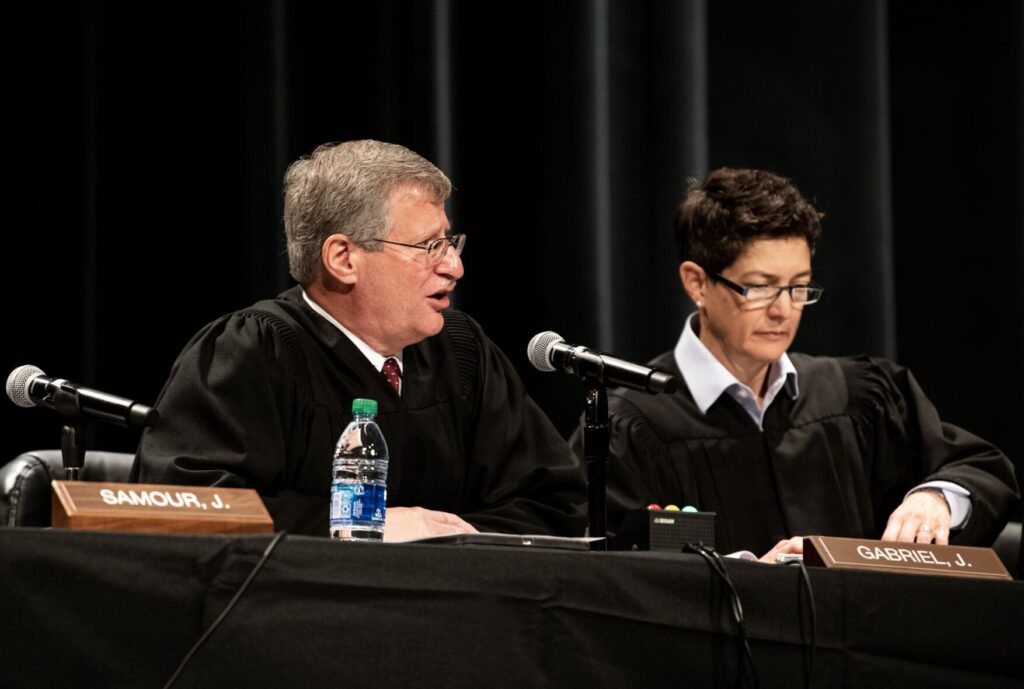
Justice William W. Hood III wondered if it was acceptable to consider alternative arguments when they pertained to the same underlying issue.
“Here, we have a determination made that there was lack of reasonable suspicion. So it seems that the only difference really is when the lack of reasonable suspicion existed, when that should kick in,” he said.
Justice Monica M. Márquez felt similarly, observing that Brown “framed the issue as there was not reasonable suspicion for the stop, and in fact the stop occurred the moment that the police blocked in the defendant’s vehicle. So I’m wondering whether this ‘separate claim’ about the initial encounter was ever a separate claim.”
On the other hand, Márquez questioned the public defender’s office about why defendants should be able to bog down a prosecution’s interlocutory appeal with their own challenges to a ruling.
“Why isn’t this gonna open a giant can of worms?” she said. “It seems that allowing the consideration of alternative arguments on (interlocutory appeals) from the defendant will in fact incentivize the defendant to raise everything under the sun.”
Hood speculated that a ruling in Brown’s favor could have the opposite effect. Prosecutors, he said, may have the incentive to work out evidentiary issues at the trial court so as to avoid a complex interlocutory appeal.
“There’s this overarching sort of policy debate about what kind of world we’d be creating and how problematic this would become for trial courts and for us,” Hood said, when in fact the effects might be minimal.
Brown’s attorneys added that the Supreme Court also has the discretion to decide which arguments to consider, meaning it could reject those without merit.
The case is People v. Brown.


Justice Hart to leave Supreme Court, new recs from Access to Justice Commission | COURT CRAWL
Michael Karlik
michael.karlik@coloradopolitics.com
Updated 6 hours ago
Welcome to Court Crawl, Colorado Politics’ roundup of news from the third branch of government. A member of the Colorado Supreme Court unexpectedly announced her retirement from the bench, plus the state’s Access to Justice Commission has made recommendations following...

Judge denies AstraZeneca’s bid to block Colorado drug discount law
Marissa Ventrelli
marissa.ventrelli@coloradopolitics.com
Updated 7 hours ago
A Colorado district court judge denied drug manufacturer AstraZeneca’s request for an injunction to block enforcement of a recent law barring drug manufacturers from imposing restrictions on covered entities to obtain drugs under a federal discount program. The law states...
Colorado Supreme Court finds judge mistakenly barred evidence over officer’s failure to unmute body cam
Michael Karlik
michael.karlik@coloradopolitics.com
Updated 10 hours ago
A Fremont County judge incorrectly barred evidence from being used against a defendant based upon a Cañon City officer’s failure to unmute his body-worn camera, the Colorado Supreme Court decided on Monday. Under a comprehensive police accountability law enacted in 2020,...
Colorado Supreme Court holds municipal sentences may not be greater for identical state crimes
Michael Karlik
michael.karlik@coloradopolitics.com
Updated 7 hours ago
The Colorado Supreme Court ruled on Monday that municipalities may not subject defendants to sentences that are harsher under their own ordinances than for identical offenses under state law. In the Dec. 22 opinion, Chief Justice Monica M. Márquez noted...
Divided appeals court nullifies defendant’s $37,000 restitution obligation due to faulty order
Michael Karlik
michael.karlik@coloradopolitics.com
Updated 3 days ago
Colorado’s second-highest court concluded on Thursday that a defendant has no obligation to pay nearly $37,000 in crime victim restitution due to a faulty order that even the trial judge acknowledged was contrary to the law. In Colorado, as part...

Federal court issues injunction on Colorado gas stove labels law
Marissa Ventrelli
marissa.ventrelli@coloradopolitics.com
Updated 7 hours ago
A federal judge in Denver has issued an injunction blocking enforcement of a newly enacted state law that would have required retailers to place labels on gas-fueled stoves with warnings about their potential effects on air quality. The law, House...
Justice Melissa Hart to step down from Colorado Supreme Court
Michael Karlik
michael.karlik@coloradopolitics.com
Updated 3 days ago
Justice Melissa Hart will step down from the Colorado Supreme Court effective Jan. 5, the Judicial Department announced unexpectedly on Friday. Hart has been on an unexplained and unusual leave of absence from the court since Oct. 28. She told Colorado Politics...
Colorado Supreme Court may address ‘new form of representation’ in criminal case
Michael Karlik
michael.karlik@coloradopolitics.com
Updated 2 days ago
The Colorado Supreme Court signaled last week that it may get involved in an ongoing Denver criminal proceeding in which the prosecution alleges a trial judge sidestepped the clear rules for appointing defense counsel. At least four of the court’s...
Justices debate what to do when governments withhold key info from plaintiffs
Michael Karlik
michael.karlik@coloradopolitics.com
Updated 3 days ago
Members of the Colorado Supreme Court seemed to be on different pages when they considered on Tuesday whether a woman injured by a sidewalk defect in Manitou Springs was forever barred from suing the actual entity responsible because she did...

Colorado justices splinter over approach to sentencing review
Michael Karlik
michael.karlik@coloradopolitics.com
Updated 1 day ago
Members of the Colorado Supreme Court were divided on Monday about whether vehicular homicide stemming from intoxicated driving is “grave and serious” in every possible scenario, with two justices suggesting the court reconfigure its approach for determining the proportionality of...
PREV
PREVIOUS

Jefferson County negotiating separation with health director who resigned after closed-door meeting
Jefferson County is negotiating separation terms with its former public health director, who resigned Monday after a two-hour, private meeting with the county’s health board. The board of health accepted Dawn Comstock’s resignation after the closed-door meeting, board chair Cheri Jahn said in a statement. Comstock was named executive director of Jefferson County Public Health […]

Douglas County school board members say former superintendent divided the community
Two Douglas County school board members who voted to fire former Superintendent Corey Wise appeared on Fox News earlier this week to defend their positions. School board President Mike Peterson and board member Kaylee Winegar told the national TV audience that Wise divided the community and they didn’t believe his views would ever align with […]