

10th Circuit rebuffs churches’ challenge to Colorado’s early COVID-19 restrictions
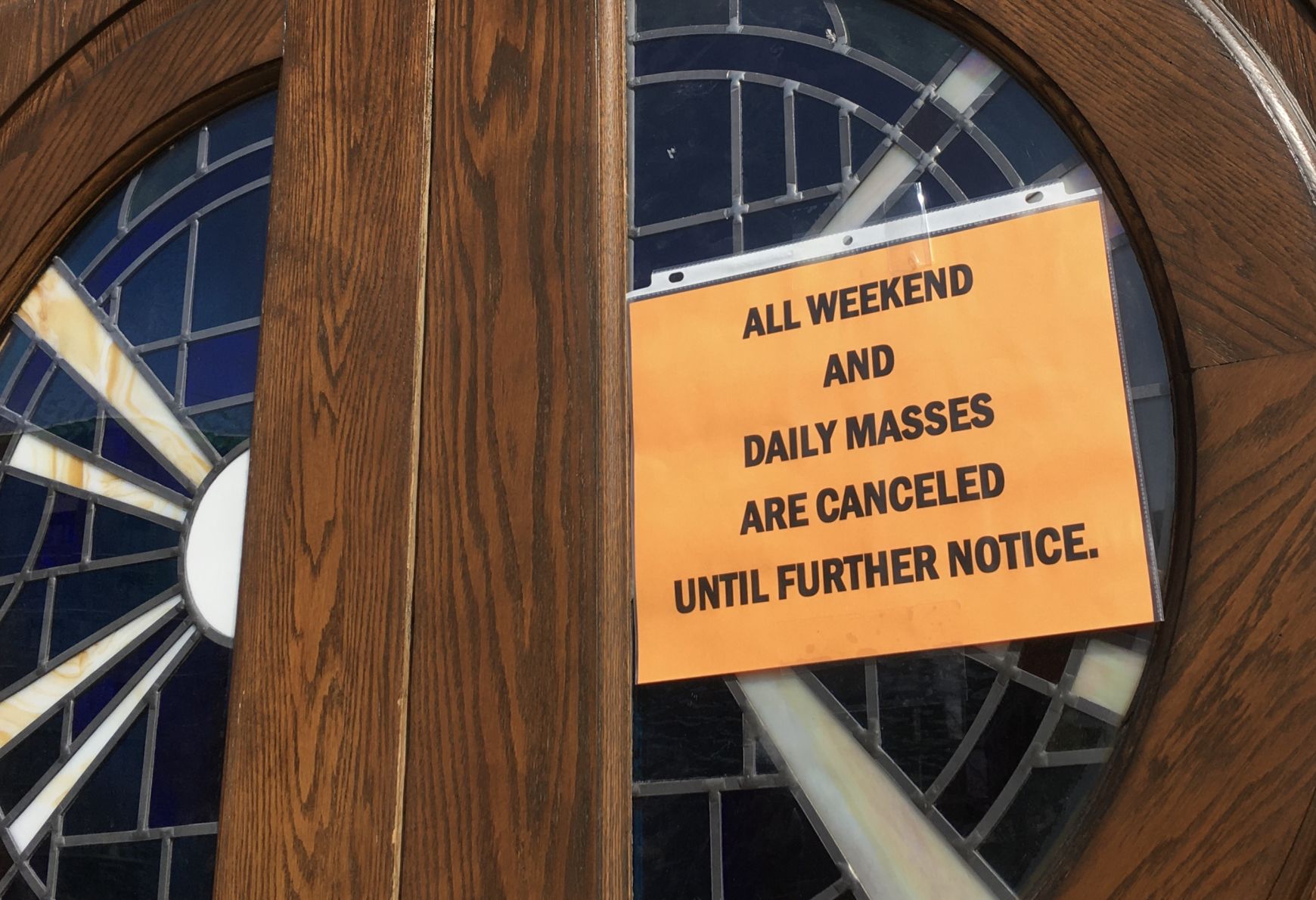
The federal appeals court based in Denver has rejected a challenge by two suburban churches to Colorado’s previous COVID-19 mitigation measures, deeming it unlikely that the state would reimpose capacity restrictions or distancing requirements even amid elevated infection rates.
Denver Bible Church of Wheat Ridge and Community Baptist Church of Brighton sued the state and federal governments in August 2020 and succeeded in receiving an exemption to the face-covering and capacity mandates in place at the time. But the plaintiffs subsequently failed to get the U.S. Court of Appeals for the 10th Circuit and the U.S. Supreme Court to agree to block the enforcement of any further public health orders against the churches.
Now, a three-judge panel for the 10th Circuit has deemed the original claims moot in light of developments in the intervening 17 months.
“Here, the state contends that there is no reasonable expectation it will ever reinstate the challenged COVID-19 restrictions against plaintiffs,” wrote Judge Nancy L. Moritz in the Jan. 24 order. Instead, “the state has continued to decrease restrictions over time, even when faced with increasing COVID-19 cases.”
The churches had pursued their legal challenge to Colorado’s COVID-19 mitigation policies even as one of the plaintiffs in the lawsuit, Pastor Bob Enyart of Denver Bible Church, died last year from COVID-19. He refused to get vaccinated.
Originally, the plaintiffs alleged that Gov. Jared Polis exceeded his authority under the Colorado Disaster Emergency Act by issuing executive orders aimed at curbing the spread of the novel coronavirus. They claimed the governor’s actions and the related public health orders suppressed attendance at worship services, restricted how pastors could interact with their congregations and amounted to a First Amendment violation.
“If plaintiffs comply with the mandates contained in the orders, they violate their sincerely held religious beliefs and if they do not comply, they pay a heavy price,” the lawsuit claimed.
Shortly afterward, U.S. District Court Judge Daniel D. Domenico granted a temporary restraining order, preventing the state from enforcing masking requirements and capacity restrictions against the two churches. He did not question the science behind the public health orders but observed that houses of worship were subject to a more restrictive set of guidelines than businesses the state deemed critical.
Not all of the state’s religious leaders welcomed the decision. Three Christian bishops immediately declared their support for the public health orders in the wake of Domenico’s order.
Even with the churches’ victory, their other claims gained no traction at the district court level. Those included allegations that Polis’ orders were unconstitutionally vague, that the public health directives violated the churches’ due process rights and that the disaster emergency law itself was unconstitutional. Among their arguments, the plaintiffs compared the COVID-19 restrictions for faith houses to forced sterilization and Nazi gas chambers.
The churches appealed to the 10th Circuit and the Supreme Court seeking to block enforcement of any emergency orders that applied to faith houses, but were rebuffed each time.
The 10th Circuit’s decision on Monday resolved all of those claims in the government’s favor, finding the disaster emergency law is likely constitutional and that all of the other legal challenges are moot. The attorney for the plaintiffs, Rebecca Messall, told the appellate panel during oral arguments in November that the possibility still existed of another executive order re-imposing masking or distancing requirements.
“Tomorrow if there’s a whiff of smoke from Larimer County or there’s a presence of a new, COVID-like virus, the governor can implement the same things at any time. There’s no stopping him,” she said.
“If that were the standard, we would never have mootness as long as the governor can issue an executive order, and that’s not correct,” Moritz responded. She added that evaluating the mootness of the claims required asking whether Colorado had revoked the challenged COVID-19 restrictions only for the purpose of getting the lawsuit thrown out of court.
“You’re not suggesting they let these orders expire just so they could resume their illegal conduct after this lawsuit?” Moritz pressed.
Messall declined to answer.
“This whole regime has no due process for anybody, and it’s just considered an afterthought or not a thought,” she insisted.
The state maintained that a set of Supreme Court decisions had since clarified the scope of COVID-19 restrictions on houses of worship, and Colorado had reacted accordingly. Further, the attorney general’s office said, Colorado issued public health orders in the first place because those were the tools it had to slow the spread of the virus prior to the availability of vaccines.
“The state’s strategy has shifted. It’s shifted away from imposing these non-pharmaceutical interventions to increasing vaccination rates,” argued Assistant Attorney General Ryan K. Lorch. Although the oral argument took place amid last year’s surge of the delta variant, Lorch said “there is no constant threat that appellants will be subject to the same types of challenged public health measures that they challenged in August 2020.”
The panel found that argument persuasive.
The most recent public health order, while addressing face covering and COVID-19 testing in certain scenarios, did not apply to faith houses. In fact, it specifically exempted worship services from a proof-of-vaccination requirement.
Polis has for months resisted enacting mask mandates or other public health orders that would alter daily life for most Coloradans, even amid surges in cases from the delta and omicron variants. As hospital beds filled in the fall, the governor shifted his attention from public health orders to pushing for vaccinations and sending relief to hospitals.
At the time, the governor’s more hands-off posture put him at odds with physicians and public health officials elsewhere, but Polis has consistently maintained that the state’s role in controlling the spread of the virus has largely ended.
Moritz noted in the decision that an absence of further restrictions on churches, even as infection rates reached their highest point ever due to the omicron variant, “underline[s] the strength of the state’s position that it is not reasonably likely to reimpose pandemic-related restrictions on plaintiffs.”
The 10th Circuit also rejected the churches’ claims against the U.S. government, finding no connection between federal COVID-19 aid to Colorado and any purported violation of their religious rights.
Attorneys for Denver Bible Church and Community Baptist Church declined to comment.
The case is Denver Bible Church et al. v. Polis et al.
Gazette staff writer Seth Klamann contributed to this report.


Colorado justices skeptical of appellate court’s limitation on prosecution’s appeal
Michael Karlik
michael.karlik@coloradopolitics.com
Updated 19 hours ago
The Colorado Supreme Court seemed skeptical on Tuesday that Denver prosecutors should be barred from appealing a trial judge’s permanent dismissal of a criminal case, based upon the sequence of events after the original ruling. Prosecutors charged Quinn M. Jebe...
Federal judge: Government violated order shielding man from deportation in ‘one-off mistake’
Michael Karlik
michael.karlik@coloradopolitics.com
Updated 20 hours ago
A federal judge acknowledged on Thursday that the government violated his order by deporting a man in immigration detention during his pending court case, but it “serves nobody’s interests” to require the government to return him. On Feb. 18, Tesfami...
Colorado Supreme Court lifts curtain on decision-making at legal event
Michael Karlik
michael.karlik@coloradopolitics.com
Updated 23 hours ago
Members of the Colorado Supreme Court sat down with lawyers on Wednesday to answer questions about behind-the-scenes topics, including what happens immediately after an appeal is argued, why they might intervene in an ongoing case, and the consequence of a...
Colorado’s newest federal judge speaks about techniques for advancing cases
Michael Karlik
michael.karlik@coloradopolitics.com
Updated 2 days ago
U.S. Magistrate Judge Cyrus Y. Chung described on Wednesday the various tactics he employs to resolve court cases, summing up his role with a laxative-based metaphor. “Someone told a group of us federal magistrate judges that magistrate judges are the...

Federal judge hears ICE agents’ confusion about law, injunction on warrantless arrests
Michael Karlik
michael.karlik@coloradopolitics.com
Updated 3 days ago
A federal judge heard testimony on Tuesday from U.S. Customs and Immigration Enforcement agents in Colorado, who had trouble describing the requirements of his recent injunction and the training they received on making warrantless arrests pursuant to the law. On...

10th Circuit dismisses challenge to Colorado legislature’s decorum rules
Michael Karlik
michael.karlik@coloradopolitics.com
Updated 2 days ago
The Denver-based federal appeals court concluded on Tuesday that Colorado lawmakers cannot be sued for creating and enforcing rules of decorum that circumscribe the public commentary allowed at legislative committee hearings. A three-judge panel of the U.S. Court of Appeals...
Colorado Supreme Court blocks ballot initiative defining ‘fees’
Michael Karlik
michael.karlik@coloradopolitics.com
Updated 4 days ago
The Colorado Supreme Court blocked a proposed ballot initiative on Monday that would have required voter approval for new fees above a certain threshold, while also enshrining a definition of “fee” into the state constitution for the first time. Chief...
Colorado justices, by 5-2, say Longmont detective did not violate suspect’s Miranda rights
Michael Karlik
michael.karlik@coloradopolitics.com
Updated 4 days ago
The Colorado Supreme Court’s majority ruled on Monday that a Longmont detective did not coerce a suspect into talking by making references to how a judge would look at his character, and by suggesting he may get out of prison...
Colorado justices find Fort Collins police lacked probable cause to arrest suspect in park
Michael Karlik
michael.karlik@coloradopolitics.com
Updated 4 days ago
The Colorado Supreme Court agreed on Monday that Fort Collins police lacked probable cause to arrest a man for a child sex offense based on his presence in a public park around the time they intended to meet with their...

Supreme Court to hold oral arguments, discipline commission releases report | COURT CRAWL
Michael Karlik
michael.karlik@coloradopolitics.com
Updated 4 days ago
Welcome to Court Crawl, Colorado Politics’ roundup of news from the third branch of government. The state Supreme Court is holding oral arguments this week, plus Colorado’s judicial discipline commission released its annual report. Colorado Supreme Court news • The Supreme...
PREV
PREVIOUS
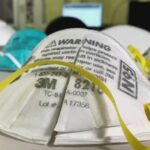
Denver recreation centers begin distributing KN95, surgical masks
Denver residents can now pick up to five free KN95 and surgical masks at the city’s recreation centers. The city’s Department of Parks and Recreation has received 100,000 masks to dole out across 29 facilities in Denver. Each resident can take up to five masks, which are free and available “while supplies last,” the city […]

Ellen Kessler accuses 'lazy' and 'nasty' ranchers of wolf 'bait' to get reimbursement
Animal rights activist Ellen Kessler, a gubernatorial appointee to the State Board of Veterinary Medicine, is back in the news with what rural Coloradans and their allies claim is another attack on ranchers. Kessler, appointed to the state vet board in 2020, has earned the wrath of ranchers and farmers for what they view as […]