

OUT WEST ROUNDUP | Rare insects need snowfields; Utah park to require timed tickets
MONTANA
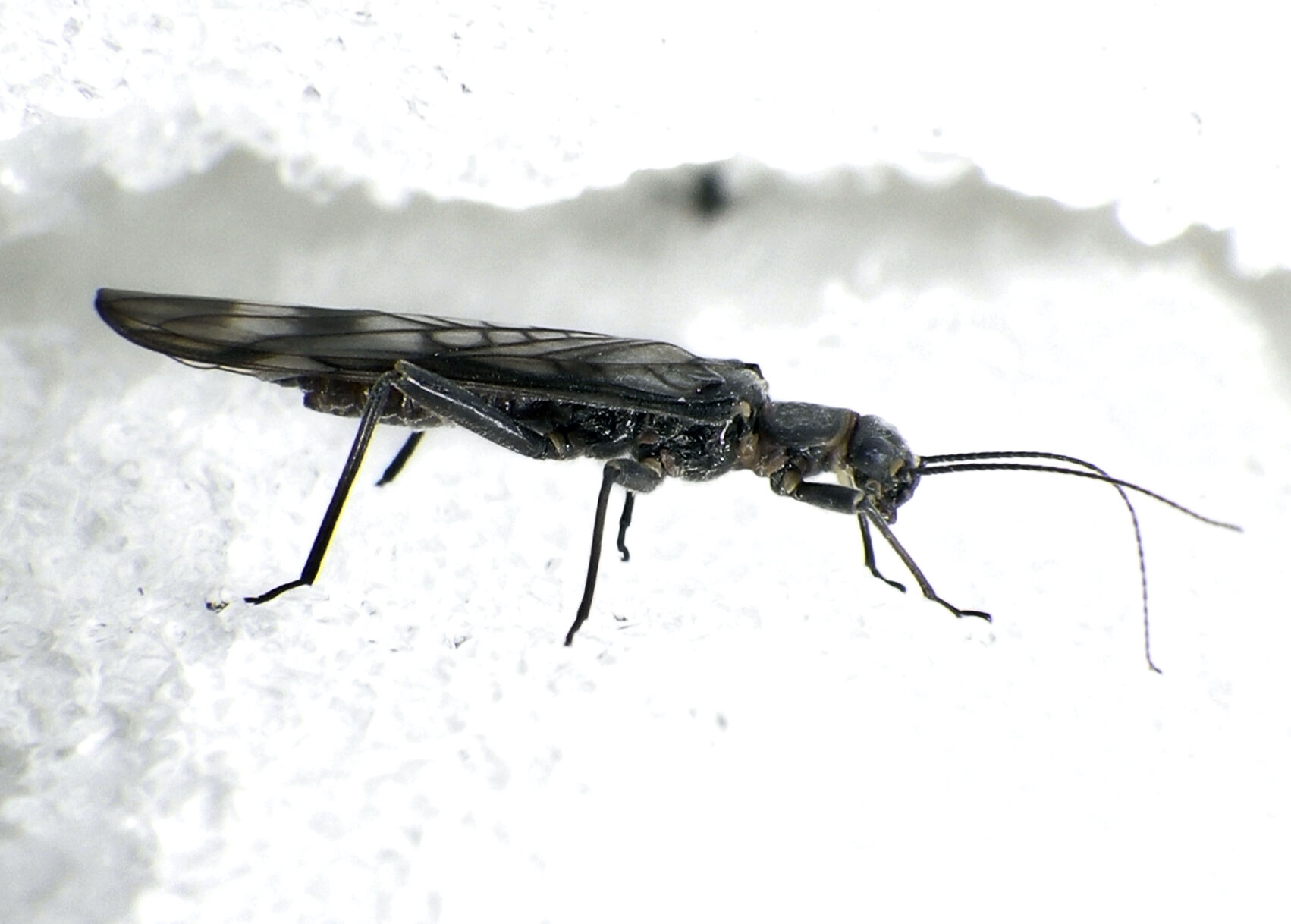
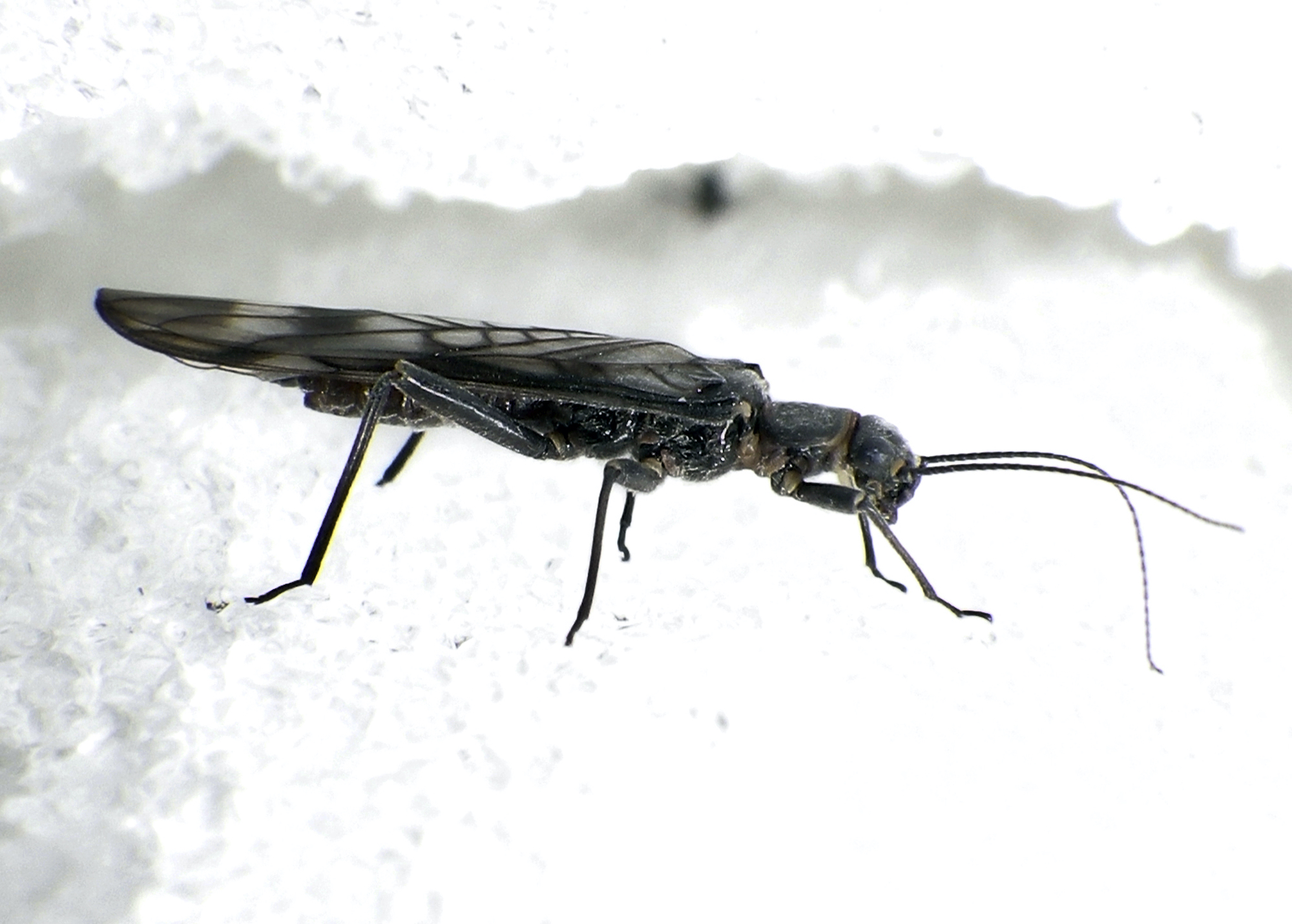
Rare Rocky Mountain insects will need snowfields to survive
HELENA – Federal wildlife officials say two species of rare insects in the Rocky Mountains will need several thousand acres of glaciers and snowfields if they are to survive a warming world that’s threatening them with extinction.
The western glacier stonefly and the meltwater lednian stonefly live in streams that flow from melting glaciers and snowfields. Scientists say the insects are not doing well and face continued declines as they lose a projected 80% of their habitat in Glacier National Park by 2030.
The stoneflies’ peril underscores the threat climate change poses worldwide to mountaintops that are “biodiversity hotspots” – home to a rich variety of plants, animals and insects that scientists are still learning about.
The two species live in and around Glacier National Park in Montana, Waterton Lakes National Park in Alberta, Canada, and Native American tribal lands in western Montana. More recently, they’ve been found in streams in Wyoming’s Grand Teton National Park and the Absaroka-Beartooth Wilderness in Montana and Wyoming.
They are mostly found in steep, remote areas that are hard to reach and away from backcountry trails.
A new draft recovery plan from the U.S. Fish and Wildlife Service suggests the possible transplant of some of the insects to new areas, exploring ways to artificially propagate populations and research into the stoneflies’ heat tolerance.
The wildlife service listed them as a threatened species in 2019 after being sued by environmentalists to act. To be safe from continued decline, the agency says the two species each need at least 3,087 acres of glaciers and snowfields. That’s about how much meltwater habitat the insects had in northwestern Montana in 2005, but much has since been lost.
Nature reserve buys ranch, grows to more than 700 sq miles
BILLINGS – A privately-owned nature reserve that’s trying to build a Connecticut-sized park where bison and other wildlife can freely roam on the U.S. Northern Plains says it is purchasing a 50-square mile ranch that abuts the Charles M. Russel National Wildlife refuge.
The deal for the 73 Ranch in Central Montana along the Musselshell River expands the size of the American Prairie Reserve to more than 700 square miles. The purchase price was not disclosed, The Billings Gazette reported.
Since 2001, the reserve has been trying to stitch together millions of acres of adjoining public and private lands to create a vast wildlife preserve.
The U.S. Bureau of Land Management attempted to buy the 73 ranch in August, in part to provide access to landlocked areas hunters were anxious to reach. The deal fell through after a government-ordered appraisal did not meet the seller’s terms.
The reserve has more than 800 bison and has said it plans to increase its herds to thousands of animals in coming decades.
A decision from federal officials is pending on the reserve’s proposal to alter grazing leases for its bison on property it leases north of the Missouri River. The proposal has been strongly opposed by many property owners in the area and Republicans including Gov. Greg Gianforte.
UTAH
Arches National Park to require timed tickets
SALT LAKE CITY – A Utah national park famed for its otherworldly sandstone arches will require visitors to get timed entry tickets during its high season next year, the second Utah park to implement such a system as visitation swells.
Arches National Park officials said on Dec. 10 they’re not trying to decrease the number of visitors during the six-month period, but rather spread them out over the course of the day. The announcement came a week after nearby Zion National Park said it would require reservations to hike the famed cliffside Angels Landing trail.
At Arches, visitation skyrocketed 66% over the last decade, and is on track to break another record this year with nearly 1.7 million visitors as of the end of October, said park spokesperson Kait Thomas. At times, Arches has gotten so crowded officials have had to close the gates for hours at a time to delay entry.
Tickets will be available for a total of 2,700 vehicles per day, about the average number on a busy day in 2019, she said.
The system will only be in place between April and October next year, and tickets are only required from 6 a.m. to 5 p.m. People can enter without a ticket outside those hours and months.
Reservations cost $2 apiece and can be booked on a first-come, first-served basis on the website recreation.gov starting Jan. 3.
Arches is located in southern Utah and known for its sandstone arches, the most famous of which is Delicate Arch, a soaring formation that’s featured on many Utah signs and license plates.
NEW MEXICO
UNM to appeal allowing grad student workers to unionize
ALBUQUERQUE – The University of New Mexico plans to appeal a ruling that graduate student employees can unionize.
The Albuquerque Journal reported on Nov 28 that UNM has filed notice of intent to appeal in 2nd Judicial District Court.
Cinnamon Blair, a university spokeswoman, said UNM wants a “correct and thorough legal examination of the issues” by the courts.
University graduate student workers first petitioned for union recognition in December 2020. A hearing officer on the the state Public Employees Labor Relations Board determined that graduate students were not regular employees because their jobs last for a semester.
Graduate students filed an appeal. Both sides made arguments in front of the board. In August, the board sided with the student workers. Earlier this month, the board called for graduate student workers to do a “card check” and see if a majority wanted to unionize.
Blair says the notice of appeal is not meant to reflect negatively on the value of graduate student employees.
Chile Drop back to spice up New Year’s Eve
LAS CRUCES – Organizers say the annual Chile Drop will return to Plaza de Las Cruces this year for an in-person celebration to ring in 2022.
The celebratory event was held virtually last year as COVID-19 spread during the winter months. It was prerecorded and aired Dec. 31 for viewers.
This year, live music, food and entertainment will be offered on New Year’s Eve in downtown Las Cruces. Main Street will be blocked off around the plaza so the event will be pedestrian friendly.
Coronavirus-safe protocols put in place by the state for outdoor events will be followed, event coordinator Russ Smith said. That means masks are not required in outdoor settings.
One change this year will be how the color of the chile is determined. In previous years, when the clock struck midnight on Jan. 1, the large chile encircled with lights would turn red or green or a combination of both, which is known as Christmas in New Mexico. This year, coordinators decided to let residents vote on their preferred color online by scanning a QR code. Voting will continue through 11 p.m. New Year’s Eve.
Voters have the option of choosing red or green. Smith said they have had people voice opinions that the chile should turn other colors such as pink or orange, but officials with Downtown Las Cruces Partnership decided to stick with the colors from New Mexico’s famous question – red or green?

Colorado open records reform bill dies in Senate committee
Marianne Goodland
marianne.goodland@coloradopolitics.com
Updated 12 hours ago
Efforts to overhaul Colorado’s open records law have stalled again. Senate Bill 107, which would have extended response times for public records requests and added accountability measures for late responses, failed to advance out of its first committee and will...

Colorado Supreme Court blocks ballot initiative defining ‘fees’
Michael Karlik
michael.karlik@coloradopolitics.com
Updated 12 hours ago
The Colorado Supreme Court blocked a proposed ballot initiative on Monday that would have required voter approval for new fees above a certain threshold, while also enshrining a definition of “fee” into the state constitution for the first time. Chief...

Colorado joins multi-state call to keep ICE away from polling locations
Jacob Mauk
jacob.mauk@denvergazette.com
Updated 9 hours ago
Colorado Secretary of State Jena Griswold announced Monday that the state has formally requested written confirmation from the Department of Homeland Security that ICE agents will not be stationed at polling locations during the 2026 election cycle, according to a...
Colorado prostitution decriminalization bill shelved after sponsor says it lacks votes
Marianne Goodland
marianne.goodland@coloradopolitics.com
Updated 11 hours ago
A bill that would have decriminalized prostitution in Colorado will not move forward this year after its sponsor said it lacks the votes to pass its first committee. Sen. Nick Hinrichsen, a Pueblo Democrat, said he will ask to postpone...

GOP senators push back against Schumer’s ‘Jim Crow 2.0’ description of SAVE Act
Asher Notheis, Washington Examiner
asher.notheis.washington.examiner@gazetteedit.wpenginepowered.com
Updated 13 hours ago
Sens. Rick Scott (R-FL) and Mike Lee (R-UT) pushed back on Senate Minority Leader Chuck Schumer’s (D-NY) framing of the SAVE America Act as “Jim Crow 2.0” on Sunday. President Donald Trump announced Sunday that he will not sign any...

Rubio warns US will no longer tolerate ‘hostage diplomacy,’ claims Iranian military is ‘being eviscerated’
Timothy Nerozzi, Washington Examiner
timothy.nerozzi.washington.examiner@gazetteedit.wpenginepowered.com
Updated 14 hours ago
Secretary of State Marco Rubio is warning hostile state actors, Iran in particular, that the United States will no longer engage in “hostage diplomacy.” Rubio made the remarks ahead of a flag-raising ceremony at the State Department to mark U.S....
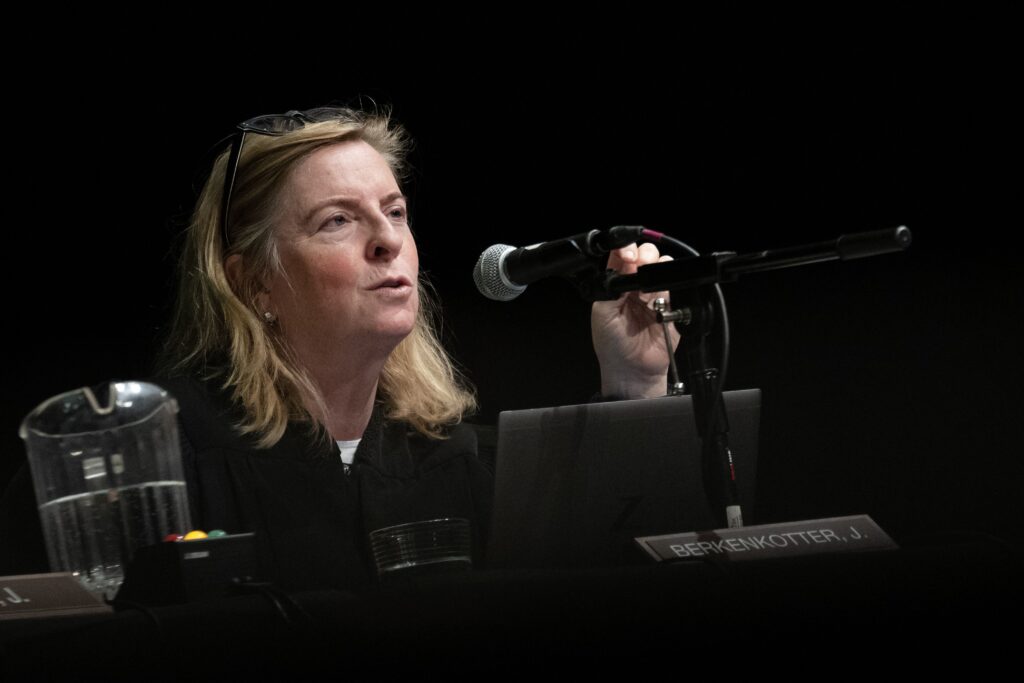
Colorado justices, by 5-2, say Longmont detective did not violate suspect’s Miranda rights
Michael Karlik
michael.karlik@coloradopolitics.com
Updated 14 hours ago
The Colorado Supreme Court’s majority ruled on Monday that a Longmont detective did not coerce a suspect into talking by making references to how a judge would look at his character, and by suggesting he may get out of prison...
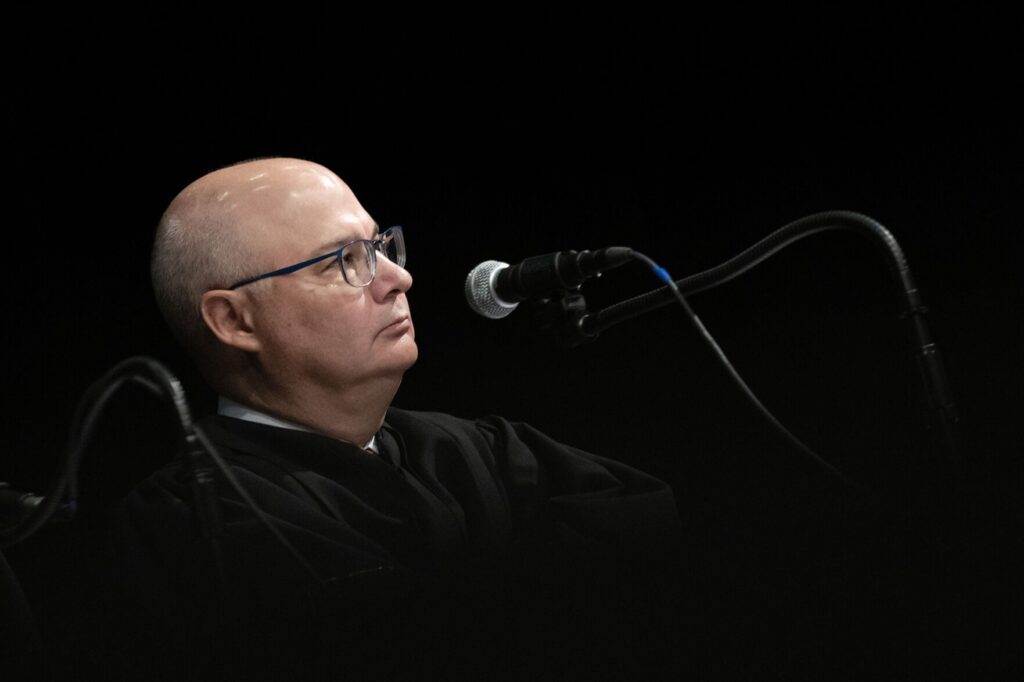
Colorado justices find Fort Collins police lacked probable cause to arrest suspect in park
Michael Karlik
michael.karlik@coloradopolitics.com
Updated 16 hours ago
The Colorado Supreme Court agreed on Monday that Fort Collins police lacked probable cause to arrest a man for a child sex offense based on his presence in a public park around the time they intended to meet with their...

Colorado board delays vote on banning soda purchases with SNAP benefits
Marissa Ventrelli
marissa.ventrelli@coloradopolitics.com
Updated 15 hours ago
The Colorado Board of Human Services voted to delay its decision on whether to allow Supplemental Nutrition Assistance Program recipients to use benefits to buy soft drinks. Under the “Healthy Choice Waiver,” SNAP recipients would be prohibited from using benefits...

Supreme Court to hold oral arguments, discipline commission releases report | COURT CRAWL
Michael Karlik
michael.karlik@coloradopolitics.com
Updated 18 hours ago
Welcome to Court Crawl, Colorado Politics’ roundup of news from the third branch of government. The state Supreme Court is holding oral arguments this week, plus Colorado’s judicial discipline commission released its annual report. Colorado Supreme Court news • The Supreme...
PREV
PREVIOUS
SONDERMANN | 2021: The year-end mode is an ode
Eric Sondermann To 2021, we bid a not so fond adieu The prevailing sentiment having been a distinct boo-hoo. Though, for most, it was better than the year before Few will shed a tear in showing it the door. It started with quite the bang on January 6th Trump inciting his crowd to overturn an […]

National Western Stock Show back in the saddle for 2022
After the 2021 National Western Stock Show was canceled for only the second time in its 116-year history, the state’s agricultural community and Denver residents are chomping at the bit for its return Jan. 8. “It’s part of the fabric of Colorado,” said Paul Andrews, the event’s president and CEO. “If you live in Colorado, […]