

State Supreme Court says man’s post-arrest conduct cannot count toward resisting arrest
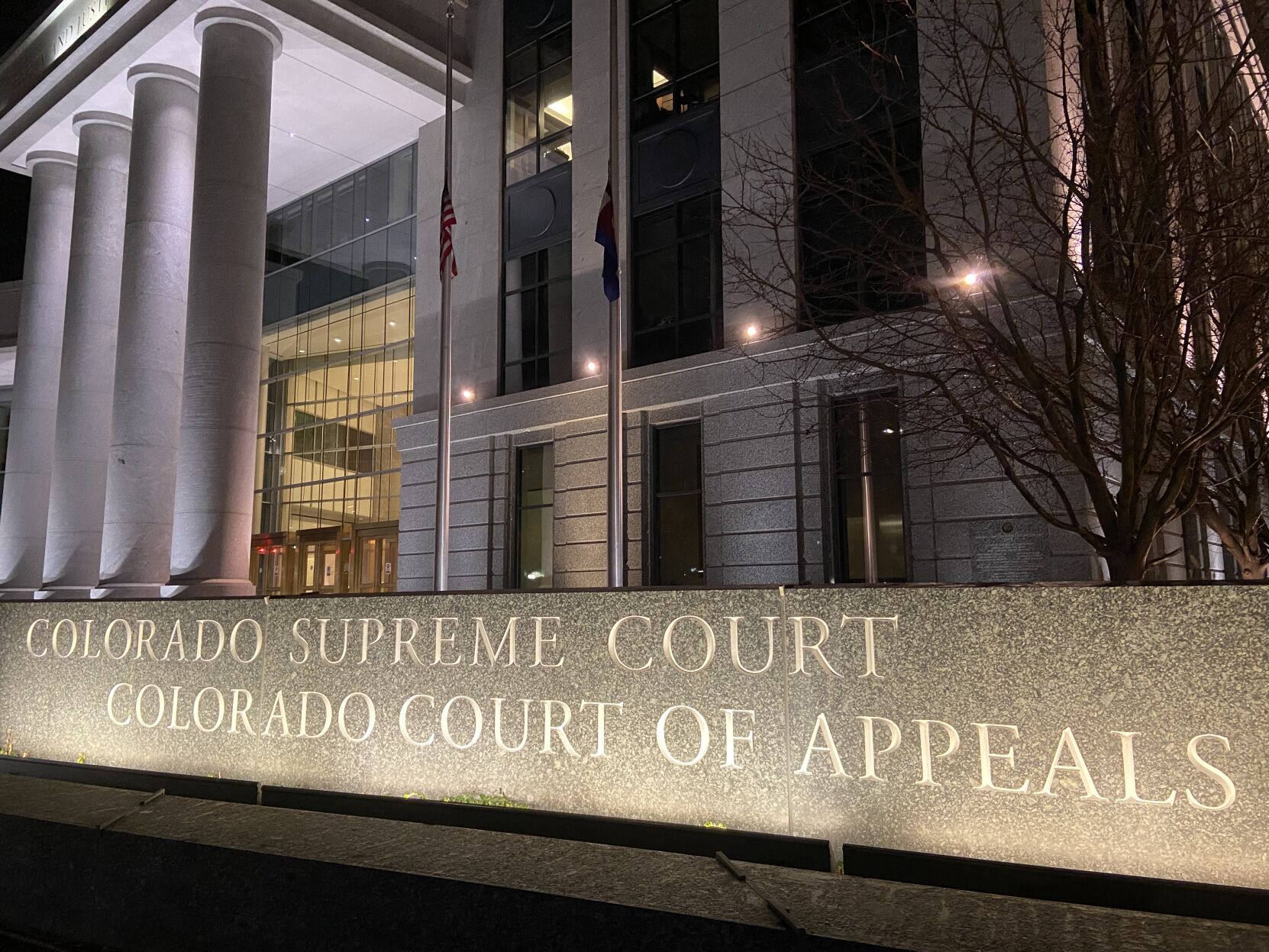
A Mesa County man was under arrest at the time officers placed him in handcuffs, meaning his conduct after that point could not be used against him to prove he was guilty of resisting arrest, the state Supreme Court decided Monday.
The ruling reverses the state’s second-highest court, which determined that because Weston Jefferson Thomas went limp after being handcuffed and forced sheriff’s deputies to carry him to the patrol car, “he nonetheless resisted the completion of the arrest in a manner that created a substantial risk of injury to the officers.”
Under Colorado law, a person resists arrest when they use physical force or threaten violence to prevent a law enforcement officer from carrying out an arrest. Alternatively, they are guilty if they use “any other means” that creates a substantial risk of harm to the officer.
On March 6, 2015, Thomas’ 78-year-old landlady had received complaints about noise. She went to his trailer, which he parked on her property, to try to quiet him down. The victim later testified that Thomas grabbed her by the neck, slammed her against a surface and yelled she “didn’t belong in this world.” A neighbor came to the victim’s aid.
The two deputies who arrived arrested Thomas for assault on an at-risk, meaning elderly, person. When they tried to handcuff him, Thomas pulled his arms away at first, but the officers succeeded in cuffing him.
That is when Thomas reportedly “went limp,” requiring the deputies to help him travel approximately 20 feet to the patrol car. The terrain they covered included debris, broken glass, television sets and microwaves. A jury convicted him of resisting arrest and the Court of Appeals last year upheld the conviction, reasoning that Thomas’ conduct, coupled with the hazardous environment, would have created a substantial risk to the deputies.
On appeal to the Supreme Court, the government argued Thomas was only under arrest once he was secured in the patrol car. Thomas countered that his limpness in the debris field did not matter for his conviction of resisting arrest because he was already arrested.
“Mr. Thomas was arrested when he was handcuffed, but the court of appeals looked to post-arrest evidence to uphold this conviction,” Deputy State Public Defender Jacob B. McMahon wrote to the Supreme Court.
The justices agreed with Thomas, and sent the case back to the Court of Appeals to reexamine whether there was sufficient evidence to convict Thomas of resisting arrest only up to the moment he was handcuffed.
Justice Carlos A. Samour Jr., writing for the court, explained that an arrest has occurred when an officer gains sufficient physical control over someone to be reasonably sure they will not leave. The court established previously that a person may commit the crime of resisting arrest up until that moment, after which they could be convicted of assault based on their conduct.
“Under the circumstances of this case, we conclude that the deputies effected Thomas’s arrest when they handcuffed him,” Samour wrote in the Dec. 20 opinion. “That was the line of demarcation at which the crime of resisting arrest ended and the potential to commit the crimes of second degree assault and escape began.”
Thomas had also challenged his other convictions for bodily injury to an at-risk person and third-degree assault, as well as the trial court’s determination that he should receive a sentence enhancement for being a habitual criminal. The Supreme Court agreed that he could not stand convicted of both the bodily injury and assault offenses against Thomas’ landlady, based on how the legislature had drafted the law.
Thomas also prevailed on his claim that he should have received a lesser sentence under the habitual criminal statute, which increases the maximum prison term by four times for anyone who has been convicted of three previous felonies. Thomas argued that two of his prior drug felonies had since been reclassified and no longer counted toward the habitual felon calculation.
The Supreme Court deemed that interpretation the correct one and ordered a re-sentencing of Thomas. The court rejected the logic of the Court of Appeals on every issue raised in Thomas’s appeal.
The case is Thomas v. People.

michael.karlik@coloradopolitics.com


10th Circuit rejects ‘penalty’ for children of naturalized citizens seeking visas
Michael Karlik
michael.karlik@coloradopolitics.com
Updated 6 hours ago
The Denver-based federal appeals court joined three of its peers earlier this month and determined the child of a newly naturalized U.S. citizen is not moved to a longer visa line as a result of his parent gaining citizenship, and...
Appeals court recognizes longer window to sue insurers for withholding policy details
Michael Karlik
michael.karlik@coloradopolitics.com
Updated 1 hour ago
Colorado’s second-highest court split with its own prior decision earlier this month and concluded injured motorists have two years, not one, to sue insurance companies for withholding relevant information about an at-fault driver’s policy. In 2019, Colorado lawmakers enacted a measure to...

Appeals court decides free speech cases, error-prone judge reversed again | COURT CRAWL
Michael Karlik
michael.karlik@coloradopolitics.com
Updated 13 hours ago
Welcome to Court Crawl, Colorado Politics’ roundup of news from the third branch of government. The state’s Court of Appeals decided multiple cases implicating free speech rights, plus Colorado’s most error-prone judge was reversed on appeal yet again. Heard on...

Federal judge dismisses claims against medical contractor for Eagle County jail suicide
Michael Karlik
michael.karlik@coloradopolitics.com
Updated 3 days ago
A federal judge dismissed the claims against a medical contractor for the Eagle County jail and its employees earlier this month, concluding there were insufficient allegations that they violated the constitutional rights of a man who died by suicide in...
Federal judge advances lawsuit seeking overtime compensation for Aurora firefighter trainees
Michael Karlik
michael.karlik@coloradopolitics.com
Updated 5 hours ago
A federal judge gave preliminary approval earlier this month to a class of Aurora firefighter trainees who may sue the city over allegations that they were denied overtime pay in violation of federal law. Joseph Elias, who attended Aurora’s fire...
Appeals court says jury not obligated to apply discounts to determine value of stolen merch
Michael Karlik
michael.karlik@coloradopolitics.com
Updated 5 hours ago
Colorado’s second-highest court concluded on Thursday that it was up to a Douglas County jury to determine the value of stolen merchandise at a defendant’s theft trial, after both sides presented different estimates of the items’ value. Under state law,...
Public figures have limited path to sue over accusations of criminality, says appeals court
Michael Karlik
michael.karlik@coloradopolitics.com
Updated 4 days ago
Colorado’s second-highest court ruled last week that a public figure cannot sue for defamation solely because a person publicly accuses them of committing a crime, as the statement may be constitutionally protected opinion. A three-judge Court of Appeals panel narrowed...
Federal judge to consider sanctioning ex-Colorado judicial discipline director
Michael Karlik
michael.karlik@coloradopolitics.com
Updated 4 days ago
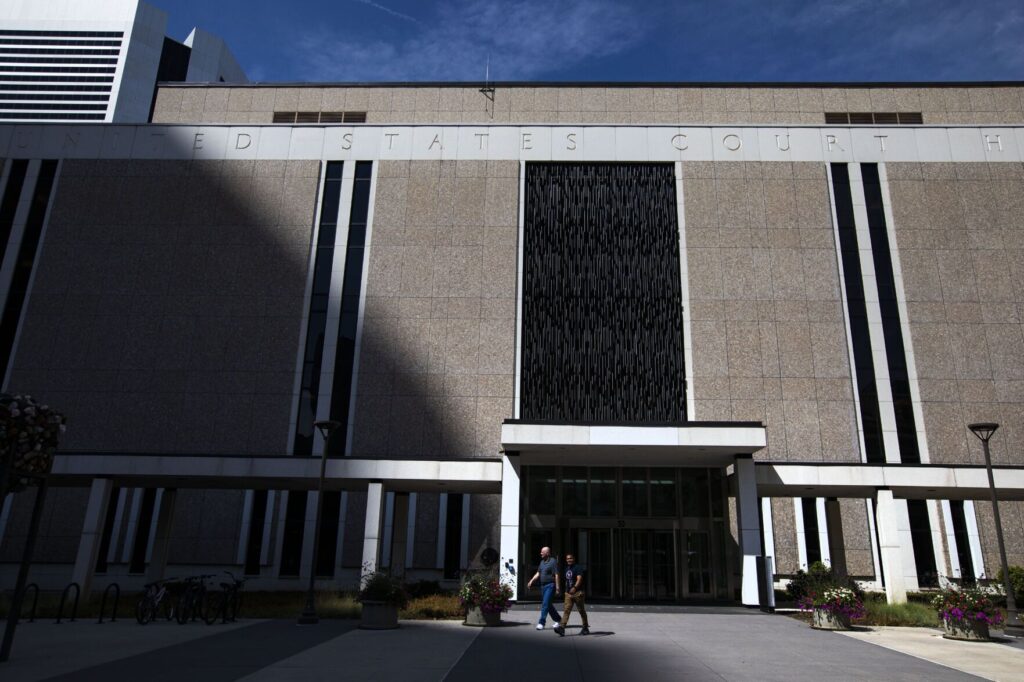
A federal judge ordered Colorado’s former head of judicial discipline on Wednesday to explain why she should not sanction him for making inaccurate statements about the defendants in his lawsuit against the Colorado Supreme Court and related entities. U.S. District...

Federal judge green-lights trial against Denver officer over race-based enforcement
Michael Karlik
michael.karlik@coloradopolitics.com
Updated 3 days ago
A federal judge green-lit a jury trial last week on a man’s claim that a Denver police officer engaged in racially selective enforcement of the law by arresting him for video recording at a police station, while not arresting a...
Federal judge says 8 years in solitary confinement not grounds to reduce man’s sentence
Michael Karlik
michael.karlik@coloradopolitics.com
Updated 5 days ago
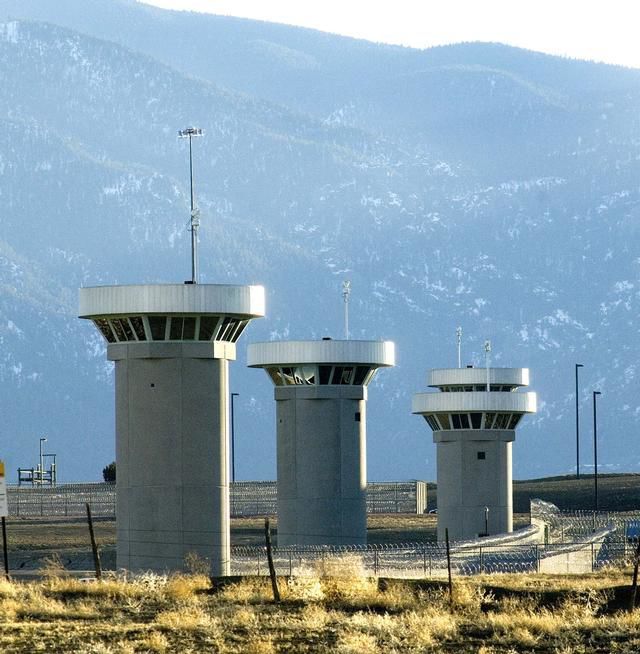
A federal judge concluded earlier this month that a man’s eight years allegedly spent in solitary confinement did not justify granting his request for a sentence reduction. However, U.S. District Court Senior Judge William J. Martínez signaled his willingness to...
PREV
PREVIOUS

Movement grows calling for leniency in trucker’s 110-year sentence for fatal I-70 crash
A national movement continued to grow Monday, with millions of people calling for leniency for a trucker who was sentenced to 110 years in prison after he was convicted of killing four people in a crash on Interstate 70 in 2019. A petition asking Gov. Jared Polis to grant clemency or commute the sentence handed […]

State confirms first wolf kill in decades
State wildlife officials on Tuesday confirmed the first killing of livestock by a pack of wolves in more than 70 years. Colorado Parks and Wildlife said officers on Sunday investigated reports of a calf killed by wolves on a ranch in Jackson County. “The results of this investigation indicated wolf tracks in […]