

AG’s office urges SCOTUS to pass on Christian web designer’s case
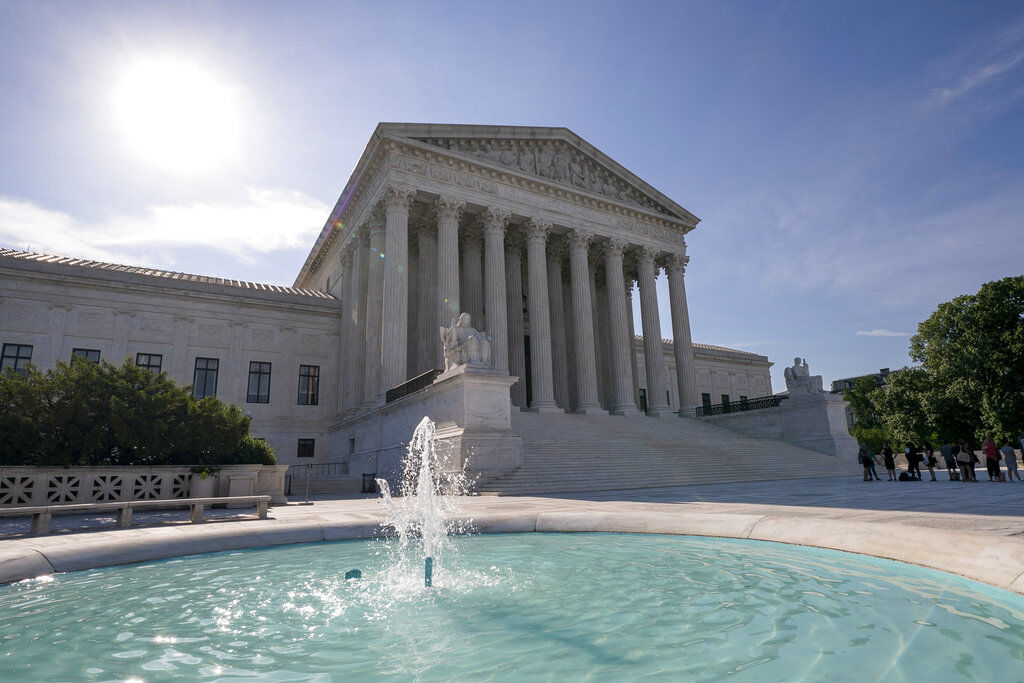
The U.S. Supreme Court should decline to hear a case challenging the constitutionality of Colorado’s anti-discrimination law because the state has not, and likely would not, take action against the business owner in question, the Colorado Attorney General’s Office argued to the nation’s highest court on Wednesday.
In a legal brief submitted to the Supreme Court, the state defended the Colorado Anti-Discrimination Act’s (CADA) protections for LGBTQ individuals and also slammed graphic and web designer Lorie Smith for pursuing the lawsuit in the absence of any state proceedings against her.
Smith seeks to expand her business to the creation of wedding websites. As a Christian, however, she would decline to build wedding websites for same-sex couples and wishes to advertise her belief that to do otherwise “would compromise my Christian witness and tell a story about marriage that contradicts God’s true story of marriage.”
The state’s brief, signed by Attorney General Phil Weiser, contended that there is no proof any same-sex couple has asked for and been refused service, or that the state will enforce CADA against Smith. The brief also referenced other courts that have addressed the question of whether businesses may preemptively challenge anti-discrimination laws.
“All these courts have held that a state must take significant action to enforce its statute for a plaintiff to face a credible threat of enforcement,” the attorney general’s office wrote.
After a lower court dismissed Smith’s case, the Denver-based U.S. Court of Appeals for the 10th Circuit upheld the constitutionality of CADA in a decision this July. By a 2-1 ruling, the appellate panel’s majority found that although the state’s anti-discrimination law would compel Smith to create content at odds with her religious beliefs, Colorado has a key interest in protecting certain populations from discrimination in the marketplace.
“[A] faith that enriches society in one way might also damage society in other ways, particularly when that faith would exclude others from unique goods or services,” wrote Senior Judge Mary Beck Briscoe.
Smith is now requesting that the Supreme Court review the 10th Circuit’s decision. In effect, she is asking the court to pick up where it left off in the 2018 decision of Masterpiece Cakeshop v. Colorado Civil Rights Commission. That case, involving a Lakewood business owner who refused to create a wedding cake for a same-sex couple, also implicated whether Colorado could compel someone to violate their religious beliefs through CADA.
The Court, however, declined to give a direct response and rendered a decision based on what it viewed as hostile conduct toward the plaintiff in that case.
Weiser’s office brought the Court up to date on civil rights enforcement since the Masterpiece Cakeshop decision.
“In the three and a half years since Masterpiece, Colorado has not imposed any civil penalties related to same-sex wedding services,” the office wrote. Since late 2016, there have been 47 public accommodations complaints alleging discrimination on the basis of sexual orientation, only two of which the state found to have probable cause.
The Civil Rights Division administratively closed 15 additional complaints, meaning they resulted in settlements, withdrawals or other resolution without penalties.
The 10th Circuit disagreed with the attorney general’s office that it could not decide Smith’s case because she had not been the subject of any state enforcement action. Consequently, Weiser’s office touched on other reasons for maintaining the status quo – namely that allowing an exception for Smith would amount to the state’s endorsement of anti-LGBTQ beliefs, and that her intended statement about the types of websites she would not design would serve to advertise the type of discrimination CADA outlaws.
“[P]rohibiting companies from displaying what would amount to ‘Straight Couples Only’ messages is permissible because it restricts speech that proposes illegal activity and is therefore unprotected by the First Amendment,” the state wrote.
Since Smith filed her petition to the Supreme Court, First Amendment scholars, conservative groups and a collection of Republican members of Congress have asked the Court to accept her case. Critics of the 10th Circuit’s decision or CADA have decried the outcome as viewpoint discrimination, censorship and “a step on the road to Fascism.”
Smith is also suggesting that the Supreme Court overrule its own 1990 decision finding that generally-applicable laws that do not target religion are constitutional. The Supreme Court has already committed to hearing multiple religious freedom cases during its current term, including an appeal argued on Wednesday involving the right of families in Maine use state education subsidies toward religious instruction.
The case is 303 Creative et al. v. Elenis et al.


Colorado justices agree to review insurance question that has divided federal judges
Michael Karlik
michael.karlik@coloradopolitics.com
Updated 12 hours ago
The Colorado Supreme Court granted a federal judge’s request on Friday to address an issue that has produced conflicting answers in policyholders’ lawsuits against insurance companies over unpaid benefits. “Parties (and judges) regularly spend undue time and money fighting in...

Federal judge dismisses background screeners’ challenge to Colorado law
Michael Karlik
michael.karlik@coloradopolitics.com
Updated 17 hours ago
A federal judge dismissed a challenge on Friday to a portion of Colorado law that prohibits certain information from being included in consumer reports, in what seemed to be a conflict with federal law. Congress originally enacted the Fair Credit...
10th Circuit rejects ‘penalty’ for children of naturalized citizens seeking visas
Michael Karlik
michael.karlik@coloradopolitics.com
Updated 10 hours ago
The Denver-based federal appeals court joined three of its peers earlier this month and determined the child of a newly naturalized U.S. citizen is not moved to a longer visa line as a result of his parent gaining citizenship, and...
Appeals court recognizes longer window to sue insurers for withholding policy details
Michael Karlik
michael.karlik@coloradopolitics.com
Updated 1 day ago
Colorado’s second-highest court split with its own prior decision earlier this month and concluded injured motorists have two years, not one, to sue insurance companies for withholding relevant information about an at-fault driver’s policy. In 2019, Colorado lawmakers enacted a measure to...

Appeals court decides free speech cases, error-prone judge reversed again | COURT CRAWL
Michael Karlik
michael.karlik@coloradopolitics.com
Updated 2 days ago
Welcome to Court Crawl, Colorado Politics’ roundup of news from the third branch of government. The state’s Court of Appeals decided multiple cases implicating free speech rights, plus Colorado’s most error-prone judge was reversed on appeal yet again. Heard on...
Federal judge dismisses claims against medical contractor for Eagle County jail suicide
Michael Karlik
michael.karlik@coloradopolitics.com
Updated 5 days ago
A federal judge dismissed the claims against a medical contractor for the Eagle County jail and its employees earlier this month, concluding there were insufficient allegations that they violated the constitutional rights of a man who died by suicide in...

Federal judge advances lawsuit seeking overtime compensation for Aurora firefighter trainees
Michael Karlik
michael.karlik@coloradopolitics.com
Updated 1 day ago
A federal judge gave preliminary approval earlier this month to a class of Aurora firefighter trainees who may sue the city over allegations that they were denied overtime pay in violation of federal law. Joseph Elias, who attended Aurora’s fire...
Appeals court says jury not obligated to apply discounts to determine value of stolen merch
Michael Karlik
michael.karlik@coloradopolitics.com
Updated 1 day ago
Colorado’s second-highest court concluded on Thursday that it was up to a Douglas County jury to determine the value of stolen merchandise at a defendant’s theft trial, after both sides presented different estimates of the items’ value. Under state law,...
Public figures have limited path to sue over accusations of criminality, says appeals court
Michael Karlik
michael.karlik@coloradopolitics.com
Updated 5 days ago
Colorado’s second-highest court ruled last week that a public figure cannot sue for defamation solely because a person publicly accuses them of committing a crime, as the statement may be constitutionally protected opinion. A three-judge Court of Appeals panel narrowed...
Federal judge to consider sanctioning ex-Colorado judicial discipline director
Michael Karlik
michael.karlik@coloradopolitics.com
Updated 5 days ago
A federal judge ordered Colorado’s former head of judicial discipline on Wednesday to explain why she should not sanction him for making inaccurate statements about the defendants in his lawsuit against the Colorado Supreme Court and related entities. U.S. District...
PREV
PREVIOUS

Colorado scales back bed surge plans as COVID-19 metrics improve
COVID-19 hospitalizations in Colorado have dropped by more than 200 patients in recent weeks, prompting the state to scale back its plan to surge 500 new hospital beds by next week. But thanks to staffing shortages and an influx of sicker-than-usual patients, hospital bed capacity remains tighter than at any point in the pandemic. As […]
TRAIL MIX | 'Not one of the boys': How Mary Estill Buchanan just missed breaking an enduring glass ceiling
The women who have been chipping away for decades at Colorado’s political glass ceilings have long since left most of them shattered. The invisible barriers that kept women from winning nearly every major office in the state were broken years ago – when Republican Virginia Blue was elected state treasurer in 1966; when Democrat Pat Schroeder […]