

In the office and out in the field, therapy dog is mascot for Boulder prosecutors’ focus on mental health
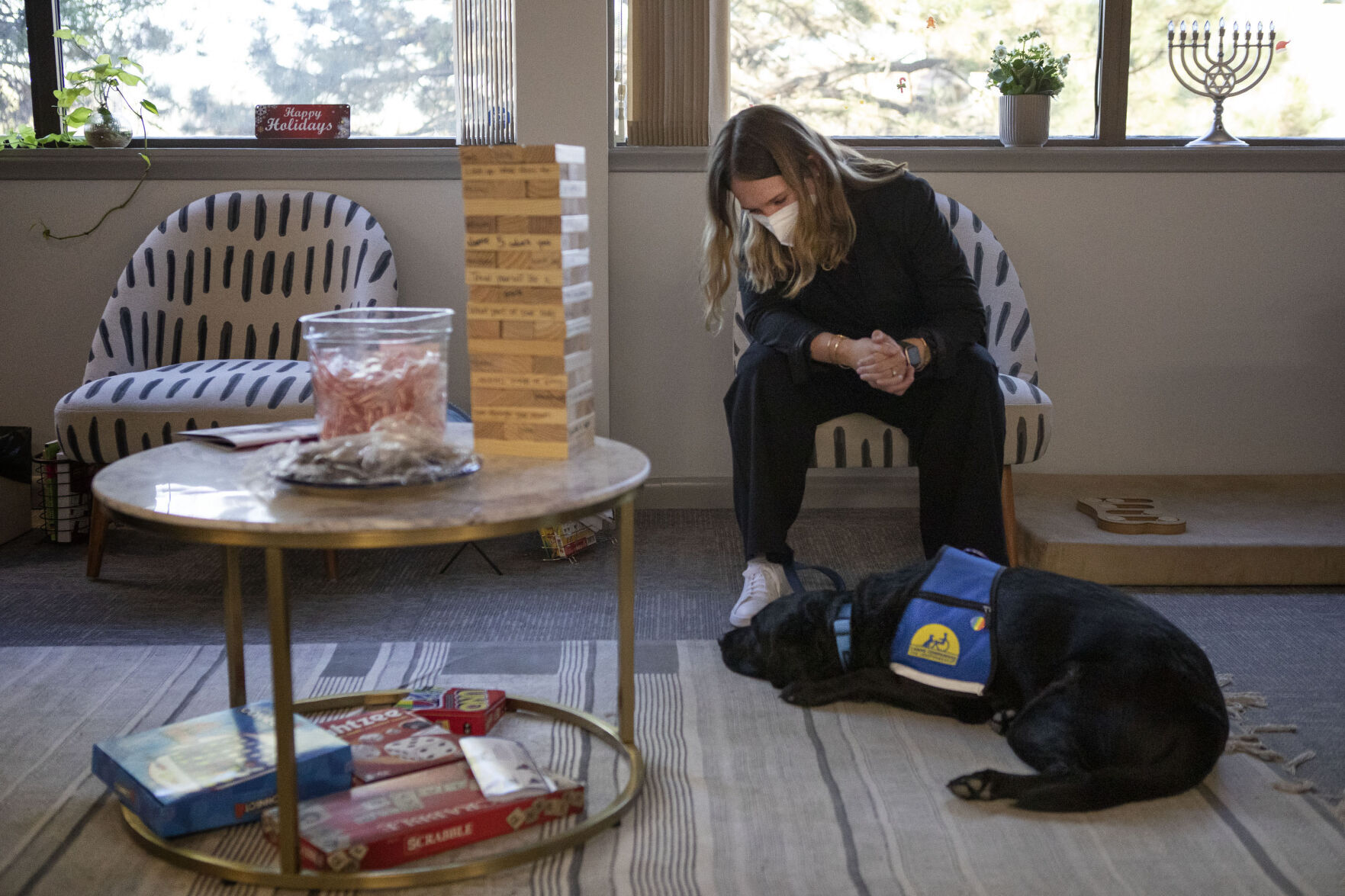
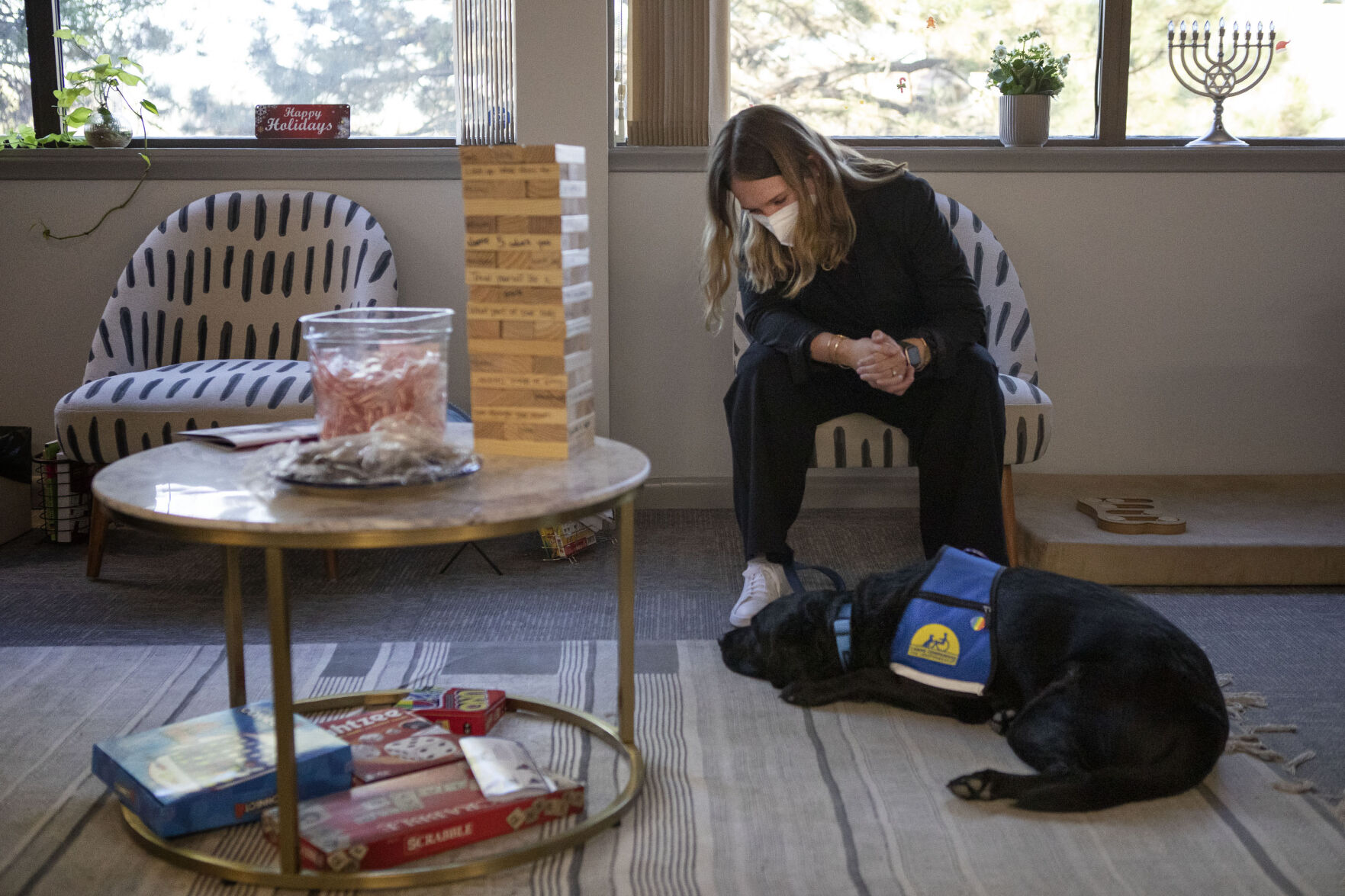
On a chilly Thursday afternoon in mid-November, 3-year-old Buck flops down on his bed in an office in the Boulder County Justice Center in between being asked to show off his tricks, much like a toddler with a short attention span.
When called on, Buck uses his pitch-black nose to turn the page of a picture book and grips a box of tissues in his teeth to bring to someone who might need one.
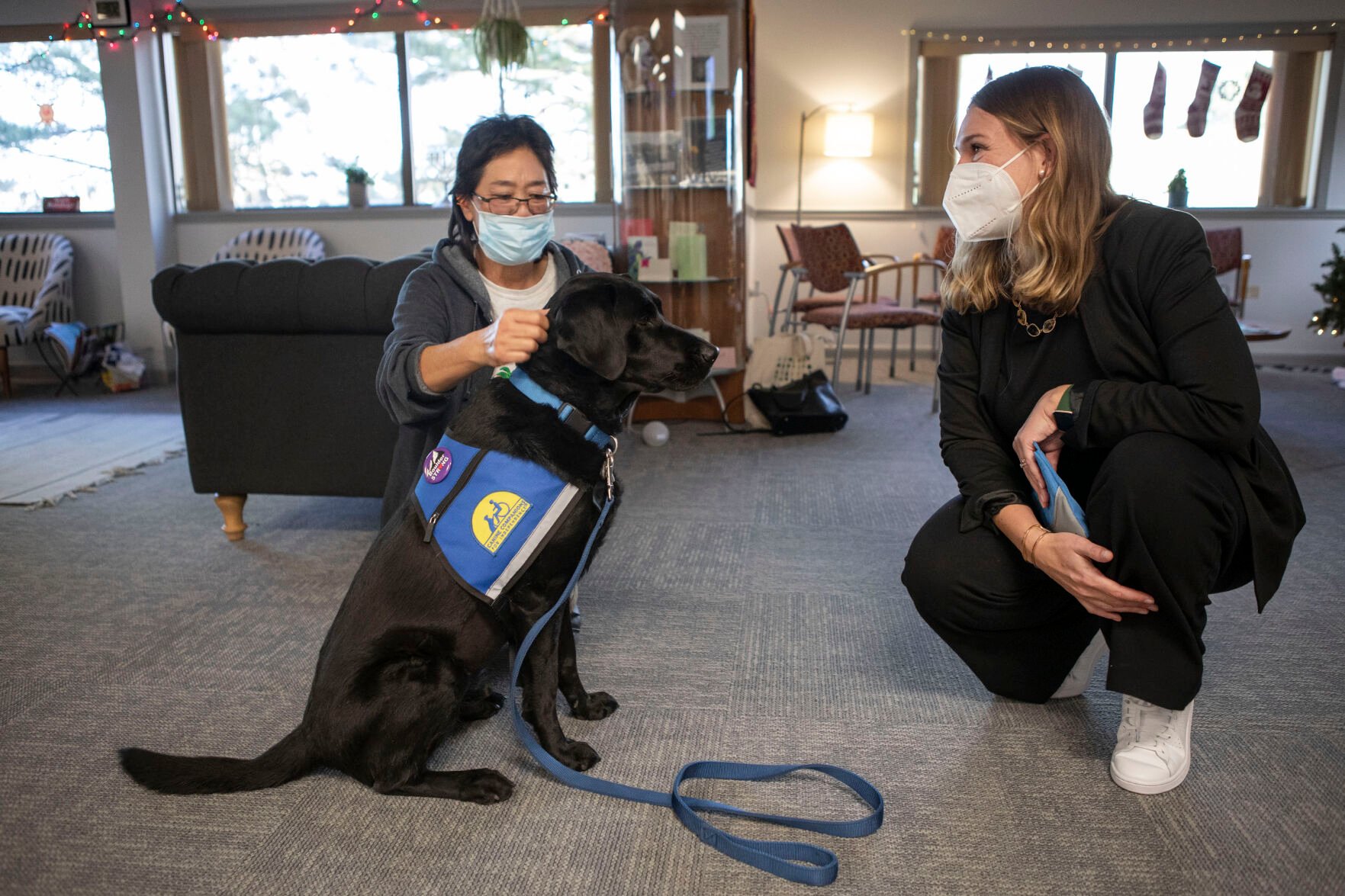
Walking through the floor of the justice center that houses prosecutors’ offices, he stops to peer into one because he knows its occupant will feed him Cheerios. Later at the Boulder Strong Resource Center on Baseline Road, Buck approaches Carolyn Nakano, a longtime King Soopers employee, who begins stroking his black coat.
Buck is a therapy dog – he has the official title of facility assistance dog – who mainly provides support to the Boulder County District Attorney’s Office. His service certification also allows him to be in courtrooms to soothe victims of crime during testimony and go to traumatic scenes to support survivors and first responders.
He’s part of the mental health support programs the office has developed since 2018 to help its prosecutors cope with the unique set of stressors their jobs expose them to because of their constant proximity to traumatic crimes.
“We see the worst that humans can do to each other, repeatedly, in any given week. And that can wear on your sense of the world and your sense of reality around safety,” said Elaina Shively, a Boulder prosecutor who oversees and implements the office’s well-being initiatives.
Mental health in the legal profession has gotten more attention in recent years. A 2016 study found up to 36% of practicing lawyers qualify as problem drinkers, according to a report released by Colorado’s Task Force on Lawyer Well-Being, and up to 28% struggle with significant anxiety, stress and depression.
Boulder participated in a pilot program by the statewide task force for developing well-being support initiatives as the project’s representative district attorney office. And its work to develop mental health support programs for its prosecutors has been tested this year after the March massacre at Boulder’s south-side King Soopers that killed 10 people.
Prosecutors in Boulder’s office declined to talk about how the case has affected attorneys’ mental health because the case is active. But they talked more generally about the importance of the legal profession focusing on mental health.
“I’ve often thought to myself, if the victim is crying, and I’m crying with the victim, who’s actually going to be going to court to prosecute the case and fight for the right outcome? But we have to recognize that all of (us are) human and these things can have an impact,” said District Attorney Michael Dougherty.
Although he sees some emotional compartmentalizing as necessary to be able to work the difficult and complicated cases that come with his job, Dougherty acknowledged it can contribute to stress building up over time. He said his office’s mental health support trainings aim to help prosecutors recognize signs that trauma from their work is trickling into other areas of their lives, such as if they find themselves getting more upset about something than they normally would.
“Are they noticing that they’re handling situations in life in a way that they would have handled differently or better under normal circumstances? It’s really about looking for red flags,” Dougherty said.
The Boulder Strong Resource Center, set up in the aftermath of the massacre, has been offering therapeutic services to visitors such as counseling and massages. It’s been available to prosecutors as well as victims’ families, first responders, King Soopers employees and others in Boulder.
Buck makes regular appearances at the center, and he went into the ravaged King Soopers on a weekend several months ago when survivors and families of the massacre’s victims had the chance to go in if they chose to help cope with their trauma. Whether he’s in the DA’s office or working in the field, Buck’s presence helps people open up about what they might be struggling with, Shively said.
“I can tell sometimes people come into my office and want to visit with Buck, and they’ll share something that they’re struggling with. And I’m able to talk through it with them or help get some resources. We encourage people to use the dogs to just kind of take a breather after an especially difficult time,” she said.
As Colorado’s de facto advocates for spotlighting mental health for prosecutors, Dougherty said he hopes his office’s initiatives send a message encouraging other offices to also prioritize well-being.
“It has to be a priority for every prosecutor’s office throughout the country so that we can help minimize the impacts of trauma and stress, while supporting our staff to do their best work in furtherance of public safety and justice,” he said.


Rep. Ron Weinberg won’t seek reelection
Marianne Goodland
marianne.goodland@coloradopolitics.com
Updated 9 hours ago
Republican Rep. Ron Weinberg of Loveland announced on Thursday evening that he will not seek another term in the Colorado House. “Serving this community has been one of the greatest honors of my life,” the two-term state representative said on...

Colorado title board OKs ballot measures to eliminate flat income tax in favor of graduated brackets
Marianne Goodland
marianne.goodland@coloradopolitics.com
Updated 10 hours ago
Proponents hoping to change Colorado’s income tax structure from a flat rate to graduated tiers — thereby raising taxes for some brackets — walked away from a Wednesday meeting with eight ballot measures approved by the title board. The coalition...

House advances government funding bills as Johnson appeases GOP factions
Rachel Schilke, Washington Examiner
rachel.schilke.washington.examiner@gazetteedit.wpenginepowered.com
Updated 14 hours ago
The House is one step closer to passing the final slate of appropriations bills after Speaker Mike Johnson (R-LA) successfully staved off rebellions from his center and right flanks, setting up the legislation for a final vote later this afternoon. ...

Trump’s foreign focus could turn off voters worried about the economy
W. James Antle III Washington Examiner
wjamesantleiiiwashingtonexaminer@wpstage.coloradopolitics.com
Updated 14 hours ago
President Donald Trump’s attention to foreign affairs may be contributing to public perceptions that he isn’t focused enough on the U.S. economy. Polls have shown anemic support for Trump’s military operations, even though they have been reasonably successful and led...
Colorado lawmakers want officers to conduct ‘lethality assessments’ in response to domestic violence fatalities
Marissa Ventrelli
marissa.ventrelli@coloradopolitics.com
Updated 14 hours ago
A bipartisan group of lawmakers is hoping to reduce to Colorado’s rising domestic violence fatalities through a bill that would require law enforcement agencies around the state to conduct “lethality assessments” on domestic violence victims. In early December of last...
Colorado Joint Budget Committee rejects DOC’s $2.4M request for more beds
Marissa Ventrelli
marissa.ventrelli@coloradopolitics.com
Updated 15 hours ago
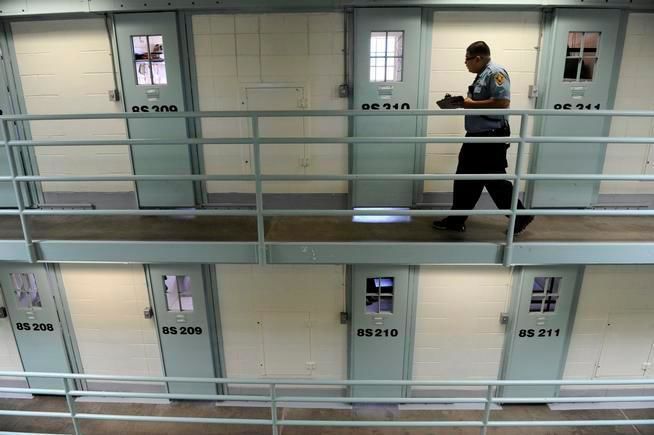
The state’s Joint Budget Committee voted on Wednesday to deny the Department of Corrections’ $2.4 million request for additional prison beds, citing the department’s lack of a plan to address its ongoing overcrowding problems. In September, the committee approved the...

‘The people’s lawyer should show up,’ Democratic AG candidates say as Griswold misses forum
Thelma Grimes
thelma.grimes@coloradopolitics.com
Updated 7 hours ago
Watch the forum here. Three Democratic primary candidates running for Colorado attorney general used a forum Wednesday night to call out the absence of a fourth contender at an event hosted by the Denver Press Club. In their opening statements,...

Veterans share their priorities with governor candidate Sen. Michael Bennet
Alexander Edwards
alexander-edwards@coloradopolitics.com
Updated 18 hours ago
Veterans told Sen. Michael Bennet that they want more resources for county-level support services and suicide prevention during a discussion Tuesday at the Mt. Carmel Veterans Service Center in Colorado Springs. Having served at the federal level for 16 years,...
Colorado attorney general invites public to report ICE ‘misconduct’
Marissa Ventrelli
marissa.ventrelli@coloradopolitics.com
Updated 10 hours ago
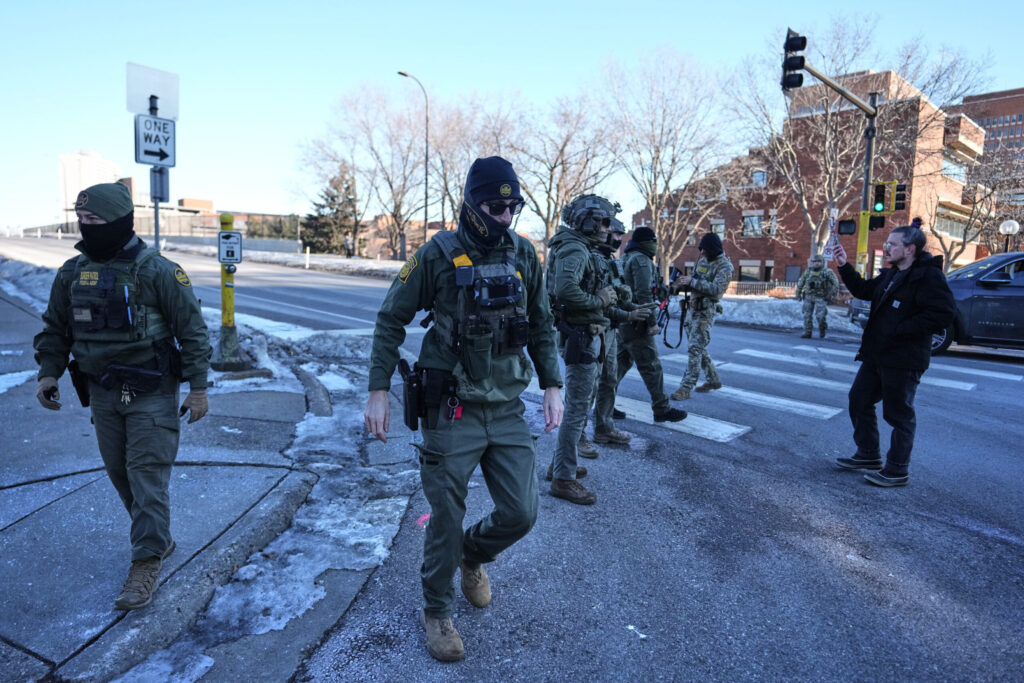
Colorado Attorney General Phil Weiser has launched a new online mechanism that allows Colorado residents to report “misconduct” by federal immigration agents, his office announced on Wednesday. “Nobody is above the rule of law, including federal agents such as ICE...

Colorado Democrat John Hickenlooper raises over $1.1 million in 4th quarter for reelection bid
Ernest Luning
ernest.luning@coloradopolitics.com
Updated 7 hours ago
U.S. Sen. John Hickenlooper’s reelection campaign raised over $1.1 million in the fourth quarter of 2025 and finished the year with more than $3.8 million in the bank, the Colorado Democrat’s campaign said Thursday. The fundraising haul brings Hickenlooper’s total...
PREV
PREVIOUS

Some Coloradans' drinking water still has highest radium levels in the nation
Some of the highest concentrations of radium-contaminated drinking water in the nation are clustered in rural southeast Colorado, according to a recent compilation of data. The problem is hardly new. The presence of radium in the area’s groundwater, which is linked to an increased cancer risk particularly for children, has been known for decades. The newly […]

Trio of Colorado municipal leaders named to National League of Cities board
Kevin Bommer, executive director of the Colorado Municipal League, was elected to the National League of Cities board of directors by NLC’s membership at the 2021 virtual City Summit. Bommer was elected to a two-year term, one of eight state municipal league directors appointed to the 59-member board. He will also serve on the board’s executive […]