

INSIGHTS | Higher energy prices look increasingly like a foregone conclusion

John Hickenlooper had a hard time staying on point, but his diversion was big news.
A few days before The New York Times reported it last Sunday, Hick broke the news that Congress is on the cusp of passing a carbon tax to cut pollution, raise revenue and speed the transition from fossil fuels to green energy.
The former governor turned U.S. senator was on a Zoom call with experts last week to talk about electrified transportation, specifically electric trucks to replace the diesel engineers.
Having industry to pay a government-set price for each ton of emissions will financially motivate it to cut emissions. At the same time, that windfall could pay the fare for delivering climate change.
Whether it’s pay me now or pay me later, John Q. Public can expect to foot the bill. There’s no magic money that politicians try to sell you on.
Hickenlooper suggested U.S. carbon taxes can change the planet. “Setting a price on carbon with tariffs will really help the rest of the world follow our lead.”
Hickenlooper is in a jam sandwich with the oil and gas industry, which is critical to Colorado’s economy, and the most progressive members of his party who contend he’s not doing enough, if his hair is not on fire.
As far back as last summer, Hickenlooper was talking up taxing carbon.
“The thing I’d like more than anything is to get a price on carbon,” Hickenlooper said during a virtual town hall in August, which was supposed to focus on the Democrats’ $1 trillion infrastructure bill.
“We’re going to have some of the largest investments in electrification in this country to accelerate the transition to electric vehicles,” he told his constituents on the call, citing $7.5 billion to build out the nation’s charging station network.
Hick was one of 11 members of his party appointed to negotiate the infrastructure package with 11 Senate Republicans last summer. His roots on the issue run much deeper than his nine-month tenure in Washington, way deeper.
In 2017, he held a press conference at Red Rocks Amphitheater to sign an executive order that kept Colorado on pace with the Paris Climate Agreement, as then-President Donald Trump pulled the U.S. out of the global response.
“Colorado’s connection to the outdoors and wilderness is central to our core identity. It’s really who we are,” Hick said then. “Clean air and clean water is central to that brand, to our values.”
The Senate has come around to Colorado’s way of thinking, as they typically do on green issues, Hick said on the call last week.
In reality, senators came around to Oregon’s way of thinking.
Carbon pricing has been percolating on the left for months, but when it became clear last week that the $3.5 trillion Biden wish list wouldn’t pass with clean energy in the mix, the focus shifted to making industries (and ultimately customers) pay up.
“I’ve had a carbon pricing bill in my desk for the last three years just waiting for the time,” Sen. Ron Wyden, Democrat of Oregon, chair of the Senate Finance Committee and former chair of the Energy Committee, told The New York Times Saturday. “… Now there are a number of senators, key moderate senators, who’ve said they’re open to this. And a lot of House folks have said they would support it if the Senate sends it over.”
Democratic leaders on Capitol Hill set a Halloween deadline to reach an agreement on President Joe Biden’s economic package.
The political hobgoblin in all this is Joe Manchin.
The West Virginia Democrat won’t support the package’s $150 billion investment in greener electricity. His state is a major coal producer, and Manchin is politically fat on campaign contributions from fossil fuel producers.
He articulates a good case that hastily abandoning fossil fuels would harm America’s energy independence and, ironically, sacrifice climate change at the alter of politics.
That’s a view supported by the industry. Fof the first time, the American Petroleum Institute is endorsing carbon pricing.
“Confronting the challenge of climate change and building a lower-carbon future will require a combination of government policies, industry initiatives and continuous innovation,” Mike Sommers, API’s president and CEO, told Colorado Politics in March.
Last month, API was among the industry groups opposing proposed fees on methane, however.
Back on July 1, I was part of a small group of reporters invited out to the 11-acre Namaste Solar farm east of Aurora, as Hickenlooper showed off Colorado’s efforts to produce green power to U.S. Energy Secretary Jennifer Granholm.
Colorado has anted up up: 348 solar companies employed about 7,719 people, including about $390 million in solar investments in 2019, before the pandemic, with a total of $3.9 billion invested overall, according to the Department of Energy.
“I know there’s a sense of urgency on the part of the administration and the president himself,” Granholm told us. “Yesterday with the wildfire issue, Gov. (Jared) Polis was part of a whole Western governors chat with the president that I was at, too, and we were talking about the underlying issues, which is climate change.”
Finding a way to pay for it always winds up coming from the same back pocket, yours and mine. Carbon taxing might be big news, yet the costs are anything but.

Trump plans to move Forest Service headquarters to Utah, shutter research sites | OUT WEST ROUNDUP
The Associated Press
the-associated-press@coloradopolitics.com
Updated 3 days ago
UTAH Forest Service bound for Salt Lake City SALT LAKE CITY — President Donald Trump’s administration will move the U.S. Forest Service headquarters out of the nation’s capital to Salt Lake City as part of an organizational overhaul that involves...
Pastors Scott Bottoms, Victor Marx win spots in Colorado GOP’s gubernatorial primary at party assembly
Ernest Luning
ernest.luning@coloradopolitics.com
Updated 23 minutes ago
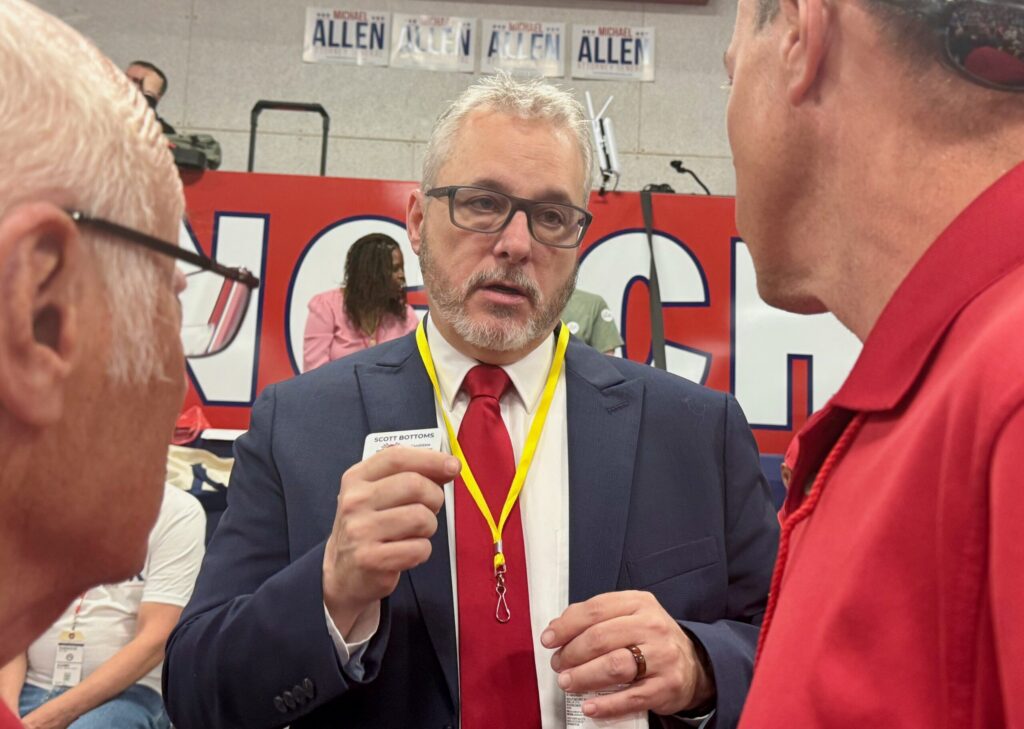
Two pastors from Colorado Springs qualified Saturday for the Republican gubernatorial primary ballot at the Colorado GOP’s state assembly in Pueblo in a party meeting that dragged late into the night. State Rep. Scott Bottoms, who is known as one...
Colorado House finishes work on 2026-27 state budget, finally
Marianne Goodland
marianne.goodland@coloradopolitics.com
Updated 19 hours ago
The House on Saturday, after four days of work – it usually takes two – finished up their work and voted on the $46.8 billion 2026-27 state budget, as contained in House Bill 1410 and 64 accompanying measures designed to...
Home rule has protected Colorado cities for over 125 years | Cronin and Loevy
Tom Cronin Bob Loevy
tom-cronin-bob-loevy@coloradopolitics.com
Updated 19 hours ago
Colorado is currently gripped by a political struggle between the governor plus the legislature in Denver and populous home-rule city governments, mainly on the Front Range, such as Colorado Springs. In the past few years, the legislature has been passing bills that applied to city government policies, which...
Colorado Politics calendar Apr. 13-19
Rachael Wright, Special to Colorado Politics
rachael.wright@coloradopolitics.com
Updated 4 days ago
CoPo’s weekly political calendar will help you find political and public-policy events throughout Colorado. It includes candidate and issue campaign events, public policy meetings, court hearings, state and local party conventions, assemblies, debates, rallies, parades, speaking engagements, traveling dignitary appearances,...
Minority Leader Peña argues against oil and gas bill | A LOOK BACK
Rachael Wright, Special to Colorado Politics
rachael.wright@coloradopolitics.com
Updated 4 days ago
Forty-Five Years Ago This Week: “The Colorado House of Representatives had just given its final approval to House Bill 81-1152, which created $9 million in tax relief to oil and gas companies. But this came “at the expense of local...
A longshot, upset bid and a few quick takes | SONDERMANN
By Eric Sondermann
by-eric-sondermann@coloradopolitics.com
Updated 3 days ago
It is hard to keep up these days. The flow of news often seems overwhelming. Let’s focus today on an unusual congressional race before moving on to a few quick, supplementary observations. Since its creation 54 years ago, Congressional District...
An “-“ends tribute in a week full of “odds” | Capitol M | Week of April 11, 2026
Marianne Goodland
marianne.goodland@coloradopolitics.com
Updated 3 days ago
The lighter side of the Capitol, usually… The decision to read the budget bill — the long bill, which spans 661 pages this year — put a damper on the House’s already less‑than‑festive mood. So Capitol M decided to catch...
What you need to know about the Colorado legislature reading a 661-page bill aloud
Marianne Goodland
marianne.goodland@coloradopolitics.com
Updated 19 hours ago
A rarely used procedural move by a Republican legislator threw the Colorado House into an extended slowdown, after she invoked her right to have a nearly 700-page state budget bill read aloud in full. Once Rep. Brandi Bradley, R‑Roxborough Park,...
Literal reading of budget bill complicates Colorado legislators’ plans for GOP assembly
Marianne Goodland
marianne.goodland@coloradopolitics.com
Updated 1 day ago
Republican Rep. Brandi Bradley’s decision to force the full reading of the state budget — called the “long bill” for its obvious length — has not only slowed House business to a crawl but also disrupted her colleagues’ plans for...
PREV
PREVIOUS

No-bid contracts to campaign contributors, top-dollar PR firms among 'custodial funds' spending in Colorado
Colorado Secretary of State Jena Griswold sent $2.8 million in federal emergency COVID-19 mitigation funds – almost half of the CARES Act cash allocated to her office – to a politically well-connected, Washington D.C.-based public relations and lobbying firm to produce a set of TV ads to educate Colorado voters about the 2020 election procedures. […]

Colorado Health Foundation poll cites the mental health toll of worrisome economics
A new in-depth survey suggests Coloradans have faith in a robust economic recovery, but in the meantime the high cost of living is exacting a cost on their mental health. The nonprofit Colorado Health Foundation’s annual “Pulse” poll of 2.493 adults cites a lack of affordable housing and the high cost of child care as […]