

COURT CRAWL | Federal judges failed to recuse, 10th Circuit splits over man’s confinement

Welcome to Court Crawl, Colorado Politics’ roundup of news from the third branch of government. A report about federal judges who failed to recuse themselves from cases despite having financial conflicts of interest left two Colorado judges apologizing, plus a new judge has taken office in downtown Denver.
“I should have known that”
• The Wall Street Journal dropped a major finding that 131 federal judges across the country had participated in cases while also having financial investments in one of the parties. In addition to violating judicial ethics, such conduct also runs contrary to federal law.
• Two judges from Colorado were implicated in the WSJ’s reporting: U.S. District Court Senior Judges R. Brooke Jackson and Lewis T. Babcock. “I dropped the ball,” Babcock admitted to the WSJ. He owned between $15,001 and $50,000 of Comcast stock while presiding over a lawsuit involving the company.
• Jackson had 36 cases with undeclared financial conflicts of interest. He detailed those in a 21-page memo to the WSJ, which he subsequently gave to Colorado Politics. Jackson’s explanation was that he had zero knowledge of his or his wife’s investments, so he didn’t believe there was any bias. Nonetheless, he acknowledged he was in the wrong, and that he should have realized what he had to do when he inherited cases from other judges who recused themselves for financial reasons.
• The clerk’s office for the district court confirmed that Jackson, who is now a part-time judge since his retirement last week, has provided a list of conflicts of interest.

Suited up!
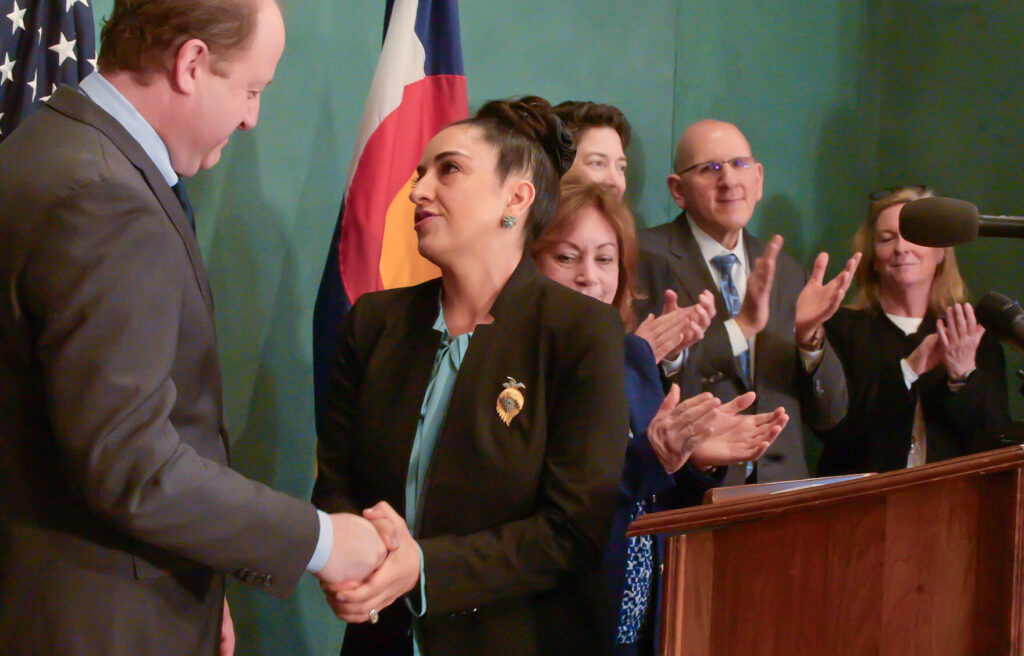
• The Denver-based U.S. Court of Appeals for the 10th Circuit, which hears federal appeals from Colorado and five surrounding states, officially has a new member. Judge Veronica S. Rossman took office on Thursday, four-and-a-half months after the White House nominated her to succeed fellow Coloradan Carlos F. Lucero on the 12-member court. The next scheduled oral arguments in which she will participate begin on November 15.
When is a sentence not a sentence?
• In 1984, a Colorado judge opted not to sentence a man to the maximum 24 years in prison for sex assault, instead committing him indefinitely, and up to life. While indeterminate sex offender sentences are common, the man argued 37 years later that his “commitment” was just that — an involuntary commitment requiring separate protections under the law, rather than a criminal sentence.
• By a 2-1 decision, the 10th Circuit disagreed. While the majority said, in essence, the choice of word doesn’t matter, Judge Carolyn B. McHugh believed there was absolutely a distinction between a commitment and a sentence, and Colorado is violating the man’s constitutional rights by keeping him behind bars.
• “I sit here and rot, wandering [sic] what do I have to due [sic] to get my freedom or at least my chance at it. I believe that I can still become a law-abiding citizen and a productive member of society if I can just get my foot out the door. But at 65 years of age, I see my chances slowly fading away.” —Bruce E. Wimberly, plaintiff, writing to the 10th Circuit

Oil, gas and…cheese?
• Several key decisions came out of the state’s federal trial court this week, featuring subjects that normally don’t occupy the same courtroom. First, the Bureau of Land Management violated federal environmental law by approving 58,000 acres in northwest Colorado for oil and gas leases without fully incorporating available air quality data. The court ordered a review in lieu of voiding the entirety of the public land leases.
• A former laborer at Leprino Foods Company, the world’s largest manufacturer of mozzarella cheese, may take her ex-employer to trial over allegations that it discriminated against her while she was pregnant.
• A Black inmate at the “supermax” prison in Florence alleged guards had a role in releasing a white supremacist inmate who was intent on attacking him. But in the judge’s eyes, he failed to prove his case.
Supreme Court check-in
• A pair of 4-3 decisions from the Colorado Supreme Court upheld the use of “blind” expert testimony in two criminal cases from people unfamiliar with the facts of the cases, but who knew about the dynamics of domestic violence. The dissenting justices believed the Court was opening the door to completely irrelevant statements, but the majority was comfortable as long as the testimony was close enough.
• The Court formally got rid of a procedural tactic that made it easier for employers to avoid liability, although the General Assembly also eliminated the feature earlier this year.
• Two justices were interested in hearing a case involving whether a defense lawyer’s personal conflict amounted to ineffective assistance, but one more member was needed for the Court to take the appeal.

Vacancies and appointments
• The governor is considering three candidates to succeed Sedgwick County Court Judge James Craig Dolezal: John Fryar and Chris Hoschouer, both of Julesburg, and Myka Landry of Kiowa.
Miscellaneous decisions
• A Wheat Ridge police officer should not have looked in a vehicle’s hidden compartment during a pre-towing inventory, but the 10th Circuit nonetheless upheld the search as constitutional when it turned up a stolen handgun.
• An inmate asked the court to appoint a medical expert because he could not afford one. The court said no, and sided against him on his medical claims. The 10th Circuit said the decision was correct, even if it seemed unfair.
• The Biden administration has nominated Cole Finegan, a former Denver city attorney and staffer to Democratic politicians, to be U.S. Attorney for Colorado.
Colorado Politics Must-Reads:

Judge rules that Colorado law makes it too hard for parties to bar unaffiliated voters from primaries
Ernest Luning
ernest.luning@coloradopolitics.com
Updated 24 minutes ago
A federal judge ruled in favor of the Colorado Republican Party late Tuesday, saying that a portion of the state law that allows unaffiliated voters to cast ballots in party primaries is unconstitutional because it imposes an unrealistic burden on...
10th Circuit upholds regulator’s methodology for Tri-State exit fees
Michael Karlik
michael.karlik@coloradopolitics.com
Updated 3 hours ago
The Denver-based federal appeals court upheld a regulatory agency’s methodology for calculating the fee owed by entities seeking to withdraw from Tri-State Generation and Transmission Association last week. Tri-State is a Westminster-based cooperative that provides and transmits electricity to member...
Federal judge proposes sanctions against Mike Lindell’s lawyers for continued fake citations
Michael Karlik
michael.karlik@coloradopolitics.com
Updated 4 hours ago
A federal judge is once again pursuing sanctions against lawyers for MyPillow CEO Mike Lindell for continuing to cite to court cases that do not exist, likely based on the faulty output of artificial intelligence tools. Last year, a jury...
Susan Blanco signals views on role of appellate courts in first opinion as Colorado justice
Michael Karlik
michael.karlik@coloradopolitics.com
Updated 7 hours ago
Justice Susan Blanco’s first solo opinion as a new member of the Colorado Supreme Court made clear her view of the guardrails that keep the state’s highest court tethered to the issues it is asked to decide. On Monday, the...

Colorado leaders weigh next steps after Supreme Court rejects state ban on ‘conversion therapy’
Marissa Ventrelli
marissa.ventrelli@coloradopolitics.com
Updated 1 day ago
Colorado leaders said they are weighing next steps after the U.S. Supreme Court on Tuesday rejected the state’s ban on “conversion therapy” for children, as critics and supporters cheered or lambasted the ruling. The court’s near-unanimous decision called the Colorado...
Federal judge dismisses U.S. government lawsuit against Colorado, Denver’s ‘sanctuary’ laws
Michael Karlik
michael.karlik@coloradopolitics.com
Updated 1 day ago
A federal judge dismissed the U.S. government’s lawsuit against Colorado and Denver on Tuesday, which alleged that various local policies impermissibly infringed on federal immigration enforcement. U.S. District Court Judge Gordon P. Gallagher followed the lead of judges in Illinois...
Federal judge finds DOJ adequately searched for, disclosed records related to Bidens
Michael Karlik
michael.karlik@coloradopolitics.com
Updated 1 day ago
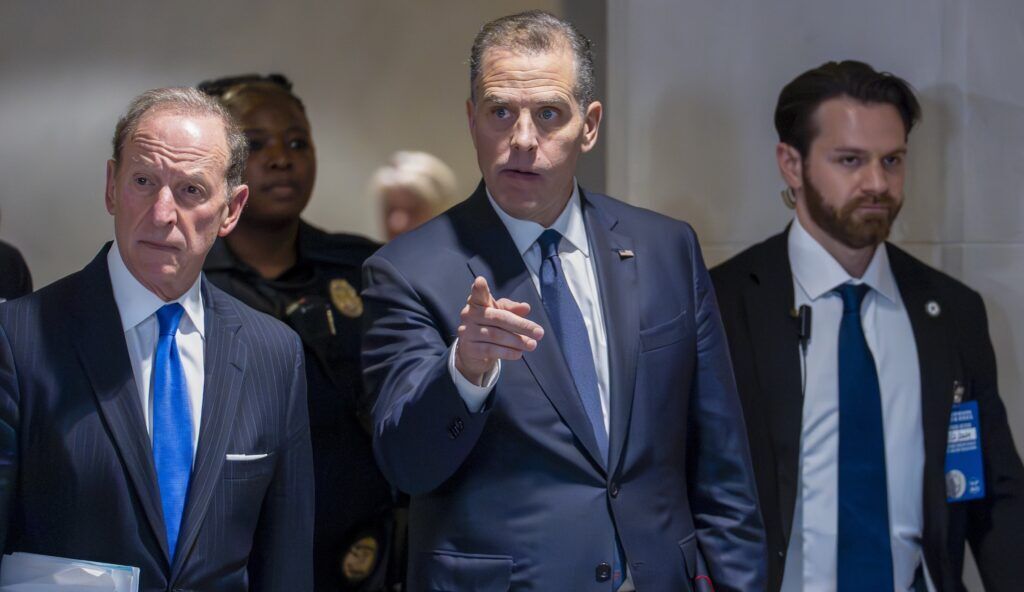
A federal judge determined on Friday that the U.S. Department of Justice adequately searched for and disclosed records to a Colorado attorney in response to his request for documents related to former President Joe Biden’s son and brother. In November...
10th Circuit warns lawyers after finding fake case in filing
Michael Karlik
michael.karlik@coloradopolitics.com
Updated 22 hours ago
The Denver-based federal appeals court warned attorneys to be more careful last month after discovering one lawyer cited a fake case in his arguments. In recent months, federal and state judges in Colorado have begun cautioning lawyers explicitly about the...

10th Circuit rules cognitively impaired man’s risk of lobotomy, mistreatment in Mexico not ‘torture’
Michael Karlik
michael.karlik@coloradopolitics.com
Updated 2 days ago
The Denver-based federal appeals court concluded last month that a man’s risk of mistreatment or forced lobotomy in his native Mexico did not amount to “torture” that should shield him from deportation. A three-judge panel of the U.S. Court of...
Colorado justices side with news organizations for disclosure of high-level child abuse data
Michael Karlik
michael.karlik@coloradopolitics.com
Updated 1 day ago
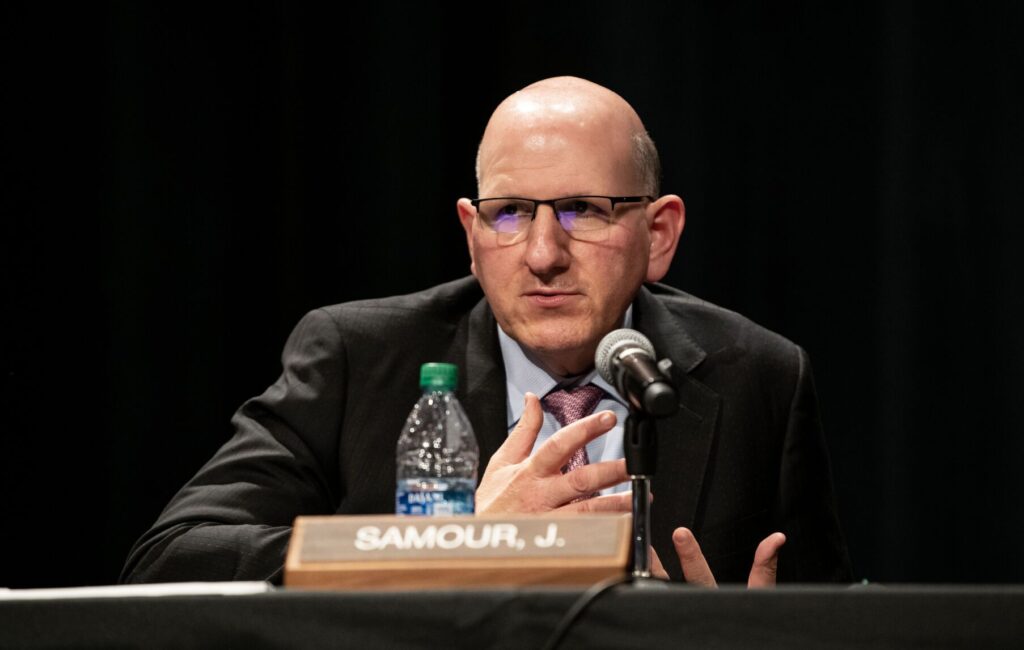
The Colorado Supreme Court ruled on Monday that the state must disclose the number of child abuse reports at individual group living facilities in response to an open records request, as the addresses are already in the public domain. The...
PREV
PREVIOUS

Appeals court finds El Paso judge mistakenly instructed jury, orders lower sentence for sex assault
A man convicted of sexual assault and serving a prison sentence of six years to life will have his sentence reduced, after the Court of Appeals determined an El Paso County judge failed to give the jury complete instructions. Manuel Jose Menendez received two convictions for sexual assault and unlawful sexual contact stemming from the […]

Judge declines to dismiss assault charge despite deleted prison video
A federal judge has declined to dismiss the charge against a Colorado inmate for allegedly assaulting a correctional officer, despite the prison deleting video footage from immediately after the incident. Eric King stands accused of assaulting or obstructing a federal official at the Federal Correctional Institution at Florence. One month after the altercation, his lawyer requested […]