

Judge declines to dismiss assault charge despite deleted prison video
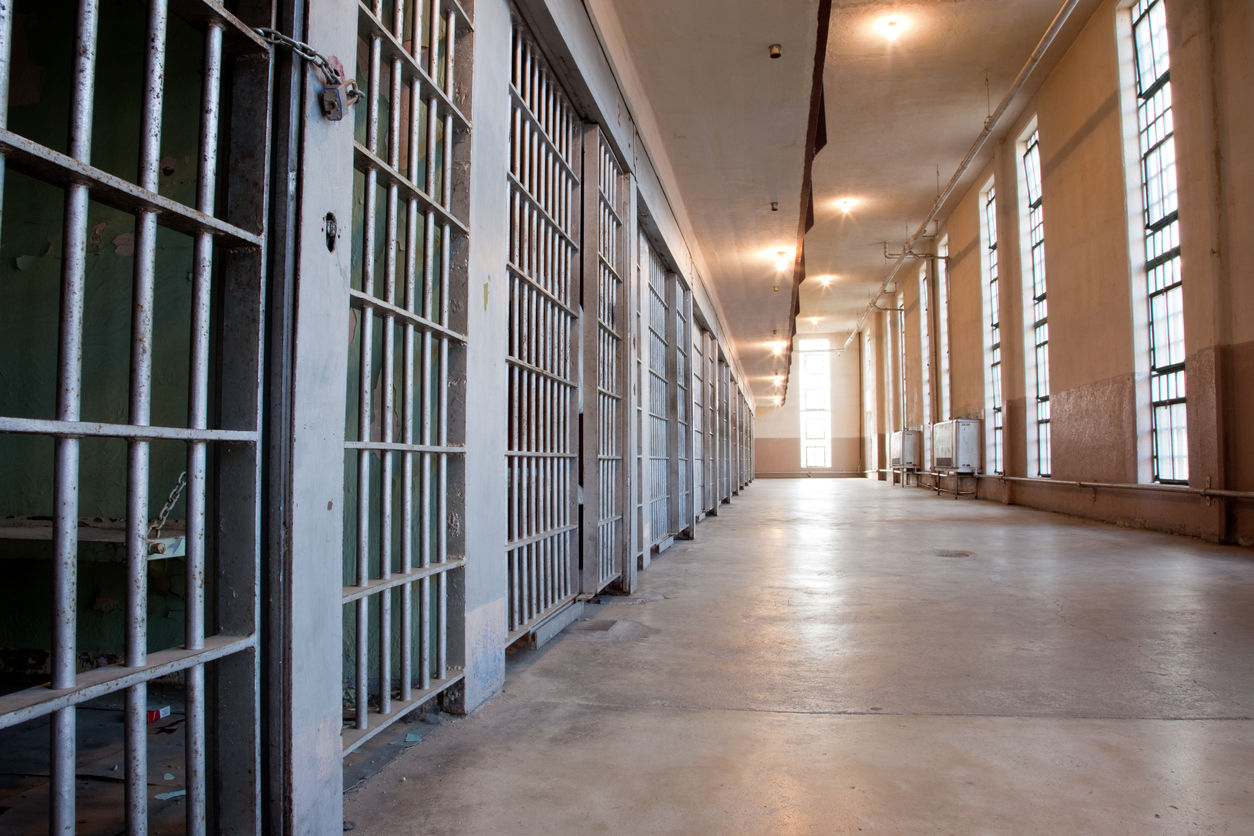
A federal judge has declined to dismiss the charge against a Colorado inmate for allegedly assaulting a correctional officer, despite the prison deleting video footage from immediately after the incident.
Eric King stands accused of assaulting or obstructing a federal official at the Federal Correctional Institution at Florence. One month after the altercation, his lawyer requested video footage from the prison of King’s transport to a holding cell in a special housing unit following the assault. After learning the prison had not retained the video because it showed King being compliant, the defense moved to dismiss the criminal charge.
“The video from the Special Housing Unit (SHU) demonstrating Mr. King’s compliance was valuable and necessary exculpatory evidence for his complete defense,” King’s motion argued. “The Bureau of Prisons knew of the exculpatory character of the evidence and destroyed the recording(s) in bad faith, against policy, as well as after counsel for Mr. King made a timely and specific request for preservation of the evidence.”
But on Thursday, U.S. District Court Judge William J. Martínez decided King had failed to show that the video would have aided his defense, or that the government acted in bad faith.
“[A]s a practical matter, Defendant’s actions after the alleged assault have arguably little to no bearing on the matter at hand: whether he in fact assaulted Lieutenant Wilcox,” the judge wrote in a Sept. 30 order.
According to the federal government’s description, King was an inmate at Florence on Aug. 17, 2018 when another inmate assaulted a lieutenant. The prison discovered an email King sent to his significant other after the incident, in which he called the assault “one for the home team” and “a win for every prisoner ever. Hard to stop smiling thinking about it.”
Lt. Donald Wilcox reportedly interviewed King to determine whether he posed a threat to prison staff. During the conversation, Wilcox sustained a broken nose and damage to his finger and eye. King claimed Wilcox provoked him, and he hit back in defense. Wilcox claimed King struck him with a fist.
Afterward, King was restrained in a chair and escorted to the prison’s special housing unit. Reportedly, multiple officers were needed to restrain King because he repeatedly try to pull away and continue attacking. After arriving at the holding cell, he was restrained for five hours and taken to solitary confinement at the maximum-security facility at Florence.
King’s motion to dismiss the assault charge included a statement from the lieutenant who investigated incidents between staff and inmates at Florence, saying he did not retain the surveillance video from the special housing unit because King was being compliant. Another officer present during King’s transport said that King had a history of making false complaints and anti-Bureau of Prisons statements, but “he had not been violent toward staff prior to this incident.”
King painted the missing video as something crucial to establishing the credibility of the corrections officers who said he remained aggressive after assaulting Wilcox.
“The case in essence boils down to who threw the first punch and whether Mr. King was responding from a defensive posture,” wrote King’s attorney, Lauren C. Regan of the Civil Liberties Defense Center. “If Mr. King is fighting, resisting or otherwise out of control on the video, a jury may infer he was aggressive and may have instigated violence against Wilcox in the closet; but on the other hand, if King is complaint [sic] and not resisting in the immediate aftermath, a jury may infer that he merely defended himself in response to an assault by staff. The video is key to establishing this question before the jury.”
The government countered that such evidence was not relevant, and in fact would not be allowed to establish King’s character.
“In other words, defendant would not be permitted to argue that his compliant behavior during his entry into the SHU somehow suggests that he is a peaceful person who therefore did not assault the correctional officer earlier in the day,” wrote Assistant U.S. Attorney Aaron M. Teitelbaum.
Martínez sided with the government. Even if King could show the video would be useful to him, the judge concluded, King had not established the government purposefully destroyed it contrary to prison policy.
The case is United States v. King.
Colorado Politics Must-Reads:

Colorado Supreme Court upholds child abuse convictions despite faulty jury instruction
Michael Karlik
michael.karlik@coloradopolitics.com
Updated 3 hours ago
The Colorado Supreme Court decided on Monday that a San Miguel County jury properly convicted a defendant of child abuse resulting in death, even though the instructions potentially allowed jurors to avoid finding that the child abuse resulted in death....
Colorado justices say group that spent $4M on ballot initiatives does not have to disclose donors
Michael Karlik
michael.karlik@coloradopolitics.com
Updated 6 hours ago
The Colorado Supreme Court ruled on Monday that an organization that spent $4 million to advocate on ballot initiatives in the 2020 election is not required to disclose its donors and spending. The Supreme Court acknowledged that multiple factors suggested...

Colorado–Nebraska water clash heads to US Supreme Court as canal fight intensifies
Marianne Goodland
marianne.goodland@coloradopolitics.com
Updated 2 hours ago
The U.S. Supreme Court on Monday agreed to hear Nebraska’s lawsuit against Colorado over the Perkins County canal, a move that advances a legal dispute likely to take years to resolve. The proposed Perkins County canal would run through land...
Colorado Supreme Court: Redistricting plans for 2028 election cannot proceed under state constitution
Michael Karlik
michael.karlik@coloradopolitics.com
Updated 1 hour ago
The Colorado Supreme Court blocked all attempts at redrawing congressional district boundaries for the 2028 election from reaching the ballot on Monday, concluding each of the proposed ballot measures violated the constitutional single-subject requirement. The court considered five distinct but...
Bennet, Hickenlooper to vote against Trump’s 10th Circuit nominee from Colorado
Michael Karlik
michael.karlik@coloradopolitics.com
Updated 2 days ago
Colorado’s two Democratic senators will not vote to confirm President Donald Trump’s nominee to a vacancy on the Denver-based federal appeals court. Trump has selected U.S. District Court Chief Judge Daniel D. Domenico, who he appointed as a federal trial...
Trump administration warns Jeffco Public Schools it will lose federal funding over transgender issue
Matt Kyle
matt.kyle@denvergazette.com
Updated 6 hours ago
The U.S. Department of Education on Friday warned Jeffco Public Schools it has 10 days to correct alleged Title IX violations over the Colorado district’s transgender policy or lose federal funding. The Notice of Impending Action is the latest development...
U.S. government declines to oppose multiple challenges to immigration detention in Colorado
Michael Karlik
michael.karlik@coloradopolitics.com
Updated 3 days ago
Multiple federal judges in Colorado granted petitions from people challenging the lawfulness of their immigration detention this week after the government took the unusual step of declining to submit arguments in opposition. Colorado’s federal trial court is facing a flood of...
Colorado justices discuss solution to confusion from prior criminal ruling
Michael Karlik
michael.karlik@coloradopolitics.com
Updated 3 days ago
The Colorado Supreme Court pondered the fallout on Tuesday from its nearly six-year-old decision interpreting the state’s impaired driving laws, with the justices now addressing how defendants affected by the legal change must seek postconviction relief. In contrast to other...
Colorado justices suggest father entitled to appeal of custody decision
Michael Karlik
michael.karlik@coloradopolitics.com
Updated 4 days ago
Members of the Colorado Supreme Court signaled strongly on Tuesday that a father deserved some avenue for challenging a temporary child custody order that no lower court believed it could review due to the unusual circumstances of the case. Because...

Court snuffs out challenge to Denver’s flavored tobacco ban
Deborah Grigsby
deborah.smith@denvergazette.com
Updated 3 days ago
The smoke finally cleared in Denver’s battle over a citywide ban on flavored tobacco products when a Denver court dismissed a challenge from local vape shop owners seeking to declare the ordinance unconstitutional and block its enforcement. On Wednesday, Denver...
PREV
PREVIOUS

COURT CRAWL | Federal judges failed to recuse, 10th Circuit splits over man's confinement
Welcome to Court Crawl, Colorado Politics’ roundup of news from the third branch of government. A report about federal judges who failed to recuse themselves from cases despite having financial conflicts of interest left two Colorado judges apologizing, plus a new judge has taken office in downtown Denver. “I should have known that” • The Wall […]

Denver officer may be held liable for arresting wrong woman at wrong hospital, judge says
An Aurora woman may sue the police officer who arrested her at Denver Health by mistaking her for a different person at a different hospital, a federal judge has ruled. Two members of the Denver Police Department, Officers Don Whyde and Brian Long, were investigating a burglary and assault in downtown Denver when they arrived at the […]