

Federal court declines to dismiss ADA lawsuit against Denver

A federal court rejected Denver’s request to dismiss a civil rights lawsuit against the city from a former employee with cerebral palsy who alleges she experienced discrimination and retaliation.
The decision was a procedural victory for Kristen Guadiana, who is seeking back pay and other monetary damages after being terminated as an eligibility technician in the Denver Department of Human Services.
One of the attorneys representing Guadiana at Colorado’s federal district court, Charlotte N. Sweeney, is currently President Joe Biden’s nominee for a judgeship on the same court. The employment discrimination lawyer was among the three candidates recommended to Biden by the state’s U.S. senators, and she is awaiting a hearing before the Senate Committee on the Judiciary.
Guadiana described in her federal complaint that the city hired her in May 2015, and she was responsible for determining people’s eligibility for Medicaid assistance.
Employees in her position were required to complete a certain number of applications per day, but Guadiana’s cerebral palsy precluded the use of her left hand for typing. Allegedly, her supervisor and coworkers noticed she was a fast typist despite the use of only one hand.
Six months after her hiring, Guadiana’s supervisor reportedly told her that her numbers were “a little low” and the city would extend her probation. Afterward, the department explored ways to accommodate Guadiana under the Americans with Disabilities Act.
The 1990 federal law requires employers to provide reasonable accommodation to individuals with disabilities so that they can perform the essential functions of their position. According to the Job Accommodation Network, its survey of employers found the majority of workplace accommodations cost nothing to implement, and the median expenditure for those who did incur a one-time cost was $500.
The city reportedly suggested Guadiana receive a one-handed keyboard, voice recognition software or a “short” keyboard with a 10-number keypad. While Guadiana was reportedly on medical leave in early 2016, the short keyboard arrived, but was never installed because it was incompatible with her computer. The department also ended the interactive process of coming up with reasonable means of accommodation for Guadiana.
Guadiana’s supervisor subsequently told her she was not meeting her goals, and assigned her to a call center duties in March. The city terminated Guadiana on April 21, 2016. Although she finally received a compatible short keyboard, Guadiana only had access to it for a week before her firing.
“Defendant discriminated against Plaintiff because of her disability by, among other things…terminating Plaintiff without first evaluating whether Plaintiff’s purported performance issues improved following the use of her approved accommodations; failing to offer Plaintiff additional reasonable accommodations, including transfer to a vacant position for which she was qualified; and otherwise failing to engage in the interactive process in good faith,” Guadiana claimed in her lawsuit.
The city asked the federal court to dismiss the lawsuit, arguing the Department of Human Services actually functioned as part of the state of Colorado. Therefore, it was entitled to immunity.
But in an August 10 order, U.S. Magistrate Judge Scott T. Varholak disagreed with that line of thinking. Because Guadiana said she was hired by the city, followed the city’s policies, and had the city’s human resources and attorney offices involved in her ADA accommodation, Varholak found immunity was not warranted.
Ariel B. DeFazio, an attorney who represents Guadiana along with Sweeney, said she was pleased with the order “not only because it means that Ms. Guadiana’s case can proceed to the merits, but also because it is precedent on which future city employees can rely in pursuing their own disability discrimination and retaliation claims.”
The case is Guadiana v. Denver.



Denver murder conviction reversed for incomplete self-defense instruction
Michael Karlik
michael.karlik@coloradopolitics.com
Updated 16 hours ago
Colorado’s second-highest court reversed a defendant’s murder conviction last week because a Denver judge gave an incomplete instruction to the jury about the man’s right to self-defense. Donald R. Gonzales and Gary McLaughlin met up in a Capitol Hill parking...
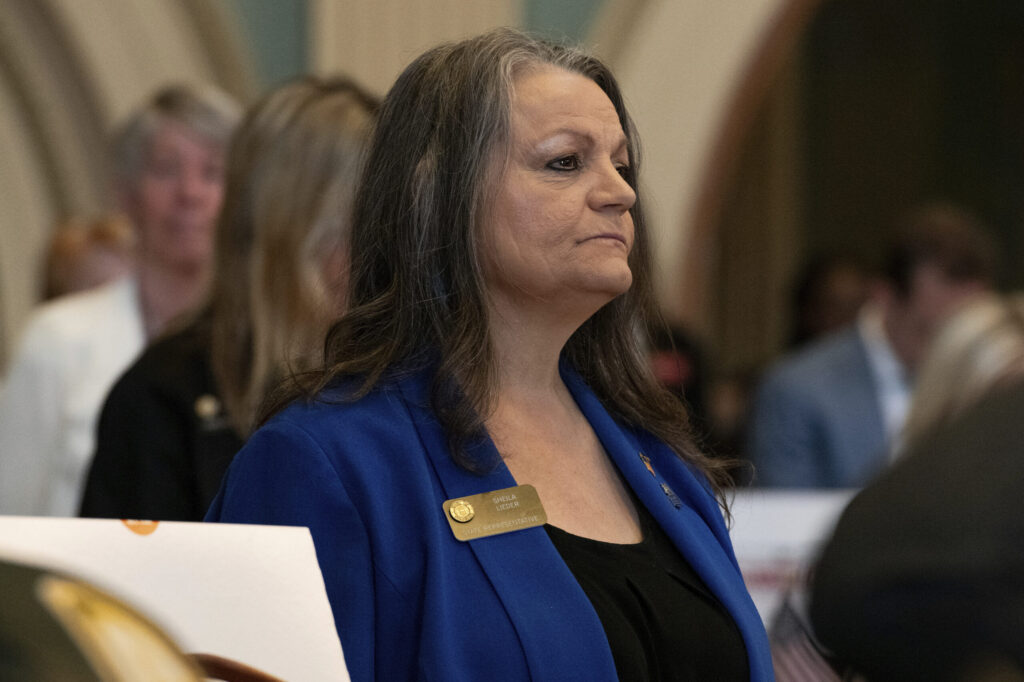
Colorado lawmaker, House leaders named in workplace-retaliation lawsuit
Marianne Goodland
marianne.goodland@coloradopolitics.com
Updated 19 hours ago
A former legislative aide has filed a lawsuit alleging she was mistreated, illegally directed to perform campaign work and harmed by a House leadership structure she charged was fragmented, politicized and ineffective at protecting employees. The lawsuit, filed by Jennifer...

Federal judge hears arguments about Colorado’s 3-day gun purchase waiting period
Michael Karlik
michael.karlik@coloradopolitics.com
Updated 23 hours ago
A federal judge heard arguments on Monday about the constitutionality of a 2023 Colorado law that generally imposes a three-day waiting period on firearm purchases after the initiation of a background check. The test that the U.S. Supreme Court created...
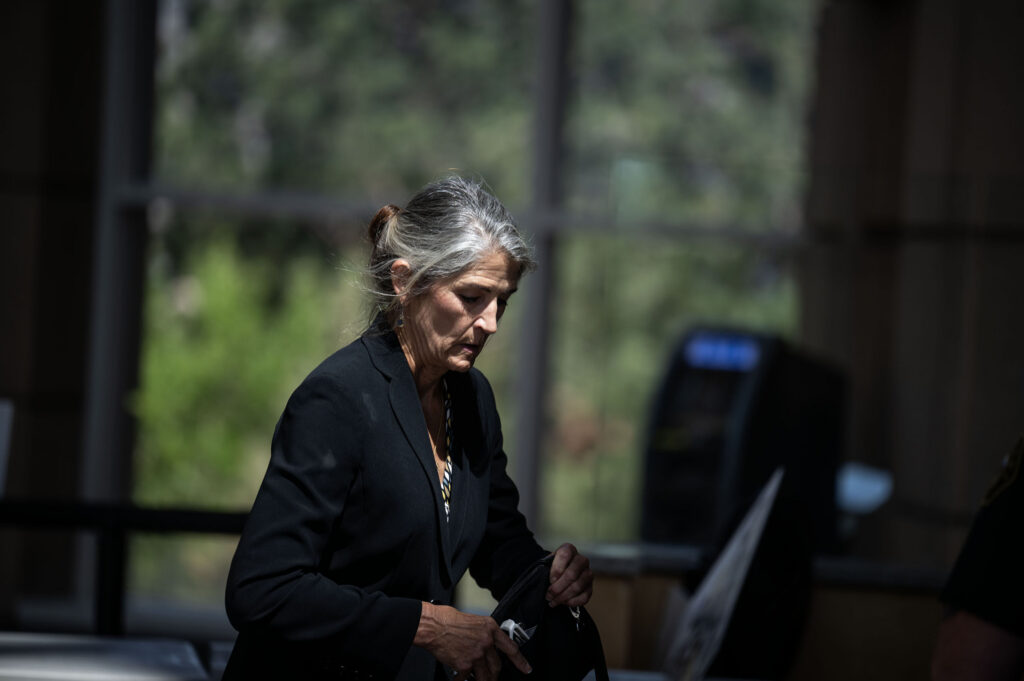
Colorado Supreme Court intervenes in Weld County prosecution dismissed due to Missy Woods misconduct
Michael Karlik
michael.karlik@coloradopolitics.com
Updated 15 hours ago
The Colorado Supreme Court ordered a Weld County trial judge last week to respond to the district attorney’s claim that he improperly dismissed a criminal case because of “outrageous” conduct by the Colorado Bureau of Investigation. Daniel Lee Eatinger stood...
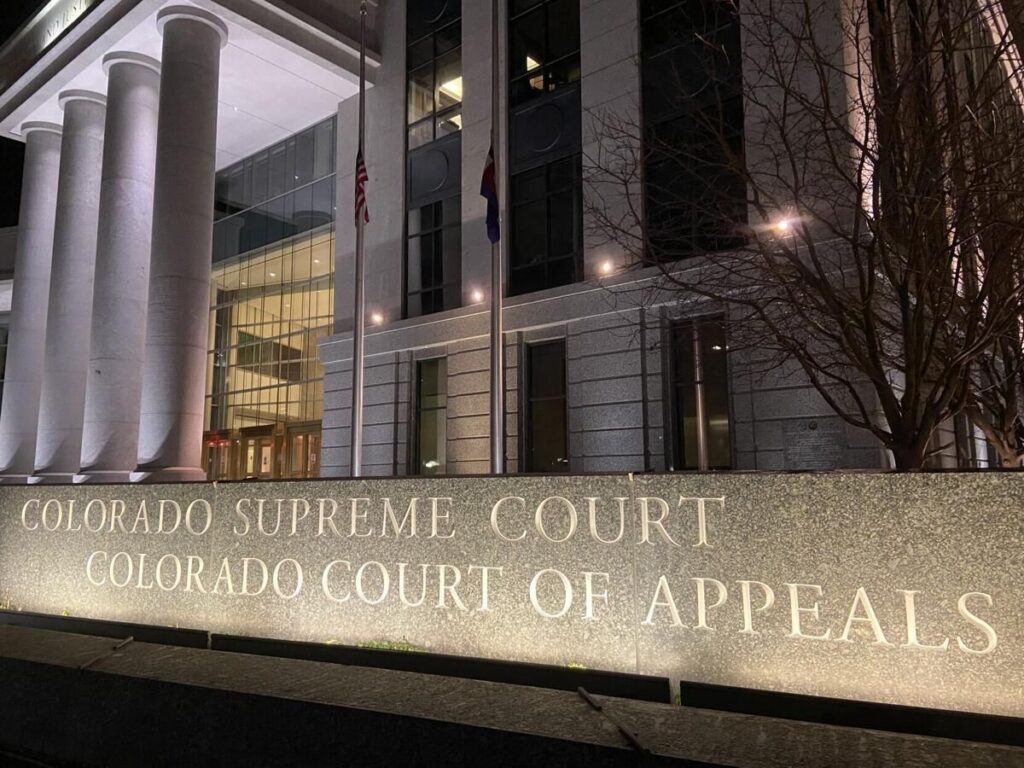
Schoolchildren’s presence at child sex-related trial did not harm Arapahoe County defendant, appeals court says
Michael Karlik
michael.karlik@coloradopolitics.com
Updated 4 days ago
Colorado’s second-highest court decided on Thursday that the presence of a group of schoolchildren on the first day of a child sexual exploitation trial did not violate an Arapahoe County defendant’s constitutional right to a fair trial. Prosecutors charged Jerry...
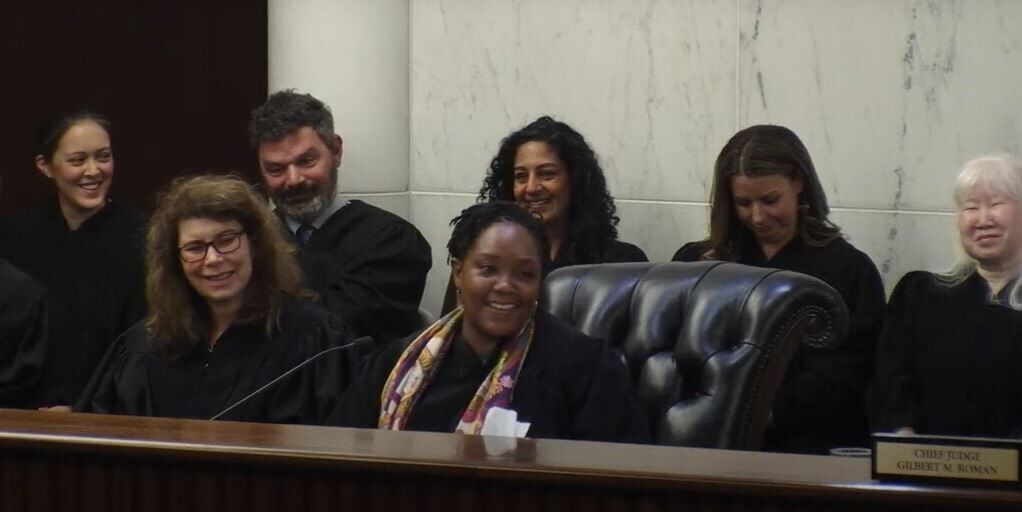
Appeals court cites week-old Colorado law to reinstate child neglect case at child, father’s request
Michael Karlik
michael.karlik@coloradopolitics.com
Updated 3 days ago
Colorado’s second-highest court invoked a new state law for the first time on Thursday and reinstated a child neglect case that both the child and her father wished to reopen. House Bill 1227 took effect on Aug. 12, reversing a...
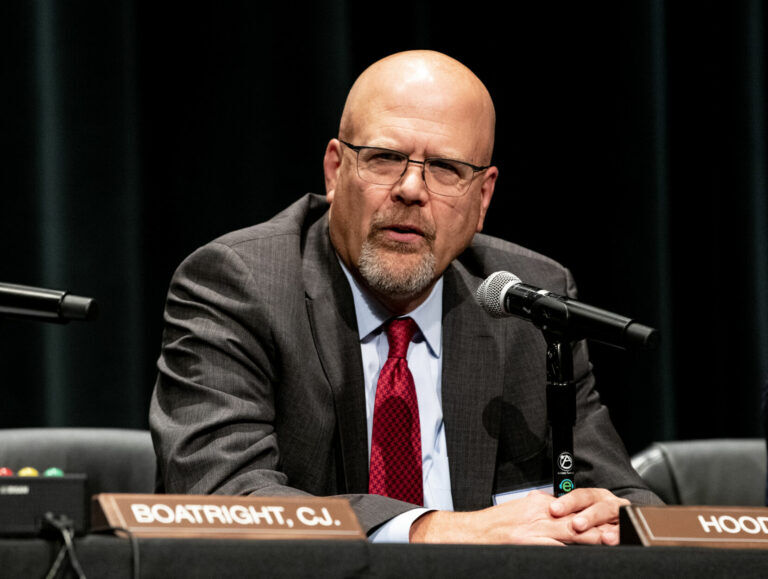
Colorado Supreme Court names William Hood as next chief justice
Michael Karlik
michael.karlik@coloradopolitics.com
Updated 5 days ago
The Colorado Supreme Court has selected Justice William W. Hood III to be the next chief justice, the judicial branch announced on Friday. Hood will succeed Chief Justice Monica M. Márquez, who took over the role in July 2024. “I...

Family of slain Lakewood teacher releases statement as murder suspect makes first court appearance
Matt Kyle
matt.kyle@denvergazette.com
Updated 2 days ago
Patrick Theodore Barnett, the Lakewood man accused of killing his wife, a Jeffco Public Schools art teacher, made his first court appearance Friday morning as his wife’s family looked on. The status conference hearing was held before District Court Judge...
Appeals court upholds Park County trophy hunting conviction
Michael Karlik
michael.karlik@coloradopolitics.com
Updated 4 days ago
Colorado’s second-highest court clarified on Thursday that a defendant may stand convicted under the state’s trophy hunting laws if he abandons a bear carcass but returns later to remove the meat. Under Colorado law, it is a felony to detach...
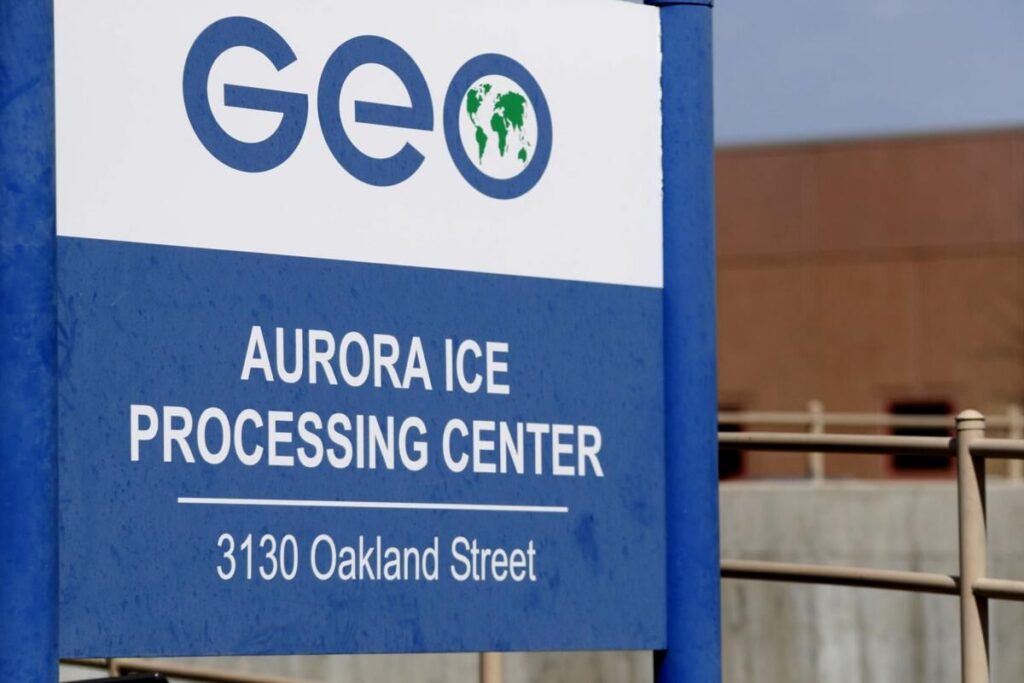
Judge grants partial injunction to GEO in fight against state health inspection law
Kyla Pearce
kyla.pearce@gazette.com
Updated 6 days ago
A judge ruled Thursday that The GEO Group does not have to follow parts of a new state law requiring more frequent health and safety inspections at the U.S. Immigration and Customs Enforcement processing center in Aurora. Under the order...
PREV
PREVIOUS

Number of available metro Denver homes ticks up
While the number of Denver-area homes available for sale in July increased 30% from the previous month, it’s still far below normal inventory levels for a market of the Mile High City’s size. That’s according to the most recent Market Trends Report from the Denver Metro Association of Realtors. The report shows there were 4,056 […]

Bureau of Reclamation declares first-ever shortage on the Colorado River basin, triggering water reductions
One-thousand, seventy-five feet. That’s the make or break level for Lake Mead, on the Arizona-Nevada border. Keep the water levels above that, and hydropower for Arizona, California and Nevada from the Hoover Dam stays stable. Drop below that, and the U.S. Bureau of Reclamation could declare a shortage in the Colorado River basin, and millions […]